GSM

GPT-6 Astra
2026-09-11 07:51:10

GPT-6 Astra clears the last unsolved FrontierMath Tier 4 problem

GPT-6 Astra has solved the final FrontierMath Tier 4 problem that had never previously been cracked by any AI system, pushing Epoch AI to label the tier "saturated." OpenAI reported a 97.6% score for Astra on Tier 4, short of a perfect run in a single evaluation. But under Epoch AI’s cumulative method, saturation means every problem in the tier has been solved at least once across attempts by different models over time. Astra supplied the missing piece by answering the only remaining unsolved question. The result marks a sharp shift from the benchmark’s early days. When Tier 4 launched on July 11, 2025, the best score on the board was about 5%. FrontierMath itself was created in November 2024 to keep advanced models from quickly exhausting older math benchmarks such as GSM8K and MATH. Epoch AI worked with more than 60 mathematicians, including Fields Medal winners Terence Tao, Timothy Gowers, and Richard Borcherds, to build original problems. After an audit, Epoch released a v2 update in June 2026 that fixed 12 Tier 4 questions and removed 7, leaving 43. Even after those changes, model performance kept climbing: GPT-5.6 Sol reached 83.0%, Claude Fable 5 hit 90.2%, and GPT-6 Astra posted 97.6%. FrontierMath has now shifted toward harder settings, including Open Problems and FrontierMath Erdős, where Astra solved 2 of 68 tasks.

40
GPT-6 Astra clears the last unsolved FrontierMath Tier 4 problem
Palantir
2026-09-05 04:17:56

Palantir CEO Alex Karp at G20 urges nations to build sovereign AI and bring experts home

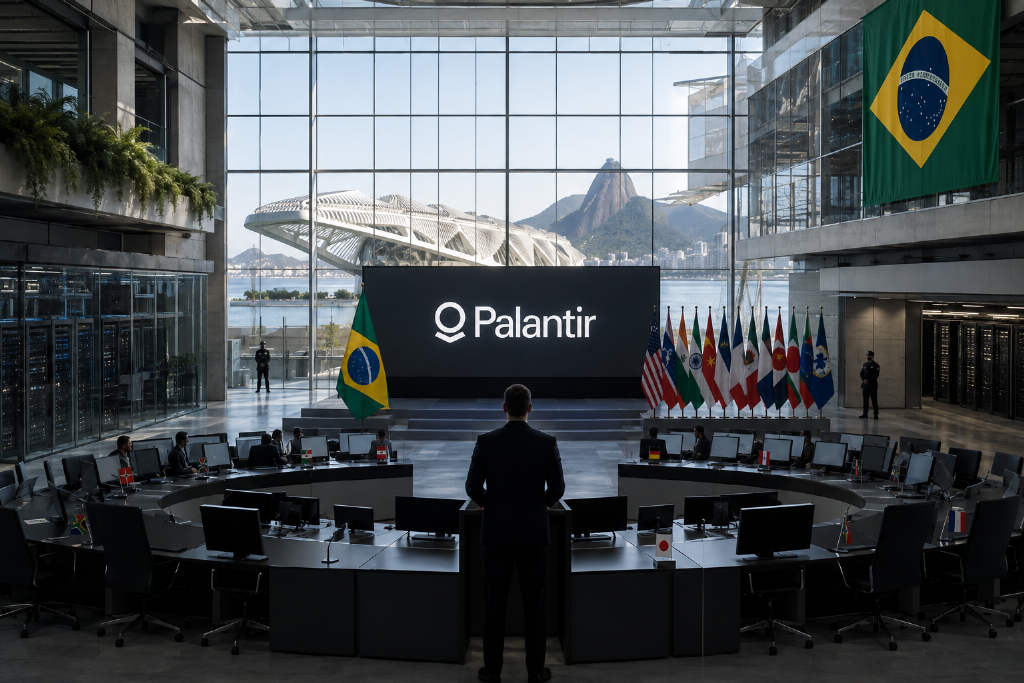
Palantir CEO Alex Karp used a G20 fireside conversation with U.S. Commerce Secretary Howard Lutnick to argue that artificial intelligence is now tied directly to national sovereignty. Karp said countries should build their own AI application layers, secure computing power and energy supply, and train models inside closed, secure environments rather than sending sensitive data to foreign technology vendors. He also said sovereign AI infrastructure should be flexible enough to use domestic or open-source models for some tasks, reducing reliance on large foreign companies. Karp placed human capital above spending levels. He said the amount of money committed to technology matters less than who controls that money and where it is directed. In his view, governments led by decision-makers without enough technical knowledge risk writing impractical rules and may even expose confidential information when deploying large language models. He described that outcome as “anti-sovereignty.” He also called on national leaders to persuade overseas technical talent to return home, framing the effort around “digital patriotism” rather than financial incentives alone. Speaking about Europe, Karp said the region is at an extreme disadvantage in AI and warned that relying on thinking shaped by the GSM era could slow adoption and development.

240
Palantir CEO Alex Karp at G20 urges nations to build sovereign AI and bring experts home
SEC
2026-09-04 00:54:41

SEC chair says Clarity Act could pass the Senate this month as Kraken parent Payward delays IPO to Q2 2027

A heavy 24-hour news cycle in crypto brought a mix of regulation, market structure, fundraising and ETF flow updates. SEC Chair Paul Atkins said the long-watched Clarity Act is scheduled for a Sept. 15 Senate vote and said he expects the bill to pass before heading to the president for signature. He also said U.S. regulators are revising old rules to fit the blockchain and crypto-asset era, and noted that the SEC had already sent a custody proposal to the White House. Separately, Kraken parent Payward has reportedly pushed its long-anticipated IPO to as early as the second quarter of 2027. The company had previously paused a multibillion-dollar listing plan, even after filing a confidential S-1 in November 2025 and raising $800 million at a $20 billion valuation. Other stories in the roundup included Thailand’s finalized crypto travel rule taking effect on Feb. 27, 2027, Ondo’s call for U.S. oversight of stock-linked perpetuals, Bybit’s appointment of Sean Ballard to lead derivatives and institutional business, and new ETF data showing a $101 million daily net inflow for U.S. spot bitcoin ETFs while spot ether ETFs posted a $48.08 million net outflow.

370
SEC chair says Clarity Act could pass the Senate this month as Kraken parent Payward delays IPO to Q2 2027
Ukraine
2026-09-03 09:53:41

Ukraine Shuts Down Kyiv Crypto Drainer Ring With Peak Monthly Turnover of Up to $1 Million

Ukraine’s National Police and Security Service said they have dismantled a network of fake investment platforms used to drain crypto wallets belonging to victims in more than 20 countries. Investigators have identified 62 victims so far, including citizens of Germany, Poland, Lithuania, Latvia, Spain, France, the U.K., Canada, and Israel. Authorities said the organizer recruited more than 46 Ukrainians and operated several offices in Kyiv and the surrounding region, with developers maintaining the fraudulent platforms while other staff handled calls, office work, and security. The Security Service described the organizer as a 25-year-old IT specialist and said the operation’s turnover reached as much as $1 million per month at its peak. According to investigators, the scam was promoted on Telegram through supposedly profitable crypto projects. Victims were asked to connect wallets and send funds, while fake balances were manually displayed on dashboards. When users tried to withdraw, they were told to approve a small test transaction from their main wallet, which triggered a drainer embedded in the site and moved funds to wallets controlled by the group. Authorities said they traced a database server in the Netherlands and carried out 34 searches in and around Kyiv, seizing computers, phones, SIM cards, cash, and vehicles. The case is being pursued under Part 5 of Article 190 of Ukraine’s criminal code.

180
Ukraine Shuts Down Kyiv Crypto Drainer Ring With Peak Monthly Turnover of Up to $1 Million
Ukraine polic
2026-09-03 09:56:55

Ukraine Police Shut Down Fake Investment Platform Network Stealing Crypto from 20 Countries

Ukraine's National Police and Security Service on Tuesday announced the dismantling of a fake investment platform network based in Kyiv that used a built-in wallet-draining tool to steal cryptocurrency from users in over 20 countries. Investigators have identified 62 victims across Germany, Poland, Lithuania, Latvia, Spain, France, the UK, Canada, and Israel. The organizer, a 25-year-old IT specialist, reportedly generated up to $1 million in monthly revenue at the peak. Police conducted 34 searches, seizing over 100 computers, 100 mobile phones, and 15 vehicles.

150
Ukraine Police Shut Down Fake Investment Platform Network Stealing Crypto from 20 Countries
Anthropic
2026-09-01 04:21:24

Anthropic says Claude can run alignment research loops, with one setup 15,000x more efficient

Anthropic said in an Aug. 28 report that it tested whether Claude could do more than execute predefined research steps and instead take on larger parts of alignment research itself. The company recruited 28 human AI safety researchers, each with at least one year of technical safety research experience and an average of 2.5 years, then ran 60 experiments comparing human-provided research directions with directions selected by Claude agents. In the study, Claude operated as an Automated Alignment Researcher, or AAR, handling literature review, method design, paper writing, training, and evaluation across 10 known alignment failure categories. Anthropic said all 10 categories improved without a collapse in general capabilities. In seven failure categories where human baselines were available, AAR’s best methods beat the best human ideas, reaching that level in an average of 6.4 hours. A second experiment pushed the idea further by having Claude Sonnet 5 align an early checkpoint of Claude Opus 4.8, despite Sonnet 5 ranking lower on the Epoch Capabilities Index. Over roughly 60 hours, the system tested more than 50 approaches and reached 65%, compared with 72% for the production-aligned version of Opus 4.8. Anthropic said that workflow was about 15,000 times more efficient than its production-grade alignment process.

130
Anthropic says Claude can run alignment research loops, with one setup 15,000x more efficient
MAGNE.AI
2026-08-26 08:00:22

MAGNE.AI pushes beyond a Web3 phone into edge AI and agent infrastructure

MAGNE.AI is no longer being framed only as a Web3 smartphone project. Public materials reviewed from RootData, regulatory filings and the company’s own disclosures show a broader buildout across devices, edge AI, identity rails and machine payments. On the hardware side, MAGNE Phone Gen1 is listed at the PVT P2 stage after Pre-EVT and EVT P1, with first-batch manufacturing targeted for the third quarter of 2026. The company has also published FCC-linked materials, a 3D phone structure viewer and staged production updates. On the enterprise side, MAGNE AI BOX is being positioned for private AI and edge-compute deployments, with a Release Gate framework, one local run validation for a Qwen3.6-35B-A3B Q4_K_M artifact, and a Gate 1 plan to build three prototypes for performance, thermal, offline and recovery testing. Agent Pay, meanwhile, has shown a local contract demo and testnet evidence, but end-to-end HTTP 402 flows are still under development and production payments are not open. MAGNE.AI disclosed a $2.64 million strategic follow-on round on Aug. 5, 2026, bringing cumulative public financing to $12.64 million by its own account. Even so, the article argues the key questions now are delivery, prototype validation, public testnet payment proof and whether community participation can convert into actual device users.

390
MAGNE.AI pushes beyond a Web3 phone into edge AI and agent infrastructure
OpenAI
2026-08-26 08:43:40

SemiAnalysis says OpenAI’s Jalapeño inference chip outperformed Nvidia Blackwell in lab tests

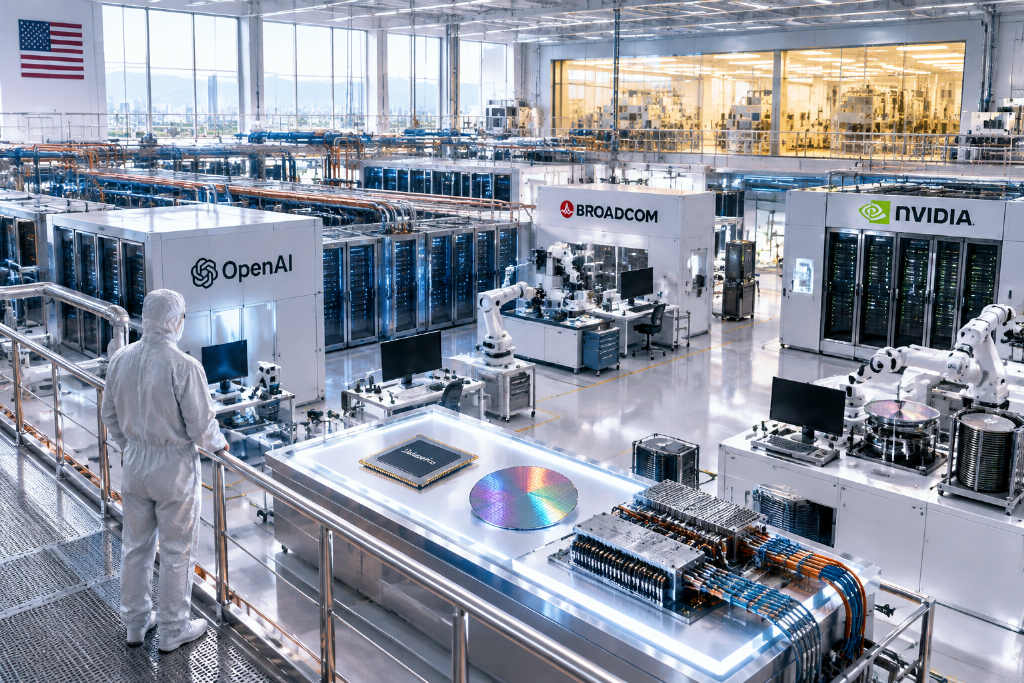
SemiAnalysis said OpenAI’s in-house inference chip, Jalapeño, delivered higher token throughput per megawatt than Nvidia’s Blackwell in lab testing, and in some comparisons even came in ahead of the next-generation Rubin lineup. The report says the chip went from design to tape-out in about 16 months after development began in mid-2024, with OpenAI and Broadcom building the first-generation ASIC from scratch. According to the published results, SemiAnalysis ran the benchmarks with the InferenceX suite and found Jalapeño leading on token throughput per megawatt without using multi-token prediction, while the other chips in the chart had MTP enabled. The report lists more than 700 tokens per second per user on DeepSeek R1 at concurrency 1, about 1,400 tokens per second per user on Kimi-K2.5 and GPT-OSS, and GSM8k scores in line with Nvidia chips. The piece argues that Rubin, not Blackwell, is the more relevant comparison because both Jalapeño and Rubin use HBM4. It also says OpenAI is optimizing for performance per watt because data center power, rather than budget or floor space, is the current constraint. The architecture described in the report allows up to 2,048 Jalapeño XPUs within a single scale-out network, with OpenAI’s next target set at 100MW.

320
SemiAnalysis says OpenAI’s Jalapeño inference chip outperformed Nvidia Blackwell in lab tests