IGV

Bank of Ameri
2026-09-21 03:33:51

BofA says rising AI security fears are turning cybersecurity into a rare two-way winner

Bank of America said in a Sept. 18, 2026 research note that growing concern over AI security is becoming a durable catalyst for cybersecurity stocks, as investors shift from worrying that AI could disrupt security software to recognizing that it creates new attack surfaces, new identities and new governance demands. The bank pointed to recent market performance as evidence that this repricing is already underway: over the past month, the HACK and CIBR cybersecurity ETFs rose 7.3% and 6.4%, compared with a 2.8% gain for the IGV software ETF and a 0.9% decline in the S&P 500. BofA raised its price targets on CrowdStrike, Okta and SailPoint, while keeping all three at Neutral. The firm argued that cybersecurity is one of the few sectors that can benefit from both positive and negative AI headlines. Negative developments raise awareness of threats and can support spending, while positive developments help validate the value of security investment. The report highlighted identity management as a core theme for protecting AI agents, which it said will need authentication, authorization, monitoring and governance. It also said platform security vendors such as CrowdStrike could benefit as enterprises look to integrate controls across identity, endpoints and networks. Even so, BofA said current share prices already reflect a meaningful amount of optimism.


50
BofA says rising AI security fears are turning cybersecurity into a rare two-way winner
Bank of Ameri
2026-09-21 03:31:14

BofA says rising AI security fears are supporting cybersecurity valuations, lifts targets on three stocks

Bank of America said in a Sept. 18, 2026 research note that investor thinking around artificial intelligence and cybersecurity has shifted in a meaningful way. Instead of focusing on whether AI could disrupt security software, the market is increasingly treating AI as a source of new attack surfaces, new identities, and new governance demands. In BofA’s view, that change is leading investors to price in a step-up in security risk, which supports both higher security spending and a more constructive valuation framework for cybersecurity names. The report pointed to recent market performance as evidence of that shift. Over the past month, the HACK and CIBR cybersecurity ETFs rose 7.3% and 6.4%, respectively, while the IGV software ETF gained 2.8% and the S&P 500 fell 0.9%. Against that backdrop, BofA raised its price targets on CrowdStrike, Okta, and SailPoint, though it kept all three at Neutral. The bank argued that AI security concerns are becoming a durable catalyst for the sector, but also said current share prices already reflect a substantial amount of optimism. The note also highlighted identity management and platform security as two key areas of focus as enterprises prepare to secure AI agents. BofA said each agent will ultimately require authentication, authorization, monitoring, and governance, creating a favorable setup for identity vendors while also benefiting broader security platforms.

60
BofA says rising AI security fears are supporting cybersecurity valuations, lifts targets on three stocks
RWA
2026-09-18 07:40:00

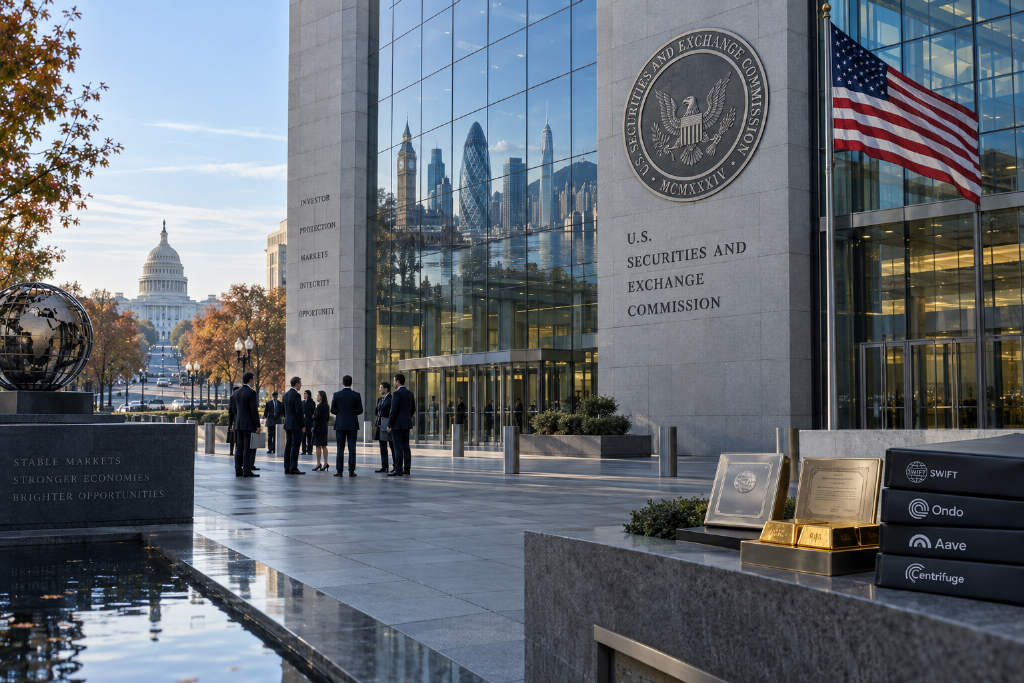
RWA Weekly: SEC clears tokenized stock exemption as on-chain holder count nears 4.5 million

Real-world asset markets eased slightly in the latest weekly window, but user growth kept accelerating. PANews said RWA on-chain market capitalization stood at $38.53 billion as of Sept. 18, down 0.75% from a month earlier, while the number of asset holders climbed to 4.436 million, up 85.84%. Stablecoins also stayed on an upward track, with total market capitalization reaching $303.35 billion and monthly transfer volume rising to $7.03 trillion. The week’s biggest regulatory development came from the U.S. Securities and Exchange Commission, which approved a temporary, conditional Innovation Exemption for tokenized National Market System stocks. The move allows limited trading on certain blockchain-based venues and gives the agency a way to collect market data before writing longer-term rules. Hong Kong, meanwhile, said it wants to support issuance and trading of gold and other suitable RWAs on licensed platforms, while the European Central Bank, the U.K., Thailand and India each advanced separate tokenization or digital currency initiatives. On the industry side, SWIFT launched a tokenized deposit cross-border payments pilot with 17 banks, Ondo’s broker-dealer unit joined DTCC’s Fund/SERV network, Aave prepared a dedicated RWA lending market on Avalanche, and Centrifuge rolled out a tokenized high-yield corporate bond fund with New York Life Investment Management. Funding activity also stayed focused on tokenization infrastructure and stablecoin settlement rails, with tZERO, Velocity, dtcpay and Fin.com all announcing fresh capital.

470
RWA Weekly: SEC clears tokenized stock exemption as on-chain holder count nears 4.5 million
Policy Regula
2026-09-02 05:18:09

Stocks and bonds fell together on the first trading day of September as 30-year Treasury yields climbed back above pre-intervention levels

Wall Street opened September with a broad risk-off move as escalating Middle East tensions, a sharp jump in oil prices and another selloff in long-dated government bonds hit multiple asset classes at once. U.S. equities closed lower across the board, with the Dow Jones Industrial Average down 0.79%, the S&P 500 off 0.71% and the Nasdaq Composite falling 1.03%, while the VIX rose 9.52% to 16.34. In commodities, October WTI crude settled up 5.20% at $90.22 a barrel and Brent gained 4.6% to $94.65, with diesel prices surging even more sharply. Treasury yields also pushed higher, led by the 30-year yield, which touched 5.29%, its highest level since the Aug. 19 bond-market intervention cited in the report. The move in rates weighed heavily on long-duration assets, including software, semiconductors and AI-related shares, while energy stocks outperformed. Markets are now looking ahead to U.S. oil inventory data, the Federal Reserve’s Beige Book, Broadcom earnings and Tesla’s Cybercab event for the next catalysts.

1390
Stocks and bonds fell together on the first trading day of September as 30-year Treasury yields climbed back above pre-intervention levels
US software s
2026-09-01 03:14:09

Wall Street’s ‘AI eats software’ trade shows cracks after Salesforce earnings

Wall Street’s long-running bearish case on software stocks is starting to weaken after a strong set of earnings from Salesforce reignited debate over whether artificial intelligence is really eroding the traditional SaaS model. For much of the past year, investors argued that AI tools would let companies do more with fewer workers, cutting demand for software seats, while “vibe coding” would lower the cost of building custom applications and pressure packaged software vendors. That narrative helped drag down many U.S. software names. The tone shifted last week after Salesforce reported second-quarter revenue and profit above Wall Street expectations and raised its full-year guidance. The company also posted 14% year-over-year growth in current remaining performance obligations, while net new annual contract value reached a four-year high. Shares jumped 22.6% in a single session, and the iShares Expanded Tech-Software Sector ETF returned to positive territory for the year. Workday, CrowdStrike Holdings and ServiceNow also advanced, adding weight to the view that investors are beginning to separate software companies by business model and data assets rather than treating the sector as one AI casualty trade. Still, some strategists say the rally is also being fueled by positioning, with underweight institutional investors rotating back into software after favoring semiconductors and AI hardware.

800
Wall Street’s ‘AI eats software’ trade shows cracks after Salesforce earnings
Odaily
2026-08-23 01:59:50

QQQ logs $10.9 billion in August inflows as money rotates out of semiconductors and software

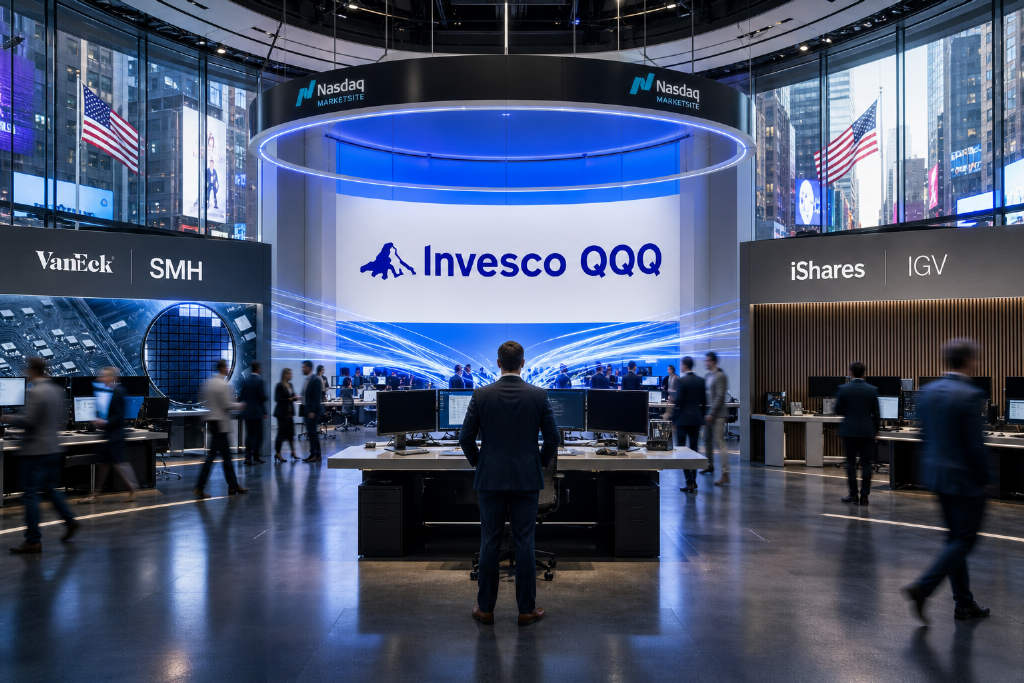
The Kobeissi Letter said in a post on X that the Invesco QQQ Trust, which tracks the Nasdaq-100, has taken in $10.9 billion in net inflows so far in August. That figure is already more than double the $4.9 billion recorded in all of July and above the previous monthly record of $9.2 billion set in March 2022. Based on the current pace, QQQ is on track to post its biggest monthly net inflow on record. At the same time, the VanEck Semiconductor ETF (SMH) has seen $2.8 billion in net outflows so far this month, putting it on pace for the largest monthly outflow in its history. The iShares Expanded Tech-Software Sector ETF (IGV) has also posted about $610 million in net outflows during the same period and may be heading for a third straight month of net redemptions. The Kobeissi Letter said the shift points to capital rotating away from semiconductor and software names and into the broader technology trade.

1380
QQQ logs $10.9 billion in August inflows as money rotates out of semiconductors and software
a16z
2026-08-18 12:43:00

a16z Breaks Down the AI Compute Trade: Revenue Is Surging, but Capex and Profitability Still Cloud the Picture

Andreessen Horowitz’s New Media team used its latest Charts of the Week to examine the AI infrastructure trade through a wider lens than headline demand growth. Moses Sternstein focused on neocloud companies such as CoreWeave, Nebius, and Applied Digital, arguing that the market’s question is no longer whether AI needs more compute, but whether providers can turn that demand into durable cash flow. The piece says many neocloud players entered the AI cycle with an advantage built during the crypto mining era: power access, data center capacity, cooling systems, and experience running dense compute loads. That legacy helped them scale revenue quickly, with CoreWeave reaching $2.6 billion in revenue in about 25 quarters versus 40 quarters for AWS after launch. Still, investors have not rewarded growth evenly. Over the past year, CoreWeave shares were down about 16%, while Nebius stayed closer to prior highs, highlighting concerns over capital intensity, depreciation, and rising interest expense. Sternstein also argues that AI is reshaping software unevenly rather than destroying SaaS across the board. Atlassian’s cloud revenue rose 31% year over year, and customers using its AI assistant Rovo were spending at nearly twice the growth rate of non-Rovo users. Databricks, meanwhile, said its Smart Router can cut average task costs by more than 30% by matching tasks with different model tiers. The article closes with data on widening enterprise AI spend gaps and diverging hiring patterns at OpenAI and Anthropic.

1230
a16z Breaks Down the AI Compute Trade: Revenue Is Surging, but Capex and Profitability Still Cloud the Picture