IMM

TrendForce
2026-08-26 06:59:19

TrendForce says memory could take 68% of major cloud providers’ capex by 2027

A new TrendForce report says DRAM and NAND Flash are on track to account for 68% of total capital expenditure by major cloud service providers in 2027, overtaking GPUs and other server components as the biggest cost center in the AI buildout. The report projects capex by hyperscalers including Amazon, Microsoft, and Google will rise 98% in 2026 and another 50% in 2027, with memory contract prices driving much of the increase. Server DRAM prices rose 64% in the second half of 2025 and are expected to climb another 270% in 2026, while enterprise NAND Flash increased 35% over the same period and may jump a further 235% in 2026. TrendForce also said HBM prices could still rise 70% to 140% in 2027 even where long-term agreements cap part of the pricing. The report argues that memory vendors are gaining more pricing power across the AI supply chain, while cloud providers may have to choose between spending more, passing costs to customers, reducing memory configurations, or shifting to in-house AI ASICs.


700
TrendForce says memory could take 68% of major cloud providers’ capex by 2027
Bitcoin
2026-08-13 16:18:45

Bitcoin Security Researchers Say Restricted U.S. AI Models Are Falling Behind Chinese Open Models

Bitcoin security researchers, company founders, and policy advocates are publicly warning that restrictions on leading U.S. AI systems are making legitimate defensive cybersecurity work harder, while Chinese open-source models are producing usable results. Rob Hamilton of AnchorWatch said OpenAI blocked him from analyzing a codebase he had already responsibly disclosed, even after he joined the company’s trusted cyber program and had completed KYC months earlier. He later said he was cut off again within 19 minutes after receiving access to OpenAI’s Daybreak Blue cyber model. Francis Pouliot of Bull Bitcoin said Chinese open models helped identify and patch a money-stealing exploit in a project he was auditing, while American models he pays for refused to review the same patch. Similar complaints came from Bitcoin Core contributor PortlandHODL and Galaxy research head Alex Thorn, who backed a Bitcoin Policy Institute open letter calling for trusted access to frontier AI models for qualified open-source defenders. Published on August 10 and signed by more than 70 digital-asset organizations, the letter asks AI labs for early access to cyber-capable systems, enough compute, secure code-review environments, and direct contact with lab security teams. The pressure intensified after a Coldcard firmware flaw, exploited from July 30, led to the theft of well over $100 million in bitcoin. Since then, the volunteer Bitcoin Red Team says it has scanned 501 projects and logged 7,958 findings, including 1,280 high or critical issues, with most compute spend going to Chinese open-weight models.

980
Bitcoin Security Researchers Say Restricted U.S. AI Models Are Falling Behind Chinese Open Models
ChainCatcher
2026-08-12 06:21:23

Server DDR5 prices rise 15% to 23% this month as 96GB spread narrows

Server DDR5 prices rose 15% to 23% this month as original manufacturers pushed prices higher in the third quarter, according to a report cited by ChainCatcher from the Science and Technology Innovation Board Daily. Contract prices for 32GB, 64GB and 96GB DDR5 RDIMM climbed to $900, $1,590 and $2,650, respectively. In the spot server RDIMM market, trade-side quotes for 32GB D5 were at $1,800 to $2,100, while 64GB D5 traded at $3,000 to $3,200 and 96GB D5 at $3,800 to $4,100. The report said the gap between contract and spot DDR5 prices, especially for 96GB products, has been narrowing. Supply from original manufacturers remains tight and continues to lag demand. At the same time, server mega-clients have become more sensitive to rising memory costs as contract prices move up quarter by quarter. With long-term agreements being finalized, supply for large customers has gained some support, and the pace of DDR5 price increases is expected to turn more moderate.

1150
Server DDR5 prices rise 15% to 23% this month as 96GB spread narrows
AI Storage
2026-08-08 14:13:52

IOSG says AI storage boom is being priced for speed, while decentralized storage keeps its case around trusted cold data

IOSG argues that the current storage rally is being driven by artificial intelligence, but not in the way traditional IT buyers used to think about storage. In its view, the market is no longer rewarding raw capacity first. It is rewarding the ability to keep GPUs fed, move checkpoints quickly, support retrieval-augmented generation with very low latency, and raise overall compute utilization across tightly coupled infrastructure stacks. That shift, the article says, is why components such as HBM, DRAM, CXL, enterprise SSDs, SSD controllers, NVMe pathways, and performance storage software have become central to the AI investment narrative. The piece draws a sharp distinction between AI storage and decentralized storage. AI storage is framed as an efficiency system built for hot data and commercial output. Decentralized storage, by contrast, is described as a trust system for cold data, focused on permanence, censorship resistance, auditability, and public memory. IOSG uses Filecoin and Arweave as the main examples, outlining how the two networks diverge in architecture and product direction, while also listing persistent problems across the sector, including weak enterprise service layers, retrieval limits, supply-demand incentive mismatches, privacy and compliance tensions, and token economics that can amplify market cycles rather than solve product-market fit.

1330
IOSG says AI storage boom is being priced for speed, while decentralized storage keeps its case around trusted cold data
Winbond
2026-08-07 07:02:35

Winbond targets top global SLC NAND supplier spot by 2027 as DRAM shortages stretch on

Winbond said DRAM supply will remain tight through 2027 and could get even tighter next year, while some customers are already discussing long-term supply agreements for 2029 and 2030. The company also outlined a plan to become the world’s largest SLC NAND supplier by 2027, backed by capacity expansion in Kaohsiung and a shift to 16nm. Analysts say the market is underestimating SLC demand tied to CMX and CXL-based AI server expansion.

730
Winbond targets top global SLC NAND supplier spot by 2027 as DRAM shortages stretch on
MarsBit
2026-07-25 02:48:09

MarsBit weekly picks highlight Clarity Act, Hyperliquid, AI and a MetaMask security scare

MarsBit’s Weekly Editor’s Picks for July 18 to July 24 pulled together a wide range of stories spanning macro markets, crypto investing, AI, prediction markets, policy, stablecoins, emerging ecosystems and security. The roundup pointed to fresh stress in the U.S. Treasury market, where rising yields and a long stretch of elevated 30-year rates have pushed investors to rethink the Federal Reserve path. It also revisited South Korea’s single-stock leveraged ETF unwind in eight stages, arguing that the selloff was driven by a feedback loop involving foreign capital rebalancing, retail dip-buying, daily ETF rebalancing, forced liquidations, shifting industry expectations, tighter regulation and tighter monetary policy rather than a collapse in fundamentals. On the crypto side, MarsBit highlighted arguments that the next bull market could center on the merger of on-chain finance and traditional finance, with stablecoins, tokenized assets, 24/7 trading, instant settlement and institutional DeFi at the center. Hyperliquid and Robinhood were named as two representative players pushing that convergence from different directions. The roundup also covered Hyperliquid’s HIP-4 proposal, updates around the U.S. CLARITY Act, a report that SpaceX will release $116 billion in stock into circulation on August 6 through a phased structure, and a MetaMask contractor incident in which a person later identified by Consensys as a North Korean hacker had accessed core wallet code. MarsBit said the incident caused no user asset or data losses.

1360
MarsBit weekly picks highlight Clarity Act, Hyperliquid, AI and a MetaMask security scare
Samsung Elect
2026-07-21 03:33:40

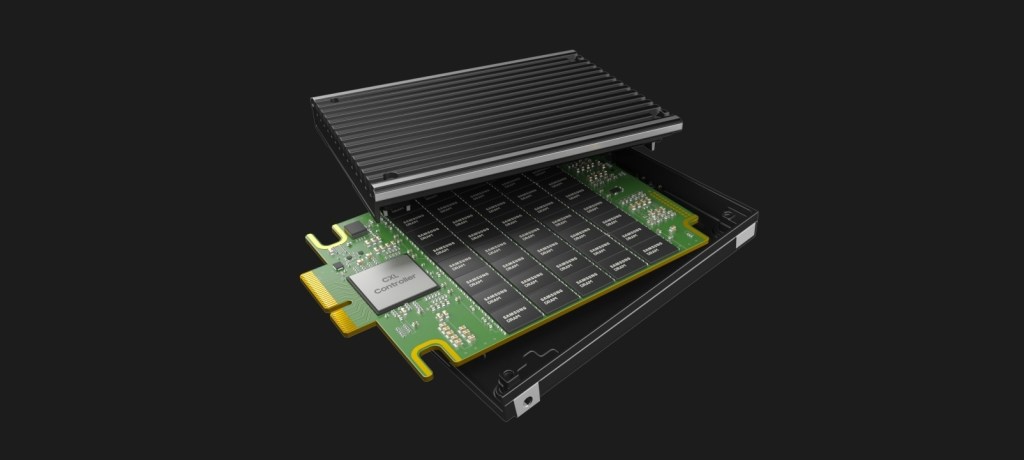
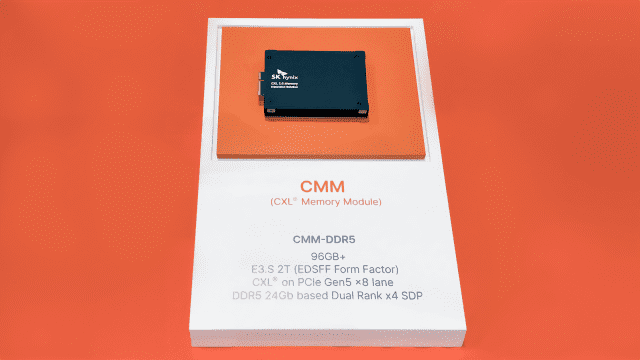
Samsung, SK Hynix and Micron pull back from in-house CXL controller plans

The world’s three largest memory makers are backing away from commercializing their own Compute Express Link, or CXL, controllers, according to a report translated by TechFlow from ZDNet Korea. Samsung Electronics, SK Hynix and Micron have either scaled back or dropped plans to bring internally developed CXL expansion device controllers to market, with design work increasingly shifting to fabless chip companies including Montage, Astera Labs and Primemas. The reported reason is not a loss of confidence in CXL itself. Instead, memory manufacturers are weighing the business risk of selling high-priced integrated CXL modules that could erode demand for the commodity DRAM DIMMs that still generate core revenue. Major data center customers are said to prefer lower-cost disaggregated architectures, where a CXL controller is installed separately on the system board and paired with standard DIMMs. Micron has already shut down its standalone controller development line and adopted a Primemas solution. SK Hynix has told key partners it is ending in-house CXL controller development and is reallocating staff to processing-in-memory, or PIM. Samsung is taking a more limited approach, keeping its internal controller for research use while buying fabless-designed controllers for external products. The report says Samsung also removed formal commercialization of its internal controller from its roadmap.

290
Samsung, SK Hynix and Micron pull back from in-house CXL controller plans