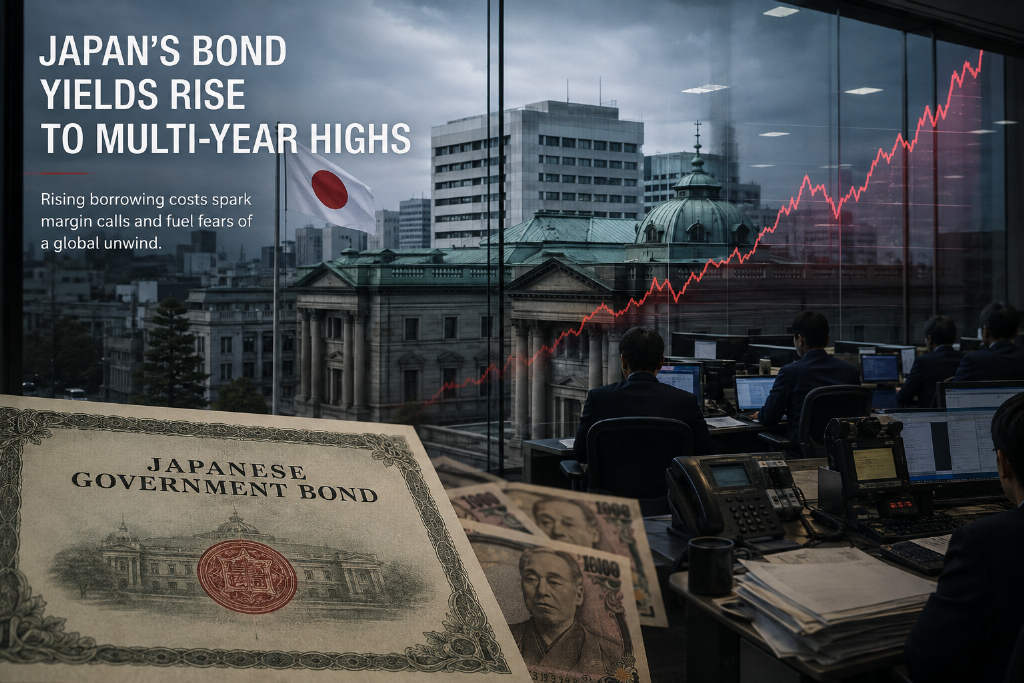
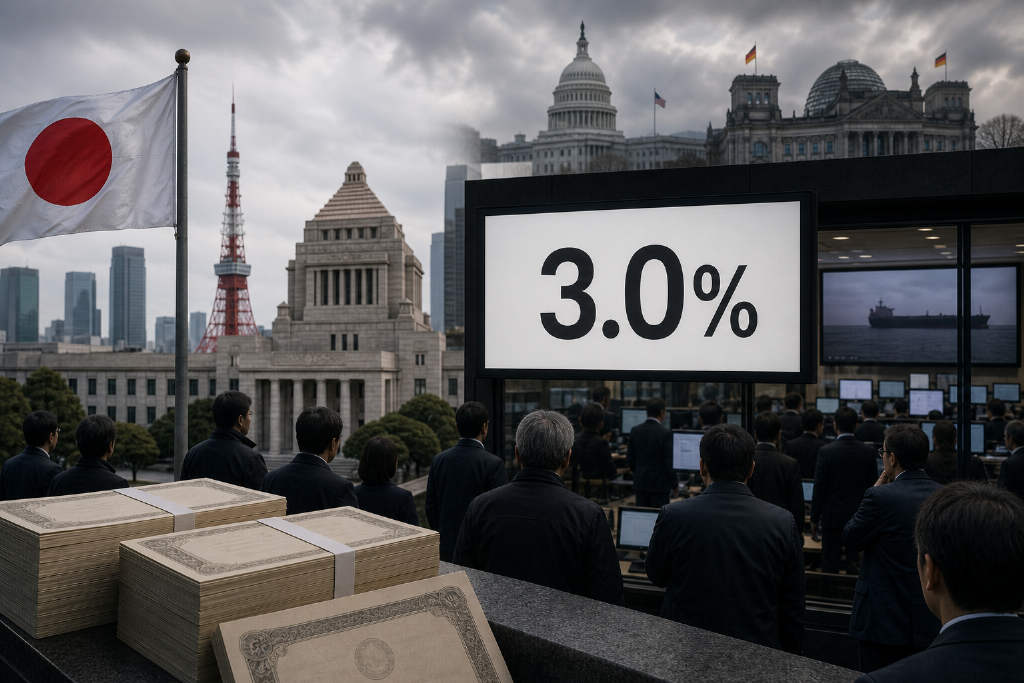
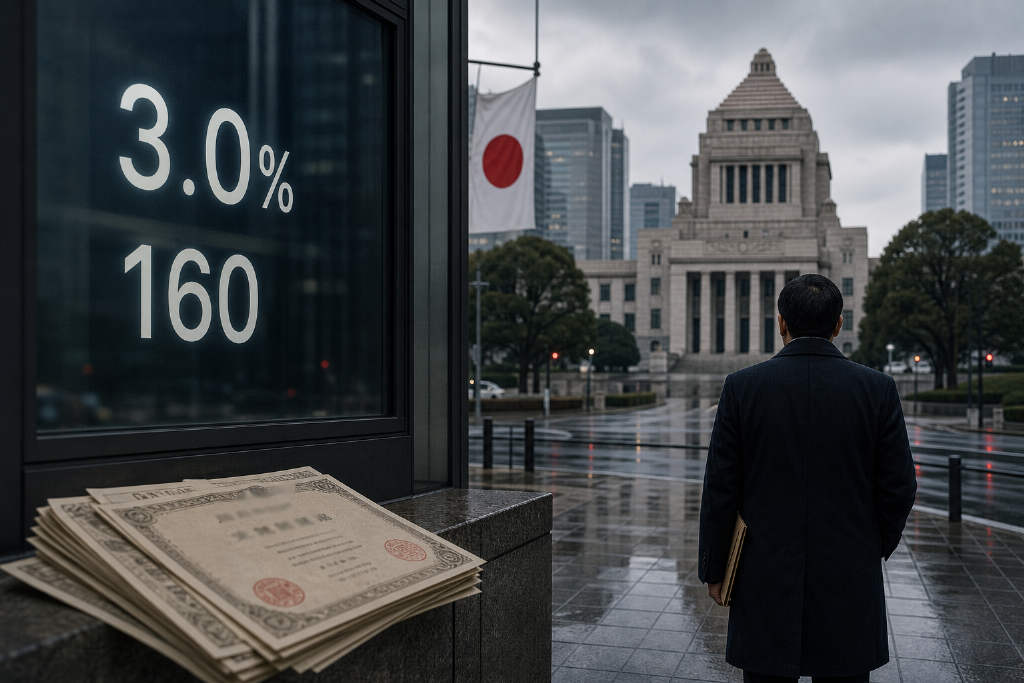
Japan bonds2026-09-11 03:03:55Nomura says Japan’s bond selloff may be driving global long-end yields higher and threatening AI tradesJapan’s 10-year government bond yield briefly rose above 3.0% in Tokyo trading, the first move past that level since September 1996. In a report cited by Wallstreetcn and carried by TechFlowPost, Nomura Research Institute executive economist Takahide Kiuchi argued that the recent rise in global long-term yields is more likely being driven by Japan than imported from overseas markets. Kiuchi said the 10-year Japanese government bond yield has climbed about 1.4 percentage points over the past year, while the increase in the U.S. 10-year Treasury yield was only about half that size over the same period. Nomura’s breakdown showed the largest single contribution came from a risk premium tied to worsening fiscal conditions in Japan. Inflation expectations, changes in the Bank of Japan’s JGB holdings, U.S. Treasury moves, and changes in real policy rate expectations accounted for smaller portions. The report also pointed to three near-term drivers behind the break above 3%: stronger expectations of a Federal Reserve rate hike after recent comments by Fed Chair Kevin Warsh at Jackson Hole, market expectations for a Bank of Japan rate increase at its September meeting, and rising concern over Japanese fiscal expansion after ministries submitted FY2027 budget requests roughly JPY 20 trillion above the FY2026 budget. Nomura warned that persistently higher long-end yields could weigh on bank balance sheets, pressure property and equities, cool AI-related stocks, and slow financing for AI infrastructure investment.850
Goldman Sachs2026-09-10 04:16:46Goldman Sachs says a shift by Japan’s pension giant into domestic bonds could lift the yen and ripple across Asian FXGoldman Sachs said in its latest report that the yen has gained more than 4% since early September, with a more hawkish Bank of Japan and market expectations around a possible asset allocation shift by Japan’s Government Pension Investment Fund, or GPIF, prompting investors to reassess the currency’s medium-term path. The bank said that if GPIF were to move part of its portfolio from overseas assets into domestic fixed income, the yen could see a structural appreciation. Using GPIF’s roughly $2 trillion in assets under management, Goldman estimated that a 5 percentage point increase in domestic fixed-income allocation would theoretically translate into about $100 billion of USD/JPY selling. The report said that size is roughly equal to half of Japan’s annual current account surplus and could also trigger an unwind of previously built yen-funded carry trades. Goldman added that the effects could spill into broader Asian currency markets. Looking at data since 2022, the bank said the Korean won has been the most sensitive to moves in the yen, with a beta of about 0.45, followed by the Thai baht and the Malaysian ringgit. Offshore yuan and the Taiwan dollar were also cited. Goldman kept its view favoring the Taiwan dollar over the yuan in North Asia, and in South Asia it maintained a bearish stance on the Philippine peso and a constructive view on the Indian rupee versus the peso. The bank noted that a GPIF reallocation into domestic bonds remains a scenario analysis, not a formal decision.1110
Japan bonds2026-09-03 03:20:07Japan Bond Yields Hit Three-Decade High, Putting Yen Carry Trade Unwind Back in FocusJapan’s 10-year government bond yield has moved above 3% for the first time since September 1996, sharpening market attention on the risk of a broader unwind in yen-funded carry trades. The move comes as the yen remains weak, inflation pressure persists, and expectations for further Bank of Japan tightening build quickly. Markets have fully priced in a 25-basis-point rate hike in September, and some participants have started to consider the possibility of another move in October. The concern reaches far beyond Japan. U.S. Treasury Secretary Bessent has warned that disorderly moves in the yen market could trigger forced liquidations, spread stress across global markets, and eventually raise borrowing costs for U.S. households and businesses. Analysts say carry positions built up since 2024 are meaningful, with investors borrowing cheaply in yen and buying higher-yielding assets and currencies. At the same time, most strategists do not yet see evidence of a large structural reversal, noting that Japanese investors are still buying overseas assets and have not clearly shifted funds back home. Because Japan is the largest foreign holder of U.S. Treasuries, any reallocation by its pension funds and life insurers is being watched closely as domestic yields rise.1320
bond selloff2026-09-02 04:13:07Why the global bond selloff hit all at onceOn Sept. 1, benchmark government bond yields in Japan, the U.K. and the U.S. all jumped to levels not seen in years, turning a slow build-up into a visible selloff. The article traces the move back to constrained energy flows through the Strait of Hormuz, firmer oil prices, rising inflation pressure, a shift in central-bank messaging, and a swelling supply of sovereign and corporate debt. It also argues that the gap between tighter monetary policy and heavier fiscal borrowing has left long-dated bonds most exposed. Market flows before and after the Jackson Hole speech show money moving out of U.S. assets and into Europe, Asia, short-duration debt and gold, though the post-speech data had not yet been released.960
Japan bonds2026-09-01 12:01:55Japan 10-Year Bond Yield Breaks 3% as Global Bond Selloff IntensifiesJapan's 10-year government bond yield breached 3% for the first time since 1996, joining a global rout in fixed-income markets. The US 10-year Treasury yield briefly hit 4.79%, while Germany's 10-year Bund yield reached its highest since 2011. The selloff is driven by inflation fears, rate hike expectations, and fiscal financing pressures. Japanese investors may reduce overseas bond allocations, and analysts say Japan's diminished role as a marginal buyer of foreign debt could lift global term premiums and long-term yields. Other factors include Middle East tensions, US debt surpassing $40 trillion, Japan's fiscal expansion, and tech giants issuing long-term bonds for AI infrastructure, adding to supply pressures.940
Japan bonds2026-09-01 08:02:43Japan’s 10-year bond yield hits 3% for the first time in nearly 30 years as yen nears intervention lineJapan’s borrowing costs climbed to their highest level in nearly three decades after the country’s benchmark 10-year government bond yield briefly touched 3% on Tuesday, according to CNBC. The move marked the first time the yield reached that level since September 1996 and came during a broader sell-off in sovereign debt tied to inflation and fiscal pressure. The move also coincided with comments from U.S. Treasury Secretary Scott Bessent, who said in a CNBC interview on Monday that he believes the Japanese government and the Bank of Japan will take steps that support a stronger yen. In the foreign-exchange market, the yen weakened to about 160.1 per U.S. dollar, touching the 160 level for a third straight session, a threshold some traders view as an intervention warning line. The development matters for crypto markets because the yen has long been a key funding currency for carry trades. Investors often borrow in low-yielding yen and deploy that capital into higher-yielding or riskier assets. If the yen strengthens and rate differentials narrow, those positions can come under pressure, potentially pulling liquidity out of global risk assets, including cryptocurrencies.1030
Bank of Japan2026-08-28 04:07:02Weak Japan 2-year bond auction adds to expectations for a BOJ rate hike in SeptemberMarket expectations for tighter monetary policy from the Bank of Japan are building, while demand at Japan’s latest two-year government bond auction came in weak. The bid-to-cover ratio fell to 2.97, below the previous 3.63 and under the 12-month average of 3.74. The tail widened to 0.034 from 0.007 a month earlier, marking the weakest result since 2016. ChainCatcher reported that the government led by Japanese Prime Minister Sanae Takaichi supports a rate hike as early as September. Overnight index swaps are pricing the probability of a September hike at about 84%. The figures point to a market that is increasingly preparing for policy tightening, while the auction data shows softer appetite for short-dated Japanese government debt.830
Japan bonds2026-08-24 07:11:43Japan bond auctions on Sept. 1 and 3 draw market attentionJapan is scheduled to issue 10-year and 30-year government bonds on Sept. 1 and Sept. 3, with the market closely watching how the auctions are received. According to ChainCatcher, Nomura Holdings strategist Andrew Ticehurst said weak demand at the sales could push up government bond yields in both Japan and the United States. He added that such a move could raise overall market risk. The focus is now on whether investor appetite at the two auctions holds up, as the outcome may have implications beyond Japan’s domestic bond market and spill over into broader rates sentiment.1020