Japanese yen2026-09-03 15:57:58Stronger Yen Lends Near-Term Support to Bitcoin as Carry Trade Risks BuildA stronger Japanese yen is giving Bitcoin and other dollar-priced assets short-term support by pushing the U.S. Dollar Index lower, but the same move is also reviving concerns about yen carry trade unwinds. Data cited in the report showed USD/JPY falling 1.4% intraday to 156.40 after a 0.9% drop on Wednesday. The euro, pound and Australian dollar also edged higher against the U.S. dollar. As a result, the Dollar Index slipped 0.4% to 99.22, moving closer to its 200-day moving average. According to the analysis, a softer dollar usually benefits assets priced in dollars, including Bitcoin and gold, while also easing global financial conditions and lifting risk appetite. The picture can change quickly if yen appreciation becomes too fast. For more than a decade, investors have borrowed cheaply in yen to buy stocks, bonds and cryptocurrencies. A rapid rise in the yen can force those positions to unwind and trigger selling across risk assets. The report noted that when yen carry trades were unwound in August 2024, Bitcoin fell about 20% within a few days. Markets are now increasingly expecting the Bank of Japan to raise rates to 1.25% from 1% on Sept. 18. The report also said U.S. and Japanese officials had previously acted to address what it described as “disorderly yen moves.”940
HSBC2026-09-02 14:31:55HSBC economist says Asia is not reliving 1997, but its weak point now is US AI hardware demandHSBC Chief Asia Economist Frederic Neumann said three market signals look similar to the run-up to the 1997 Asian financial crisis: higher US Treasury yields, a sharp slide in the Japanese yen, and a tech-driven wave of optimism now centered on artificial intelligence. He pointed to the rise in the 10-year US Treasury yield from 0.5% in August 2020 to 4.79% earlier this week, including an 80-basis-point jump since February this year, as the closest parallel to the earlier period. He also noted that the yen weakened from about 103 in 2021 to 163 in July before rare joint intervention by Washington and Tokyo helped pull it back toward 160. Even so, Neumann argued that the differences between 1997 and 2026 are larger than the similarities. In his view, Asia is no longer mainly a capital-importing region dependent on foreign funding. It has become a capital exporter, which means higher US funding costs and a weaker yen are no longer the region’s main pressure points. The more immediate risk, he said, is Asia’s reliance on US demand for AI hardware. Exports tied to AI-related electronics have become an important growth pillar for South Korea, Japan, Taiwan, and Singapore, leaving the region exposed if higher yields and tighter funding conditions slow US investment in AI hardware.1110
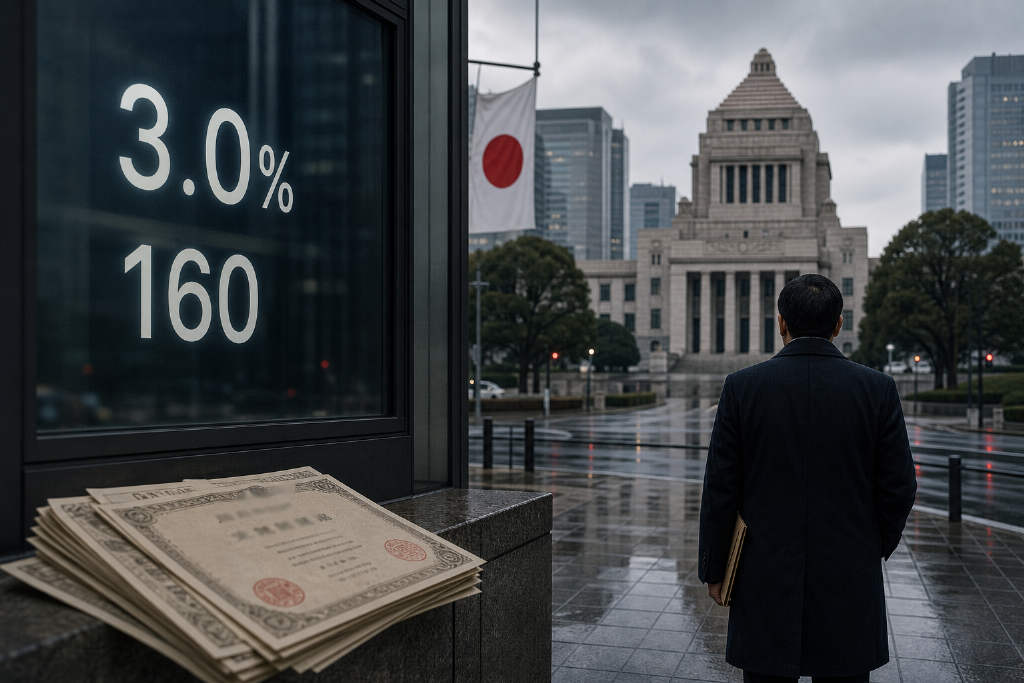
Japan bonds2026-09-01 08:02:43Japan’s 10-year bond yield hits 3% for the first time in nearly 30 years as yen nears intervention lineJapan’s borrowing costs climbed to their highest level in nearly three decades after the country’s benchmark 10-year government bond yield briefly touched 3% on Tuesday, according to CNBC. The move marked the first time the yield reached that level since September 1996 and came during a broader sell-off in sovereign debt tied to inflation and fiscal pressure. The move also coincided with comments from U.S. Treasury Secretary Scott Bessent, who said in a CNBC interview on Monday that he believes the Japanese government and the Bank of Japan will take steps that support a stronger yen. In the foreign-exchange market, the yen weakened to about 160.1 per U.S. dollar, touching the 160 level for a third straight session, a threshold some traders view as an intervention warning line. The development matters for crypto markets because the yen has long been a key funding currency for carry trades. Investors often borrow in low-yielding yen and deploy that capital into higher-yielding or riskier assets. If the yen strengthens and rate differentials narrow, those positions can come under pressure, potentially pulling liquidity out of global risk assets, including cryptocurrencies.1030
USD/JPY2026-08-28 15:40:24USD/JPY Reaches 160 for the First Time Since July 31USD/JPY rose to the 160 level on Aug. 28, marking the first time the pair has reached that threshold since July 31. According to BlockBeats, the move came after the dollar kept strengthening against the yen during the session. The report also noted that only about one month has passed since the last joint intervention by the United States and Japan. No further details were provided in the source update. As a brief market alert, the item focused on the spot move in the exchange rate and the timing relative to the previous coordinated action by the two sides.880
Bitcoin2026-08-28 04:22:20Axie co-founder Jihoz says yen and JGB stress highlights Bitcoin’s original purposeAxie Infinity co-founder Jihoz said in a post that easier access to funding is only part of the picture for the current market trend. He added that the move also appears to be driven by problems surrounding the Japanese yen and Japan’s government bond market. Jihoz said those pressures are a reminder of a core point behind Bitcoin’s creation: flaws in fiat currency and debt-based financial systems were among the key reasons the asset was created in the first place. The comments frame the current discussion around Bitcoin in macro terms rather than as a market move driven by a single factor.880
U.S. Dollar I2026-08-26 19:13:46U.S. Dollar Index closes at 99.165 as major currency quotes updateThe U.S. Dollar Index, which tracks the greenback against six major currencies, rose 0.25% and finished late trading at 99.165, according to ChainCatcher. Currency quotes in the same update showed the euro at $1.1651 and the British pound at $1.3592. The U.S. dollar was also quoted at 159.4 Japanese yen, 0.8055 Swiss francs, 1.3878 Canadian dollars, and 9.5329 Swedish kronor. The report was published as a 7x24 flash update and provided a snapshot of foreign-exchange pricing at the market close.910
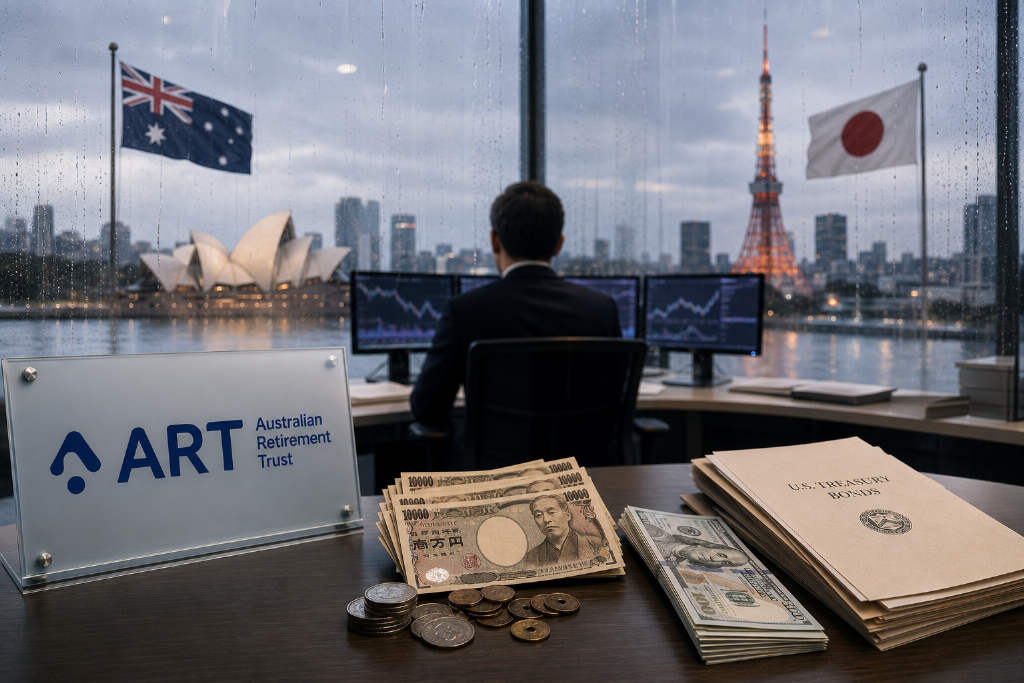
Australia Ret2026-08-26 09:00:05Australia’s No. 2 pension fund adds to yen position and trims U.S. TreasuriesAustralia Retirement Trust (ART), Australia’s second-largest pension fund, has been building a contrarian position in the Japanese yen over the past six months while cutting part of its U.S. dollar exposure. The fund, which manages about A$370 billion, has lifted its yen overweight to the highest level seen in years and added to the trade when the currency moved close to 160 against the dollar. ART senior portfolio manager Jimmy Louca said the market may be overstating the drag from energy prices on the yen while underpricing the chance of another Bank of Japan rate increase. Rate swaps currently imply roughly an 80% chance of a September hike, with an October move largely fully priced. A Reuters survey also found that 57% of economists expect the BOJ to raise rates to 1.25% in September. At the same time, ART is running an about 0.5 percentage-point underweight in U.S. Treasuries, citing still-elevated U.S. inflation, resilient economic conditions, and competition for capital between the government and the AI investment boom. Louca said 30-year Treasury yields could rise toward 5.5%.1210
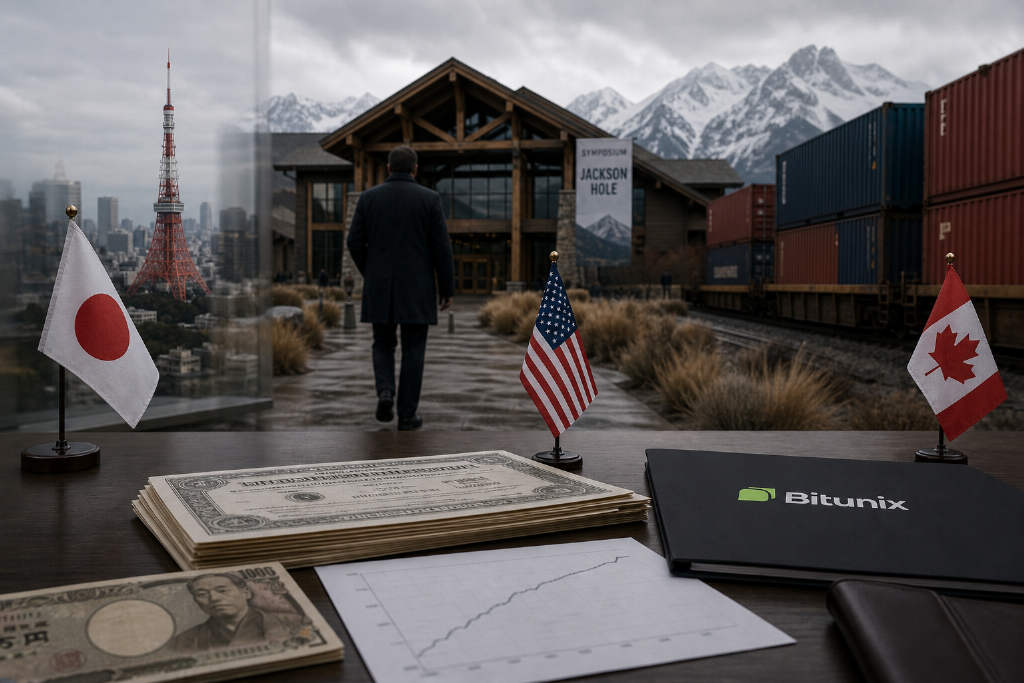
Bitunix2026-08-24 03:37:37Bitunix analyst flags US Treasuries, yen and trade risks as fresh test for global financial conditionsA Bitunix analyst said global financial conditions are facing a new test as pressure builds from the US Treasury market, the Japanese yen and renewed trade friction. Minneapolis Federal Reserve President Neel Kashkari said he has not seen signs of dysfunction in the Treasury market, arguing that the 10-year US Treasury yield, near 4.7%, is elevated but not historically abnormal. In that setting, the Federal Reserve can keep fighting inflation as its main task instead of adjusting policy in response to moves in long-dated yields. The analyst said this suggests the Fed is unlikely to make stabilizing the long end of the bond market a near-term policy objective even with US government debt above $40 trillion. That stance stands apart from the Treasury Department’s recent effort to lower financing costs by expanding long-bond buybacks. At the same time, market bets on a Bank of Japan rate hike on Sept. 18 have risen to about 82%, while the yen has moved back toward 160. The note also pointed to the breakdown in US-Canada trade talks and higher US tariffs on Canadian goods as factors reviving supply-chain and inflation risks. Jackson Hole is now seen as the next key event to watch.1180