Abstract2026-10-08 21:02:07Abstract ETH withdrawals hinge on operators before Dec. 15 shutdownETH withdrawals from Abstract remain dependent on operators ahead of the network’s Dec. 15 shutdown, according to a brief report from TheDefiant. Citing data from L2BEAT, the report said roughly $17.1 million in ETH has been canonically bridged to the network. Under the project’s wind-down plan, there is no independent exit mechanism available after Dec. 15. That leaves users reliant on operator handling for withdrawals tied to those bridged assets. The report focuses on the withdrawal path for canonically bridged ETH and the lack of a trust-minimized exit once the shutdown date passes.10
Igloo2026-10-06 22:22:24Igloo to Shut Down Abstract on Dec. 15, Leaving Roughly $48 Million to ExitIgloo Inc., the parent company behind Pudgy Penguins, said it will shut down Abstract, its Ethereum layer 2 network, on Dec. 15. The team warned on X that users who do not bridge assets out before that date will lose access to their funds. Based on L2BEAT data cited in the report, the chain held roughly $48 million in assets shortly before the shutdown announcement. CEO Luca Netz said Igloo began building a consumer-focused blockchain after acquiring Frame in the summer of 2024, with the goal of applying Pudgy Penguins’ mass-market strategy to onchain products. Abstract said it had reached more than 400,000 users through tie-ins with Red Bull Racing and Disney and processed over 325 million transactions. The company said growth had stalled as Abstract struggled with a limited DeFi lineup, thin liquidity, weak institutional traction, and a smaller budget than rivals. Netz added that Igloo had funded the chain for the past 18 months and lost tens of millions of dollars over two years. He said the company chose not to launch a token or run an ICO. Going forward, Igloo said its focus will return fully to Pudgy Penguins, its NFT business, and the PENGU token.20
Blast2026-10-02 18:33:18Ethereum Layer 2 Blast to Shut Down After Costs Overtake Chain RevenueBlast, the Ethereum layer 2 network created by Blur founder Tieshun Pacman Roquerre, is shutting down after its team said the chain no longer works as a business. In a Friday post on X, the team said the ongoing cost of maintaining Blast now exceeds the revenue the network brings in, and that it does not see a credible route to making the chain economically sustainable. Users were told to move assets back to Ethereum mainnet, including funds held in the Blast progressive web app. To ease the process, Blast said it will reduce its withdrawal delay to 24 hours, though withdrawals will be temporarily unavailable while the team removes Blast assets from Lido, a step expected to take about one week. Users can withdraw through the standard Blast interface until Oct. 26; after that, funds will still be accessible, but only by interacting directly with Blast bridge contracts on Ethereum. The closure caps a steep reversal for a network that once drew billions in deposits around its native-yield pitch. Data cited from DefiLlama, L2Beat, and CoinGecko showed sharp declines in value locked, token price, and market capitalization.370
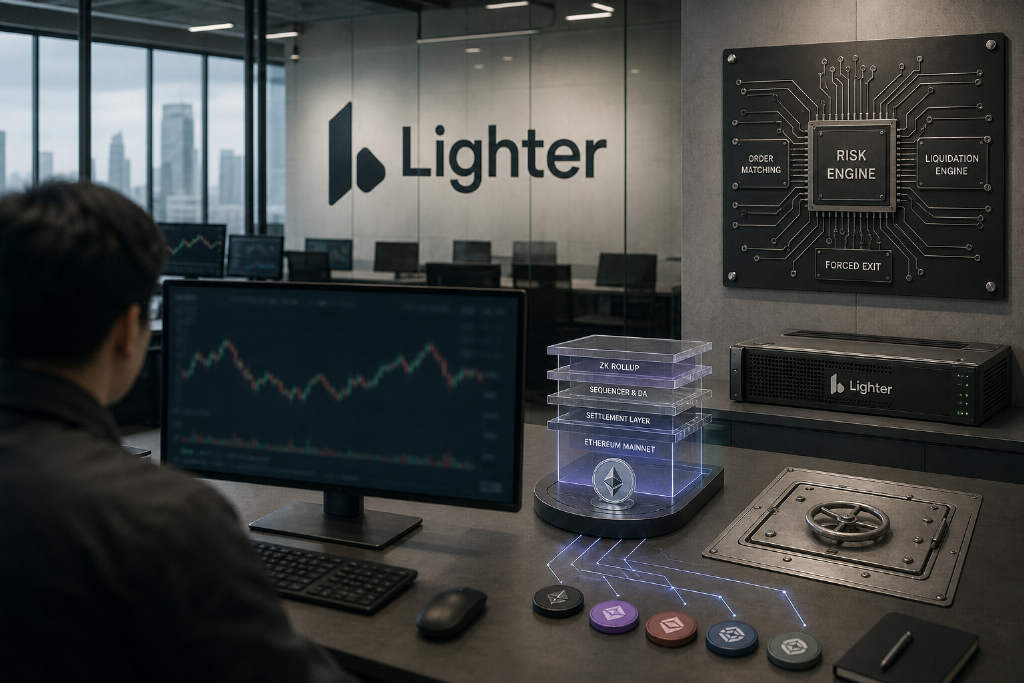
Lighter2026-08-27 02:02:27Why LIT Keeps Hitting Highs as Lighter Bets on a Different Perp DEX ArchitectureLighter’s token, LIT, has continued to set fresh highs since Aug. 20, reaching as much as $3.8 on Aug. 26 after bottoming near $0.78 on March 30, according to Foresight News. The report argues that the rally is not only tied to business-side factors such as token buybacks and a partnership with Robinhood, but also to Lighter’s underlying market structure and chain design. Only about 25% of LIT is currently in circulation, while team and investor allocations remain locked until Dec. 30, 2026. Current sell pressure mainly comes from staking rewards, and official dashboard data shows 17.3 million LIT has already been bought back, equal to 1.73% of total supply and 6.92% of circulating supply. Foresight News says Lighter has taken a path distinct from general-purpose Layer 2s and standalone Layer 1 trading chains. Instead of relying on a generic stack, Lighter built a purpose-built ZK Rollup for trading and encoded exchange rules directly into zk constraints. That design, combined with Ethereum-based custody, forced exit guarantees, and direct access to liquidity from Ethereum, Arbitrum, Base and Solana, is presented as the core reason the market has assigned a premium to the protocol and its token.810
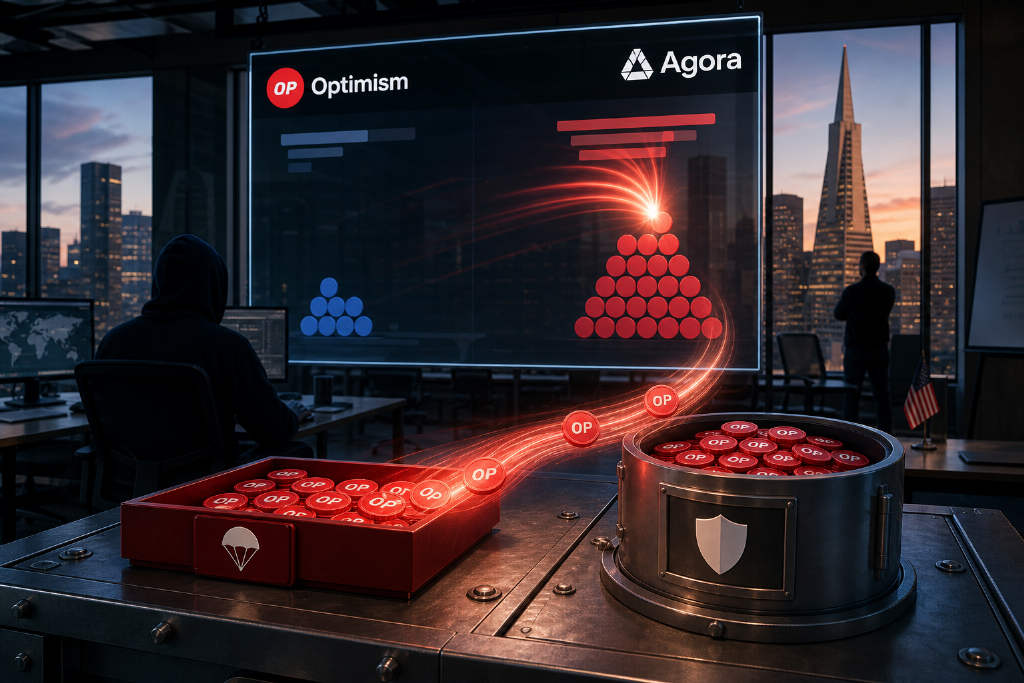
Optimism2026-08-21 01:33:33Optimism vote to move 546.9 million OP from airdrops to ecosystem fund raises governance conflict concernsAn Optimism governance proposal passed in the final minutes on Agora after a late 8.49 million OP vote flipped support from 45.77% to 61.84%. The measure transfers 546.9 million OP from the project’s user airdrop allocation to a foundation-controlled strategic ecosystem fund, an amount equal to 12.7% of total supply and nearly 24% of circulating supply, according to the article. The decisive vote came from Test in Prod, a core development team that identifies itself on Agora as part of the Optimism Collective and, in a 2025 Security Council nomination document, said it was “fully funded by the Collective.” Critics including L2BEAT, independent researcher Polynya and community member Luckyhooman.eth argued that the authorization is too broad, prior ecosystem spending has not been formally evaluated, and reallocating tokens away from users rewrites a distribution commitment made when OP launched in 2022. The dispute has turned into a wider debate over whether DAO voting can remain independent when funded parties vote on foundation-directed budgets, and whether a tokenholder majority can legitimately alter the original promises tied to token allocation.700
l2beat2026-07-22 22:10:14L2BEAT Confirms ETH Layer2 Emergency Exits Now Independent: Users Can Self-Generate ZK ProofsAfter auditing Lighter’s ZK circuits, L2BEAT made the entire source code public. Users can now independently rebuild circuits and generate ZK proofs, enabling permissionless asset withdrawal from Layer2 without project team involvement. This eliminates blind trust and boosts decentralization.460