ECB2026-09-07 05:44:18Deutsche Bank Expects ECB to Hike in September, Followed by Another 25bp in DecemberDeutsche Bank has revised its ECB rate forecast, now expecting a September rate hike followed by an additional 25 basis point increase in December, bringing the deposit rate to 2.75%. Persistent energy risks keep inflation elevated, but a still-soft labor market and lack of wage pressures complicate the outlook. The ECB's rate decision is due on September 10.770
CITIC Securit2026-09-07 01:03:36CITIC Securities says strong August U.S. payrolls led markets to reprice September hike oddsCITIC Securities said in a research note that U.S. nonfarm payroll growth for August 2026 came in well above expectations, with leisure and hospitality and healthcare making notable contributions, while local government education jobs rebounded. The note said private-sector hiring showed a sixth straight month of gains in goods-producing industries, which may reflect demand tied to U.S. data center construction. It also said job losses in finance and information technology reflected the impact of AI. The report put the August unemployment rate at 4.1%, or 4.14% when expressed to two decimal places. Labor force participation rose to 61.6% from 61.4%, though the continued decline in participation among people aged 45 to 54 remains a point to watch. CITIC Securities added that strong payroll data was offset by dovish remarks from Federal Reserve Governor Christopher Waller, leading the market to again price the probability of a September rate hike at around 60%. The next key data point, according to the note, is the August CPI report due on Sept. 11.850
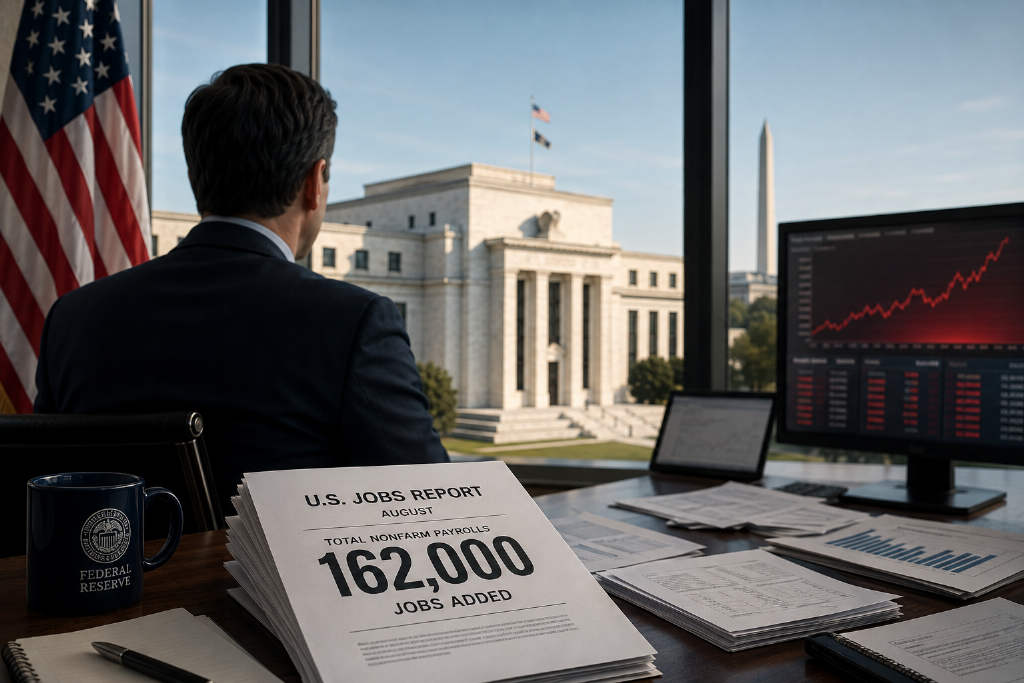
US Nonfarm Pa2026-09-05 03:26:09Barclays says August payrolls were flattered by temporary factors, keeps September hike callBarclays said the August U.S. nonfarm payrolls report looked strong on the surface but overstated underlying labor demand. The Labor Department reported payroll growth of 162,000 on Sept. 4, far above Barclays’ 25,000 forecast and the 55,000 market consensus, while the prior two months were revised up by a combined 55,000. In Barclays’ view, a large share of the surprise came from temporary rebounds in leisure and hospitality and state and local education hiring, rather than a clean acceleration in labor demand. The bank also pointed to distortions from the birth-death model. Compared with the same month in 2025, the drag from the adjustment was about 32,000 smaller in August 2026, which lifted the headline figure. Barclays said that over a three-month average, the adjustment looked less unusual, but month-to-month swings have become harder to read after the Bureau of Labor Statistics changed its methodology in January. The report showed the unemployment rate edging up to 4.1% on a rounded basis, with labor force participation rising to 61.6%. Wage and income measures improved, including 0.27% monthly average hourly earnings growth and a 0.67% rise in private-sector wage income. Barclays said those figures marginally strengthen the case for a 25 basis point Federal Open Market Committee hike in September. It still sees next week’s inflation release as the key test, even though it expects both core CPI and core PCE to rise 0.23% month over month in August.590
nonfarm payro2026-09-05 08:26:30US August Nonfarm Payrolls Beat Expectations but Core Growth Slows; Fed Rate Hike Odds RiseU.S. August nonfarm payrolls came in at 162,000, well above the expected 56,000, but organic growth was only about 60,000 after stripping out one-time factors. The unemployment rate held at 4.1%, while average hourly earnings growth slowed to 3.1% year-over-year. GF Securities said the data rules out both extreme narratives but raises the probability of a rate hike this year. The market-implied probability of a September hike rose to 58.6%. Yields on 2-year and 10-year Treasuries climbed, while U.S. stocks edged lower, though the AI hardware sector rebounded.850
US Nonfarm Pa2026-09-04 12:30:46US August Nonfarm Payrolls Surge to 162,000, Far Exceeding ExpectationsThe US unemployment rate in August stood at 4.1%, in line with expectations. Nonfarm payrolls reached 162,000, sharply above the expected 56,000. The prior month's figure was revised from -23,000 to 21,000. Data released on September 4.820
US payrolls2026-09-04 00:28:03August U.S. payrolls due tonight as JPMorgan flags sharp S&P 500 moves around the dataThe U.S. Bureau of Labor Statistics is set to release the August nonfarm payrolls report tonight, with the market expecting payroll growth of just 56,000 and the unemployment rate holding at 4.1%. Current market thinking describes the U.S. labor market as stable but soft, and weaker hiring data is not necessarily seen as enough on its own to trigger a Federal Reserve rate cut. The policy focus, according to the report, remains centered on inflation. JPMorgan’s trading desk laid out two market scenarios for the S&P 500. If August job growth comes in above 95,000, the index could fall 0.5% to 1.25%. If payroll gains land between 5,000 and 35,000, the bank expects the S&P 500 could rise 0.25% to 0.75%. The report said investors are treating the payrolls release as an important variable for September Fed expectations and near-term U.S. equity direction. Recent remarks from Fed officials suggest employment is not the main policy focus right now. Fed Governor Michael Barr called labor conditions "stable" earlier this week, while Governor Christopher Waller said on Thursday that employment conditions were "satisfactory." The report added that such language does not point to a strong labor market, but indicates the Fed could consider raising rates while trying to avoid damage to employment if inflation does not ease further.990
US2026-09-03 12:30:31US Initial Jobless Claims Slightly Exceed Expectations, Hit 3-Week HighAccording to BlockBeats on September 3, US initial jobless claims for the week ending August 29 came in at 206,000, above the market consensus of 205,000, marking the highest level since the week ending August 15. The data indicates a modest uptick in layoffs, though still within a low historical range.840
Federal Reser2026-09-01 23:53:26Fed Vice Chair Barr ties financial inclusion to employment and price stabilityFederal Reserve Vice Chair Michael S. Barr said financial inclusion is directly tied to the central bank’s core mandate, arguing that full employment and price stability cannot be achieved if large parts of the population lack access to basic banking services. Barr made the remarks in Washington at the Second Chance Lending Forum, where he framed access to banking as more than a social policy issue and instead linked it to broader economic stability. Citing data from the 2023 National Survey of Unbanked and Underbanked Households, Barr said the share of unbanked Americans has fallen to a record low. Even so, nearly 20% of adults still said they would be unable to cover a $400 emergency expense, a sign that financial vulnerability remains widespread despite progress in formal banking access. Barr also pointed to data he disclosed at the Next Generation Financial Inclusion conference on July 14. Among workers with graduate degrees, 43% had recently used artificial intelligence tools, compared with 10% among those with only a high school education. He said that gap in technology adoption is widening inequality in the labor market, according to CryptoBriefing.800