‹ BackNewsLabor market

Labor market

Bill Gates
2026-08-26 10:21:00

Bill Gates says the turbulent AI era has arrived, calls for human-only jobs and a rethink on robot taxes

Bill Gates has struck a more cautious tone on artificial intelligence, saying the technology could become either "the greatest equalizer in history" or "the biggest source of unfairness." In a new essay published on Aug. 26 U.S. time, Gates said it was the first time he had encountered a new technology and wished it would develop more slowly. He argued that societies need time to prepare for social, political, and economic disruption, even as AI is unlikely to wait. The Microsoft co-founder focused much of his warning on jobs, especially entry-level roles for young workers. He said customer service, sales, software engineering, and legal assistant positions may be affected early, while loan underwriting, data analysis, and medical triage could follow as models improve. He also said falling robot costs and stronger AI could bring machine competition to some physical jobs in construction and hospitality around 2030. Gates also raised concerns about cybersecurity, biotechnology, education, AI companions, and governance. At the same time, he said AI still has strong potential in healthcare, agriculture, and public services. To deal with labor disruption, he proposed setting aside some roles that society chooses to keep human-led, even if machines can perform them, and considering taxes on AI- or robot-driven automation gains to help fund retraining and social support.

550
Bill Gates says the turbulent AI era has arrived, calls for human-only jobs and a rethink on robot taxes
Bill Gates says AI has crossed multiple danger thresholds and calls for tighter oversight
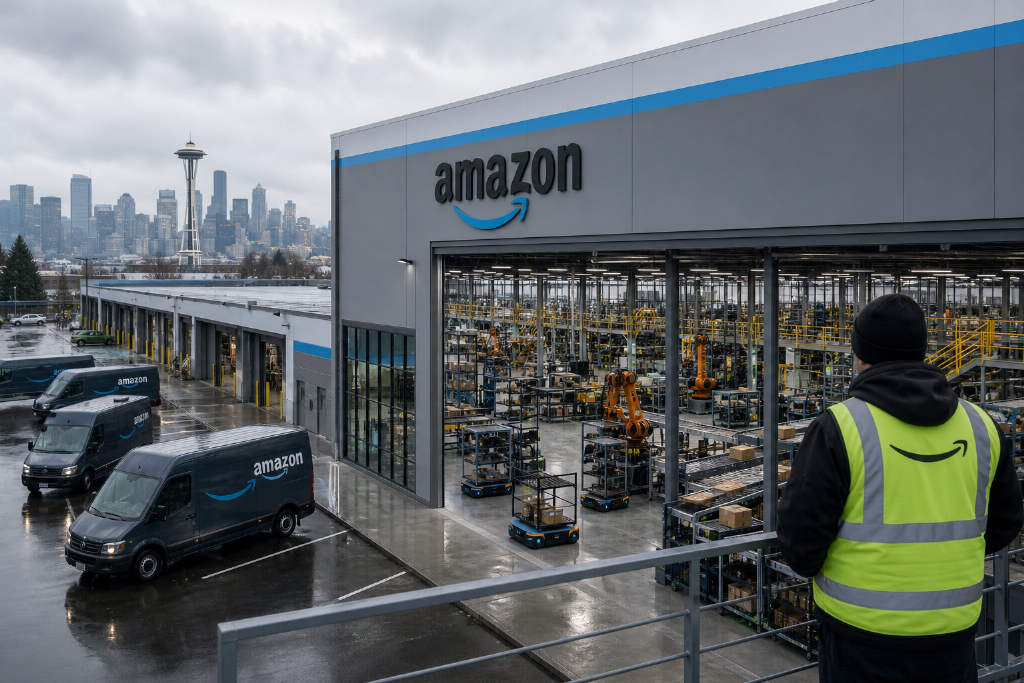
Amazon to Invest Hundreds of Millions of Dollars in AI- and Robot-Driven Fully Automated Delivery Stations
Fed's Daly says she strongly supports holding rates steady in July
Fed minutes say labor market is stable, but weak spots remain
AI
2026-08-19 08:50:34

Paper argues AI layoffs create a demand trap, with automation tax as the only fix

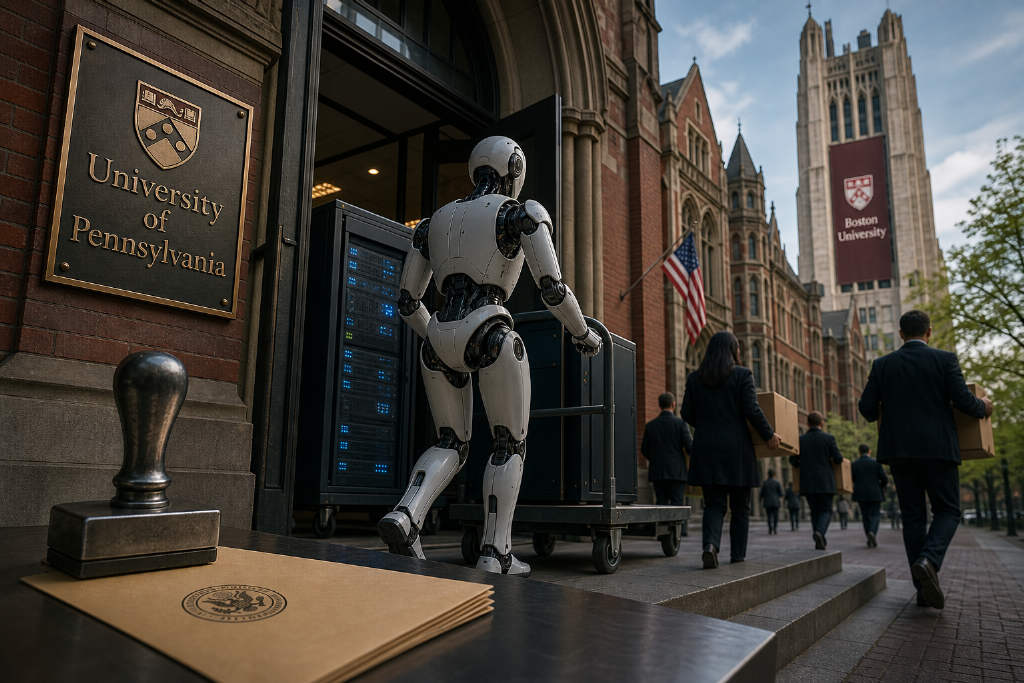
A theoretical economics paper posted on arXiv by University of Pennsylvania researcher Brett Hemenway Falk and Boston University professor Gerry Tsoukalas argues that AI-driven layoffs can push the broader economy into a destructive feedback loop. The paper, titled The AI Layoff Trap and published on March 21, 2026, says firms capture the full savings from replacing workers with AI, while the lost spending power of displaced workers is spread across the entire market. That setup, the authors argue, gives each company a strong incentive to automate even when collective over-automation hurts both labor and firms. The paper models a market with N identical companies and shows that each firm bears only 1/N of the demand loss caused by its own layoffs. It expresses the degree of over-automation as ℓ(1-1/N)/k, where ℓ is the demand loss caused by each displaced worker and k is the friction cost of adopting AI. According to the authors, the gap widens as competition increases and as AI becomes cheaper and easier to deploy. The paper also reviews policy tools often discussed in the AI labor debate, including UBI, retraining, employee profit-sharing, capital gains taxes, and negotiation, and concludes that none of them eliminate the problem at the margin. In the model, only a Pigouvian tax on automation changes firms’ incentives directly. The authors add that the paper is a theoretical exercise rather than an empirical measurement of the current labor market.

1240
Paper argues AI layoffs create a demand trap, with automation tax as the only fix
U.S. retail sales post sharpest drop since May 2025 as confidence and labor data weaken
South Korea adds 108,000 jobs in July as youth unemployment rises to 6.8%