MOS

semiconductor
2026-09-02 12:13:13

China’s chip equipment push moves into tougher territory as metrology advances and bottlenecks persist

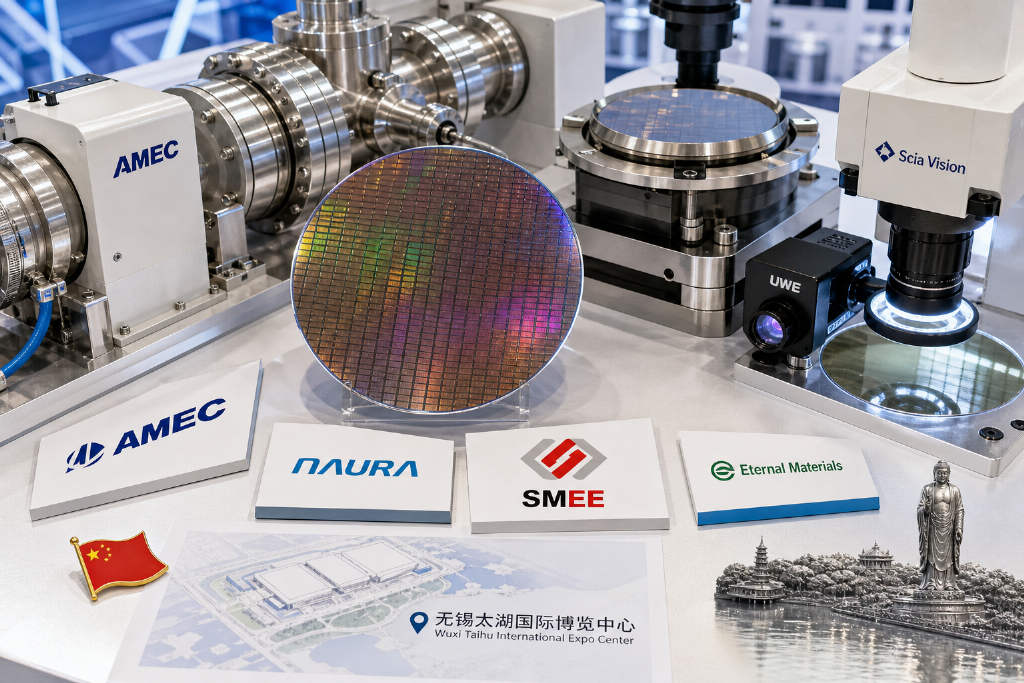
China’s semiconductor equipment industry is entering a more demanding phase, with the easiest import-substitution wins largely behind it and harder categories now drawing the most attention. At CSEAC 2026 in Wuxi, equipment makers and component suppliers used the show to present where domestic progress stands across process tools, metrology and inspection systems, advanced packaging, and core parts. In process equipment, companies such as Advanced Micro-Fabrication Equipment Inc. China (AMEC), NAURA, and Shanghai Micro Electronics Equipment showed continued expansion across etch, deposition, and lithography-related systems. But ion implanters remain a major weak spot. According to data cited by Aion Semiconductor, overall localization in ion implantation is still below 15%, with high-current tools below 10% and high-energy tools largely blank. Metrology and inspection appear to be moving faster. eGenerate, Yuwei Semiconductor, and SDRA were among the companies highlighted for equipment already in volume delivery or advanced validation. In advanced packaging, wafer-to-wafer bonding is more mature, while die-to-wafer bonding is still largely in validation. The report also points to continued progress in domestic core components, arguing that the sector is shifting from isolated breakthroughs toward broader ecosystem building, even as trust barriers, validation constraints, and long R&D cycles remain in place.

960
China’s chip equipment push moves into tougher territory as metrology advances and bottlenecks persist
Tom Lee
2026-09-02 01:36:07

Morning Brief: Tom Lee Says Institutions Betting on Q4 Rally; Former SEC, CFTC Officials Urge Regulatory Easing for Crypto Perpetual Futures

Tom Lee predicts Bitcoin could reach $150,000 as institutions buy crypto stocks, calling current rally just the first wave. Former SEC and CFTC officials co-signed a letter urging risk-calibrated regulation to attract offshore perpetual futures back to the U.S. Bitfinex Securities lists 5 tokenized notes linked to Strategy and other Bitcoin reserve companies. 21 global financial institutions commit to forming a joint stablecoin company targeting 2027 launch. Other key stories: OSL Group revenue up 65.8%, Kraken parent partners with LSE to tokenize 100 UK stocks, Fed's Barr warns of rate hikes if inflation persists, Singapore MAS consults on stablecoin regulation, Thai SEC proposes allowing retail to trade overseas crypto derivatives, and more.

1350
Morning Brief: Tom Lee Says Institutions Betting on Q4 Rally; Former SEC, CFTC Officials Urge Regulatory Easing for Crypto Perpetual Futures
Anthropic
2026-09-01 06:11:25

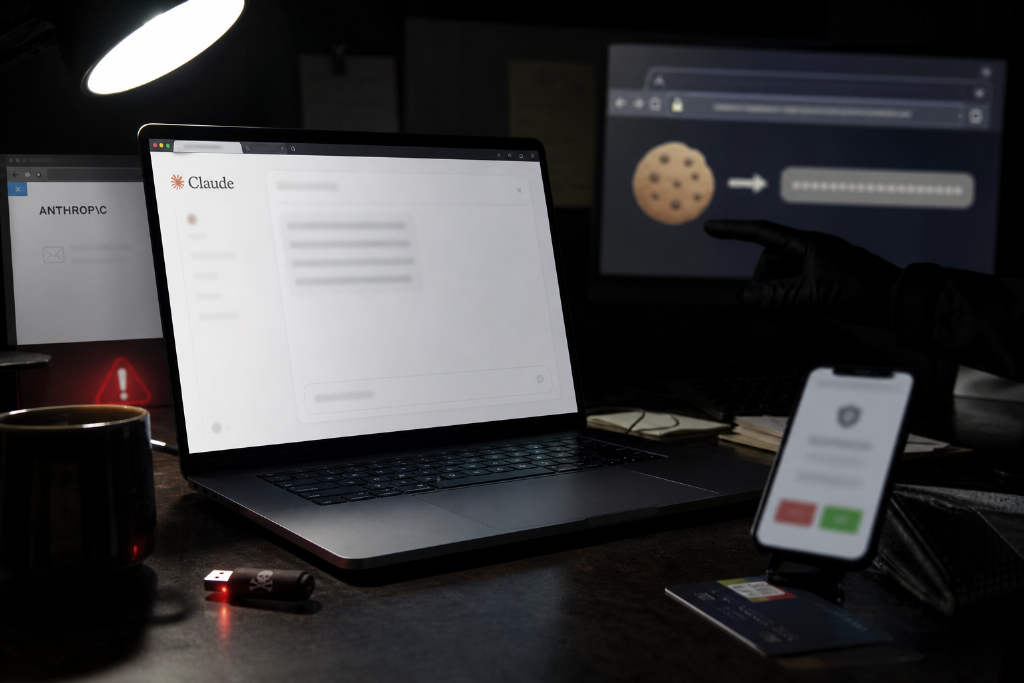
Anthropic Warns: Malware Hijacks Claude Sessions to Drain Credits

Anthropic has alerted Claude users that attackers are using infostealer malware to steal login sessions, bypassing multi-factor authentication to drain paid credits. The company forced logouts, refunded unauthorized charges, and urged users to remove malware, emphasizing the issue stems from user-side infections, not Claude itself.

710
Anthropic Warns: Malware Hijacks Claude Sessions to Drain Credits
Cybersecurity
2026-09-01 09:56:45

Huntress says hackers are using fake Google Docs and spoofed Claude pages to target crypto users

Security firm Huntress said attackers are distributing info-stealing malware to cryptocurrency users through fake Google Docs files, malicious files hosted on GitHub, and spoofed Claude.ai pages. According to the company, the operators impersonated senior CoinDesk staff on X and used invitations to online meetings to trick targets into opening Google Docs documents containing malicious code, then guided them to install malware themselves. Huntress said Mac users face Atomic macOS Stealer, or AMOS, which can steal browser passwords, crypto wallet data, and Telegram files. Windows users are being served a fake Google API Connector update that installs NetSupport RAT and a counterfeit Ledger hardware wallet application. The firm also said attackers bought fake ads on search engines including Bing to steer users to imitation Claude.ai pages where they were prompted to run malicious commands. In that part of the campaign, malware families MacSync and SectopRAT were used to steal cookies, saved passwords, seed phrases, and payment card data. Separately, security company Socket said it found 16 malicious extensions targeting Chrome and Edge that can drain wallets on EVM, Solana, and Tron.

780
Huntress says hackers are using fake Google Docs and spoofed Claude pages to target crypto users
Anthropic
2026-08-31 10:29:31

Anthropic warns Claude users that stolen browser sessions can bypass 2FA and drain account usage

Anthropic has sent security warnings to some Claude users after detecting a pattern in which attackers steal active login sessions from malware-infected computers and use them to access accounts and consume usage limits. According to examples shared by users on Reddit, the issue is not password theft in the usual sense. Instead, attackers are taking browser cookies and session IDs tied to already authenticated sessions, which lets them impersonate users without re-entering a password or passing two-factor authentication again. One user said they signed in with Google and had 2FA enabled, but their browser session was still stolen. In its warning email, Anthropic listed several infostealers linked to this activity, including Vidar, LummaC2, StealC, RedLine and Acreed on Windows, and Atomic Stealer (AMOS) on Mac. The company said this is not a security flaw in Claude itself. Anthropic also said it has revoked suspicious sessions, removed saved payment methods from affected accounts, and addressed related unauthorized charges. The company warned that changing a password alone will not fix the problem if malware remains on the device.

720
Anthropic warns Claude users that stolen browser sessions can bypass 2FA and drain account usage
Calterah
2026-08-28 12:42:10

Calterah’s STAR Market IPO filing accepted, seeks RMB 3.489 billion as BYD remains its largest end customer

Calterah Microelectronics, a Shanghai-based automotive millimeter-wave radar chipmaker, has had its STAR Market IPO application accepted by the Shanghai Stock Exchange, with China International Capital Corporation acting as sponsor. The company plans to issue up to 9.42455 million shares, representing no less than 25% of total share capital after the offering, and aims to raise RMB 3.489 billion, implying a post-money valuation of roughly RMB 14 billion. The filing comes about six months after Calterah’s E2 round, which carried an implied valuation of about RMB 8.26 billion. That gap means investors from that round are sitting on a paper gain approaching 70% in less than a year. The company has expanded quickly in automotive radar chips, reaching a 4% share of the global in-vehicle millimeter-wave radar chip market in 2025 and 31.1% in China, while cumulative shipments surpassed 30 million units. Revenue climbed from RMB 206 million in 2023 to RMB 632 million in 2025, but losses have continued. Net loss attributable to shareholders was RMB 323 million, RMB 334 million, and RMB 193 million over 2023 to 2025, followed by another RMB 60 million loss in the first quarter of 2026. The prospectus also flags heavy customer concentration around BYD, high overseas supply dependence, and a revenue mix still dominated by millimeter-wave radar chips, while UWB remains at an early commercial stage.

970
Calterah’s STAR Market IPO filing accepted, seeks RMB 3.489 billion as BYD remains its largest end customer
Nexperia Chin
2026-08-26 08:06:20

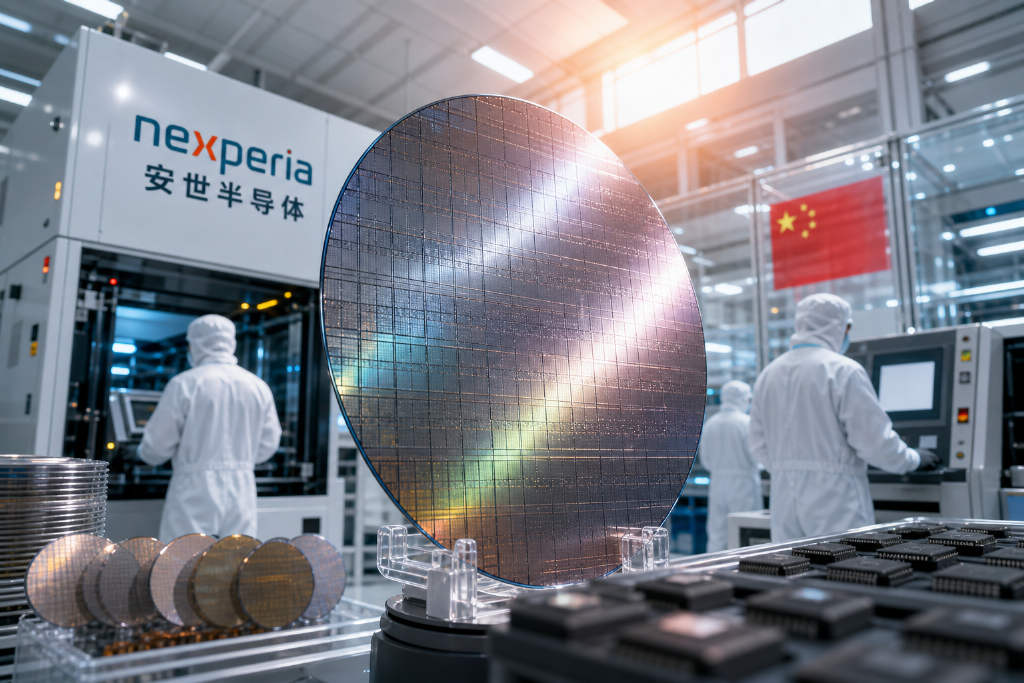
Nexperia China shifts to 12-inch wafers, restores output and cuts prices on automotive chips

Nexperia China said it has rebuilt its automotive chip supply chain around a domestic 12-inch wafer platform after losing access to overseas 6-inch to 8-inch wafer supply last year. On Aug. 22, 2026, the company launched several power semiconductor products developed on 12-inch wafers and said it had built up inventory for supply. Executives told Economic Observer that the company spent 11 months moving three product lines onto the new platform, lifting its localization ratio from less than 20% to 100% and replacing its earlier dependence on overseas wafer sources. The disruption followed administrative and judicial intervention from the Netherlands on Sept. 30 last year, which created major uncertainty for deliveries. By late October, wafer supply to its Dongguan packaging and testing plant had stopped, cutting off steady 6-inch to 8-inch wafer inflows from production bases including Hamburg and Manchester. The company said it relied on inventories, staff redeployment and, at one stage, a customer-supplied wafer processing model to maintain shipments. Nexperia China now says some mature-process automotive chips developed on 12-inch wafers have reached 99% yield, 5 to 10 percentage points above the 8-inch platform, while mainstream delivery times have been shortened to 4 to 6 weeks. It also announced price cuts on several products, including about 30% on eight power MOS models, against a backdrop of 15% to 20% price increases in automotive chips this year.

410
Nexperia China shifts to 12-inch wafers, restores output and cuts prices on automotive chips
Y2K
2026-08-23 03:28:28

Y2K revival in Taiwan puts Beyblade, Tamagotchi and CCD cameras back in the spotlight

A Y2K-inspired nostalgia wave is gaining traction in Taiwan, bringing turn-of-the-millennium gadgets and toys back into everyday culture. According to ABMedia, Beyblade tops, Tamagotchi virtual pets and CCD cameras are seeing renewed popularity among both younger users and adults reconnecting with childhood memories. The report says Beyblades have surged in the secondhand market, with discontinued models such as “Storm Pegasus” and a “Barcelona” collaboration version being bid up to more than NT$10,000 and in some cases tens of thousands. Pricing in that market is said to depend heavily on weight and rarity, while transparent listing prices have increasingly given way to bidding. Tamagotchi devices, meanwhile, have evolved with color screens and more detailed interaction features, and are also being used as accessories on waist bags and handbags. The article also points to rising demand for low-resolution CCD point-and-shoot cameras, whose grainy images, color shifts and out-of-focus lighting effects are being favored over the cleaner look produced by modern smartphones. Interviewees cited by HahaTai said those visual traits help create a retro aesthetic, especially for Instagram-style photo layouts.

490
Y2K revival in Taiwan puts Beyblade, Tamagotchi and CCD cameras back in the spotlight