MOS

analog chips
2026-08-04 10:04:07

Analog Chipmakers Show Broader Recovery as Inventories Normalize and AI Demand Adds Support

A recovery is taking shape across the analog semiconductor market, with ON Semiconductor, Texas Instruments, STMicroelectronics and NXP Semiconductors all reporting year-over-year and sequential revenue growth, while third-quarter guidance also pointed to further sequential gains. The rebound is no longer tied to a single end market. Industrial demand moved first, data center demand followed, and automotive improved visibly in the second quarter. Inventory metrics shifted at the same time: STMicroelectronics said its book-to-bill ratio was close to 2, NXP’s channel inventory fell back to 11 weeks, and Texas Instruments reported rising backlog with lead times extending by several weeks from a level below 13 weeks. Management commentary across the group suggested the analog market had moved from a long destocking phase toward normalization, with new orders beginning to flow again. The report also shows the upcycle is uneven. Some categories, including automotive analog, power management, AI server power chains, optical module analog front ends and certain sensors, are tightening. General-purpose parts, consumer electronics and parts of the power and discrete segment still face pricing pressure. AI is becoming a more important growth driver as data center power conversion, thermal management, optical connectivity and industrial or automotive applications increase the content value of analog chips. Even so, forecasts cited in the report indicate analog is improving rather than leading the broader semiconductor boom, which is still being driven much more sharply by memory.

2250
Analog Chipmakers Show Broader Recovery as Inventories Normalize and AI Demand Adds Support
TSMC
2026-07-31 10:12:49

Why TSMC stayed with Kumamoto after the 7.1 quake hit JASM

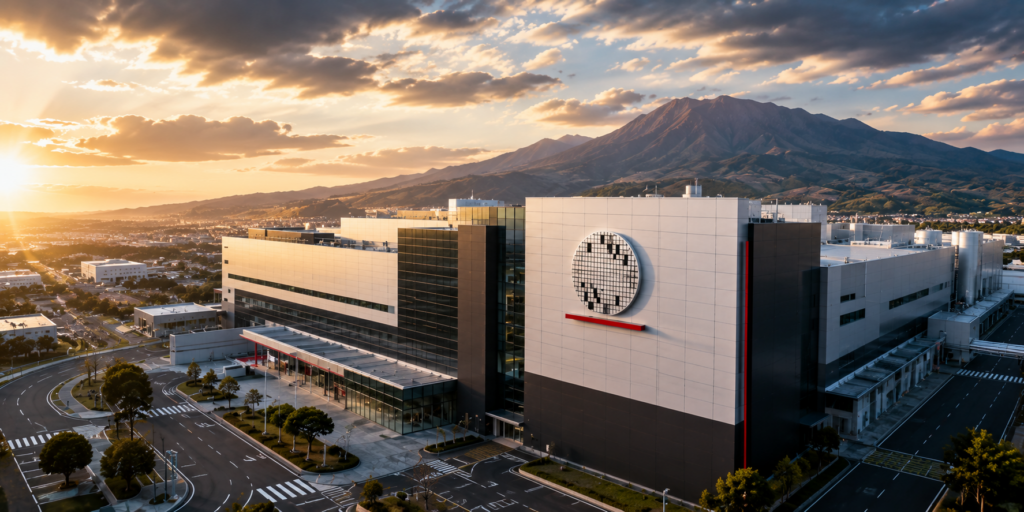
A 7.1-magnitude earthquake that struck Kumamoto on July 28 briefly halted production at Japan Advanced Semiconductor Manufacturing (JASM), TSMC’s chip venture in the prefecture, and paused construction at its second plant. The disruption revived a familiar question in the market: why would TSMC place such a large wafer-fab investment in a high-risk seismic zone? The source article argues the answer lies less in luck than in industrial arithmetic. Kumamoto sits inside a semiconductor cluster built over roughly six decades across Kyushu, with nearby suppliers, customers, water resources and lower power costs already in place. JASM’s two plants also carry more than $20 billion in combined equipment investment, while Japanese government subsidies for the first and second fabs total about ¥1.2 trillion, covering roughly 40% of spending. The article also points to precedent. Sony suffered ¥28 billion in losses in the 2016 Kumamoto earthquake, yet stayed in Kikuyo and kept expanding. In that framing, the real comparison is not between risk and no risk, but between recovery costs after a quake and the far higher cost of relocating an entire supply-chain ecosystem.

780
Why TSMC stayed with Kumamoto after the 7.1 quake hit JASM
2D semiconduc
2026-07-29 11:33:16

China’s 2D semiconductor supply chain is taking shape, stretching from materials and equipment to processors and memory

Two-dimensional semiconductors, also known as atomically thin semiconductors, are moving beyond basic research and into pilot production, process development, and early industrial deployment. The article says global chipmakers and research groups including TSMC, Intel, Samsung, imec, and IRDS have already put 2D semiconductors on their roadmaps for the post-1 nm era, where they could serve as core building blocks in heterogeneous integration. On the Chinese side, progress now spans the full stack. At the materials and equipment layer, teams led by Nanjing University and Jimo Core Technology reported advances in wafer-scale single-crystal growth, including 6-inch production and later 8-inch mass production of 2D semiconductor single crystals. Other groups addressed long-standing gaps in p-type materials and wafer-scale ferroelectric systems. On the manufacturing side, Yuanji Micro’s 8-inch engineering demonstration line in Pudong has gone online, accompanied by a 500 nm PDK designed to work with mainstream EDA flows. In applications, the field is no longer limited to isolated devices: China has reported 32-bit RISC-V processors based on MoS2, a multi-bit parallel microprocessor called MAGIC-1000, ultra-low-leakage transistor work tied to DRAM, and single-electron non-volatile storage results. The picture presented is one of an industrial chain that now covers materials, tools, process integration, design, and end applications.

1130
China’s 2D semiconductor supply chain is taking shape, stretching from materials and equipment to processors and memory
Taiwan stocks
2026-07-29 03:38:00

Taiwan stocks break below 40,000 intraday as finance minister says stabilization fund is still on hold

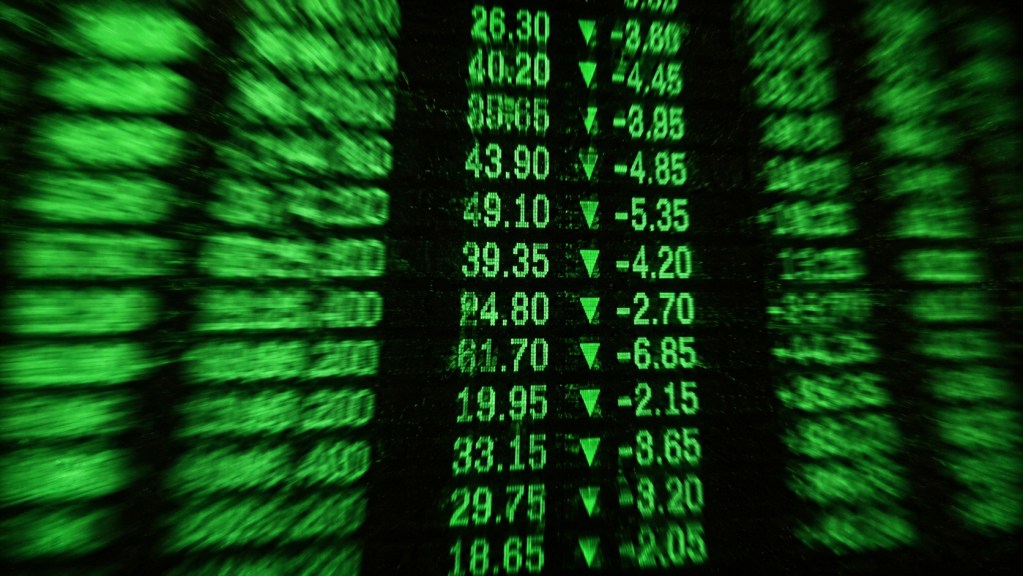
Taiwan stocks extended their slide on July 29, briefly falling below the 40,000 mark after a sharp sell-off the previous day. Finance Minister Chuang Tsui-yun told lawmakers that personnel linked to the National Financial Stabilization Fund are continuing to monitor the market, but the threshold for intervention has not yet been met. She said the sell-off is not unique to Taiwan, pointing to synchronized declines in the U.S., Japan, and South Korea, with losses concentrated in electronics and semiconductor shares. The benchmark’s weakness came after a 2,030.83-point drop on July 28, the third-largest single-day point loss on record. Memory shares were hit particularly hard after SK Hynix reported second-quarter 2026 results that came in below expectations. Several names, including Winbond, Nanya Technology, and Macronix, fell to daily limit-down levels, while other memory-related stocks dropped more than 9%. Analyst Chou Chia-ho of Lun Yuan Securities Investment Consulting said funding and margin pressure remain a key issue, warning that forced selling may continue before the sector finds a clearer bottom.

2060
Taiwan stocks break below 40,000 intraday as finance minister says stabilization fund is still on hold