MOS

Japan photore
2026-07-22 11:38:11

Japan photoresist cutoff rumor for China clashes with customs data and public records

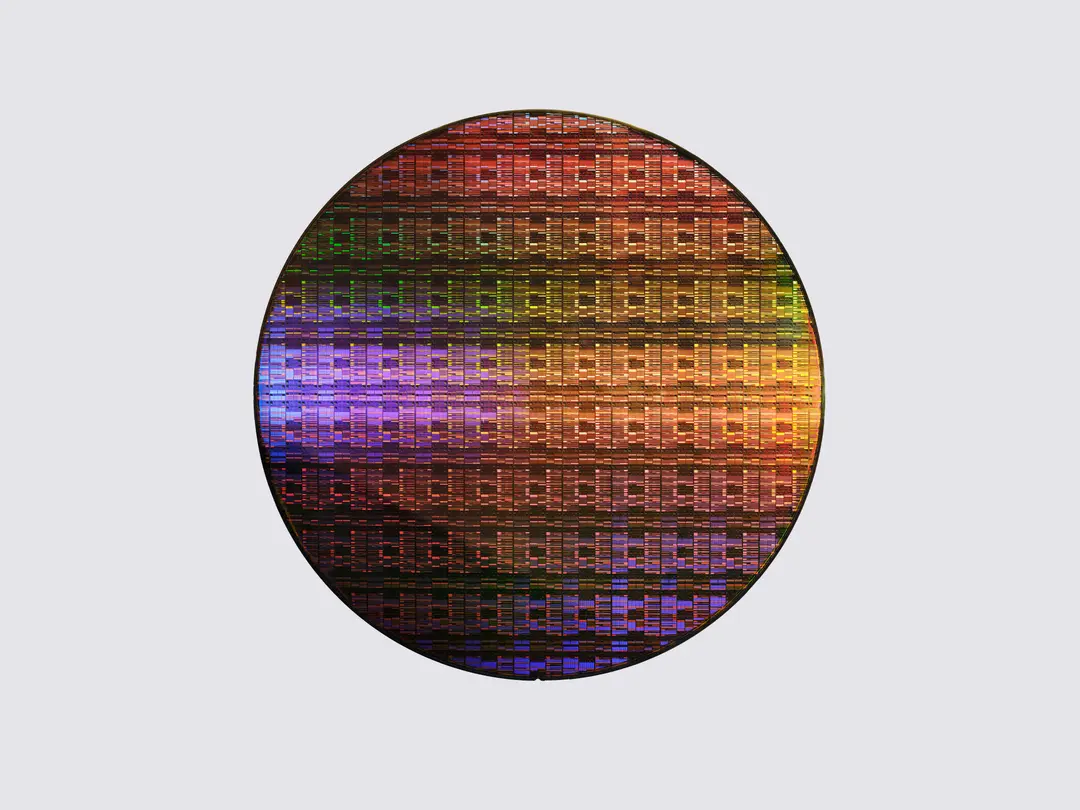
A widely shared report claiming that four major Japanese suppliers had halted new China orders for ArF and EUV photoresists has drawn intense attention, but the underlying evidence appears thin. The original article says the rumor named Tokyo Ohka, JSR, Shin-Etsu Chemical, and Fujifilm, and described a sweeping suspension of orders, technical support, and deliveries. Yet customs data cited in the same piece shows China imported 1,622 tons, 1,495 tons, 1,958 tons, 1,910 tons, and 1,939 tons of photoresist from Japan from January through May 2026, for a total of more than 8,900 tons, with no visible cliff-like drop in overall volumes. The report also notes that a similar claim circulated before and that Japanese official channels, corporate websites, and industry media had not publicly reported the latest alleged cutoff. From there, the article shifts to the larger issue: why advanced photoresists matter so much to chip manufacturing, how Japanese companies built their edge through decades of process-specific formulations and customer co-development, and why an outright supply halt would not be a simple decision. It points to China’s growing role as a major photoresist market, Japan’s export-control timeline that has not formally included photoresists, rising domestic substitution in China, and South Korea’s expanding ArF and EUV-related capabilities. The piece argues that the bigger question is not the rumor itself, but the industry’s continuing anxiety over supply security.

1300
Japan photoresist cutoff rumor for China clashes with customs data and public records
Weizhao Semic
2026-07-17 12:03:08

Weizhao Semiconductor files again for Hong Kong listing as profit swings to loss and CSRC questions deal pricing

Shenzhen Weizhao Semiconductor Co., Ltd., a power semiconductor device supplier and a national-level "little giant" enterprise, has filed a fresh application for a main-board listing in Hong Kong, with GF Securities serving as sole sponsor. The move comes after its first filing, submitted on Jan. 12, 2026, lapsed six months later. The renewed application arrives as the company’s operating picture weakens. According to its prospectus, Weizhao posted a net loss of 510,000 yuan in the first five months of 2026, compared with a profit of 26.529 million yuan a year earlier. Gross margin fell to 17.9% from 22.4%, while the revenue share of its higher-margin WLCSP products dropped from 46.3% to 27.4%. Regulatory scrutiny has also intensified. In June 2026, the China Securities Regulatory Commission asked the company six questions in supplemental filing materials for overseas listing registration, focusing on whether recent share placements were fairly priced, whether differing entry prices among new shareholders were reasonable, and whether two equity incentive grants involved unusually large pricing gaps or related-party ties. The prospectus also shows a sharp reshaping of the company’s channel structure, with distributor numbers falling from 658 to 103 over three years, alongside rising customer and supplier concentration.

530
Weizhao Semiconductor files again for Hong Kong listing as profit swings to loss and CSRC questions deal pricing
semiconductor
2026-07-15 02:32:57

AI-driven memory boom may peak by 2027 or 2028, TechFlowPost analysis says

A market analysis published by TechFlowPost argues that the semiconductor industry, especially memory, is going through an expansion unlike anything seen in the past three decades. Citing data from the World Semiconductor Trade Statistics (WSTS) and TrendForce, author Takashi Yunokami says monthly memory shipments surged from roughly $5.6 billion in 2016 to $63.3 billion in May 2026, while year-over-year growth hit 285%, far above prior memory-cycle peaks. The article says the current boom is being powered not only by stronger demand, but by an extraordinary rise in pricing. DRAM spot prices reportedly climbed from $4.70 in early 2025 to $46.00 recently, while NAND wafer prices rose from $2.40 to $25.00. That pricing surge, in the author’s view, explains much of the market’s sharp revenue expansion. Yunokami traces the demand shock back to massive capital spending by Amazon, Google, Microsoft and Meta, whose combined capex is projected at $755 billion in 2026. He argues that AI data centers are absorbing GPUs, HBM, DRAM, NAND and SSD supply, squeezing consumer electronics markets such as PCs and smartphones. Still, the piece is not a bullish call. Looking back over roughly 35 years of memory-market history, Yunokami says periods of continuous positive annual growth have never lasted more than five years. Based on that pattern, he argues the current memory upcycle, which began from the 2023 trough, could end by 2028 at the latest and possibly peak in 2027, with a deeper downturn likely to follow.

1230
AI-driven memory boom may peak by 2027 or 2028, TechFlowPost analysis says