BackNVIDIA GPU

NVIDIA GPU

NVIDIA
2026-08-12 10:19:04

NVIDIA shifts toward a broader customer base as hyperscaler concentration risk comes into focus

NVIDIA is moving to reduce its dependence on hyperscalers as large cloud companies push to diversify away from a single AI chip supplier, according to recent analysis from investor and researcher Evergreen Capital. The firm argues that CEO Jensen Huang has been signaling that shift for months, highlighted by his repeated use of the word “diverse” during the company’s earnings call after May results. Evergreen reads that language as a deliberate repositioning: away from being seen mainly as a chip vendor tied to hyperscaler orders, and toward becoming an AI systems platform serving a wider range of customers. In a follow-up note about three months later, Evergreen said NVIDIA’s actions are starting to match that narrative. It pointed to SPCX transactions and a GPU financing program designed to expand access to compute for smaller enterprises and emerging AI companies, while lowering revenue concentration tied to hyperscalers. The analysis also says non-hyperscaler enterprise AI compute already accounts for about half of NVIDIA’s revenue, with analysts expecting that share to exceed 70% in the next few years. If that mix shift holds, Evergreen believes the market could reassess NVIDIA with a different valuation framework.

970
NVIDIA shifts toward a broader customer base as hyperscaler concentration risk comes into focus
B3 Labs
2026-08-12 05:43:35

B3 Labs Rolls Out B3IQ GPU Platform With Installment Servers and Rentable Idle Compute

On August 12, an official announcement said B3 Labs, founded by former Coinbase team members, has launched B3IQ, a new AI infrastructure platform. The platform lets users acquire dedicated NVIDIA GPU servers through installment payments rather than paying the full price up front. These machines are assembled in the United States by Andromeda, an American AI systems manufacturer in which B3 Labs has invested, and are housed at a data center in Oregon. When the hardware is idle, users can rent the computational power back to the network; income from those rentals can be applied to the outstanding balance of the purchase or taken as direct earnings. Research teams from Stanford University, New York University, Dartmouth College and other institutions have already been using B3IQ for cancer research and specialized model training. B3IQ says it is moving quickly to build out its inventory of U.S.-assembled NVIDIA GPU systems so it can keep up with rising demand.

1080
B3 Labs Rolls Out B3IQ GPU Platform With Installment Servers and Rentable Idle Compute
SpaceX
2026-08-10 11:58:05

SpaceX valuation case hinges on delivery speed of AI compute, not just GPU count

SemiAnalysis argues that SpaceX’s emerging AI infrastructure value should be assessed less by headline GPU totals and more by how quickly large blocks of compute can actually come online. In this framework, the scarce asset is “time-to-compute” — the ability to deliver powered, usable capacity months earlier than competing builds. The report says some SpaceX projects could compress delivery timelines to roughly three to five months, creating a time premium during a period of large-scale AI compute shortages. It also cites contracts under which Google is set to pay about $920 million a month starting in October 2026 for roughly 110,000 NVIDIA GPUs and related resources, while Anthropic previously agreed to pay $1.25 billion per month for SpaceX compute. Still, the report says those prices may reflect shortage-era capacity insurance rather than durable long-term cloud economics. SemiAnalysis also outlines an aggressive case in which SpaceX nears 10 GW of compute capacity by the end of 2027 and reaches about $300 billion in annual recurring revenue, though that depends on delivery speed, next-generation GPU supply from NVIDIA, and whether customers renew once their own data centers go live.

1140
SpaceX valuation case hinges on delivery speed of AI compute, not just GPU count
Gavin Baker
2026-08-06 04:03:34

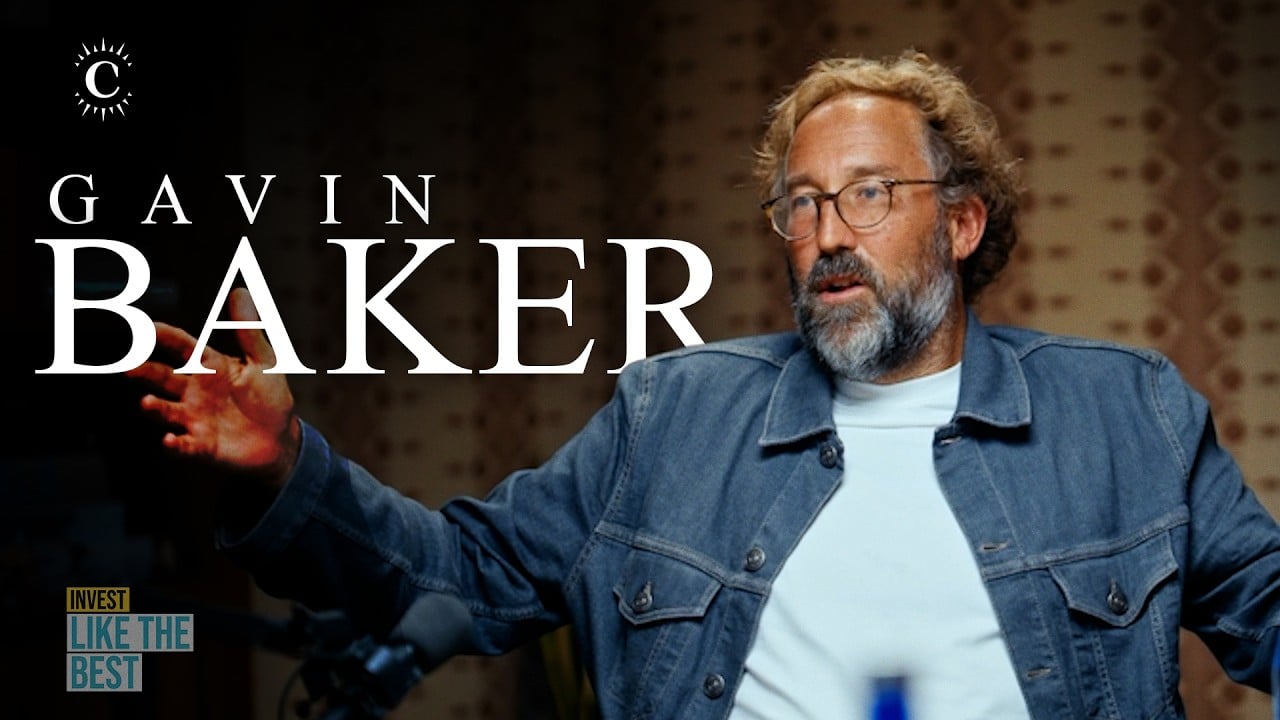
Gavin Baker says July’s AI selloff broke from the data, with Nvidia at its lowest forward multiple in a decade

Gavin Baker, founder and chief investment officer of Atreides Management, argued on Invest Like The Best that July’s selloff in AI stocks diverged sharply from industry fundamentals. He said GPU availability, GPU rental pricing, DRAM spot pricing, and token growth were all still accelerating even as many AI names fell 40% to 60% from their highs. Baker said Nvidia is now trading at its lowest forward price-to-earnings multiple of the past decade, which he sees as a sign that public markets are heavily discounting AI earnings. He also said investors misread Meta’s move to rent out compute, overstated the threat from open-source models, and treated widening CDS spreads as a credit alarm when banks may simply have been hedging commitments. At the same time, he identified regulation as the clearest downside risk, discussed long-term memory supply agreements, described Nvidia’s evolving financing model as a form of credit enhancement with revenue sharing, and pointed to SpaceX and orbital computing as underappreciated parts of the broader AI infrastructure buildout.

2040
Gavin Baker says July’s AI selloff broke from the data, with Nvidia at its lowest forward multiple in a decade
Mistral
2026-08-05 02:52:46

Mistral Open-Sources Shieldstral, a 3B Multimodal Model for Content Moderation

French AI company Mistral has released Shieldstral, an open-source multimodal safety classifier built for content moderation. The model has 3 billion parameters, is licensed under Apache 2.0, and can run on a single 16GB NVIDIA GPU, according to Mistral’s official announcement. Rather than relying on fixed built-in moderation categories, Shieldstral treats policy enforcement as a binary question: users can write moderation rules in natural language, and the model returns a calibrated yes-or-no probability on whether a given text, image, or combined input violates that policy in a single forward pass. Mistral said this setup lets teams swap or reset policies at inference time without retraining the model. The company also said Shieldstral can match or outperform open-source guard models roughly seven times larger across benchmarks covering text safety, refusal detection, policy adaptation, and multimodal tasks. Its weights are available on Hugging Face. Mistral added that it is also a founding member of the Open Secure AI Alliance, a group launched by organizations including NVIDIA.

1090
Mistral Open-Sources Shieldstral, a 3B Multimodal Model for Content Moderation
DeepSeek
2026-07-24 04:48:58

Liang Wenfeng says compute, not talent, is China AI’s main gap as pressure builds on NVIDIA’s CUDA moat

DeepSeek founder Liang Wenfeng told investors that the biggest gap between China and the U.S. in artificial intelligence is access to compute, not a shortage of talent or a lack of model expertise. According to meeting notes obtained by Yicai, Liang said differences seen in talent, model capability and applications all trace back to one issue: computing resources. He said DeepSeek currently has compute roughly equivalent to 20,000 NVIDIA H-series GPUs, while the world’s most advanced models have reached 800 billion active parameters. China’s top models, by comparison, are still in the tens of billions. Liang estimated DeepSeek trails leading U.S. AI companies by 12 to 18 months, though he said the company achieved comparable results using about one-twentieth of the compute and aims to narrow that gap to 3 to 6 months under chip restrictions. The meeting notes and analysis compiled by Citrini analyst Jukan also point to a software and hardware shift away from NVIDIA dependence. DeepSeek is working with Huawei to optimize for Ascend chips, while using its in-house TileLang programming language and compiler to reduce reliance on CUDA. Jukan argued that if China reaches greater compute independence, NVIDIA’s software lock-in across training and inference markets could weaken, opening more room for alternatives such as Google TPU and Amazon Trainium.

30
Liang Wenfeng says compute, not talent, is China AI’s main gap as pressure builds on NVIDIA’s CUDA moat