OPS

Donald Trump
2026-09-09 01:14:40

Crypto roundup: Trump defends his stock trading, YZi Labs ranks No. 2 among active family offices in August

A wide set of crypto, regulatory and corporate developments landed over the past 24 hours, led by a new post from U.S. President Donald Trump, fresh family-office investment data, enforcement action in Australia, and a string of market and infrastructure updates across Bitcoin, DeFi and payments. Trump said on Truth Social that he had made "hundreds of billions of dollars" for the United States through stocks and other assets and added that he was doing it "for our country, not for myself." Reuters had previously reported that ethics filings showed Trump disclosed at least $220 million and as much as roughly $750 million in personal securities trades in the first three months of 2026. On the investment side, FINTRX data cited by Jiaoban Xinzhi Dian showed that Binance founder Changpeng Zhao’s YZi Labs ranked as the world’s second-most active family office in August, taking part in 10 funding rounds with a combined disclosed round size of $42.1 million. The same dataset showed family offices participated in 109 deals during the month, with disclosed financing totaling $16.9 billion. Elsewhere, Australia’s AUSTRAC said it had canceled, suspended or refused to renew registrations for 45 crypto and remittance businesses over the past year. Market commentary from Two Prime and Wintermute focused on Bitcoin’s rebound, ETF inflows and key price levels, while other developments included Liquid Network fund returns, Cronos’ rollback after the Tectonic exploit, Circle’s deal for Tazapay, and broader stablecoin and banking moves in Brazil, Switzerland and South Korea.

130
Crypto roundup: Trump defends his stock trading, YZi Labs ranks No. 2 among active family offices in August
AI computing
2026-09-08 06:46:58

China Plans to Quadruple AI Computing Power by 2030

China's MIIT has released the 15th Five-Year Plan for the information and communication industry, setting a target of 9800 EFLOPS for national intelligent computing power by 2030. Current smart computing scale is about 2450 EFLOPS, requiring a roughly fourfold increase. The plan includes deploying clusters with 10,000+ accelerators and boosting domestic chip adoption. 52 facilities with over 10,000 accelerators are already built. Total investment target for information infrastructure is 3.8 trillion yuan.

170
China Plans to Quadruple AI Computing Power by 2030
intelligent c
2026-09-08 06:51:34

China's MIIT Sets 2030 AI Computing Power Target at 9800 EFLOPS in 15th Five-Year Plan

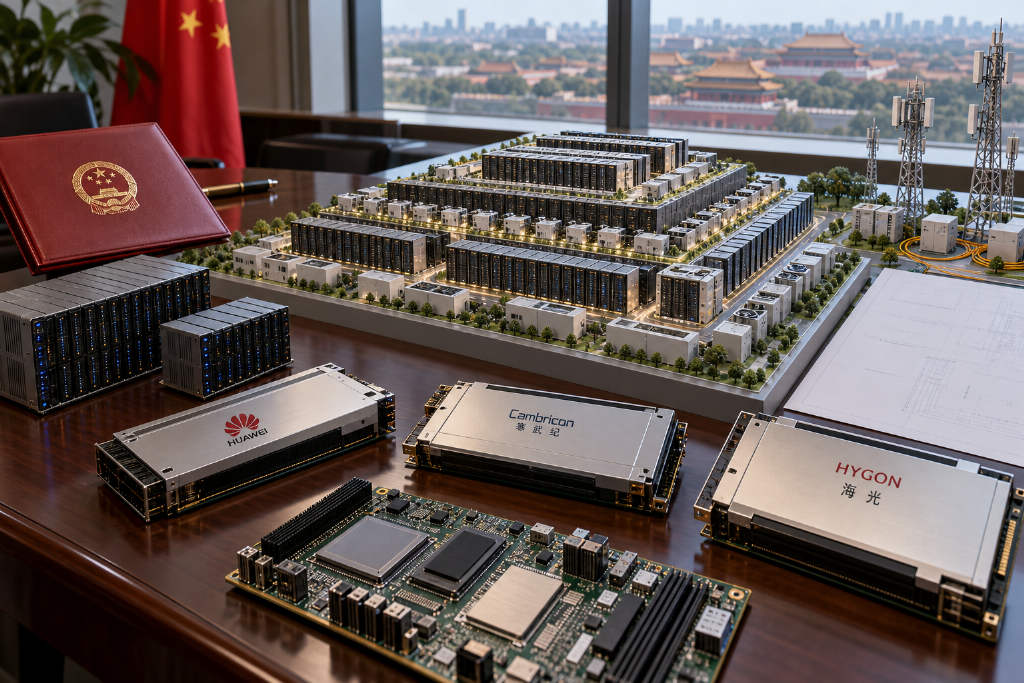
China's Ministry of Industry and Information Technology (MIIT) has released the 15th Five-Year Plan for the information and communication industry, targeting 9800 EFLOPS of national intelligent computing power by 2030, roughly 6.2 times the 2025 baseline of 1590 EFLOPS. The National Data Administration reported that the country's intelligent computing scale reached around 2450 EFLOPS (FP16) by end-July, requiring a fourfold expansion. MIIT's June data showed 2185 EFLOPS, up 177% YoY. The plan calls for orderly deployment of 10,000-card and 100,000-card intelligent computing clusters, inference computing for various scenarios, and increased adaptation of domestic AI chips. Currently, 52 facilities with over 10,000 cards have been built. The plan also sets a cumulative investment target of 3.8 trillion yuan for information infrastructure in the sector, which includes communication networks and is not solely for AI.

150
China's MIIT Sets 2030 AI Computing Power Target at 9800 EFLOPS in 15th Five-Year Plan
Malaysia
2026-09-08 02:34:00

Malaysia weighs Huawei chips for sovereign AI project as budget may reach 2 billion ringgit

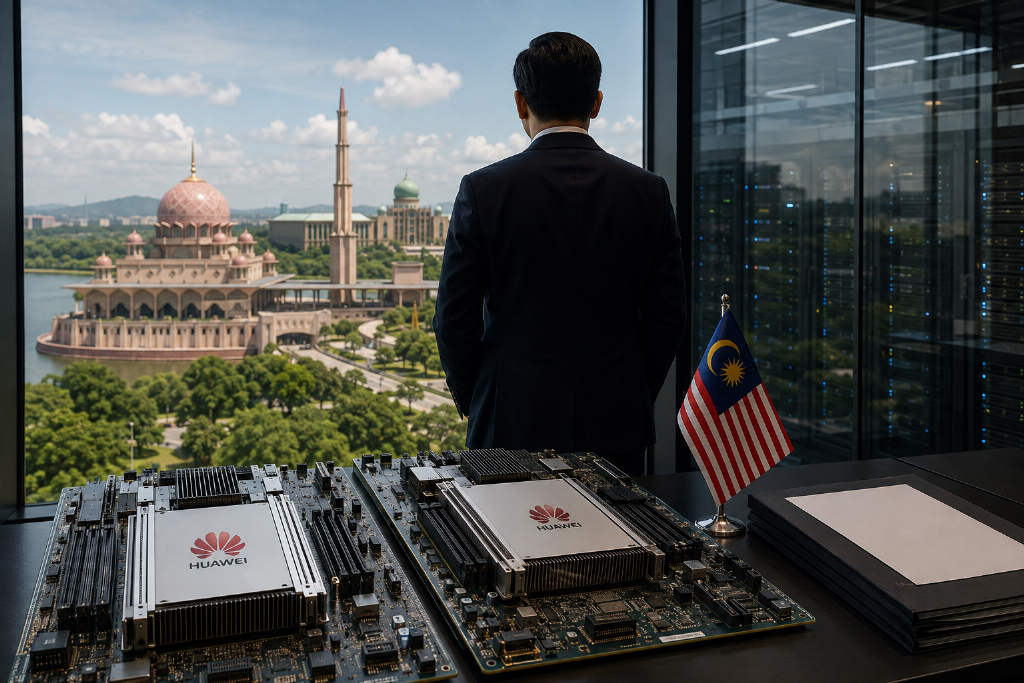
Malaysia is seriously evaluating whether to build its sovereign AI project on Huawei’s Ascend 910C chips, with the budget reportedly reaching 2 billion ringgit, or about $494 million. Bloomberg said that if Kuala Lumpur goes ahead, it would mark the first known case of a government formally choosing Chinese AI chips over U.S. alternatives for a project of this kind. The discussion goes well beyond procurement. Malaysian officials have framed the effort around data sovereignty, saying sensitive government, military and intelligence data must remain inside the country. That concern has drawn attention to the U.S. Cloud Act, which Malaysian Prime Minister Anwar Ibrahim has criticized, arguing that data handled by U.S. tech companies could still be subject to American court orders even if servers are located domestically. The proposal also sits at the center of a wider geopolitical dispute. Washington has already warned that use of Huawei Ascend 910B, 910C and 910D chips may violate U.S. export controls. At the same time, Huawei’s lower pricing has made its systems harder to ignore, even though performance still trails Nvidia’s H100. Malaysian authorities are reportedly considering another tender round that would give U.S. suppliers more direct access to the competition.

190
Malaysia weighs Huawei chips for sovereign AI project as budget may reach 2 billion ringgit
XPeng
2026-09-08 02:52:18

XPeng Robot Production Line Launches, First Humanoid Robot Walks Off Assembly Line

ChainCatcher reports that XPeng's robot production line officially started operations on September 8, 2026. The world's first high-level general-purpose humanoid robot completed automated assembly and independently walked off the production line, marking a key milestone in XPeng's transition from R&D to manufacturing. The production line, designed and developed by XPeng, integrates the mature quality system from the automotive industry with precision manufacturing for humanoid robots, achieving over 80% automation rate in core processes. The robot features 76 degrees of freedom, three Turing AI chips, and an effective computing power of 2250 TOPS. According to XPeng's plan, the robot will enter mass production by the end of this year, and deliveries will begin in 2027. This development represents XPeng's expansion into the robotics sector and highlights the company's capability in advanced manufacturing.

110
XPeng Robot Production Line Launches, First Humanoid Robot Walks Off Assembly Line
BSP
2026-09-07 10:02:58

Philippine Central Bank Proposes 12-Month OPS Registration Moratorium, Tighter VASP Rules

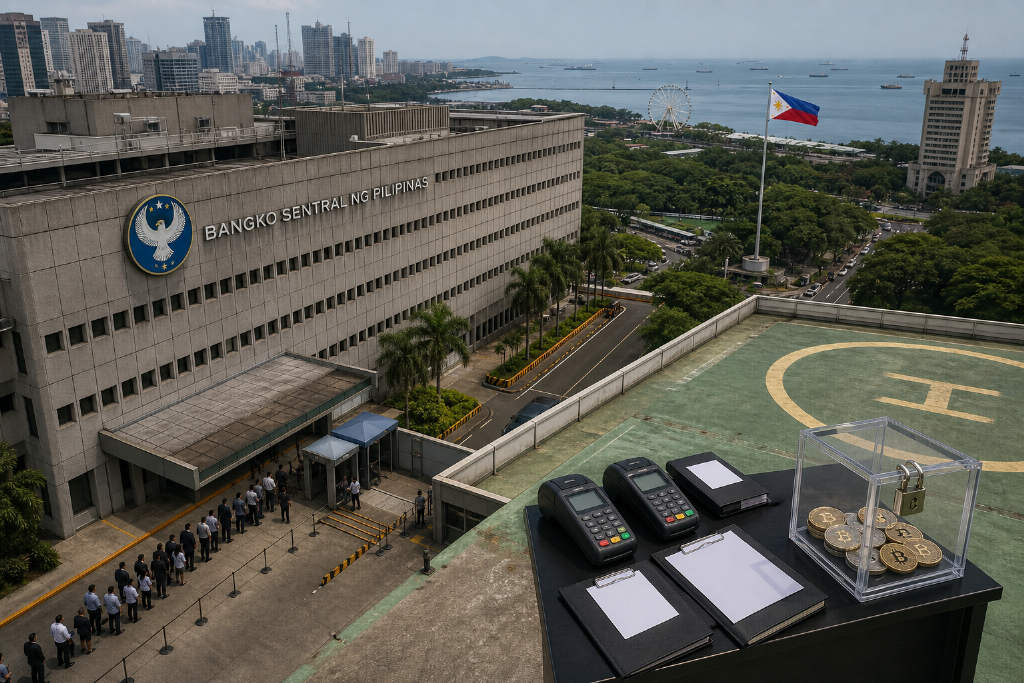
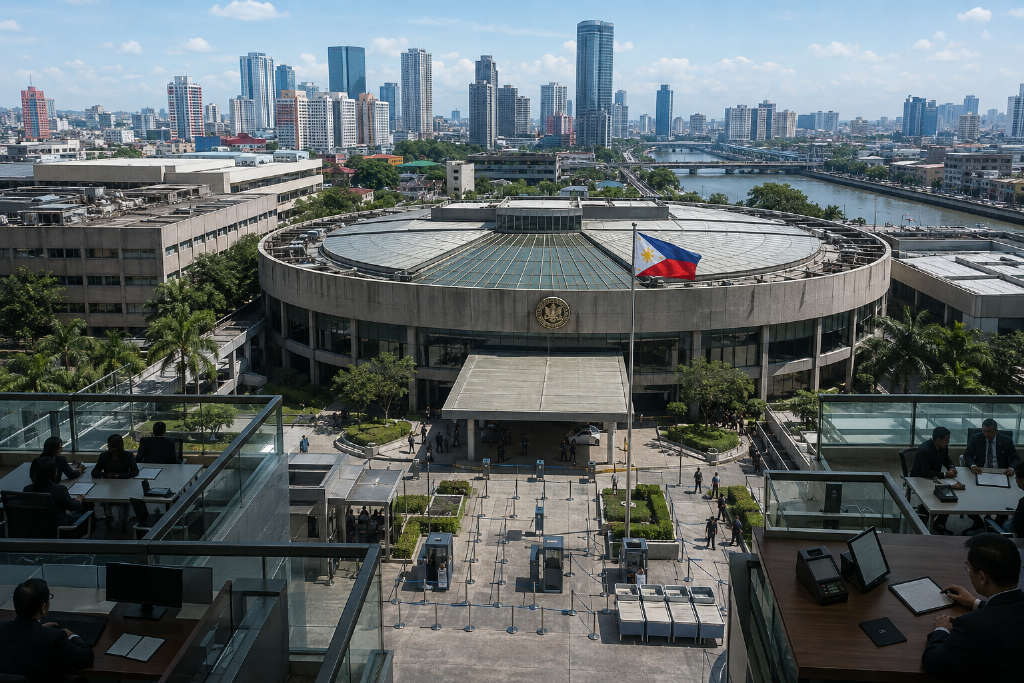
The Bangko Sentral ng Pilipinas (BSP) has issued a draft circular proposing a 12-month suspension of new registrations for Operators of Payment Systems (OPS), aiming to review the classification and licensing framework. During the moratorium, pending applications will be assessed but not approved or denied. The draft also tightens rules for Virtual Asset Service Providers (VASPs), requiring supervised institutions to deal directly with licensed VASPs and apply enhanced due diligence. The measures apply to virtual asset entities authorized by BSP or other regulators. Public comments are open; if approved, the rules take effect 15 days after publication.

90
Philippine Central Bank Proposes 12-Month OPS Registration Moratorium, Tighter VASP Rules
Philippines
2026-09-07 09:51:00

Philippine central bank proposes 12-month freeze on new payment operator registrations and tighter VASP controls

The Bangko Sentral ng Pilipinas (BSP) has proposed a 12-month pause on accepting and processing new applications for operators of payment systems, part of what it described as a broader review of its taxonomy and licensing framework. Under the draft circular, applications filed before the suspension could still be evaluated, but the central bank would withhold approval or denial decisions until the pause ends, and entities would not be allowed to begin activities that require OPS registration unless specifically authorized. The proposal also targets payment arrangements involving virtual asset service providers. BSP-supervised institutions that offer merchant acquisition services would need to handle regulated VASPs through direct merchant arrangements, with those relationships subject to enhanced due diligence, ongoing monitoring, transaction and settlement limits, and other risk-based controls. The requirement would apply to virtual asset firms that must be licensed, registered or authorized by the BSP, the Philippine Securities and Exchange Commission, or another authority. If finalized, the draft would take effect 15 days after publication. The BSP is currently accepting feedback.

130
Philippine central bank proposes 12-month freeze on new payment operator registrations and tighter VASP controls