Omni

Meta
2026-09-03 13:23:19

Meta’s Muse Spark 1.3 raises the pressure on Gemini with stronger benchmark scores and lower pricing

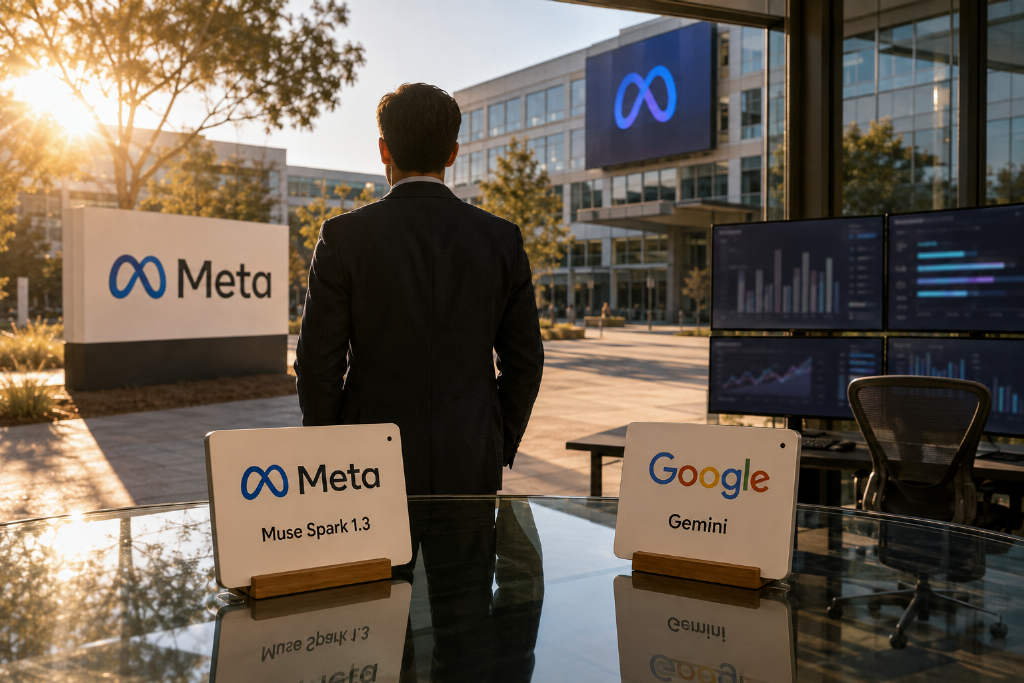
Meta has launched Muse Spark 1.3, putting fresh pressure on Google’s Gemini 3.8 Flash in both benchmark rankings and pricing. According to the source article, Meta CEO Mark Zuckerberg described the release as the company’s biggest jump so far in coding and agent work, while Meta Superintelligence Labs lead Alexandr Wang said the new version cuts unnecessary turns, reduces tool calls by about 20%, lowers token use by about 25%, and holds requirements better in long-running tasks. The model’s reported scores were a major part of the launch narrative. Muse Spark 1.3 posted 75.4 on DeepSWE v1.1, ahead of Claude Opus 5 at 74.0 and GPT-5.6 Sol at 73.0. It also scored 59.4 on SWEAtlas CodeBase QnA, 88.8 on Terminal-Bench 2.1, 98.1 on MRCR 512K-1M, and 62 on the Artificial Analysis intelligence index. On cost, the article said Meta kept pricing at $1.25 per million input tokens and $4.25 per million output tokens, while a contributor tier drew attention for especially low pricing. The report also noted skepticism. BridgeMind said recent AI launches have delivered surging benchmark numbers without matching gains in real-world experience. Artificial Analysis data cited in the article also showed weaker results for Muse Spark 1.3 in AA-Omniscience, where a higher abstention rate reduced hallucinations but pointed to limits in absolute knowledge gains.

950
Meta’s Muse Spark 1.3 raises the pressure on Gemini with stronger benchmark scores and lower pricing
Stellar
2026-09-03 07:27:46

USDT0 Goes Live on Stellar Network for Cross-Border Payments and DeFi

The Stellar Development Foundation has announced the launch of USDT0 on the Stellar network. Built on LayerZero's OFT (Omnichain Fungible Token) standard, USDT0 maintains a 1:1 reserve with USDT, enabling users to access global liquidity instantly without needing wrapped tokens or third-party tools. The integration allows Stellar users to transfer value with fees under $0.01 and finality in approximately 5 seconds, spanning over 170 countries. USDT0 is already live on the decentralized exchange SushiSwap, and more DeFi protocols are expected to integrate in the future, expanding payment applications in emerging markets in Latin America, Africa, and Asia-Pacific. This move aims to support cross-border payments and DeFi use cases on the Stellar network.

1300
USDT0 Goes Live on Stellar Network for Cross-Border Payments and DeFi
Baidu
2026-09-03 03:17:13

Baidu Reinforces ERNIE Team with Two Key Hires: Frontier Lab Researcher and DeepSeek OCR Lead

Baidu is strengthening its Foundation Model Unit (BMU) with two key hires. Sun Tianxiang, BMU head, brought in a researcher codenamed Wuqin from a North American Frontier Lab to boost ERNIE pre-training. Meanwhile, former DeepSeek researcher Wei Haoran, lead author of DeepSeek-OCR, joined BMU as head of multimodal algorithms. Wei previously contributed to the open-source Unlimited OCR, which set a record on OmniDocBench. The moves come as Baidu ramps up core model development.

1070
Baidu Reinforces ERNIE Team with Two Key Hires: Frontier Lab Researcher and DeepSeek OCR Lead
MiniMax
2026-08-31 07:28:17

MiniMax H3 Max Live Reaches Twitch as AI Video Streams Keep Generating in Real Time

fal engineer Rehan Sheikh has connected H3 Max directly to Twitch in an experiment that turns AI video generation into a live, continuously updating stream. Because the model can generate footage faster than viewers consume it, the system can play one segment while rendering the next in the background, making a theoretically endless broadcast possible. Sheikh described the setup as an "infinite interdimensional television," and MiniMax later reposted the experiment. fal then continued with a broader H3 Max Live test. The stream is not pre-rendered: viewers can type !prompt in the Twitch chat, and fal said new instructions can appear on screen within seconds, letting the audience shape each scene as the broadcast unfolds. According to the source material, the lack of a fixed script or running time means the program can continue as long as generation continues. The report said the key shift is speed. H3 Max has reduced waiting time to below playback time, clearing a threshold that previously kept AI video from functioning as a true live format. fal Research said H3 Max was trained on top of MiniMax’s open-source H3 and accelerated for fal’s inference system. Official figures cited in the report said it can generate a 5-second video in under 3 seconds, with throughput about 35 times that of MiniMax’s official H3 API. On Artificial Analysis’ audio-enabled ranking, its image-to-video model sits first at 1202 Elo, while its text-to-video model ranks third at 1235 Elo behind only Wan 3.0 and Gemini Omni Flash.

930
MiniMax H3 Max Live Reaches Twitch as AI Video Streams Keep Generating in Real Time
Google
2026-08-29 14:37:45

Google rolls out Gemini Omni 1.1 Flash with 40-second scene extension and 4K output

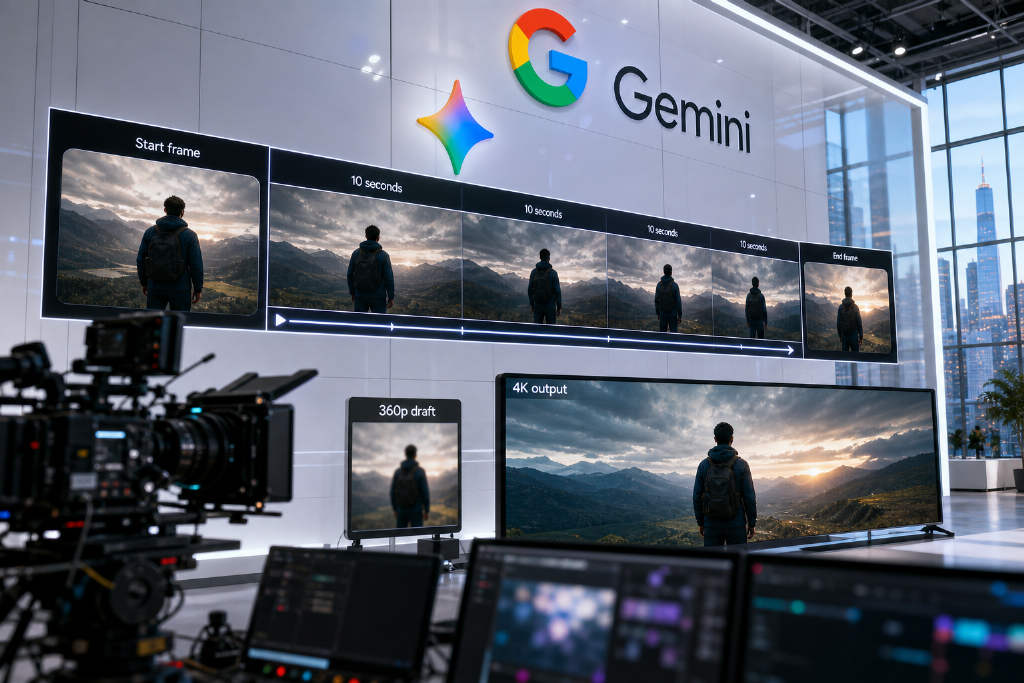
Google has released Gemini Omni 1.1 Flash, a natively multimodal model for video generation and editing, according to Techub News, citing MarkTechPost. The new version can extend scenes using up to 10 seconds of context, with total extension time reaching 40 seconds. It also allows camera motion control by fixing the first and last frames. Users can supply video clips as references to keep characters consistent across generated footage. The workflow also supports quickly producing draft videos at 360p before scaling them up to 4K output. Google is making the model available through the Gemini API on Google AI Studio and the Gemini Enterprise Agent Platform. Adobe, Figma Weave, GMI Cloud, and Runway have already integrated it as production users. On pricing, input video tokens cost $1.5 per million, while output video tokens cost $17.5 per million. The company lists the cost of generating 720p video at about $0.1 per second. All generated videos carry SynthID watermarking.

270
Google rolls out Gemini Omni 1.1 Flash with 40-second scene extension and 4K output
Google
2026-08-28 09:29:38

Google's Gemini Omni 1.1 Flash Adds Video Continuation, Extends Clips to 40 Seconds

Google has released Gemini Omni 1.1 Flash, an updated version of the Gemini Omni Flash model unveiled in May and opened for public API beta in late June. The standout addition is video continuation in the Omni API: while a single generation remains capped at 10 seconds, users can now extend clips repeatedly, each time adding another 10 seconds, for a maximum combined runtime of 40 seconds. When continuing, the model reviews up to 10 seconds of prior footage to keep characters, movement, and story coherent. The update also introduces first-and-last frame control, allowing users to supply a start image and an end image and have the model fill in the video in between. A cheaper 360p draft mode boosts system throughput by as much as 60% at roughly one-third the cost of 720p, according to the company; drafts can then be upscaled to 1080p or 4K, though that output is an upscale rather than native high-resolution generation.

810
Google's Gemini Omni 1.1 Flash Adds Video Continuation, Extends Clips to 40 Seconds
Hyperliquid
2026-08-25 01:43:56

Kinetiq pitches Elysium as a Layer 2 for Hyperliquid’s trading stack

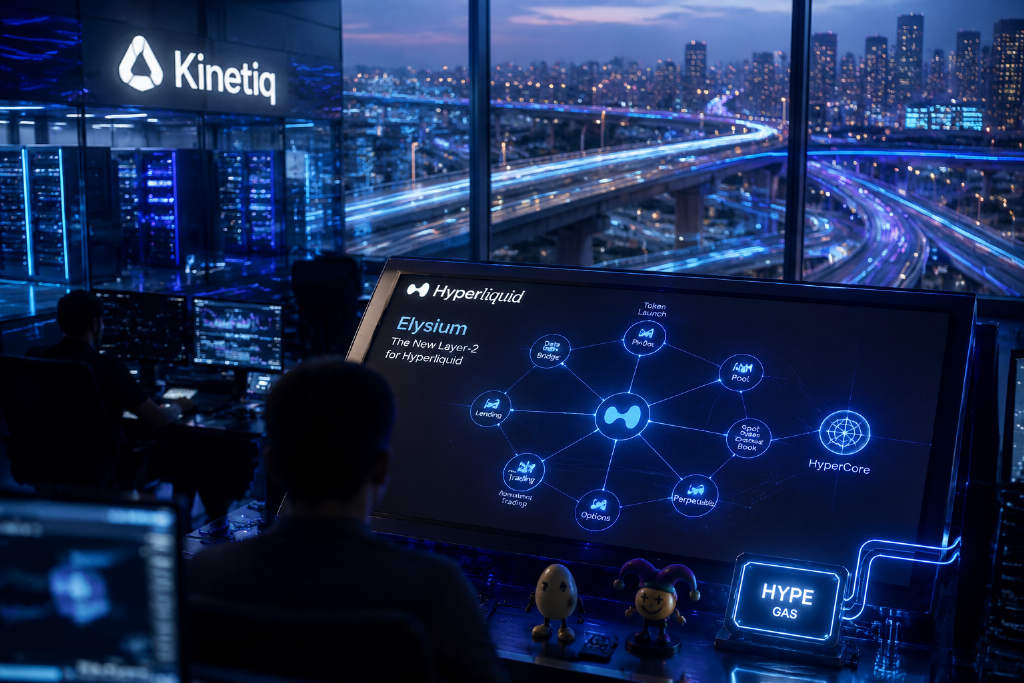
HYPE climbed above $80 on Aug. 22 and set another all-time high, drawing capital and attention back to the Hyperliquid ecosystem. That rebound also revived meme trading on HyperEVM, where egg and joff briefly emerged as high-market-cap tokens. The bounce, however, highlighted an old problem: HyperEVM has retail demand, but it still lacks a trading infrastructure layer that can keep pace with speculative activity, token launches and more complex onchain financial applications. Kinetiq, currently the largest liquid staking protocol on Hyperliquid with about $1.214 billion in TVL, says it wants to fill that gap with Elysium, a planned Layer 2 for Hyperliquid. Under the design outlined by Kinetiq, Elysium would keep HYPE as its gas token, aim for block speed and throughput several orders of magnitude above HyperEVM at launch, and expand the existing L1 Read connection to HyperCore so developers can access deeper order book data and fresher pricing. The project is framed as more than a performance upgrade. Kinetiq says Elysium could create a full token lifecycle inside the ecosystem, starting with issuance on Elysium, then routing liquidity through long-tail AMMs and Prop AMMs, later into HyperCore spot order books, and finally into perpetual markets through HIP-3. The team also pointed to use cases such as PaperTrade, options, automated trading systems and lending protocols that require real-time hedging and frequent state updates.

990
Kinetiq pitches Elysium as a Layer 2 for Hyperliquid’s trading stack