Omni

Madison Huang
2026-08-23 07:30:12

Jensen Huang’s daughter Madison Huang appears at Beijing robot conference as Nvidia’s physical AI executive

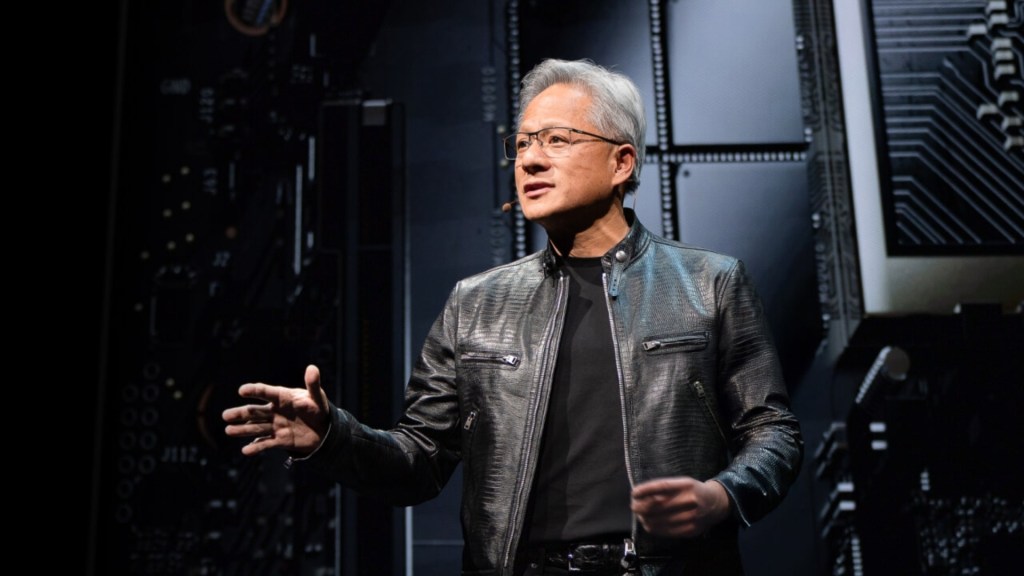
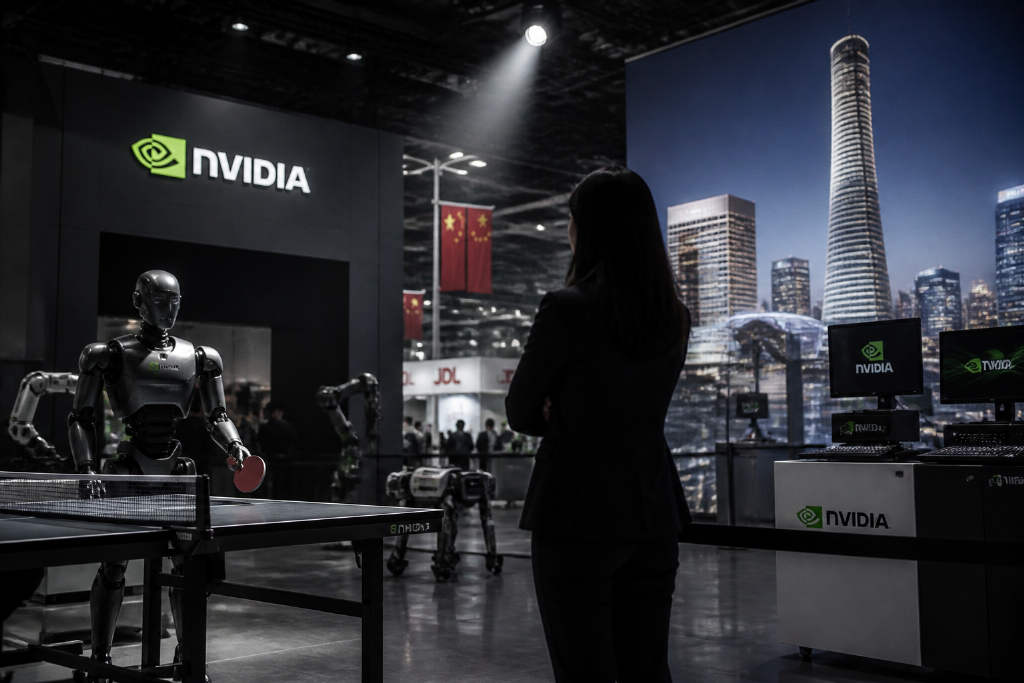
Madison Huang, daughter of Nvidia founder Jensen Huang, made a rare public appearance in Beijing during the opening of the 2026 World Robot Conference in Yizhuang, where she visited a string of robotics companies including Dobot, Lunewheel Intelligence, UBTECH, Kepler Robotics and JD’s exhibition area. Huang currently serves as senior director of product and technical marketing for Nvidia’s physical AI platform, with responsibilities spanning Omniverse, Cosmos, Isaac and the humanoid robot foundation model GR00T. The visit came at a moment of rising attention on China’s robotics sector. The conference gathered nearly 400 companies, showcased more than 3,000 exhibits and featured over 300 new product launches. On the same day, Unitree was listed on Shanghai’s STAR Market, with its share price at one point jumping more than 600% in debut trading, while a broader group of robotics companies was described as moving ahead with IPO plans. The report also traces Huang’s background before Nvidia. She studied at the Culinary Institute of America, worked in restaurants in New York and San Francisco, trained in pastry in Paris, studied wine in London, and later worked at LVMH before entering Nvidia as an intern in 2020. Nvidia disclosures cited in the report said her total compensation for fiscal 2026 was about $1.232 million.
600
Jensen Huang’s daughter Madison Huang appears at Beijing robot conference as Nvidia’s physical AI executive
CoreWeave
2026-08-21 08:03:28

Goldman Sachs Keeps Neutral on CoreWeave, Raises 12-Month Price Target to $139

CoreWeave shares rose 19% after the company reported second-quarter results, with Goldman Sachs saying the near-term setup is becoming clearer even as longer-term margin durability remains unsettled. In a report dated Aug. 20, Goldman maintained its Neutral rating and lifted its 12-month price target to $139 from $121, implying 53% upside from the current share price cited in the note. The bank said three core lines of evidence now support the company’s near-term case: demand remains ahead of supply, pricing is holding firm across both new and older chip generations, and capacity expansion continues on schedule. CoreWeave’s revenue backlog rose 5% quarter over quarter to $104 billion, while more than $25 billion of additional committed contracts had already been added after the start of the third quarter. Goldman’s bigger debate is over long-term monetization and margins. It pointed to managed inference, platform services, and CoreWeave Omni as the main software-related areas to watch. The firm said software and platform revenue must become a more dependable contributor to growth and profitability before a more constructive rating would be warranted.

410
Goldman Sachs Keeps Neutral on CoreWeave, Raises 12-Month Price Target to $139
Bitget
2026-08-20 03:20:04

Bitget lists 23 more spot stock rTokens, bringing total supported count to 682

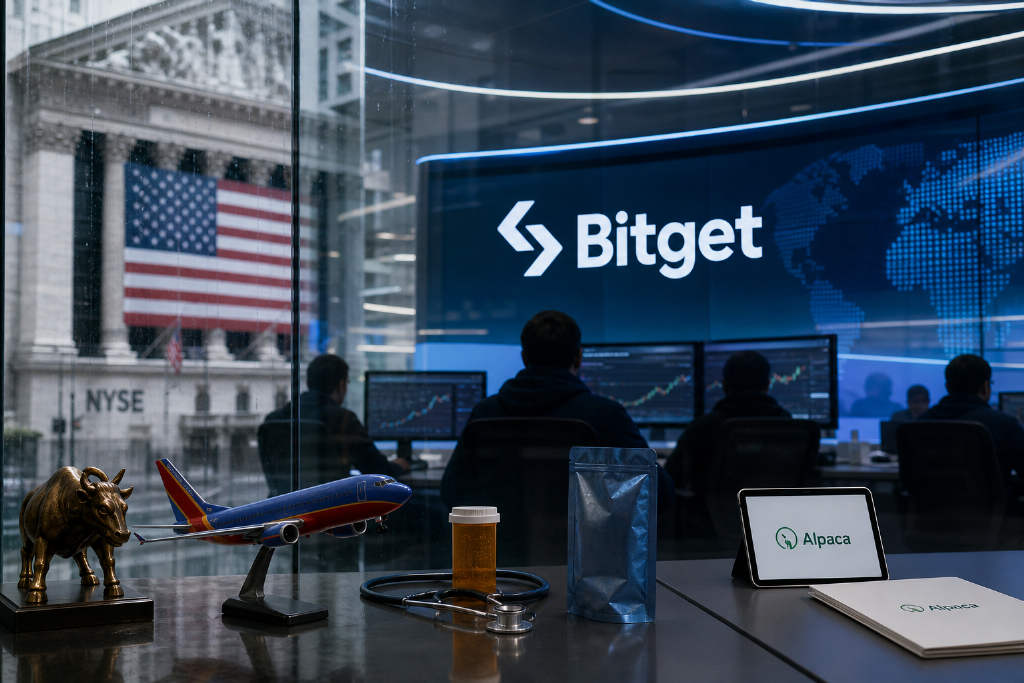
Bitget has added 23 spot stock rTokens, including rHDV, rJEPI, rLUV, and rOMC, according to an official announcement cited by ChainCatcher. The newly listed products span several sectors, including finance, healthcare, and consumer-related names. With the latest additions, the platform now supports 682 rTokens in total. The exchange said these products use the naming format of the letter “r” plus a stock ticker, such as rNVDA for Nvidia. The rTokens are issued by Reality, Bitget’s licensed real-world asset protocol, and connect to global liquidity pools including Nasdaq and the New York Stock Exchange through a partnership with compliant broker Alpaca. Bitget said the products are backed by 1:1 reserves of the underlying assets and held with licensed custodians. Stock dividends are distributed in token form on a 1:1 basis, while corporate actions such as stock splits and reverse splits are mirrored on-chain. The exchange also said holdings can be used as joint collateral in unified accounts and USDT-margined futures, allowing users to hold global stock exposure while managing capital on the platform.

1120
Bitget lists 23 more spot stock rTokens, bringing total supported count to 682
Google
2026-08-15 13:51:42

Google to let users remove visible watermarks from AI-generated content

Google said on Aug. 15 that users will be able to remove visible watermarks from AI-generated content, including images, videos and songs. The company said the change will not affect its invisible SynthID watermark or metadata tied to the C2PA standard. According to Gemini Vice President Josh Woodward, the toggle will apply to the Nano Banana, Omni and Lyria models. The option to disable visible watermarks will be available in Gemini and Google’s Flow video editor, with search support set to arrive soon. Google said the feature will roll out over the next few days, and users will be able to turn visible watermarks on or off through the “Settings > Media watermark” menu. The company also open-sourced a new library called Credentio to help developers embed local verification tools in their own applications.

1270
Google to let users remove visible watermarks from AI-generated content
Alibaba
2026-08-15 09:03:32

Alibaba open-sources Qwen3.8-27B, with 9 wins over Claude Opus 4.6 Max in its own benchmark card

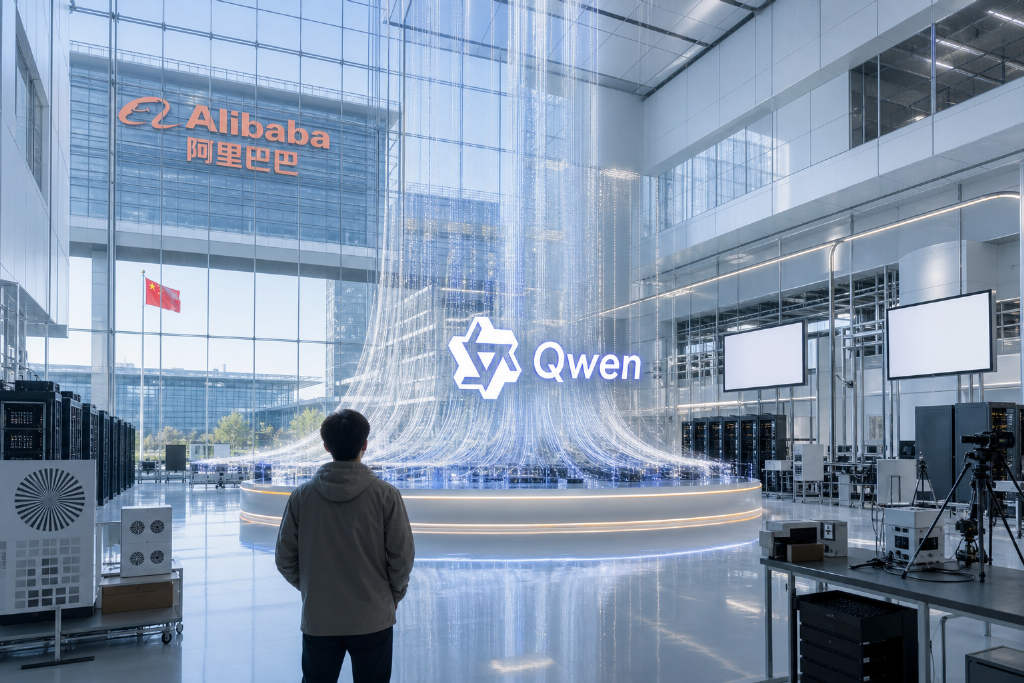
Alibaba on Aug. 14 open-sourced Qwen3.8-27B, a 27-billion-parameter dense native multimodal model released under Apache 2.0, with no monthly active user or revenue threshold attached to its license. The company said the model supports a native 262K context window and can be extrapolated to 1 million tokens through YaRN. In Alibaba’s published model card, Qwen3.8-27B was compared against Claude Opus 4.6 Max across 14 benchmarks with side-by-side scores, winning 9 and losing 5. Its largest gains were in visually grounded and agent-style tasks such as MathVision, CharXiv and AndroidWorld, while every loss was concentrated in pure reasoning, code generation, terminal coding and related long-chain tasks. Alibaba also said a 4-bit quantized version can run in roughly 14 GB to 17 GB of VRAM, enough to fit model weights on a consumer GPU such as an RTX 4090, though that figure excludes KV cache, concurrent agent sessions, runtime buffers and multimodal components. All benchmark figures cited in the model card came from Alibaba’s own release, and no third-party independent replication was provided in the input.

1510
Alibaba open-sources Qwen3.8-27B, with 9 wins over Claude Opus 4.6 Max in its own benchmark card
Nvidia
2026-08-13 09:57:55

VC partner says Nvidia is becoming a “synthetic hyperscaler” in the AI compute stack

Altimeter Capital partner Clark Tang argues that Nvidia is no longer just a chip supplier to the AI industry. In his view, the company has been building the two pillars that historically defined hyperscalers: an operating layer that abstracts and manages infrastructure, and a financing layer that funds capacity ahead of demand. Tang says this combination is turning Nvidia into a “synthetic hyperscaler,” one that is starting to displace Amazon, Microsoft, and Google in parts of the AI compute supply chain. His thesis begins with a shift in infrastructure economics. Traditional hyperscalers built strong margins by converting enterprise capex into opex and using software to maximize utilization of shared hardware. Tang says AI workloads break that model. Large-scale training depends on tightly synchronized GPU clusters, while inference is highly sensitive to tokens per watt and time to first token. In that setup, virtualization and networking layers that worked well in the cloud era can become a drag on GPU performance. He also points to the rise of neocloud providers, which offer lower-margin, AI-focused infrastructure but often lack the balance sheet strength to finance aggressive buildouts. Tang says Nvidia has moved to close that gap with software such as DSX OS, Mission Control, Omniverse, and Dynamo, while also standardizing hardware and bringing in third-party capital from firms including Apollo, BlackRock, Blackstone, Goldman Sachs, and KKR.

1220
VC partner says Nvidia is becoming a “synthetic hyperscaler” in the AI compute stack
dexterous han
2026-08-12 09:44:10

Dexterous hand startups split into two camps as 2026 funding reaches RMB 28.51 billion

A report cited by MarsBit and originally published by ITjuzi says China’s dexterous hand segment has logged 74 financing events involving 47 companies from January to Aug. 3, 2026, with disclosed funding totaling about RMB 28.51 billion. The report divides the field into two groups: 15 humanoid robot makers that develop dexterous hands in-house, and 32 third-party suppliers that sell complete hands or core components such as tactile sensors, micro motors, and precision screws. The funding gap between the two camps is wide. The 15 robot body makers accounted for 23 deals and about RMB 18 billion to RMB 20 billion in disclosed funding during the first seven months of the year, while the 32 suppliers completed 51 deals worth about RMB 8.51 billion. The report argues that in-house hand development has become a standard requirement for humanoid robot OEMs, but the deeper component stack remains largely outsourced. It also says the supplier side is fragmenting into three distinct tracks: complete dexterous hand module vendors, tactile sensing companies, and core drivetrain and transmission component makers. While complete-hand vendors are facing crowded competition, companies focused on tactile sensing and specialized parts are described as having stronger technical moats and a longer runway for commercialization.

860
Dexterous hand startups split into two camps as 2026 funding reaches RMB 28.51 billion
Meta
2026-08-11 10:33:11

Meta returns to open-weight AI with Muse Glimmer and plans to release Spark 1.2

Meta has reopened its open-weight AI strategy with the release of Muse Glimmer, a model whose underlying parameters can be downloaded and modified by developers. The company said it will also release the weights for the more capable Muse Spark 1.2 in the coming weeks, marking a clear shift back toward the approach it once used to distinguish itself from rivals. CEO Mark Zuckerberg backed the move in a post on Meta’s website, arguing that powerful and free AI should reach billions of people rather than remain concentrated in large institutions. He also defended model distillation and said people should retain the ability to learn from observable information, a position that cuts against recent complaints from OpenAI and Anthropic over how their closed models’ outputs are used. Muse Glimmer is Meta’s first open-weight model since Llama 4 and its first to ship under the Apache 2.0 license. The model supports text and image input, carries a 128K context window, and is aimed at local agent use on personal devices. Meta’s release also comes with a broader commercial and infrastructure angle, as the company plans to spend as much as $145 billion on AI infrastructure this year while building out related cloud services.

1830
Meta returns to open-weight AI with Muse Glimmer and plans to release Spark 1.2