Omni

Anthropic
2026-08-11 07:33:04

Anthropic to add invisible watermarking and C2PA signatures across Claude-generated content

Anthropic said Claude-generated content will carry machine-readable markers worldwide starting Aug. 2, 2026, adding invisible text watermarking and C2PA-based signed provenance metadata to meet transparency rules under the European Union’s AI Act. The company said the rollout will cover Claude apps, its API platform, Claude Code, and services accessed through cloud partners including AWS, Google Cloud, and Microsoft Foundry. New models launched after that date will support the markers from day one, while older models are being updated. Anthropic described the system as a two-part approach. Text outputs will include embedded signals designed to remain invisible to readers and to persist when content is copied and pasted. File outputs such as SVG, PNG, and JPG will carry signed metadata intended to show whether Claude handled the file and whether it was later tampered with. The company also said it will publish technical documentation for detection methods so users and third parties can verify whether content passed through Claude. Anthropic also acknowledged the limits of the system. A detected marker does not prove Claude was the original author, since users may use the model for proofreading, translation, or summarization of human-written text. The absence of a marker also does not prove human authorship, especially for older model outputs, heavily revised text, short passages, or images altered through screenshots or format conversion.

1830
Anthropic to add invisible watermarking and C2PA signatures across Claude-generated content
TSMC
2026-08-10 10:21:52

Nikkei: TSMC and Sony plan Kumamoto chip venture targeting automotive and robotics demand

Sony Group and Taiwan Semiconductor Manufacturing Co. (TSMC) plan to invest about 1 trillion yen, or roughly $6.3 billion, to form a joint venture in Kumamoto Prefecture, according to a report from Nikkei. The venture is intended to mass-produce next-generation semiconductors used in image sensors, with Sony expected to hold about 60% and TSMC about 40%. Commercial production could begin as early as 2029. Nikkei said the manufacturing base would use Sony Semiconductor Solutions’ existing site in Kumamoto rather than a newly built location. The report also said the two companies aim to establish the joint venture during fiscal 2026, while an investment agreement could be finalized in the coming months. The partnership builds on an announcement made in May, when Sony and TSMC said they would jointly develop and manufacture next-generation image sensors. Sony is expected to contribute sensor design capabilities, while TSMC would provide manufacturing and process technology. Nikkei added that Sony is already a minority shareholder in TSMC’s Kumamoto plant, meaning local cooperation between the two groups is already in place. The report said the effort is aimed not only at smartphones but also at Physical AI applications, including automotive and robotics, where demand for high-performance sensors is expected to matter more after 2029.

470
Nikkei: TSMC and Sony plan Kumamoto chip venture targeting automotive and robotics demand
Microsoft Thr
2026-08-07 16:36:59

Microsoft says hackers are using BNB Chain contracts and fake CAPTCHAs to deliver malware

Microsoft Threat Intelligence said a malware campaign is using compromised websites, fake CAPTCHA prompts, and BNB Chain smart contracts to deliver malicious commands to victims. In the activity described by Microsoft, JavaScript planted on hacked sites contacts a BNB Chain gateway and pulls instructions from a smart contract previously tied to the ClearFake campaign. The setup uses a technique known as EtherHiding, which stores malicious instructions on-chain, making them harder to remove because only the wallet controlling the contract can change its contents. Victims are shown fake verification prompts that tell them to open the Windows Run dialog, paste clipboard content, and press Enter. Microsoft said this method, known as ClickFix, relies on users executing the malware themselves, while a related variation called TerminalFix sends users to Windows Terminal or PowerShell. The company said these approaches have become a high-volume initial access technique affecting thousands of enterprise and consumer devices globally each day. Microsoft also warned that attackers are abusing legitimate Windows tools such as PowerShell, cmd, mshta, rundll32, msiexec, curl, Windows Management Instrumentation, and scheduled tasks. It advised organizations to restrict unnecessary command-line tools, enable PowerShell logging, and apply application controls. The company added that users should never paste commands from CAPTCHA pages, browser errors, emails, ads, or unsolicited support pages into Run, Terminal, PowerShell, or Command Prompt.

460
Microsoft says hackers are using BNB Chain contracts and fake CAPTCHAs to deliver malware
MiniMax
2026-08-07 05:03:26

MiniMax shares jump 78.21% after H3 launch and open-source release as investors reprice video AI

MiniMax has become one of the market’s sharpest AI rerating stories in the span of a week. After releasing its multimodal generation model H3 on July 31 and open-sourcing it on Aug. 3, the company’s shares climbed 78.21% from the post-launch period through 10:53 a.m. on Aug. 7, including a 23.15% gain on the day. The source article argues that investors are no longer treating H3 as just another benchmark-driven model release. Instead, they are pricing in a broader thesis around video generation as a high-token-consumption workload, lower inference costs, and the ecosystem effects that follow an open-source strategy. According to MiniMax, H3 supports text, image, video and audio context, and can generate up to 15-second videos at 2K resolution, 24FPS, with native stereo audio. In Artificial Analysis blind testing, H3 scored 1242 Elo in text-to-video with audio, ranking second globally, while placing first in video editing and among the top three in image-to-video. The article also highlights price as a key factor, saying H3’s per-second 2K cost is less than one-third of flagship models and its 768P pricing is less than half of mainstream offerings. The strongest shift in sentiment came after open-sourcing. MiniMax said 16 chip vendors, multiple developer communities, cloud inference platforms and inference frameworks had already adapted or integrated H3, with more than 100 enterprises going live on Day 0. That has pushed the discussion beyond model rankings toward revenue growth, ecosystem distribution and strategic positioning.

2350
MiniMax shares jump 78.21% after H3 launch and open-source release as investors reprice video AI
Fei-Fei Li
2026-08-06 08:13:13

Fei-Fei Li says World Labs wants to build scalable digital worlds for robotics after SceniX acquisition

World Labs’ acquisition of SceniX is being framed by CEO Fei-Fei Li and SceniX co-founder Yunzhu Li as a move to solve one of robotics’ hardest bottlenecks: the shortage of training and evaluation data. In an a16z interview, the two said robots are the first major proving ground for “spatial intelligence,” a category World Labs sees as the next frontier for AI. Their joint plan centers on a real-to-sim-to-real stack that maps physical environments into aligned digital worlds, where robots can be trained and tested more safely, more quickly and at larger scale. Li said World Labs’ Marble model can already turn images and text into geometrically consistent worlds, while SceniX brings robotics, simulation and evaluation expertise. Yunzhu Li argued that the company is not trying to bet on a single robot body or a single model architecture. Instead, it is building infrastructure that can support different hardware types, multimodal policy models and simulation workflows. Both executives said simulation is not a substitute for real-world data, but a necessary partner to it, particularly for counterfactual reasoning, reliability testing and iteration speed. They also said near-term deployment is more likely in semi-structured settings such as warehouses, restaurants and hotels than in fully unstructured home environments.

2040
Fei-Fei Li says World Labs wants to build scalable digital worlds for robotics after SceniX acquisition
Market Analys
2026-08-02 12:30:00

Crypto Week Ahead: Circle and SpaceX Earnings, Major Token Unlocks, and Shutdowns for Zapper and Ctrl Wallet

The coming week carries a dense schedule for crypto markets and adjacent sectors. Circle, SpaceX, Hut 8, and American Bitcoin are all set to release quarterly results, while token unlocks for Succinct (PROVE), Ethena (ENA), and Hyperliquid (HYPE) are also on the calendar. At the same time, several products and services are approaching end-of-life milestones, including DeFi dashboard Zapper, crypto wallet Ctrl Wallet, and Polygon liquid staking token MaticX. Exchanges are making changes as well: Binance will stop supporting the Sophon mainnet and migrate SOPH to Ethereum on a 1:1 basis, and Coinbase plans to suspend trading in IDEX, LRC, OMNI, PIRATE, and FIS. The week also includes Polymarket’s shift to TWAP-based settlement for crypto up/down markets, a planned compensation update from AFX Trade after its bridge exploit, and an upcoming XRP Ledger software release that restores revised features previously removed over security flaws. Macro data are also due, with the U.S. set to publish July unemployment, nonfarm payrolls, and wage figures on Aug. 7.

3060
Crypto Week Ahead: Circle and SpaceX Earnings, Major Token Unlocks, and Shutdowns for Zapper and Ctrl Wallet
Claude Code
2026-08-02 08:27:42

Claude Code can be routed to free models, but that does not make Claude free

A viral post claiming developers can use Claude Code for free through GitHub tools has drawn attention, but the setup does not make Anthropic’s Claude model free. What these tools actually do is reroute Claude Code traffic to other providers, including DeepSeek, Kimi, OpenRouter, or even local models, by changing the ANTHROPIC_BASE_URL environment variable to a third-party gateway that speaks the Anthropic API format. Claude Code still supplies the terminal interface and agent framework, handling file access, command execution, and multi-step task planning, while the underlying model intelligence comes from whichever backend the user selects. That distinction matters. Developers may get a free or cheaper experience by using alternative models behind the Claude Code interface, but they are not getting free access to Claude itself. The article also notes trade-offs. DeepSeek and Kimi K2 appear broadly usable for tool calling, yet their overall coding performance still trails Claude. There are also compliance questions tied to Anthropic’s terms of service when Claude Code is directed to non-Anthropic backends. Separately, numbers cited in the viral post, including claims around vendors, developers, and setup time, were not tied to a specific repository and could not be independently verified.

1860
Claude Code can be routed to free models, but that does not make Claude free
Bitcoin
2026-07-31 11:07:44

RGB pushes a unified Bitcoin asset standard as Tether prepares native USDT issuance on Bitcoin

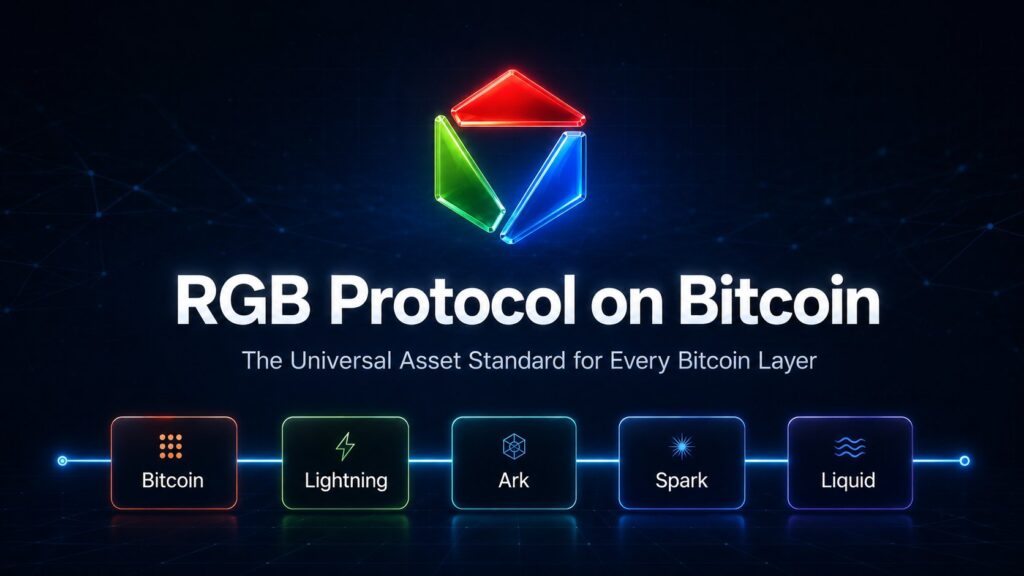
RGB has renewed its pitch to become the common asset standard across Bitcoin’s growing multi-layer ecosystem, arguing that separate token frameworks built by Lightning, Ark, Spark and other protocols are creating fragmentation. The timing is notable. On July 6, Tether said it would issue USDT natively on Bitcoin through RGB, with UTEXO leading issuance and distribution and a launch expected within weeks. That would mark USDT’s return to Bitcoin 12 years after its earlier issuance era on Omni Layer. RGB’s architecture differs from ERC-20 on Ethereum. It uses client-side validation, keeps contract data and state off-chain except for commitments, and binds asset ownership directly to Bitcoin UTXOs. According to the source material, this allows assets to move between the Bitcoin base layer and Lightning channels without relying on cross-chain bridges, while final settlement stays on Bitcoin. The project’s technical stack has also advanced. RGB exited testnet in July 2025, version 0.11.1 gained full Bitcoin mainnet support, and the LNP/BP Standards Association released v0.12 on July 10, 2025 after an eight-month rebuild. Still, the article argues adoption remains the real test. With about 92% of USDT circulating on Ethereum and Tron, Tether’s distribution power may become the first large-scale trial of RGB’s standardization push.

1970
RGB pushes a unified Bitcoin asset standard as Tether prepares native USDT issuance on Bitcoin