Serenity Says World Models Are Becoming AI’s Biggest Investment Consensus in China
Analyst Serenity says China’s primary AI funding is moving away from early base-model startups and into embodied AI, physical AI, and world models.

Analyst Serenity says China’s primary AI funding is moving away from early base-model startups and into embodied AI, physical AI, and world models.

A heavy stream of crypto and AI developments landed between July 23 and July 24, led by BitMEX’s decision to shut down on Sept. 23 and the collapse in its exchange token BMEX, which market data showed fell 99.69% at one point as liquidity tightened. Arthur Hayes later said he was deeply proud of what had been built, while Bubblemaps said 75% of BMEX allocations had never circulated on-chain. Vanar also unveiled a major strategic reset, saying it will move to Base, focus on an AI Organizations economy, migrate existing VANRY holders on a 1:1 basis and lift total supply from 2.4 billion to 10 billion tokens, with 62% still locked during the transition and new allocations vesting over 60 months after a cliff period. Institutional tokenization also moved forward. Mubadala Capital said it is working with Coinbase and KAIO on a blockchain-native version of its long-term private equity fund for qualified investors, with Coinbase set to use Base as one of the token networks and to purchase the token for its own balance sheet. Michael Saylor separately announced the launch of the Bitcoin Security Consortium, backed by a three-year $15 million commitment and founding members including Anchorage Digital, ARK Invest, BlackRock, Block, Blockstream, Coinbase, Fidelity Digital Assets, Galaxy and Strategy. Elsewhere, Ondo Finance said Oasis Pro Markets had received authorization to offer regulated tokenized securities services in the U.S., Uniswap introduced permissioned pools on v4, and a long list of market, policy, security and AI infrastructure updates continued to reshape the day’s flow.


A comprehensive guide to ICOs: how they work, key milestones from Mastercoin to EOS, types of tokens, comparison with IPOs and VC, risks, benefits, and the road ahead amid regulatory scrutiny.

LMAX Group has introduced Omnia Exchange, a new platform designed to let institutions and financial platforms convert FX, crypto, stablecoins and other digital assets in real time through one API.

Bitmine said it held 4.168 million ETH, 193 BTC and $988 million in cash as of Jan. 11, with total crypto, cash and “moonshots” holdings reaching $14 billion.

Xiaomi unveiled MiMo V2.5 and V2.5 Pro, integrating text, image, audio, and video. Pro resolves 57.2% on SWE-bench Pro, matching Claude Opus 4.6 and GPT-5.4, while using 42% fewer tokens than Kimi K2.6. Base model offers lower cost at higher speed, both support 1M context.

Bitmine said it held 4,110,525 ETH, 192 BTC and $1.0 billion in cash as of Dec. 28, 2025, bringing total crypto, cash and other holdings to $13.2 billion.

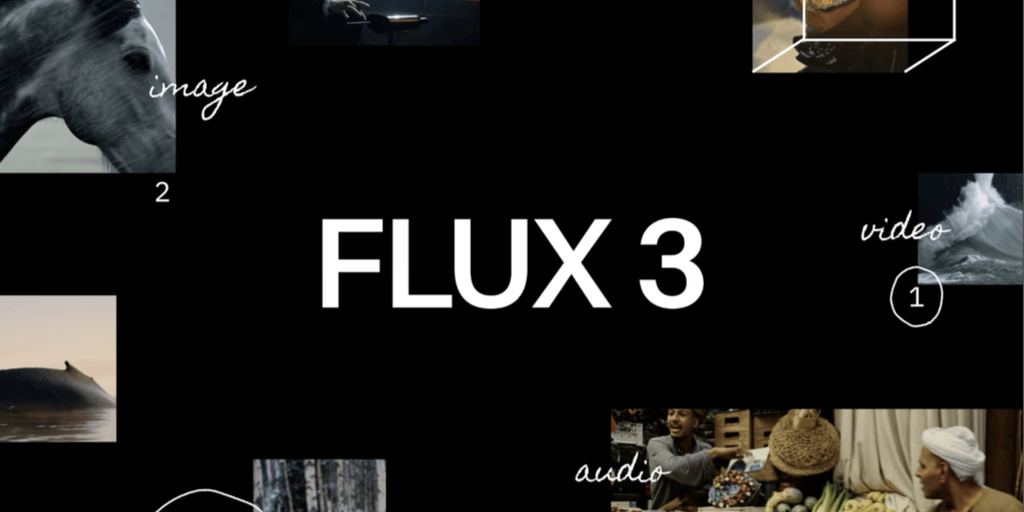
Black Forest Labs unveiled FLUX 3 on Thursday, turning its flagship system from a still-image model into one that can also generate video with synchronized audio. The German AI lab said the model was trained jointly on images, video, and audio in a shared system, making FLUX 3 a multimodal model rather than a set of separate tools stitched together. Video is the main release feature. FLUX 3 can create clips up to 20 seconds long, with dialogue, sound effects, and ambient sound generated alongside the visuals and aligned to what is happening on screen. In early head-to-head preference tests, human reviewers picked FLUX 3 over Runway Gen-4.5 in 77% of comparisons and over Luma Ray 3.2 in 93%. Against Gemini Omni and Seedance, BFL said FLUX 3 held a narrower edge, winning 52% of evaluations. The company is also tying the model to robotics through FLUX-mimic, a system built with Zurich-based mimic robotics. BFL said Audi is already testing it for tasks such as fitting flexible door seals, and put end-to-end response time at about 101 milliseconds. FLUX 3 is not fully open yet: Video and Action are in early access through APIs and selected partners, while the open-weight Dev version for local use is scheduled for later in 2026.