QTS

NVIDIA
2026-09-01 12:13:28

Jensen Huang says AI will create hundreds of thousands of jobs as demand for skilled trades rises

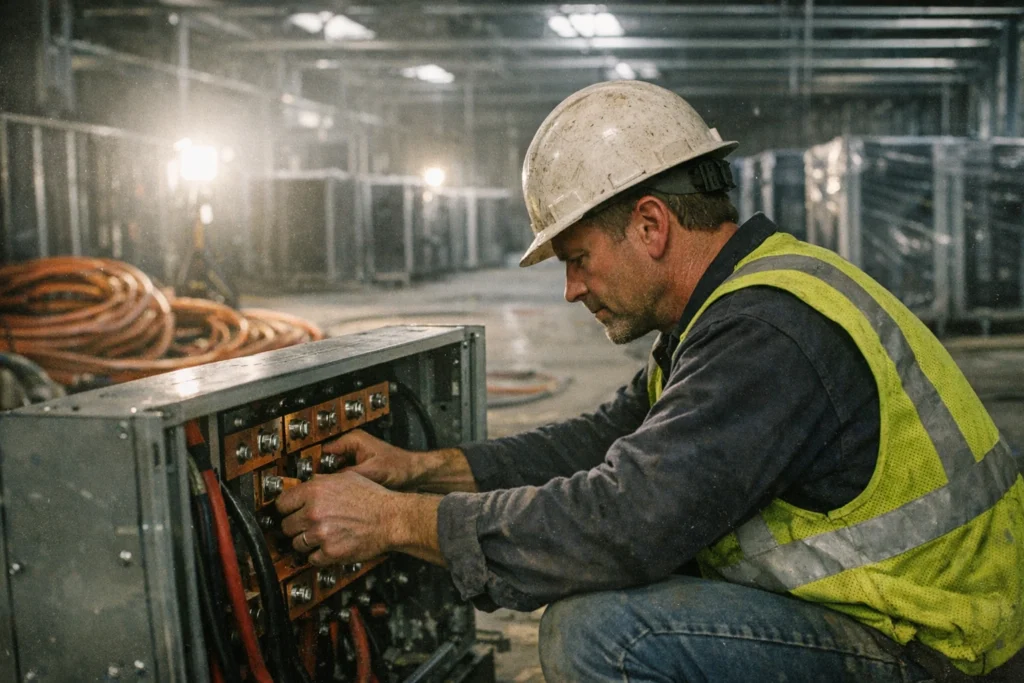
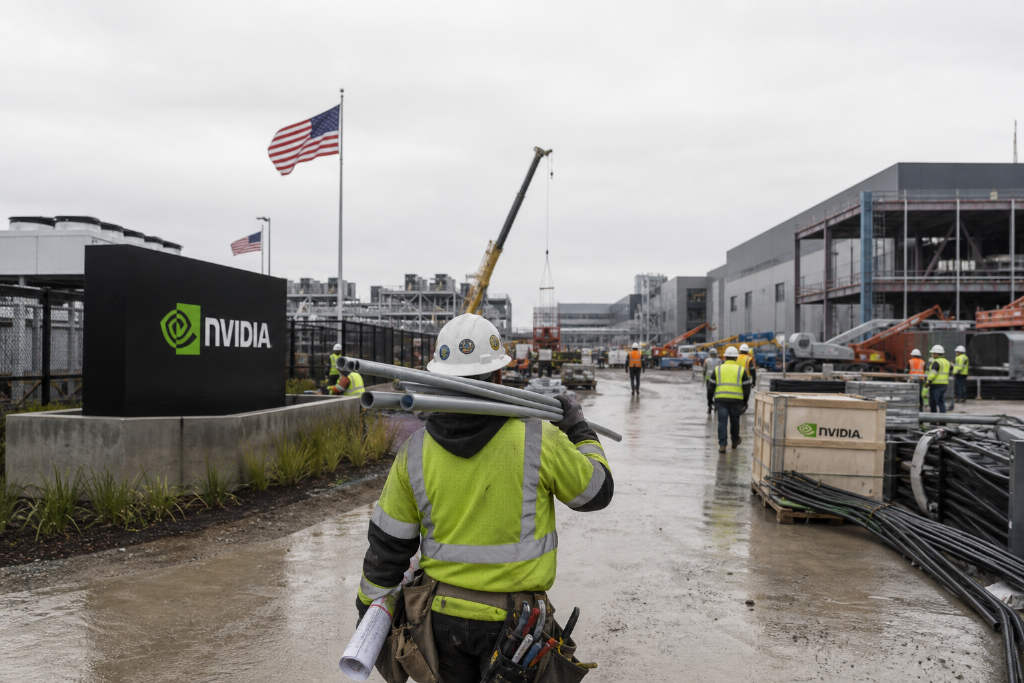
NVIDIA CEO Jensen Huang said the AI boom will not only eliminate some jobs but also create "hundreds of thousands" of new ones, with electricians, plumbers, carpenters, technicians and other skilled trades expected to benefit. Huang said construction tied to chip plants, packaging facilities, data centers and "AI factories" is driving a sharp increase in demand in the United States for workers who can "build things with their hands." He added that technology shifts typically reshape employment rather than simply erase it, saying some roles disappear while many new ones emerge. Huang also said white-collar jobs are unlikely to vanish in the near term, while AI infrastructure buildout could bring a boom to skilled trades. According to the report, the US could face about 2.1 million unfilled skilled trade positions by 2030, including roughly 130,000 additional electrician roles. Data center construction is also expanding labor demand quickly, with QTS expecting the number of workers at its project sites to rise from about 10,000 in 2025 to 40,000 by the end of 2026.

130
Jensen Huang says AI will create hundreds of thousands of jobs as demand for skilled trades rises
Policy and Re
2026-08-19 04:30:00

Rising global bond yields and AI financing concerns drive a broad sell-off in U.S. tech stocks

U.S. stocks fell for a third straight session Tuesday as higher long-term bond yields put fresh pressure on richly valued technology names. The Nasdaq Composite dropped 1.33%, underperforming the Dow Jones Industrial Average and the S&P 500, while the 30-year U.S. Treasury yield briefly touched 5.338%, its highest level since 2007. The move was part of a wider global bond sell-off that also pushed long-dated yields higher in France, Germany, Japan and the U.K. Markets are increasingly focused on the growing debt burden tied to artificial intelligence expansion. According to figures cited in the report, AI-related bond issuance has reached $489 billion so far this year, well above an earlier full-year 2025 estimate of roughly $322 billion, while The Wall Street Journal reported that nine major technology companies have about $3 trillion in off-balance-sheet AI commitments. That backdrop hit semiconductors, memory, optical communications and AI cloud-service providers especially hard. Investors are also weighing fiscal deficits, oil-driven inflation risks tied to the Iran situation, and a heavy event calendar that includes U.S. tariffs on some Canadian products, a 20-year Treasury auction, Federal Reserve minutes and China’s one-year LPR decision.

960
Rising global bond yields and AI financing concerns drive a broad sell-off in U.S. tech stocks
Nvidia
2026-08-08 05:27:09

Nvidia targets power supplier behind OpenAI’s Stargate project with up to $3 billion Lancium investment

Nvidia is moving deeper into the base layer of AI infrastructure by targeting power capacity, not just chips. According to The Information, the company has agreed to invest $2 billion in Lancium, a power infrastructure developer backed by Blackstone, and may add another $1 billion if the company meets milestones tied to additional grid access. The initial tranche would give Nvidia roughly a 20% stake, rising to about 30% if the follow-on investment is completed, in a deal that values Lancium at around $10 billion including debt. The strategic logic centers on one of the biggest constraints facing AI data centers: electricity. Lancium is the power infrastructure provider behind OpenAI and Oracle’s “Stargate” AI campus in Abilene, Texas. It has already secured and developed 4 gigawatts of power on the Texas grid, with another 15 gigawatts of projects awaiting interconnection. Those assets span supply for the Abilene Stargate site, a Crusoe-built Microsoft data center, a QTS Data Centers project in Turkey, Texas, and another Crusoe development in Childress. The report said the investment is pure equity and does not include credit support for construction or leasing. It also comes as Texas Governor Greg Abbott has paused new grid interconnection applications for data centers, adding uncertainty to the timing of future expansion. Separately, Lancium is said to be considering an IPO in 2027.

1120
Nvidia targets power supplier behind OpenAI’s Stargate project with up to $3 billion Lancium investment
AI
2026-08-07 00:20:16

AI debt caution spreads to data center CMBS as Pure DC drops planned €1 billion bond sale

Investor caution toward AI-linked borrowing is showing up well beyond the largest funding markets. According to people familiar with the matter, two of the past three commercial mortgage-backed securities deals tied to data center financing had to widen pricing from initial discussions to draw enough demand, including offerings linked to KKR-backed CyrusOne and Blackstone-backed QTS Realty Trust. Over the past 12 months, risk premiums for CMBS tied to data centers have also risen across the board. That shift was underscored in mid-July when Oaktree Capital-backed UK data center operator Pure Data Centres, or Pure DC, abandoned a planned record €1 billion unsecured bond sale and turned instead to bank financing. The company had been marketing the bond while signs were emerging that investor appetite for AI-related data center debt was weakening. At the same time, CoreWeave’s sharp declines in stock and bond prices following news that Meta was building out its own cloud infrastructure made buyers more careful on terms. Pure DC ultimately concluded that the parallel bank loan option offered better conditions. The move reflects a broader repricing. Some investors are starting to treat AI data centers more like traditional office and retail property risk, focusing on overbuilding, tenant concentration and the chance that technological change could erode asset values.

1180
AI debt caution spreads to data center CMBS as Pure DC drops planned €1 billion bond sale
Goldman Sachs
2026-08-04 07:03:30

Goldman Sachs says AI data centers are short on workers, with hiring focused on power, cooling and commissioning rather than AI engineers

Goldman Sachs’ latest AI Adoption Tracker highlights a split in the labor market: AI is estimated to be eliminating about 11,000 U.S. jobs per month on a net basis, while data center construction has added 212,000 jobs since 2022 and is still creating roughly 9,000 roles each month. The openings are concentrated not in machine learning engineering, but in electrical contracting, HVAC, commissioning and critical facility operations. The report reviewed here breaks the market into two very different tracks: construction-phase jobs, which tend to pay well but are tied to projects, and operations-phase jobs, which are more permanent but often involve fixed-site shift work. It lists six major roles, from entry-level data center technicians to critical facilities engineers, commissioning engineers, electricians, HVAC technicians and operations managers, with U.S. 2026 pay ranges running from about $67,900 at the entry end to more than $215,000 for senior commissioning work on hyperscale sites. It also outlines three ways in: paid apprenticeships, certifications and lateral moves from adjacent fields such as electrical work, HVAC, security systems, military communications and IT operations. For Taiwan, the article points to hiring by Chunghwa Telecom, Delta Electronics and Google, as well as CDCP certification courses offered locally in Chinese. At the same time, Goldman’s figures suggest the biggest risk is not AI replacing these roles in the short term, but the temporary nature of construction work: about 4.7 million peak-period construction jobs versus about 697,000 permanent operations roles.

1230
Goldman Sachs says AI data centers are short on workers, with hiring focused on power, cooling and commissioning rather than AI engineers
Blackstone
2026-07-06 03:29:56

Blackstone’s QTS Halts Virginia Mega Data Center Project as AI Infrastructure Expansion Hits Constraints

QTS, the data center operator owned by Blackstone, has halted the Digital Gateway project in Prince William County, Virginia, ending what had once been pitched as the world’s largest data center campus. The development was planned to span 2,100 acres, include 37 buildings totaling about 22 million square feet, and represent more than $100 billion in investment. But years of local opposition, disputes tied to nearby Civil War historic sites, and a court ruling that invalidated zoning approval over procedural defects ultimately derailed the project. The cancellation comes as Blackstone is also selling mature Virginia data center assets, a combination that has drawn attention across infrastructure and technology markets. Beyond the legal setback, the project faced power constraints, rising utility and network upgrade costs, the withdrawal of partner Compass Datacenters, and a tougher policy backdrop for new data center development. Industry data cited in the report suggests these pressures are not isolated: delayed U.S. data center projects reached roughly $130 billion in value in the first quarter, while public resistance and electricity bottlenecks are becoming central obstacles to AI-related infrastructure buildout. The Digital Gateway withdrawal is increasingly being viewed as a sign that the AI data center boom is running into hard limits in land use, grid capacity, permitting, and community acceptance.

220
Blackstone’s QTS Halts Virginia Mega Data Center Project as AI Infrastructure Expansion Hits Constraints