Hyperliquid2026-10-07 04:05:09Jeff Yan Says HIP-3 Once Accounted for About 51% of Hyperliquid Trading VolumeHyperliquid founder Jeff Yan said during a TOKEN2049 discussion in Singapore that the HIP-3 market at one point contributed about 51% of Hyperliquid’s trading volume in July, a figure he said points to clear product-market fit. He argued that users’ willingness to move from existing financial products into new on-chain markets shows there had been a sizable supply gap in available products, while also reflecting confidence in the execution ability of market deployers. Yan said perpetual contracts tied to real-world assets, including crude oil and Pre-IPO products, have become a key use case for HIP-3. He also described a broader shift over the past year, with more markets giving users access to trading opportunities that were previously out of reach. In the same discussion, Yan said Hyperliquid wants to function as open protocol infrastructure for different financial products and applications rather than compete directly with front-end platforms. He added that Builder Codes lets developers build products such as mobile apps and institutional-grade trading terminals without creating their own matching and liquidation systems, while plugging directly into Hyperliquid’s markets and liquidity.140
Hyperliquid2026-10-07 03:45:18Hyperliquid founder says HIP-3 gained traction by widening access to financial marketsHyperliquid founder Jeff Yan said during a TOKEN2049 Week conversation in Singapore on Oct. 7 that the strong reception for HIP-3 points to clear product-market fit in the segment. He said users have shown a willingness to move away from existing financial products and try new on-chain markets, which in his view suggests there had been a sizable supply gap and also reflects trust in the execution capabilities of market deployers. Yan said one of the most notable shifts over the past year has been the rise of markets that let users access trading opportunities that were previously out of reach. In the discussion, crude oil and Pre-IPO perpetual contracts tied to real-world assets were cited as important use cases for HIP-3. He also said Hyperliquid wants to position itself as open protocol infrastructure that other financial products and applications can build on, rather than competing directly with front-end platforms. According to Yan, Builder Codes lets developers launch products such as mobile apps and institutional trading terminals without building matching and liquidation systems from scratch, while connecting directly to Hyperliquid’s markets and liquidity.130
Hyperliquid2026-10-07 03:58:26Hyperliquid founder says HIP-3 once made up 51% of platform volume as Pre-IPO markets widen accessHyperliquid founder Jeff Yan said at a TOKEN2049 discussion in Singapore that HIP-3 markets accounted for about 51% of Hyperliquid’s trading volume at one point in July, a figure he said showed clear product-market fit. He said users’ willingness to move from existing financial products into new on-chain markets points to a sizable supply gap in prior offerings and also reflects trust in the execution of market deployers. Yan said one of the most notable shifts over the past year has been the rise of markets that let users access trading opportunities that were previously out of reach. During the discussion, crude oil and Pre-IPO perpetuals tied to real-world assets were cited as key use cases for HIP-3. He also argued that in traditional finance, some assets are only available to a small group early on, and by the time public access opens, much of the growth may already have been captured by those with privileged access. Yan added that Hyperliquid aims to be an open protocol and infrastructure layer for different financial products and applications, rather than competing directly with front-end platforms.130
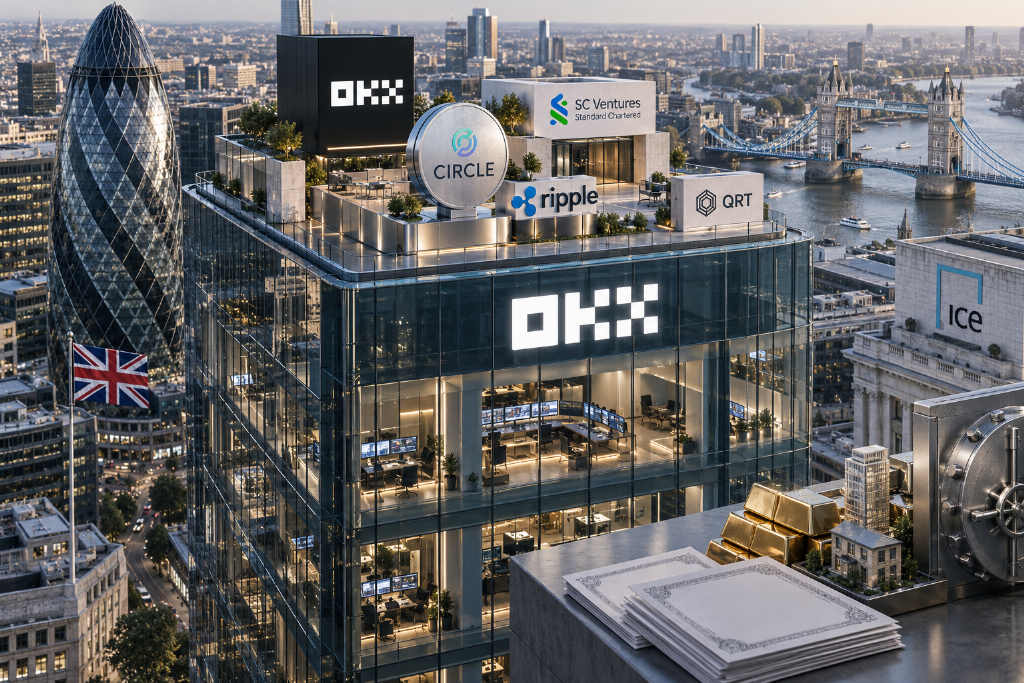
OKX2026-10-06 19:01:29OKX says it raised new funding at a $25 billion pre-money valuationOKX said Tuesday that it has secured a new round of funding at a $25 billion pre-money valuation, with backing from Circle, QRT, Ripple and SC Ventures, the investment arm of Standard Chartered. The company tied the raise directly to its push into onchain financial markets and tokenization, saying the investors represent key builders of financial infrastructure. OKX CEO and founder Star Xu said the fresh capital will help the company tokenize real-world assets and expand beyond its original exchange business into a broader global financial technology platform. The announcement also comes after Intercontinental Exchange invested in OKX earlier this year. Their joint venture, OKXICE, filed with the U.S. Securities and Exchange Commission on Sunday to launch a tokenized securities platform for around-the-clock trading in U.S. stocks. Bitcoin Magazine’s report places the deal in a wider Wall Street shift toward blockchain-based tokenization. It notes that firms such as BlackRock and Franklin Templeton have already used blockchain rails for tokenized money market funds, while tokenized stock trading received SEC approval in September. The article was written by Mathew Di Salvo.130
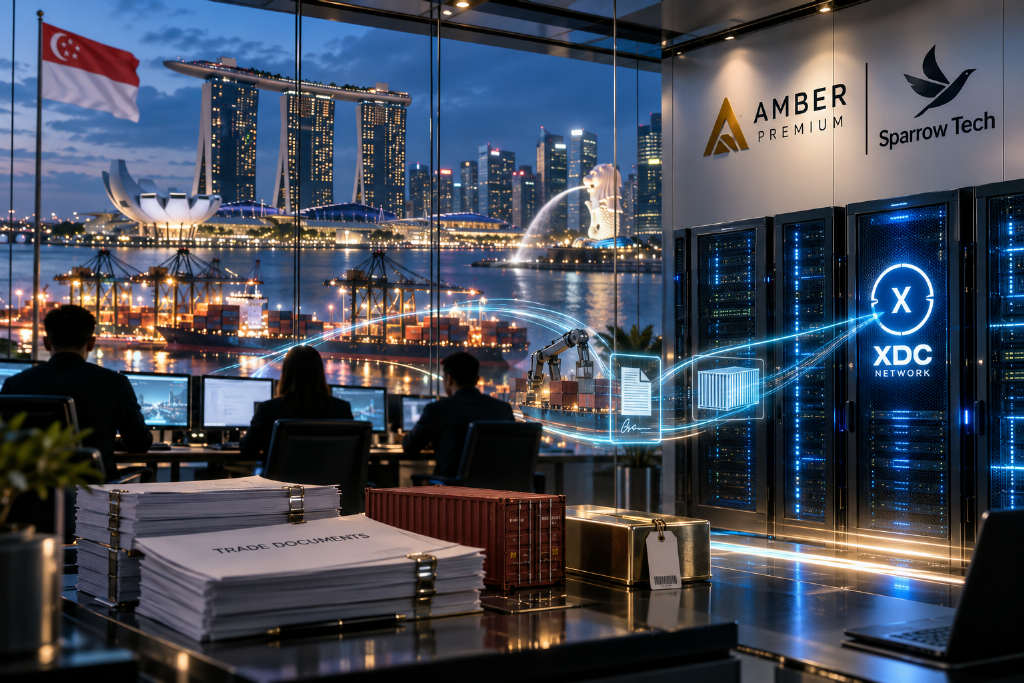
Amber Interna2026-10-05 17:52:08Amber Premium joins XDC Network as validator through Singapore unitAmber Premium, the digital asset platform under Nasdaq-listed Amber International, has joined XDC Network as a master node validator through its Singapore business, Sparrow Tech. The move means Amber will help validate transactions and support the network’s operations. Sparrow Tech holds a Digital Payment Token service license issued by the Monetary Authority of Singapore, a detail that adds regulatory context to the company’s role in the network. XDC Network is focused on trade finance and real-world asset tokenization, and its existing infrastructure participants include institutions such as Deutsche Telekom. Amber and XDC also tied the partnership to a longer-term idea: the prospect of AI agents automatically carrying out financial transactions in the future. The update was cited by Techub, with BeInCrypto named as the source in the item.250
South Korea c2026-10-04 03:58:46South Korea’s Crypto Market by 2030: How Institutions May Approach Stablecoins, Payments and Tokenized AssetsSouth Korea’s crypto market is already large by trading volume, but tokenized real-world assets remain small relative to local exchange activity. The source article argues that the country is moving into a new phase in which institutional participation, regulatory design and payment infrastructure matter more than retail trading alone. It points to Bank of Korea data showing about KRW 640 billion in tokenized real-world assets, versus 11.13 million eligible trading accounts and average daily crypto trading volume of KRW 5.4 trillion in the second half of 2025. The report lays out a 2030 scenario built around three tracks: KRW stablecoins operating alongside existing payment rails, backend settlement software becoming more valuable than consumer-facing payment interfaces, and tokenized real-world assets shifting from simple issuance toward global distribution and post-issuance operations. It also reviews overseas developments, including U.S. and European regulatory moves, tokenization efforts by major financial institutions, and examples such as UBS, J.P. Morgan, Hamco, Bridge, M0, MetaMask and Rain. For Korean institutions, the article outlines two routes. One is a domestic strategy focused on private ledgers and preparation for the local tokenized securities regime. The other is an offshore strategy aimed at global distribution under structures the Financial Services Commission said may fall outside the Electronic Securities Act under specific conditions. The broader conclusion is that timing matters: firms that move while rules are still being shaped may be in a stronger position once the market structure is finalized.340
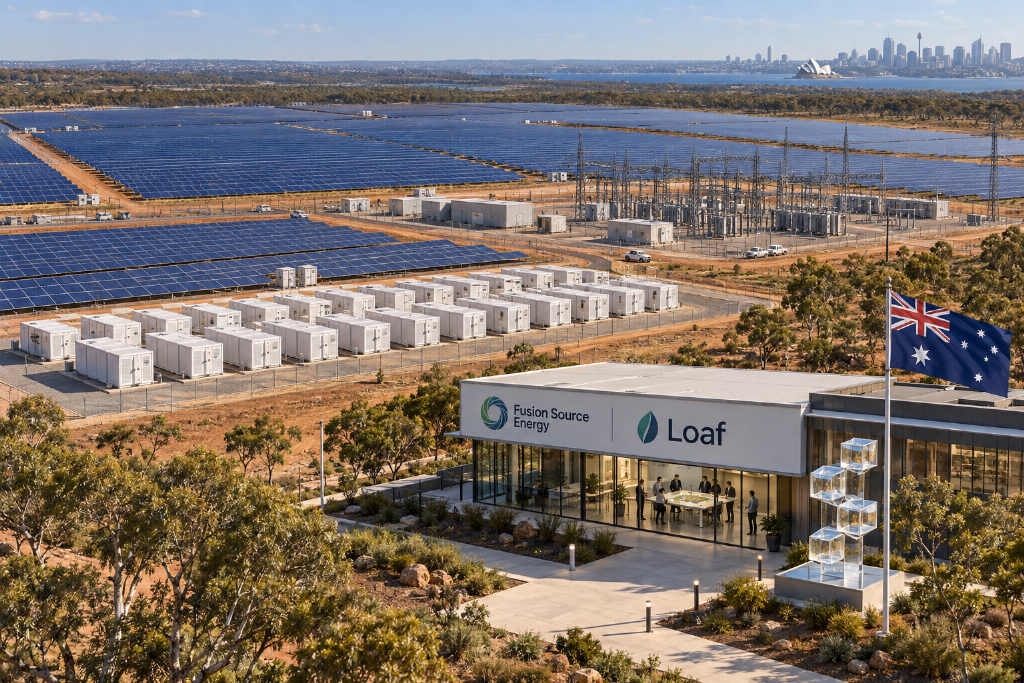
Fusion Source2026-10-04 00:07:44FSE and Loaf sign MOU to bring more than $500 million in Australian solar and battery projects on-chainFusion Source Energy (FSE) and its partners have signed a memorandum of understanding with on-chain real-world asset platform Loaf to pursue the on-chain issuance of more than $500 million worth of Australian solar and battery projects. The pipeline spans more than 1,000 hectares of land and is led by Project Amber, a development exceeding 200 megawatts. Under the memorandum, the capital raised is expected to speed up project development and expand Amber’s battery capacity. Amber is described as a utility-scale solar park that will combine more than 200 megawatts of solar generation with multi-hour battery storage at the same site. Annual output is expected to supply electricity for more than 70,000 homes, or roughly match the demand of a 50-megawatt data center. The broader pipeline also includes battery storage assets below 5 megawatts and distributed energy resources across multiple Australian sites.250
Hong Kong RWA2026-10-03 08:40:14Tiger Research maps out how Hong Kong’s RWA issuance model works in practiceTiger Research examined how real-world asset tokenization can be structured, sold, and repaid through Hong Kong, using Korean assets as the working example. The report argues that market growth alone does not solve the core problem: turning an underlying asset into a product investors can actually buy and later be repaid on time. In the model described, an offshore special purpose vehicle, or SPV, acquires or holds the underlying assets, issues notes backed by those assets, and works with licensed Hong Kong intermediaries to distribute the product to overseas professional investors. Buyers hold a claim on the issuer’s product rather than direct ownership of the underlying Korean assets. The report highlights several pressure points, including enforceable rights to cash flows, timing mismatches between asset collections and investor payments, and cross-border transfer and tax bottlenecks. It also says the real test starts after the first deal closes: whether the same framework can support repeat issuance, attract returning investors, and secure a steady supply of assets.280