BackSOCAMM

SOCAMM

Goldman Sachs
2026-08-10 15:34:00

Goldman Sachs says memory could account for about 62% of Nvidia Vera Rubin BOM

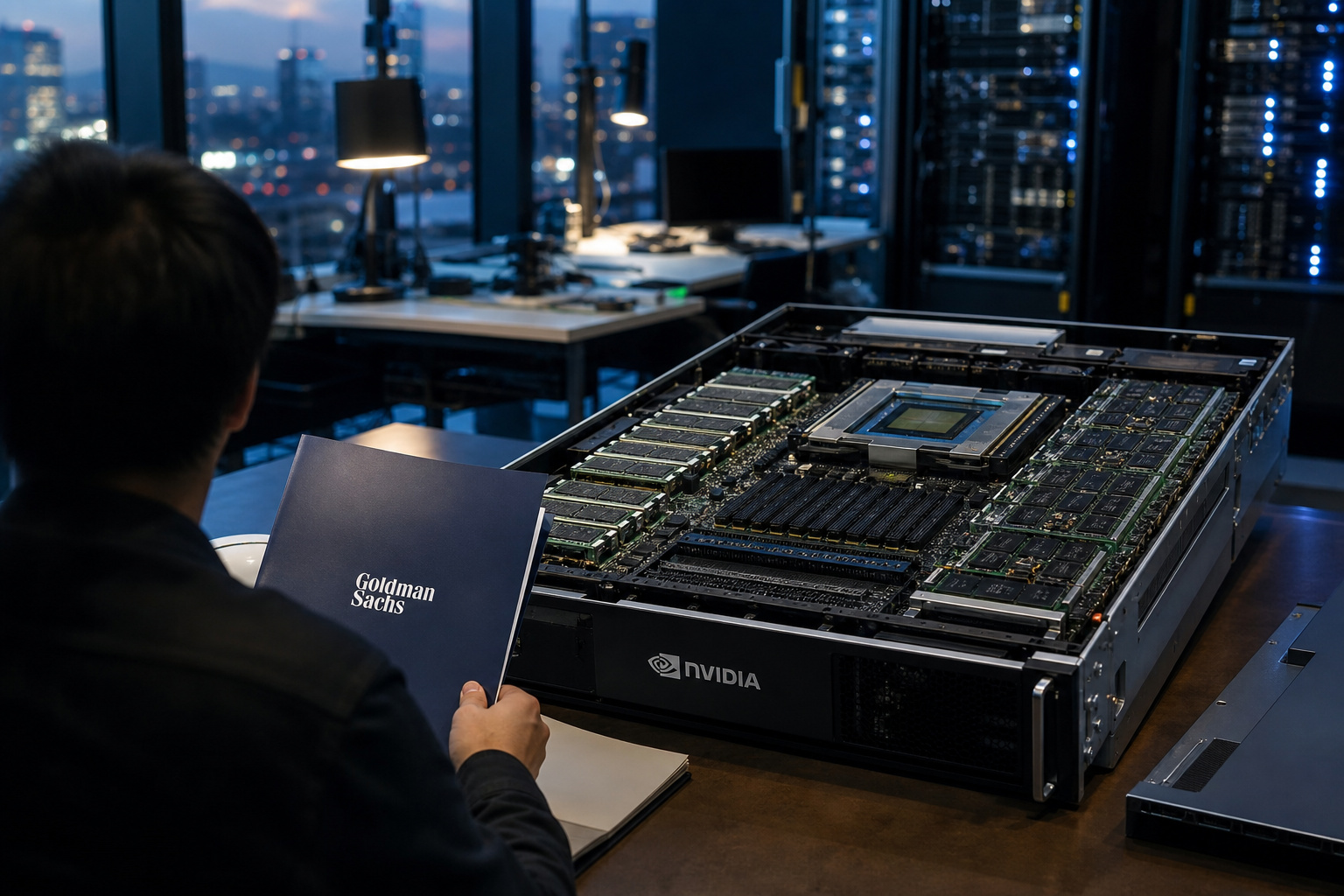
Goldman Sachs said in a report dated Aug. 10 that memory components are expected to make up about 62% of the bill of materials for Nvidia’s next-generation Vera Rubin superchip. Citing Goldman’s analysis, ZeroHedge said the cost share of SOCAMM2 memory modules on the CPU side of the Vera Rubin platform is notably higher than that of HBM4 high-bandwidth memory on the GPU side. Goldman had already noted in May that as demand for AI infrastructure keeps rising, memory is becoming a key part of the hardware cost structure for AI servers. The latest note adds to that view by pointing to the growing weight of high-performance memory in next-generation AI computing platforms and the rising importance of the memory segment across the AI chip supply chain.
660
Goldman Sachs says memory could account for about 62% of Nvidia Vera Rubin BOM
South Korea P
2026-08-08 04:44:32

Analyst says Korean PCB makers posted strong Q2 results, with SOCAMM seen as a new growth driver

Citrini analyst Jukan said on Aug. 8 that South Korean PCB and package substrate makers could extend their strong second-quarter momentum into Q3, with earnings expectations continuing to improve. He cited Daeduck Electronics, Simmtech, and TLB as examples. Daeduck Electronics reported Q2 revenue of 401 billion won, up 63% year over year, while operating profit jumped 3,599% to 70.3 billion won. Simmtech posted revenue of 514.6 billion won, up 51%, and operating profit of 62.9 billion won, up 1,035%. TLB recorded revenue of 88.2 billion won, up 38%, with operating profit rising 86% to 12.8 billion won. Jukan said Daeduck’s strength lies in FC-BGA, FC-CSP, and multilayer PCB products used in AI data centers. He described Simmtech as focused on package substrates and memory module PCBs, while TLB supplies PCBs tied to server DDR5 and enterprise SSDs. He also said a shift in BT substrate orders to Korean suppliers, along with rising SOCAMM demand tied to Nvidia’s next-generation Vera Rubin GPU and Vera CPU shipments, could support the next leg of growth.

820
Analyst says Korean PCB makers posted strong Q2 results, with SOCAMM seen as a new growth driver
TrendForce
2026-08-04 07:25:54

TrendForce says DRAM tightness may last through 2027 as Nvidia weighs lower HBM options for Rubin Ultra

TrendForce said in its latest research that tight DRAM supply is expected to continue through 2027, while uncertainty around the HBM4e validation schedule is pushing AI chipmakers to reconsider the memory stack used in next-generation products. According to the report, Nvidia has been evaluating multiple HBM options for Rubin Ultra since the third quarter of 2026, expanding beyond the original 12-Hi HBM4e design to include 8-Hi HBM4e, 12-Hi HBM4, and 8-Hi HBM4 alternatives, with final specifications still undecided. The firm also noted that Nvidia had already decided to halve SOCAMM capacity in its next-generation Vera Rubin Superchip module because the LPDDR5X supply bottleneck is expected to persist through 2027. TrendForce said the shift away from 12-Hi HBM4e is tied to broader DRAM shortages in 2027, which could constrain wafer allocation to HBM, as well as uncertainty over the mass-production schedule and yield ramp for 12-Hi HBM4e. It expects HBM bit shipments to grow about 50% to 60% year over year in 2027, but still fall short of demand, leaving suppliers with pricing power and likely driving HBM prices sharply higher.

720
TrendForce says DRAM tightness may last through 2027 as Nvidia weighs lower HBM options for Rubin Ultra
NVIDIA
2026-08-03 16:04:54

NVIDIA says Vera BlueField-4 STX lifts AI storage performance by as much as 3.67x

NVIDIA has released new benchmark results for its Vera BlueField-4 STX storage processor, saying the company’s Vera CPU-based AI-native storage platform posted clear gains over traditional x86 CPUs across a range of storage tasks. According to NVIDIA, the tests covered encryption, compression, data integrity checks, and recovery workloads that are becoming more demanding as AI agent applications scale and storage systems handle enterprise knowledge bases, long-term memory, KV cache, tool-call data, and model outputs. In the benchmark figures disclosed by the company, AES-128 encryption throughput improved by as much as 1.43x and decryption throughput by up to 1.29x. Reed-Solomon recovery reached up to 3.26x, CRC32C data integrity checks rose by as much as 3.67x, compression throughput increased by up to 3.29x, and decompression performance improved by as much as 1.72x. NVIDIA also said overall throughput in a combined compression-and-encryption storage pipeline improved by as much as 3.21x. The company said Vera CPU uses its in-house Olympus core architecture with 88 Armv9.2-compatible CPU cores, 176 threads, Scalable Coherency Fabric, and a SOCAMM2 LPDDR5X memory system, with up to 3.4 TB/s of interconnect bandwidth and up to 1.2 TB/s of memory bandwidth.

590
NVIDIA says Vera BlueField-4 STX lifts AI storage performance by as much as 3.67x
SK Hynix
2026-07-30 06:22:56

SK Hynix posts record profit, but the stock sell-off shows investors want more than strong numbers

SK Hynix reported record second-quarter results, with revenue at KRW 79.32 trillion and operating profit at KRW 60.54 trillion, up 257% and 557% year over year, while operating margin climbed to 76%. Even so, the stock fell more than 15% intraday after the earnings release because both revenue and operating profit came in below market expectations of roughly KRW 84 trillion and KRW 64 trillion. The company said part of its high-value shipments slipped into the second half, suggesting a timing issue rather than a collapse in demand. Management also said HBM4 began mass production shipments in the second quarter, with larger volumes due in the second half, while around 10 customers have completed negotiations on long-term supply agreements that typically run for five years. The report points to broader AI memory demand beyond HBM alone, spanning AI server DRAM, enterprise SSDs and advanced NAND. At the same time, investors are shifting their focus from headline profit growth to a harder question: how long can this memory upcycle last, and will higher capital spending eventually recreate the industry’s familiar oversupply problem?

650
SK Hynix posts record profit, but the stock sell-off shows investors want more than strong numbers
SK hynix
2026-07-29 05:39:57

SK hynix posts record Q2 results, but Wall Street fixates on the expectation gap

SK hynix delivered what it described as its strongest quarterly results on record, yet the market reaction was muted as investors focused on where the numbers landed relative to elevated expectations. The company reported KRW 79.3 trillion in second-quarter revenue, up 51% from the prior quarter and 257% from a year earlier, while operating profit reached KRW 60.5 trillion and operating margin climbed to a record 76%. Still, both revenue and operating profit came in below market expectations, and the stock fell in after-hours trading. Management used the earnings call to defend the durability of AI-driven memory demand, arguing that the rise of Agentic AI will support structural growth not only in HBM, but also in server DRAM and high-performance enterprise SSDs. SK hynix said it has already completed long-term agreement, or LTA, negotiations with about 10 customers, including core clients, and described those contracts as strategic tools for supply stability, pricing visibility and next-generation product planning. The company also said HBM4 entered mass production in the second quarter, HBM4E samples were sent to a major customer in the first half, and 2026 capital spending is expected to land in the high end of the KRW 40 trillion range as it accelerates capacity expansion.

980
SK hynix posts record Q2 results, but Wall Street fixates on the expectation gap
SK Hynix
2026-07-29 03:06:00

SK Hynix posts record Q2 margins as HBM4 shipments and long-term deals lift demand visibility

SK Hynix reported record second-quarter 2026 revenue, operating profit and margins as higher DRAM and NAND pricing combined with expanding AI server memory demand. The company said HBM4 shipments began in Q2, while HBM4E samples built on its 1c nanometer process were delivered to major customers earlier than previously planned. Enterprise SSDs, server DRAM and SOCAMM2 also continued to scale. The numbers, however, still came in below consensus on both revenue and operating profit. Net profit surged, but the increase was heavily influenced by KRW 63.27 trillion in investment-related gains, which the source said market analysis linked mainly to the sale of Kioxia-related investment interests. That left operating profit, gross margin and operating cash flow as more relevant indicators for assessing core earnings quality. SK Hynix also said it had completed negotiations on long-term supply agreements with about 10 customers, including key accounts, adding pricing structures designed for memory price volatility. Some contracts include prepayment or deposit mechanisms. Even so, the market reaction remained volatile. Shares had fallen 14.65% the day before earnings, then rose more than 4% after the release before turning lower after the earnings call. By press time, the stock was down more than 11%, reflecting investor concern over results missing expectations, whether memory prices are near a peak, and the effect of expanding capital expenditure.

1290
SK Hynix posts record Q2 margins as HBM4 shipments and long-term deals lift demand visibility