TPS

ChainFeeds
2026-08-19 01:56:38

ChainFeeds research digest covers Uniswap, Farcaster, Niulai meme frenzy and Hyperliquid

ChainFeeds’ Aug. 19 research digest pulls together five separate narratives shaping crypto and adjacent tech markets. The package starts with Uniswap founder hayden.eth arguing that automated market makers are still early and may gain their biggest edge in correlated trading pairs, where inventory risk is lower and liquidity can form naturally around asset clusters rather than defaulting to dollar pairs. IOSG Ventures then questions whether Model Fusion actually improves production economics, saying higher benchmark scores do not by themselves prove better ROI once token costs, latency and shared-model failure modes are counted. The digest also tracks the rapid deterioration of Farcaster’s business position. After Merkle Manufactory handed the protocol, app and Clanker over to Neynar in January and returned $180 million to investors, Neynar is now looking for yet another team to take over just seven months later. In another section, a small animated film titled Niulai became a meme phenomenon: a weak box office run turned into viral online attention, then spilled into BSC, where a same-name meme coin briefly reached a $46.79 million market cap. The final piece argues Hyperliquid is no longer just an onchain perpetuals venue, but a broader trading platform built around HyperCore, HyperEVM, HYPE and HIP-3.


60
ChainFeeds research digest covers Uniswap, Farcaster, Niulai meme frenzy and Hyperliquid
Blockchain Ca
2026-08-19 00:56:14

Blockchain Capital says crypto’s next upcycle may be closer as value shifts to applications

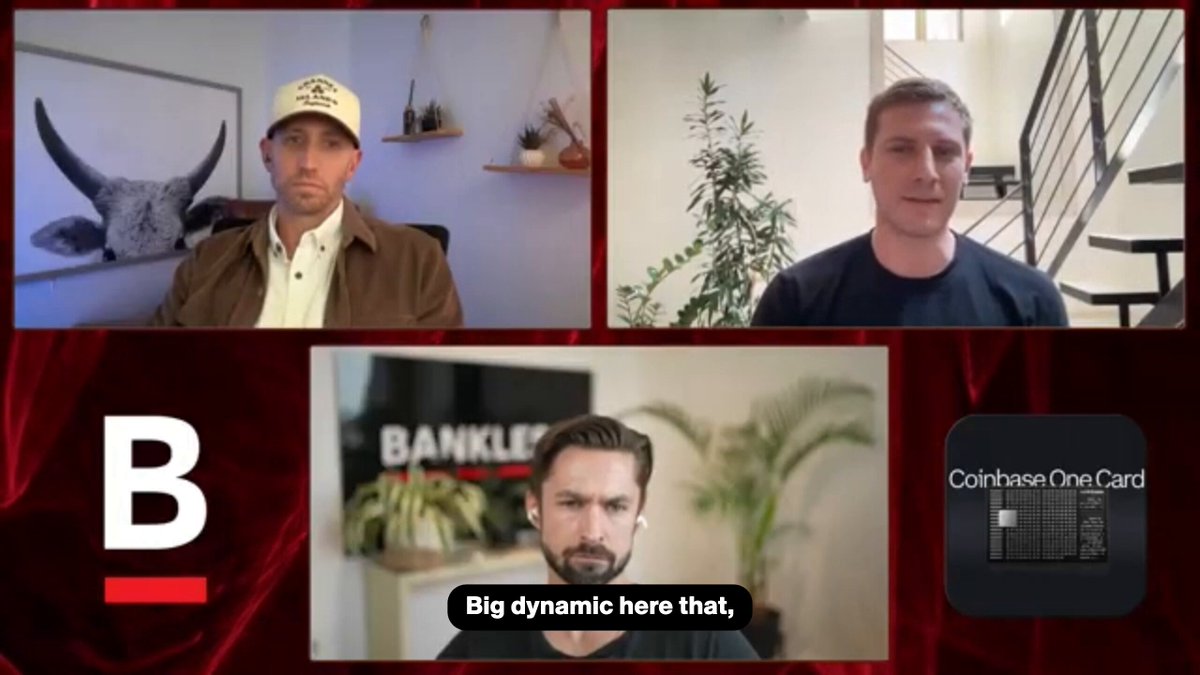
Blockchain Capital general partners Aleks Larsen and Spencer Bogart said in a recent Bankless podcast that crypto is moving out of its infrastructure-heavy phase and into an application-driven one, with stablecoins, prediction markets and tokenized financial assets leading the change. They argued that abundant and cheap block space has set the stage for broader onchain adoption, while value capture is beginning to migrate from base infrastructure to the application layer. The pair pointed to several signals. In their view, the current token bear market has unfolded alongside unusually strong catalysts, including the GENIUS Act and a clearer path for the Clarity Act, as well as deeper engagement from traditional financial institutions. Larsen compared crypto’s current position to the internet in 2003-2004: broadband had arrived, but the mobile-led inflection was still ahead. He said consumer-ready tools such as embedded wallets, social recovery and passwordless login only became usable in the last two to three years. Bogart also said application-layer fees surpassed infrastructure-layer fees for the first time in 2025, a shift he sees as evidence that crypto is entering a “fat apps” era. On tokenization, he said stablecoins are already proving how onchain dollars can deepen liquidity for lending and trading protocols, and argued tokenized equities could follow two tracks: easier market access and stronger composability. He added that traditional finance and permissionless DeFi do not need to fully merge to coexist on public blockchains.

150
Blockchain Capital says crypto’s next upcycle may be closer as value shifts to applications
BNB Smart Cha
2026-08-14 11:50:53

BSC sets Pasteur hard fork for Aug. 25 mainnet launch

BNB Smart Chain said its Pasteur hard fork will go live on mainnet at 10:30 Beijing time on Aug. 25, or 02:30 UTC, and node operators are required to upgrade to client version v1.7.7 in advance. The upgrade includes three proposals — BEP-682, BEP-695 and BEP-675 — covering cross-chain bridge validation, validator key rotation and governance-related fixes, as well as block-building efficiency improvements. According to BNB Chain, BEP-682 is designed to harden the bridge verification process and prevent privilege bypass risks tied to repeated counting of validator signatures. BEP-695 updates the validator key rotation mechanism so retired keys no longer retain administrative rights, while also addressing potential issues related to slashing and governance voting. On the performance side, BEP-675 reduces time spent on repeated transaction execution by optimizing the block construction process. In BNB Chain’s internal QANet test environment, throughput increased from 1237 TPS to 2324 TPS while block time stayed at 450 milliseconds and the block gas limit remained at 100 million. Average gas used per block rose from 46.35 million to 84.15 million.

130
BSC sets Pasteur hard fork for Aug. 25 mainnet launch
Robinhood Cha
2026-08-13 16:40:55

Gate Research: Robinhood Chain’s Meme Surge Is Driving Early Activity While Its RWA Network Is Still Taking Shape

Gate Research says Robinhood Chain is emerging as one of the most closely watched examples of a traditional finance firm building its own public blockchain, but the network’s early traction has come from Meme tokens rather than tokenized securities. In the report, Robinhood Chain is described as an Arbitrum-based, EVM-compatible Layer 2 built for tokenized stocks, ETFs, private assets, stablecoins and other real-world assets, with a long-term goal of linking issuance, wallets, trading, liquidity and applications in one system. The study argues that the chain’s first wave of growth has instead been led by Meme tokens, Launchpads and active DEX trading. As of July 23, the report says Robinhood Chain had 101 RWA assets on-chain with a combined value of about $21.84 million, while more than 40,000 new tokens were being created in a single day during the same period. That gap, according to Gate Research, reflects the much lower supply threshold for Meme assets compared with regulated financial products. The report also highlights Gate DEX’s full integration with Robinhood Chain. Gate Alpha, Gate Wallet and Gate DEX Swap now support ecosystem asset discovery, wallet interaction, on-chain trading and cross-chain swaps, expanding the network’s distribution channels and external capital access. Gate Research’s core view is that Robinhood Chain currently operates in a two-layer structure: RWA as the long-term asset destination, and Meme as the short-term liquidity engine.

230
Gate Research: Robinhood Chain’s Meme Surge Is Driving Early Activity While Its RWA Network Is Still Taking Shape
France
2026-08-12 03:20:53

France bans unsolicited telemarketing calls from Aug. 11, with fines up to €375,000

France has moved to ban unsolicited telemarketing calls, shifting its rules from an opt-out model to an opt-in system beginning Aug. 11. Under a law passed by the French Parliament on June 30, 2025, companies must obtain a consumer’s prior consent before making marketing calls or face fines of up to €375,000. Individuals who violate the rule can be fined as much as €75,000. Le Monde cited Alice Vilcot, chief of staff at France’s Directorate General for Competition Policy, Consumer Affairs and Fraud Control, as saying companies may not contact consumers without prior consent and that such consent can be withdrawn at any time. The law still allows calls when consumers actively opt in or when a company already has a contractual relationship with the customer. The report also points to long-running complaints about the Bloctel do-not-call registry, notes a €6 million penalty imposed on an Irish company last year, and compares France’s approach with Germany, the U.S., Canada, the U.K., and Taiwan’s current privacy-law framework.

530
France bans unsolicited telemarketing calls from Aug. 11, with fines up to €375,000
BSC
2026-08-11 08:56:59

BSC's Proposed BEP-675 Upgrade Could Nearly Double Network Throughput

BNB Smart Chain has put forward BEP-675, an upgrade aimed at optimizing block construction. If adopted, validator overhead would drop from 125 ms to 15 ms, boosting throughput by 88% to 2,324 TPS—all without raising the gas limit. The proposal introduces a SendBidBlock mechanism that lets builders submit fully executed blocks, leaving validators to handle only signature broadcasting and consensus checks. Test results show average block gas utilization climbing from 46.35 million to 84.15 million, with no added finality delay. U.Today first reported the news.

80
BSC's Proposed BEP-675 Upgrade Could Nearly Double Network Throughput
TRON
2026-08-11 05:42:00

TRON weekly report flags BTC resistance at $65,400 and spotlights Sealcoin and STRATO

TRON’s latest weekly industry report, covering Aug. 3 to Aug. 9, 2026, said crypto markets moved in a choppy recovery as traders focused on U.S. macro data, Federal Reserve policy expectations and key technical levels in Bitcoin. The report said BTC rebounded from around $62,500 to the $64,900-$65,100 range during the week, while ETH outperformed and held near $1,900. TRON said risk appetite improved after weaker-than-expected U.S. labor data, though institutional flows and trading activity had yet to show a clear acceleration, leaving Bitcoin near an important resistance zone. Beyond short-term market moves, the report reviewed sector themes and regulation. It said AI+Crypto has shifted from AI tokens toward infrastructure for AI agents, including on-chain execution, authorization and payment rails, while DeFi continues to move toward institutionalized yield management. TRON also highlighted two projects: Sealcoin, a machine economy protocol built around identity, service discovery, negotiation and settlement for devices such as IoT hardware, satellites and AI agents; and STRATO, a Layer1 application chain and overcollateralized stablecoin system designed for enterprise and RWA use cases. The report also tracked policy developments in the U.S., India and the EU, including the delayed CLARITY Act vote in the U.S., expanded tax transparency rules in India and ongoing MiCA implementation in Europe.

790
TRON weekly report flags BTC resistance at $65,400 and spotlights Sealcoin and STRATO
Blockchain Ca
2026-08-10 11:46:29

Blockchain Capital says stablecoins and tokenization could set up crypto’s next upswing

Blockchain Capital general partners Aleks Larsen and Spencer Bogart told the Bankless podcast that crypto is moving out of an infrastructure-heavy phase and into an application-led one, arguing that the shift is already visible in fee flows, user behavior and institutional interest. They said stablecoins have become the first large-scale real-world asset success in crypto, creating deep on-chain liquidity that feeds lending venues, exchanges and other protocols. Spencer Bogart said Blockchain Capital was the only venture firm to invest in Tether, Circle and Paxos a decade ago, and he now believes the stablecoin market, currently around $300 billion, could grow into the trillions by 2030. The two investors also argued that tokenized equities could follow a two-step path: access first, then composability. In their view, one branch of the market will favor permissionless wrappers such as SPV-based structures, while another will lean on regulated ownership rails that institutions can actually hold. They linked that broader trend to a structural industry change: in 2025, application-layer fees surpassed infrastructure-layer fees for the first time, after more than 70% of user fees had gone to infrastructure in 2021. Larsen compared crypto’s current position to the internet in 2003 or 2004, after broadband became available but before mobile drove the curve sharply higher.

570
Blockchain Capital says stablecoins and tokenization could set up crypto’s next upswing