Tether2026-09-29 11:47:48Arkham says Tether’s latest mint was XAUT, not USDTBlockchain data platform Arkham said in a post on X that Tether’s most recent token mint was not USDT. Instead, according to Arkham, the issuance was XAUT, the company’s gold-backed token known as Tether Gold, with a value of about $494.6 million. The update points to a sizable mint tied to XAUT rather than Tether’s better-known dollar-pegged stablecoin. No further details were provided in the source text beyond Arkham’s statement on X and the estimated value of the minted tokens.140
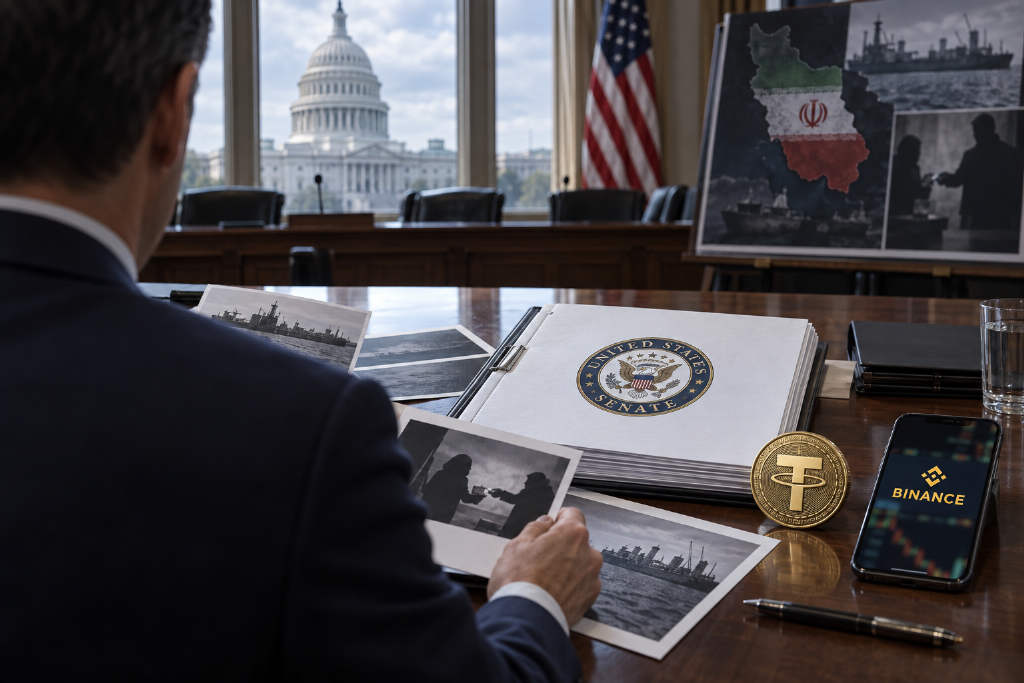
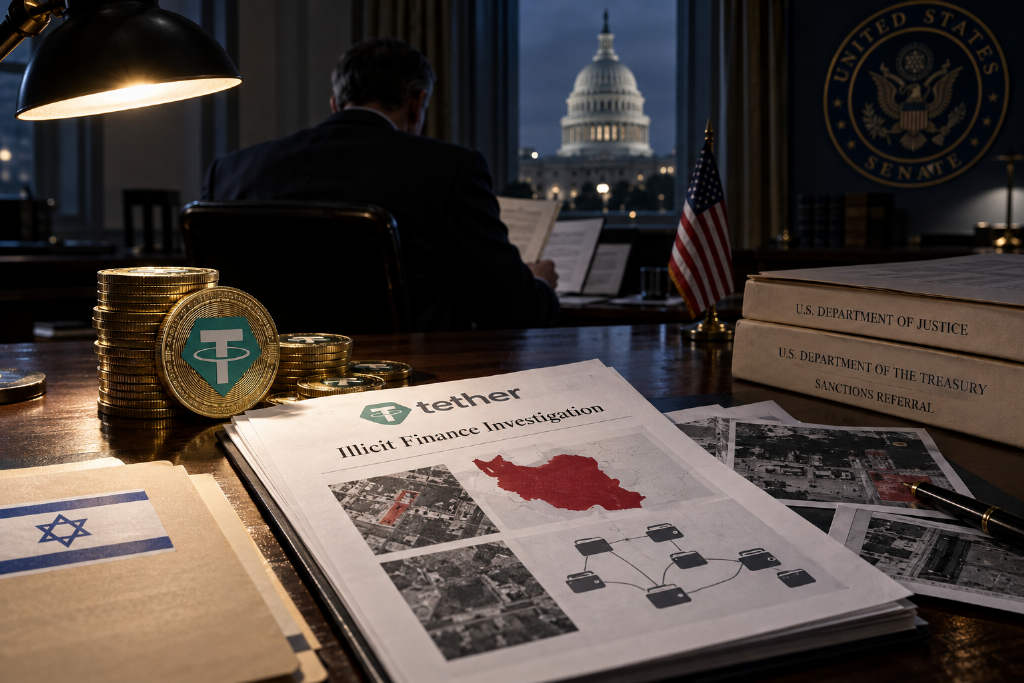
Policy Regula2026-09-29 02:51:33Senate Democrats widen Trump crypto conflict probe to Tether and BinanceDemocratic investigators on the U.S. Senate Permanent Subcommittee on Investigations said in a report released on Sept. 29 that USDT has become a major financial channel for Iran’s shadow banking system, and called on the Treasury Department and the Department of Justice to examine whether Tether violated sanctions and banking laws. The report also pointed to Tether’s links to figures connected to the Trump administration, including business ties between Tether and Cantor Fitzgerald, which is controlled by the family of Commerce Secretary Howard Lutnick, and the appointment of former White House crypto council head Bo Hines to lead Tether’s U.S. business. The filing extends a broader Democratic push that has, since 2025, examined Trump family crypto ventures including TRUMP, World Liberty Financial, USD1, Binance-related transactions, and reported overseas funding. Tether said it continues to cooperate with law enforcement and has helped freeze about $550 million in Iran-linked USDT in 2026.230
Bitcoin2026-09-29 01:59:39QCP Flags Bitcoin Pressure as Grayscale Says Compute Is Becoming a Scarce Digital AssetA broad mix of crypto, macro, regulatory, and infrastructure stories shaped the past 24 hours. QCP said Bitcoin is facing pressure from both geopolitics and a heavy U.S. macro calendar, with key support levels now in focus as traders price downside protection and spot ETF flows show hesitation. In South Korea, the Financial Services Commission is considering a market-making framework for virtual assets, a notable shift given current restrictions under the Virtual Asset User Protection Act. Franklin Templeton expanded its tokenized collateral program to Bybit, allowing users to post tokenized money market fund shares as collateral while the underlying assets continue to generate yield. ETF flows remained strong, with U.S. spot Bitcoin ETFs taking in $2.386 billion last week and spot Ether ETFs adding $690 million, according to SoSoValue. Elsewhere, Tether said it helped freeze nearly $550 million in Iran-linked USDT, Chainlink rolled out CCIP 2 with customizable cross-chain validation, and Grayscale research head Zach Pandl argued that energized, operational compute capacity is emerging as a new scarce digital asset as AI demand outpaces the buildout of power, data centers, chips, memory, and cloud infrastructure.220
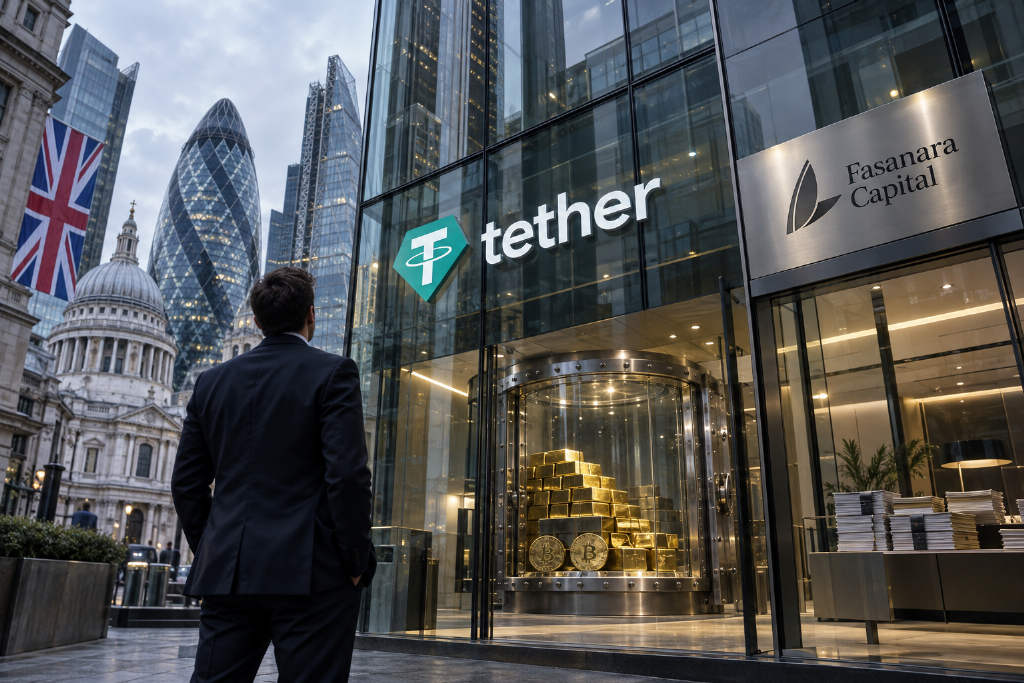
Tether2026-09-29 01:36:00Tether’s excess reserves halved in one quarter as StableFund launch draws fresh scrutinyTether’s reserve position and lending exposure are facing renewed scrutiny after the company and London-based asset manager Fasanara Capital announced StableFund, a private credit fund seeded with a combined $400 million and targeting up to $3 billion from third-party investors. Tether said it will help source USDT-related financing opportunities and provide stablecoin settlement infrastructure, but neither the launch statement nor later disclosures specified how much of the initial capital came from Tether. The timing matters because Tether’s June 30 reserve report showed total assets of about $187.75 billion against liabilities of roughly $183.64 billion, leaving $4.11 billion in excess reserves. That was down from $8.23 billion on March 31, a drop of $4.12 billion, or 50.1%, in a single quarter, while liabilities changed by only $106 million. The article points to declines in gold and Bitcoin prices as the main driver, and notes that Tether still held $13.45 billion in secured loans inside reserves. The report also places Tether’s structure against the backdrop of the U.S. GENIUS Act, which limits what qualifying payment stablecoin issuers can hold as reserves and restricts reserve reuse. With Tether also expanding lending-related activity outside StableFund, the next reserve report is expected to be closely watched for changes in excess reserves, secured loans, and whether any StableFund commitment appears inside reserve disclosures or only at the group level.220
Tether2026-09-29 01:27:57Senate report says Tether and USDT sit at the center of Iran’s shadow banking networkDemocratic investigators on the U.S. Senate Permanent Subcommittee on Investigations released a 28-page report Monday accusing Tether and its flagship stablecoin, USDT, of becoming a core tool in Iran’s “shadow banking system.” The report, led by Senator Richard Blumenthal, analyzed on-chain activity tied to 846 sanctioned or Iran-linked crypto wallets and said 757 wallets connected to Iranian terrorist financing showed a heavy reliance on USDT, with 87% primarily transacting in the token. Investigators argued that Iran’s use of USDT reflects both its broad adoption on local crypto exchanges and Tether’s deeper liquidity relative to other stablecoins. The report’s central criticism was not simply that Iran used USDT, but that Tether allegedly failed to act proactively against suspicious wallets unless it received formal sanctions or seizure notices. Blumenthal also sent letters to Attorney General Todd Blanche and Treasury Secretary Scott Bessent urging an investigation into possible sanctions and banking law violations. The report additionally pointed to Tether’s political connections, including links involving Commerce Secretary Howard Lutnick, Cantor Fitzgerald, and Tether U.S. CEO Bo Hines. Tether pushed back the same day, saying it had helped freeze $550 million in Iran-linked USDT over the past year. CEO Paolo Ardoino said USDT is not a haven for sanctioned actors and that the company acts when law enforcement provides credible information.230
Tether2026-09-28 20:40:42Blumenthal Presses Treasury and DOJ to Probe Tether Over Iran-Linked USDT UseSen. Richard Blumenthal has asked the U.S. Treasury Department and the Department of Justice to investigate Tether’s anti-money laundering and sanctions compliance after Senate investigators said Iran and its regional proxies rely heavily on USDT to move funds around sanctions. A report released Monday by Democratic staff of the Senate Permanent Subcommittee on Investigations reviewed 846 wallets sanctioned or targeted for seizure by the Treasury’s Office of Foreign Assets Control and Israel’s counter-terror financing bureau over links to Iran, Hamas, Hezbollah, and the Houthis. According to the report, 84% of those wallets transacted exclusively or almost exclusively in USDT, with the share reaching 87% for wallets on Israel’s list and 57% for those on OFAC’s list. The report also criticized Tether’s wallet-freezing record, citing delays in blocking some addresses and saying its enforcement has been uneven. Tether, for its part, said Monday that freezes it supported this year have locked about $550 million in Iran-linked USDT and that it has frozen more than 22 million USDT across more than 640 addresses in cases referred by Israel’s counter-terror financing bureau.260
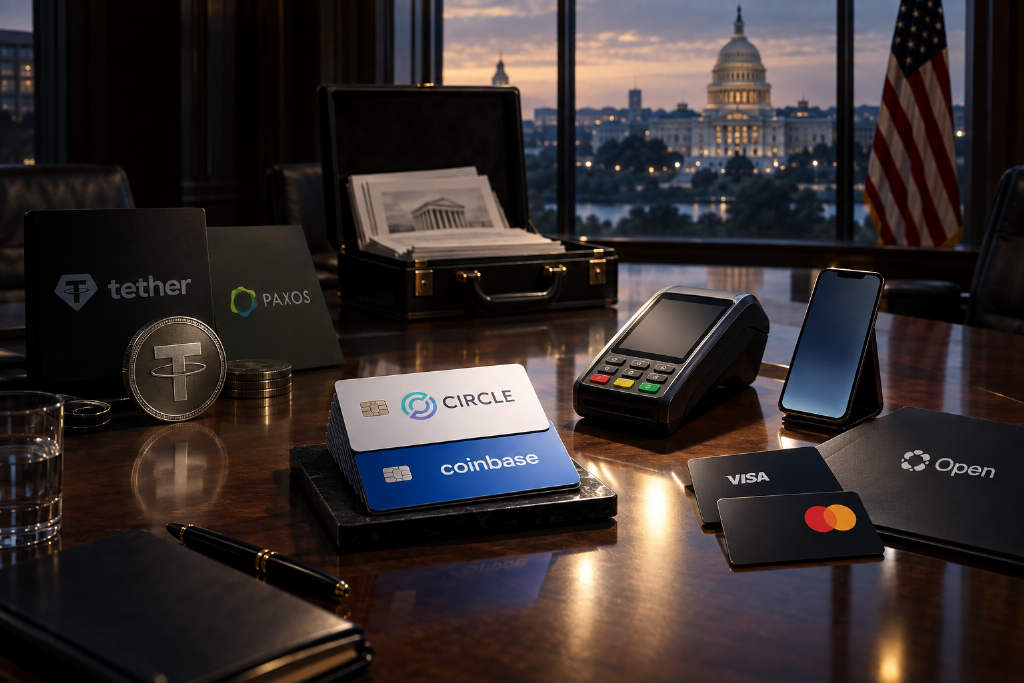
Stablecoins2026-09-28 15:28:35Stablecoin profits hinge less on issuance than on who controls distributionA long-form analysis by IOSG partner Darko argues that the core battle in stablecoins is no longer just about who issues the token, but who owns the customer relationship and the distribution channel. The piece tracks how the business model is split across reserve income, transaction fees and infrastructure revenue, then uses Circle, Coinbase, Paxos, USDG, Open USD, Hyperliquid and Tether to show where bargaining power actually sits. The article says stablecoins have become the first crypto product with broad real-world use, but headline transfer numbers still overstate actual payments. It points to 2026 data showing supply could shrink even as adjusted transfer activity hit new highs, with faster velocity reducing the amount of idle balances needed to support volume. That dynamic matters because issuers earn mainly on reserves sitting still, not on dollars moving. Against that backdrop, the report argues that distribution partners capture a large share of economics. Circle’s renewed agreement with Coinbase, unchanged through 2029, is presented as the clearest proof that control over users matters more than federal licensing alone. The piece also examines how falling interest rates can sharply compress issuer profits, why tokenized Treasuries and compliance layers matter, and why the biggest beneficiary of stablecoin growth may ultimately be U.S. Treasury bill demand.190
U.S. Senate2026-09-28 13:09:10U.S. Senate report says 84% of sanctioned Iran-linked wallets transacted in USDTA report from Democratic members of the U.S. Senate Permanent Subcommittee on Investigations examined 846 crypto wallets sanctioned by the United States and Israel over links to Iran and found that 84% of them used USDT either entirely or almost entirely for transactions. The report said USDT has become an important payment tool for Iran to evade sanctions and support what it described as a "shadow banking system." It also criticized Tether for not freezing some sanctioned wallets quickly enough. The subcommittee has submitted the report to the U.S. Department of Justice and the Treasury Department. Tether did not respond to a request for comment from The Wall Street Journal, though it had previously cooperated with law enforcement to freeze some wallets tied to Iran.200