USA

Circle
2026-08-28 11:05:48

Circle signs Chelsea shirt sponsorship deal, USDC branding to appear from 2026/27

Stablecoin issuer Circle has signed a sponsorship agreement with Premier League club Chelsea, becoming the club's lead partner and official front-of-shirt sponsor. The agreement was announced on Friday, August 28. Under the deal, Circle and USDC branding will appear on the shirts worn by Chelsea's men's team, women's team and academy teams from the 2026/27 season onwards. The partnership covers multiple teams within the club and will place the stablecoin brand on official match jerseys. In regulatory terms, USDC operates within the framework of the GENIUS Act, a law signed by U.S. President Donald Trump last year. Tether's USDT, by contrast, operates largely outside that framework on a global scale. Tether has also introduced USAT, a smaller stablecoin aimed specifically at the U.S. market. The news was reported by BlockBeats on August 28. The GENIUS Act, signed into law last year, provides a legal framework for stablecoin operations in the United States, and Circle's USDC is positioned to operate within that framework. The sponsorship begins in the 2026/27 season, when Circle and USDC branding will be displayed on Chelsea's men's, women's and academy team shirts.


760
Circle signs Chelsea shirt sponsorship deal, USDC branding to appear from 2026/27
Yayoi Kusama
2026-08-27 03:20:54

Yayoi Kusama dies at 97 after reported multi-organ failure

Yayoi Kusama, the Japanese avant-garde artist known worldwide for her polka dots, net patterns, pumpkins and Infinity Mirror Rooms, has died at the age of 97, according to The Yomiuri Shimbun. The report said Kusama died on Aug. 14, 2026, from multi-organ failure. A recipient of Japan’s Order of Culture, Kusama built one of the most recognizable names in contemporary art over a career that spanned decades. The article notes that her international artistic and market standing was firmly established after a 1998 retrospective at the Museum of Modern Art in New York. It also highlights the scale of her exhibition-driven commercial reach: a Latin American touring show that began in 2013 drew more than 2 million visitors, while a 2017 solo exhibition in Tokyo recorded about 520,000 admissions. ABMedia said that level of public demand translated into wider economic activity, including tourism, merchandise sales, lodging and dining. The report also points to Kusama’s cross-sector collaborations and the opening of the Yayoi Kusama Museum in 2017 as part of a broader effort to institutionalize her cultural capital and support long-term intellectual property and licensing operations.

570
Yayoi Kusama dies at 97 after reported multi-organ failure
Policy and Re
2026-08-24 05:03:10

Iran sanctions details due Monday as Nvidia server prices may rise more than 15% next year

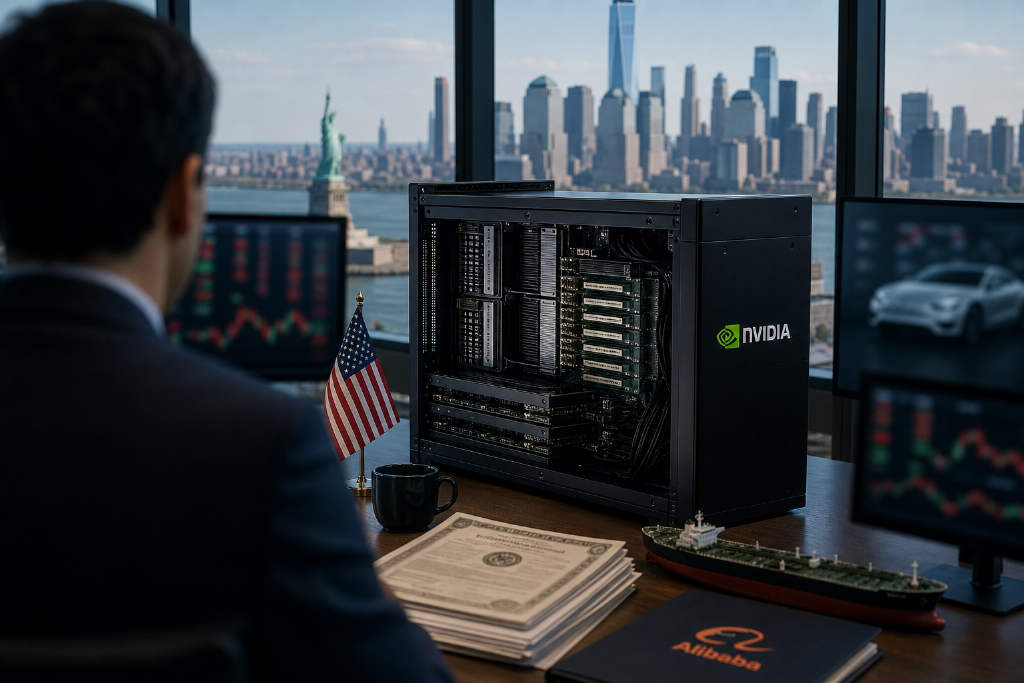
PANews’ latest Wall Street morning briefing tracks several market threads moving at once: U.S. August composite PMI came in above expectations and lifted the major indexes on Friday, yet the weekly trend remained soft. Long-dated Treasury yields stayed near the top of their one-year range, while Bridgewater founder Ray Dalio warned that a U.S. debt crisis could emerge within one to five years if deficits and debt keep worsening. Another focal point is U.S. Treasury Secretary Bessent’s plan to release detailed Iran sanctions during Monday trading hours. According to the report, the package targets purchases of Iranian oil, money transfers and ship-to-ship transfers through secondary sanctions. In parallel, the AI trade is facing a cost test: some of Nvidia’s largest customers were told that servers using Nvidia AI chips could cost more than 15% extra next year because of surging memory chip prices. The article also reviews sharp stock moves. Tesla rose 5.14% and led the “Magnificent Seven” after Nevada approved Robotaxi operations in Las Vegas involving Tesla, Waymo and Uber. Alibaba dropped after announcing an HK$80 billion placement to fund AI expansion. Crypto-related stocks moved higher as Bitcoin approached $80,000 and expectations for liquidity and crypto-friendly policy improved.

1290
Iran sanctions details due Monday as Nvidia server prices may rise more than 15% next year
US economy
2026-08-23 23:26:20

Top 1% US Households Hold More Wealth Than the Entire Middle Class, ABMedia Reports

The wealth held by the highest-earning 1% of US households now exceeds the combined wealth of America’s middle class, according to Federal Reserve data compiled by nonprofit data group USAFacts in July and cited by ABMedia. As of the first quarter of 2026, households in the middle 20% by income held about $13.6 trillion in wealth, or roughly 8% of total household wealth in the country, with average net worth of about $503,000 per household. By contrast, households in the top 1% by income had average net worth near $31 million, around 61 times that of middle-income households. Using wealth rather than income as the ranking measure, Federal Reserve statistics through the first quarter of 2026 show that the top 1% of households by net worth controlled 31.6% of US wealth. The middle 40% of households, those between the 50th and 90th wealth percentiles, held a combined 29.6%. ABMedia’s report also focuses on Silicon Valley, where high incomes and extreme wealth often exist side by side but do not translate into the same financial reality, especially as housing costs and asset ownership drive a widening gap in lived experience.

1140
Top 1% US Households Hold More Wealth Than the Entire Middle Class, ABMedia Reports
Bitcoin
2026-08-23 06:40:40

Bitcoin hashprice climbs 20.41% in four days, lifting miner revenue to $38.29 per PH/s

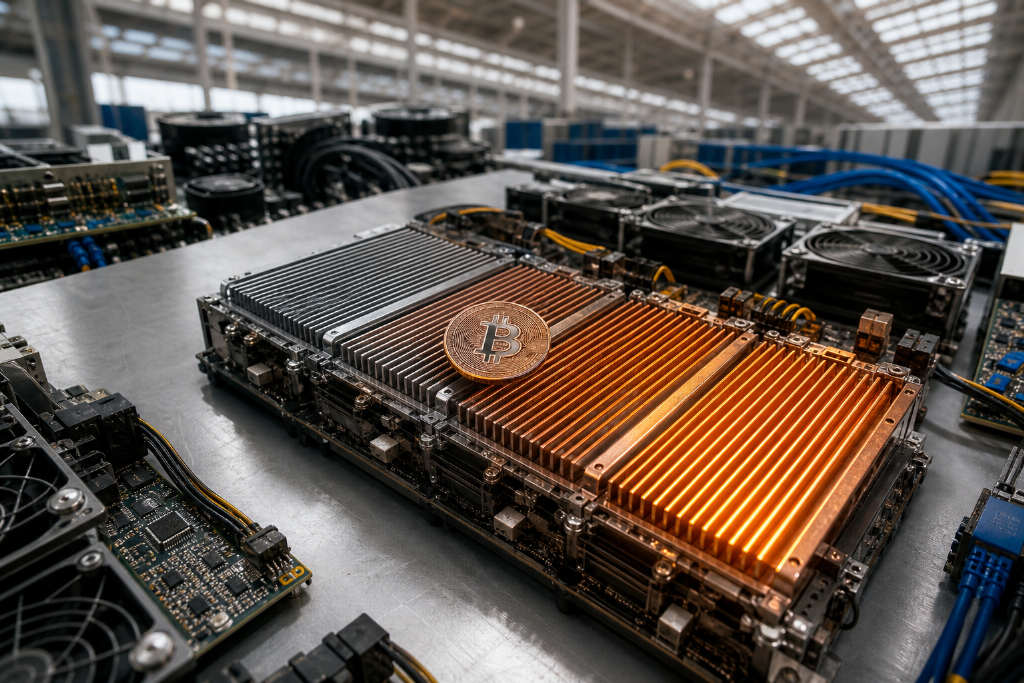
Bitcoin hashprice rose 20.41% over the four days from Aug. 18 to Aug. 22, increasing from $31.80 per PH/s to $38.29 per PH/s, according to a report cited by Odaily. Hashprice is used to measure mining revenue generated by a given amount of computational power, and the move translated into higher miner income. As of Aug. 22, the Bitcoin network had 133 large, medium-sized, and small mining pools and individual mining operations contributing hashrate. Foundry USA led with 214.73 EH/s, followed by Antpool at 156.17 EH/s, F2pool at 110.62 EH/s, and ViaBTC at 91.02 EH/s. Total network hashrate had climbed to about 922 EH/s, close to 1 ZH/s. So far in August, miners have earned $682.69 million from block subsidies and transaction fees combined. Of that total, transaction fee revenue accounted for $5.14 million, below July’s $875 million. On Aug. 22, the average Bitcoin block interval stood at 10 minutes and 5 seconds, while current data showed the day’s difficulty adjustment was expected to decline by about 1%. At an electricity cost of $0.10 per kilowatt-hour, Bitmain’s Antminer S23 Hydro 3U was estimated to generate $17.86 in daily profit.

1340
Bitcoin hashprice climbs 20.41% in four days, lifting miner revenue to $38.29 per PH/s
U.S. Treasury
2026-08-18 20:26:34

Treasury proposal under GENIUS Act could push U.S. exchanges to drop Tether’s USDT

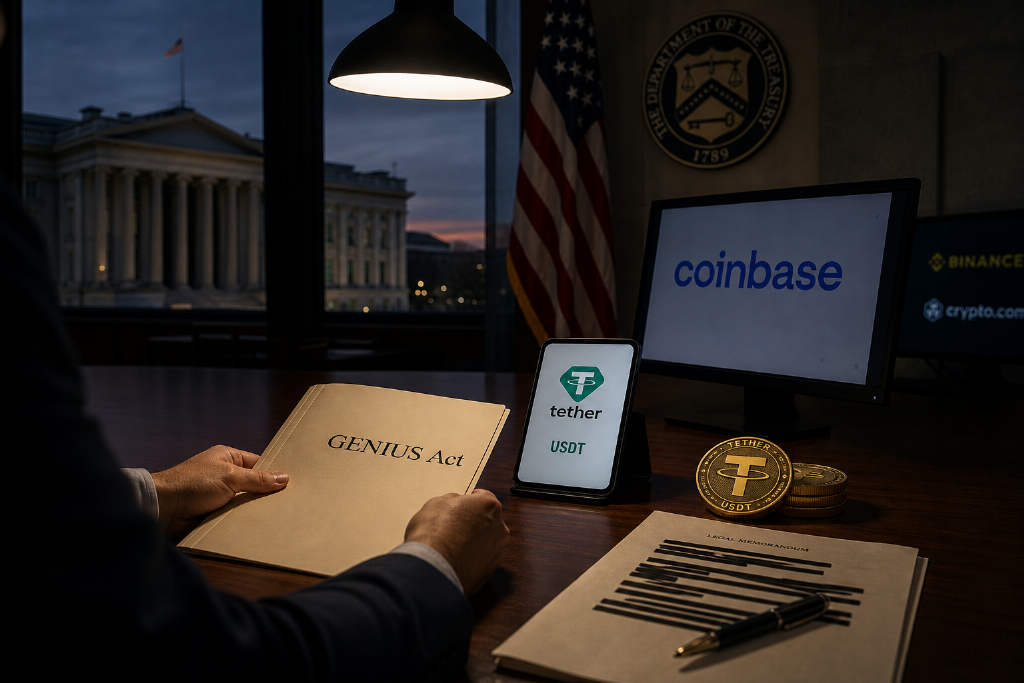
A newly proposed U.S. Treasury rule tied to Section 3 of the GENIUS Act could leave American crypto exchanges unable to offer Tether’s USDT to domestic users, according to comments made by Zero Knowledge Group founder Austin Campbell on the Aug. 17 episode of the Bits + Bips podcast. Campbell said the proposal may force platforms including Coinbase to delist USDT in the U.S. if Tether remains a foreign-issued stablecoin that cannot meet the rule’s conditions. The proposed framework would, beginning Jan. 18, 2027, generally bar digital asset service providers from offering foreign-issued payment stablecoins in the United States unless the issuer can comply with lawful U.S. orders and any reciprocal arrangements between Treasury and the issuer’s home country. Campbell pointed to the European Union’s MiCA regime as a recent example, noting that Coinbase removed USDT for European Economic Area users effective March 31, 2025, with Crypto.com and Binance taking similar steps in the same quarter. The report also highlights Tether’s split strategy: keeping USDT offshore while launching a separate U.S.-domestic stablecoin, USAT, in January 2026 through Anchorage Digital Bank, with Bo Hines leading the effort. Treasury’s rule remains a proposal, with a roughly 60-day comment period and no comparable-country determinations yet in place.

1010
Treasury proposal under GENIUS Act could push U.S. exchanges to drop Tether’s USDT
Tether
2026-08-14 06:40:41

Tether secures its first KPMG audit, but questions over USDT transparency remain

Tether said KPMG U.S. has completed the first independent audit of the financial statements of Tether International, S.A. de C.V. for the year ended Dec. 31, 2025, issuing an unqualified opinion. The audit found that Tether’s reserve assets exceeded liabilities by $6.814 billion at the end of 2025, a milestone after years of scrutiny over the backing of USDT. The work covered the balance sheet, income statement, statement of changes in equity, and cash flows, and included physical inspection of the company’s gold bars as well as checks on transaction records, valuation, counterparties, systems, and evidence of ownership. Still, the development does not close the transparency debate. Tether has not released the full audit report, leaving open questions about disclosures, audit scope, related-party transactions, and the makeup of reserves. The report also comes as U.S. stablecoin regulation tightens under the GENIUS Act, even though the law’s audit requirements do not automatically apply to offshore issuers such as Tether. In that setting, the KPMG opinion strengthens Tether’s position, but it does not settle the broader issues around disclosure, reserve risk, or future compliance.

470
Tether secures its first KPMG audit, but questions over USDT transparency remain
Bitcoin
2026-08-13 16:18:45

Bitcoin Security Researchers Say Restricted U.S. AI Models Are Falling Behind Chinese Open Models

Bitcoin security researchers, company founders, and policy advocates are publicly warning that restrictions on leading U.S. AI systems are making legitimate defensive cybersecurity work harder, while Chinese open-source models are producing usable results. Rob Hamilton of AnchorWatch said OpenAI blocked him from analyzing a codebase he had already responsibly disclosed, even after he joined the company’s trusted cyber program and had completed KYC months earlier. He later said he was cut off again within 19 minutes after receiving access to OpenAI’s Daybreak Blue cyber model. Francis Pouliot of Bull Bitcoin said Chinese open models helped identify and patch a money-stealing exploit in a project he was auditing, while American models he pays for refused to review the same patch. Similar complaints came from Bitcoin Core contributor PortlandHODL and Galaxy research head Alex Thorn, who backed a Bitcoin Policy Institute open letter calling for trusted access to frontier AI models for qualified open-source defenders. Published on August 10 and signed by more than 70 digital-asset organizations, the letter asks AI labs for early access to cyber-capable systems, enough compute, secure code-review environments, and direct contact with lab security teams. The pressure intensified after a Coldcard firmware flaw, exploited from July 30, led to the theft of well over $100 million in bitcoin. Since then, the volunteer Bitcoin Red Team says it has scanned 501 projects and logged 7,958 findings, including 1,280 high or critical issues, with most compute spend going to Chinese open-weight models.

1610
Bitcoin Security Researchers Say Restricted U.S. AI Models Are Falling Behind Chinese Open Models