VASPs

Pakistan
2026-08-21 09:02:30

Pakistan’s virtual asset licensing regime takes effect, existing VASPs face a Sept. 5 NOC deadline

Pakistan’s virtual asset licensing regime has officially gone live, according to the Pakistan Virtual Assets Regulatory Authority (PVARA). Existing virtual asset service providers (VASPs) must submit a no-objection certificate (NOC) application by Sept. 5, 2026, under Section 70 of the Virtual Assets Act 2026, or stop operating. PVARA said the country moved from basic legislation to implementing rules and an open licensing process in less than six months.

20
Pakistan’s virtual asset licensing regime takes effect, existing VASPs face a Sept. 5 NOC deadline
South Korea
2026-08-21 05:47:16

South Korean lawmakers move to broaden FIU authority over unregistered crypto firms

A group of South Korean lawmakers has introduced a bill that would widen the Financial Intelligence Unit’s powers over unregistered crypto businesses. Filed Thursday by People Power Party lawmaker Eom Tae-young and nine other lawmakers, the proposal would amend the Act on Reporting and Using Specified Financial Transaction Information by adding a new provision tied to suspected violations. If passed, the measure would allow anyone to report suspected breaches to the FIU. The agency would be able to investigate and analyze alleged violations, file complaints with relevant authorities, request criminal probes, or share information directly with investigators. Under the current framework, the FIU can identify suspected unregistered operators but still depends on police and other authorities to carry investigations forward. According to Yonhap, police suspended investigations or preliminary inquiries into 23 of 25 unregistered virtual asset service providers referred by the FIU between August 2022 and August 2025. The companies and related individuals were reportedly based overseas. South Korea requires crypto companies serving local customers to register with the FIU. In June, the regulator said 28 providers were registered and that it had referred 40 suspected illegal operators to investigative authorities.

20
South Korean lawmakers move to broaden FIU authority over unregistered crypto firms
Taiwan
2026-08-21 04:40:42

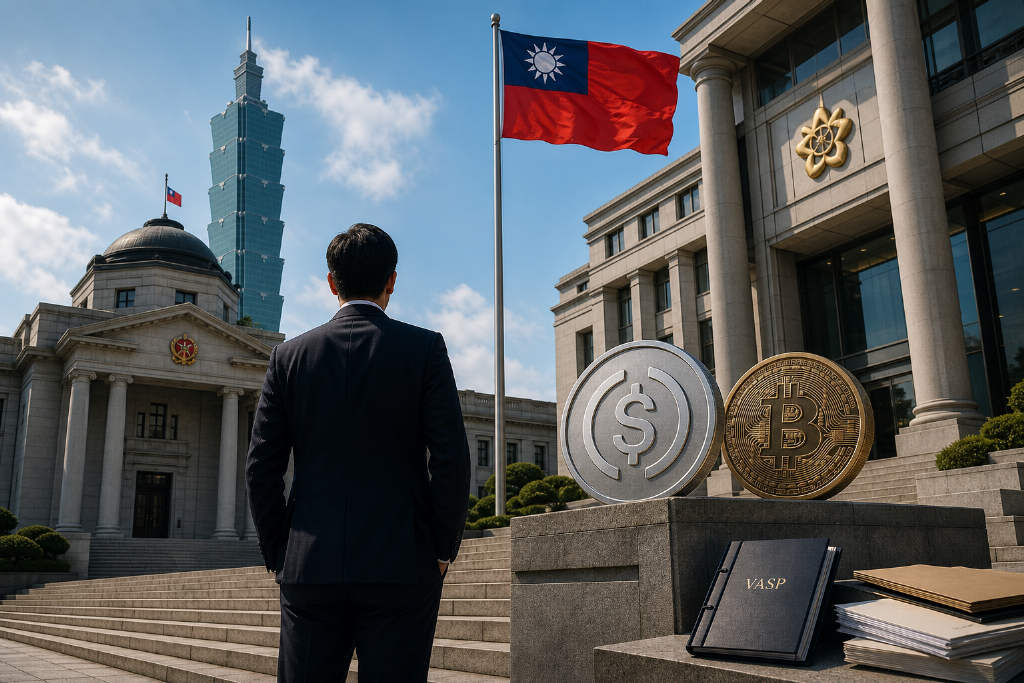
Taiwan’s digital asset law is in force, but Chen Ching says stablecoin policy still needs top-level coordination

Taiwan’s Virtual Asset Service Act cleared its third reading on June 30, 2026 and was promulgated on July 22, formally putting virtual asset service providers under a dedicated legal regime. But former premier and former Financial Supervisory Commission chairperson Chen Ching said the law’s success should not be judged by how many licenses are issued. His main test is whether the government gives the sector sustained attention at the highest level. Speaking on episode 100 of XREX Group’s podcast Web3 Big Westward Expansion, Chen said the hardest questions begin after passage of the law: how Taiwan wants to develop virtual assets and stablecoins, who has final authority when agencies disagree, and whether firms will get a review process that is clear and predictable. He pointed to a structural issue in the law’s stablecoin provisions, where the Financial Supervisory Commission is the competent authority but approval for issuance also requires the central bank’s consent. Chen argued that stablecoins should be viewed not only as a financial product subject to compliance rules, but also through the lens of monetary sovereignty and national strategy. XREX co-founder and Group CEO Wayne Huang added that if trading can remain legally onshore, local currency has a chance to remain on-chain as well, especially as tokenized real-world assets become more important.

70
Taiwan’s digital asset law is in force, but Chen Ching says stablecoin policy still needs top-level coordination
Policy Regula
2026-08-16 12:36:00

Weekly crypto calendar: CFTC’s first innovation panel to take up crypto, AI and prediction markets

The week ahead includes a dense run of crypto policy, exchange and project events. DeepSeek’s revised API pricing takes effect on Aug. 17 with peak and off-peak rates, while Coinbase is scheduled to carry out system maintenance, launch US500 perpetual-style index futures for U.S. users through Coinbase Derivatives, and end support for USDC deposits and withdrawals on Noble. Hashdex is also set to close and liquidate its Bitcoin ETF, and Binance will delist six tokens on the same day. Attention then shifts to regulation. South Korea will implement tighter rules for single-stock leveraged ETF and ETN products on Aug. 19, including stricter deviation-rate controls and an added simulated-trading requirement for first-time retail investors. Politico, citing three people familiar with the matter, reported that the White House may meet crypto and prediction-market executives on Aug. 19. On Aug. 20, the U.S. Commodity Futures Trading Commission’s Innovation Advisory Committee will hold its first meeting, with crypto assets, artificial intelligence and prediction-market oversight on the agenda. The week also features several token unlocks, including LayerZero, KAITO, MBG and SOON, plus project updates from Solana, DGrid AI, SNS, Doodles, Step App and Manus. Binance will make additional network and compliance-related changes later in the week, including restrictions involving EXMO and other platforms.


410
Weekly crypto calendar: CFTC’s first innovation panel to take up crypto, AI and prediction markets
Taiwan
2026-08-14 02:13:15

Taiwan FSC proposes tighter VASP travel rule, requiring identity data for transfers above NT$30,000

Taiwan’s Financial Supervisory Commission on Aug. 13 released a draft amendment to the anti-money laundering and counter-terrorism financing rules for virtual asset service providers, refining how the travel rule would apply to crypto transfers. The proposal aligns with Recommendation 16 revised by the Financial Action Task Force in June and sets NT$30,000 as the threshold for more detailed data collection. For transfers below that level, VASPs would only need the sender’s and recipient’s names and wallet information. Once a transfer exceeds NT$30,000, the sending VASP would need to collect added identity details, including date of birth and residential address for natural persons, or official identification number and registered address for legal entities. The draft also adds a matching obligation for receiving VASPs, which would need to compare recipient data against information sent by the originating firm. If required information cannot be obtained and transmitted, the transfer could not proceed. Public comments are open until Sept. 14, while the detailed implementation scope and timeline would be set by the industry association and submitted to the FSC for approval.

530
Taiwan FSC proposes tighter VASP travel rule, requiring identity data for transfers above NT$30,000
South Korea
2026-08-13 06:17:55

South Korea Expands VASP Registration Review to Major Shareholders Starting Aug. 20

South Korea is set to broaden the scope of its registration review for virtual asset service providers (VASPs) to include major shareholders, with the change scheduled to take effect on August 20, according to News1. Under the updated rules, operators will be required to give financial authorities 30 days' advance notice in the event that major shareholders or the company's legal compliance framework undergo any changes. The revised registration handbook was released during a briefing in Seoul hosted by the Financial Intelligence Unit (FIU) and the Financial Supervisory Service (FSS), which was intended for VASPs and prospective operators. The review now covers the largest shareholder, shareholders with a stake of at least 10%, and shareholders with a special relationship to the largest shareholder. Where the largest shareholder is a legal entity, the entity's own largest shareholder and its representatives may also be brought under review. The details emerged from a session that brought together existing service providers and firms considering entry into the sector.

560
South Korea Expands VASP Registration Review to Major Shareholders Starting Aug. 20
South Korea
2026-08-11 08:31:35

South Korea Removes $700 Threshold and Extends Crypto Travel Rule to All Transfers

South Korea’s Cabinet approved amendments to the enforcement decree of its Act on Reporting and Using Specified Financial Transaction Information on Aug. 11, removing the 1 million won, or roughly $700, threshold that had limited the crypto Travel Rule to larger transfers. Once the revised rules take effect six months after promulgation, all transfers between registered virtual asset service providers, or VASPs, will be subject to information-sharing requirements regardless of size. The amendment also tightens oversight of transfers involving overseas exchanges and personal wallets through a risk-based framework, while imposing separate suspicious transaction monitoring for transfers of 10 million won or more tied to foreign platforms or self-hosted wallets. At the same time, South Korea is raising VASP registration standards across financial soundness, internal controls, staffing, infrastructure, and major shareholder review, with those registration provisions scheduled to take effect on Aug. 20 and a one-year grace period for existing operators.

570
South Korea Removes $700 Threshold and Extends Crypto Travel Rule to All Transfers
Binance
2026-08-11 04:16:54

Binance added to Taiwan VASP association warning list over missing AML registration

Binance has been added to the warning list published by Taiwan’s Virtual Asset Service Provider Association, which said the exchange has not completed anti-money laundering registration with the Financial Supervisory Commission. Under the current rules cited in the notice, Binance is not allowed to provide virtual asset services within Taiwan or advertise and solicit business from local residents. The association also advised the public to avoid using Binance’s services in Taiwan and not to remit funds to accounts provided by the platform. The move places Binance alongside other offshore exchanges already named on the list, including Bybit, OKX, Gate.io, Bitget, Pionex, and BitMart. The report said the warning does not classify Binance as a fraud platform and does not mean Taiwanese users holding Binance accounts are acting illegally. Instead, the restriction focuses on the conduct of unregistered offshore providers, especially local service provision and marketing. The development comes after Taiwan’s legislature passed the Virtual Asset Service Act on June 30, setting the stage for a shift from an AML registration-based framework to a licensing regime for VASPs.

770
Binance added to Taiwan VASP association warning list over missing AML registration