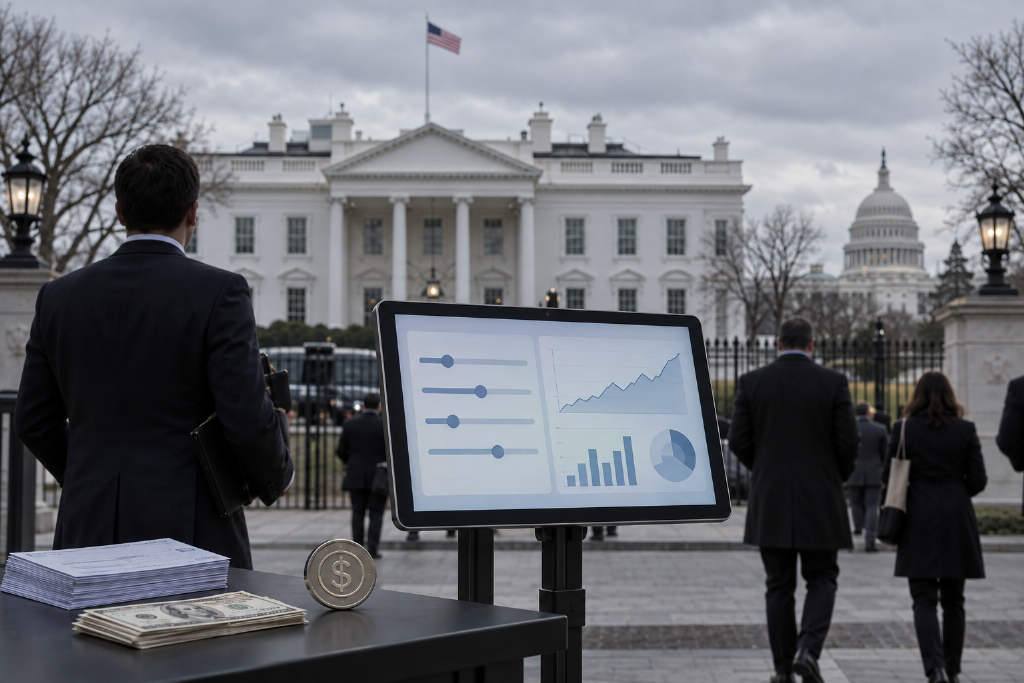
Policy and Re2026-09-15 09:45:46White House plans interactive tool to support Clarity Act and rebut stablecoin deposit-loss claimsThe Trump administration is lobbying Senate Republicans to move forward with the Clarity Act, a crypto market structure bill now facing a procedural vote in the Senate on Tuesday afternoon. Chris Phelan, chair of the White House Council of Economic Advisers, said officials will launch an interactive tool on Tuesday that lets users adjust assumptions and run scenarios to test the claim that stablecoin growth does not have a material link to deposit outflows from community banks. Banking groups said the latest revisions to the bill still do not go far enough for them to accept its stablecoin provisions. The legislation needs at least 60 votes to advance, but the path remains uncertain. Texas Senator John Cornyn and several other Republicans have suggested they may vote against it, while pro-crypto Democrats have voiced dissatisfaction with how strongly the latest text restricts President Donald Trump. Patrick Witt, executive director of the White House Digital Assets Advisory Council, said the bill now includes measures meant to protect community banks.800
Bessent2026-09-14 23:55:46Bessent says Treasury would use new powers if stablecoins harm community banksU.S. Treasury Secretary Bessent said the CLARITY Act is critical to making sure the United States wins the global race in new technologies, while also pointing to the previously passed GENIUS Act as part of an effort to build and expand stablecoin-based financial infrastructure in the country. He said the government intends to support digital technology development and, at the same time, craft appropriate regulatory rules for community banks so both sectors can contribute to U.S. economic growth. Bessent also said the final draft of the CLARITY Act gives the Treasury secretary additional authority to act if stablecoins trigger deposit outflows and damage community banks. He added that the government would not hesitate to use those tools if community banks are harmed. In his remarks, Bessent described community banks as essential to the U.S. economy and to growth in the real economy, adding that "economic security is national security."1060
Policy Regula2026-09-14 22:28:41Bessent says CLARITY Act is central to U.S. tech race and community bank safeguardsU.S. Treasury Secretary Scott Bessent said in a social media post that the CLARITY Act is critical to helping the United States win what he described as the global race in new technologies. He tied that view to Congress passing the GENIUS Act, saying the goal is to make sure stablecoin infrastructure, which he called a revolutionary financial technology, is built in the United States. Bessent also said he has focused since taking office on keeping the U.S. community banking sector strong. He described the administration’s two-track approach as promoting new digital technologies while making appropriate adjustments to community bank regulation, arguing that both areas are important to U.S. economic growth. According to Bessent, the final draft of the CLARITY Act advances that mission by giving the Treasury secretary added authority to act if changes in deposit outflows become harmful to community banks. He added that if stablecoins end up hurting community banks, he would not hesitate to use those tools to make sure they are fully protected. Bessent said community banks remain important to U.S. economic performance and Main Street growth, and said economic security is national security.990
Coinbase2026-09-14 01:41:59Brian Armstrong says stablecoins could give community banks a competitive edgeCoinbase CEO Brian Armstrong said community banks stand to become more competitive if they adopt stablecoins, arguing that the technology opens a clearer path to winning market share rather than creating only new policy concerns. In his post, Armstrong said Coinbase is working with Moov to help more than 1,000 community banks add stablecoin-related capabilities within their existing systems. He said that setup would allow faster settlement, lower costs, and real-time access to funds. Armstrong also said the debate in Washington over stablecoins and community banks is missing what he called the most important point: stablecoins are an opportunity. The remarks frame stablecoins not as a theoretical policy issue, but as a practical payments tool for smaller banking institutions already operating on legacy infrastructure.950
Coinbase2026-09-14 01:40:57Coinbase says it is helping more than 1,000 U.S. community banks add stablecoin capabilitiesCoinbase Chief Executive Officer Brian Armstrong said community banks would be in a stronger position to compete if they adopt stablecoins, arguing the technology gives them a better shot at winning market share. In a post on Sept. 14, Armstrong said Coinbase is working with Moov to help more than 1,000 community banks integrate stablecoin-related capabilities into their existing systems rather than replacing core infrastructure. He said the setup would give banks faster settlement, lower costs and real-time access to funds. Armstrong also argued that the discussion in Washington around stablecoins and community banks is missing what he called the central point: stablecoins represent an opportunity. His remarks frame stablecoins not as a threat to smaller banks, but as a tool they can plug into current operations to improve payment efficiency and fund access.1110
Coinbase2026-09-10 12:25:32Coinbase partners with Moov to provide stablecoin infrastructure to more than 1,000 community banksCoinbase said on Sept. 10 that it has entered a partnership with fintech company Moov to provide stablecoin infrastructure for small banks and community banks. Under the arrangement, more than 1,000 banks will be able to use their existing technology systems to receive stablecoins, handle settlement, and move funds in real time. Coinbase said the partnership is designed to help banks add stablecoin-related services on top of their current technology architecture rather than requiring a full rebuild of their systems. The company also said the move reflects the direction of development for regulated stablecoin infrastructure. The announcement focuses on banking access to stablecoin rails through existing operational setups and frames the partnership as an infrastructure rollout for regulated financial institutions.880
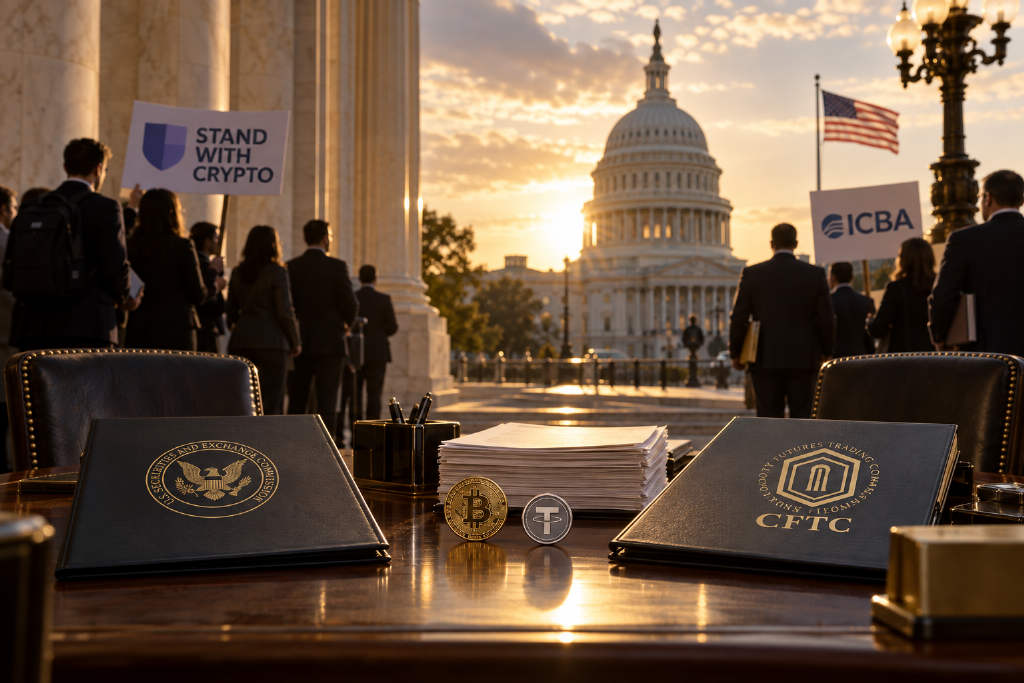
Clarity Act2026-09-09 19:12:35U.S. Senate nears Sept. 15 procedural vote on Clarity Act as crypto and community banks lobbyThe U.S. Senate is set to hold a procedural vote on the Clarity Act on Sept. 15, putting a key digital asset bill closer to formal consideration. The proposal would create a federal framework for regulating digital assets and split oversight between the Securities and Exchange Commission and the Commodity Futures Trading Commission. Lobbying around the bill has intensified on both sides. Stand With Crypto, a Coinbase-backed industry advocacy group, said its members contacted lawmakers nearly 50,000 times in August through calls and emails. The group also organized events and placed opinion pieces in local newspapers backing the measure. Separately, crypto industry groups have spent at least $190 million on the November midterm elections. Opposition has also been active. The Independent Community Bankers of America has arranged meetings between local bankers and senators in their home states and launched television ads urging changes to the bill. The group said the legislation should explicitly ban stablecoin yield to protect community banks’ role in supporting $4.1 trillion in local lending. Stablecoin rewards have become a central point of dispute, with banking groups warning of deposit outflows while crypto firms push to preserve such incentives and secure clearer federal rules. The bill is also facing criticism tied to anti-money laundering safeguards and ethics limits for government officials with crypto holdings.910
Blockchain As2026-08-31 14:00:58Blockchain Association says big banks, not stablecoins, are driving community bank deposit lossesBlockchain Association pushed back against claims from large banks that stablecoins are draining deposits from community banks, arguing that the charge is not backed by evidence. In a post on X, the group said Federal Deposit Insurance Corporation data show that large banks have been taking share from community banks for decades. As of 2023, non-community banks held at least 87% of U.S. domestic deposits, while community banks accounted for 13%. It also said the combined deposit share of JPMorgan Chase and Bank of America alone was more than 1.5 times that of the entire community banking sector. The association added that since the GENIUS Act was signed on July 18, 2025, U.S. bank deposits have continued to rise, increasing by $92.2 billion in the third quarter of 2025, $318.3 billion in the fourth quarter, and $389.7 billion in the first quarter of 2026. Citing a CRA International analysis covering 2019 to 2025, it said there was no statistically significant link between stablecoin growth and outflows from community bank deposits.1110