eba

Kalshi
2026-09-22 09:56:49

Kalshi Pushes Back on Wash-Trading Claims Over Repeated $5,500 Ether Perp Orders

Kalshi is contesting claims that volume in its crypto perpetual futures market was artificially inflated after Stealth Neolab co-founder Beni highlighted unusual trading patterns in the platform’s ether perpetual contract. In a Sept. 20 thread on X, Beni said the contract posted about $539 million in 24-hour volume against roughly $3.1 million in open interest, implying turnover of around 174 times. He later added that trades sized at exactly $5,500 accounted for 48% to 58% of ether perp notional volume on four days between Sept. 16 and Sept. 20, and said the largest position shown on Kalshi’s public leaderboard was $17,598 when he captured the data. Beni linked the activity to market makers or self-clearing members and cited a CFTC filing describing a program in which eligible makers receive 0.3 basis points while takers pay 0.3 basis points, netting to zero. Kalshi’s IcoBeast.eth rejected the allegations, saying the chart at the center of the dispute tracked prediction-market share rather than perpetuals volume and that Kalshi measures volume by maximum contract payout, as Polymarket does, because each contract settles at $1.
100
Kalshi Pushes Back on Wash-Trading Claims Over Repeated $5,500 Ether Perp Orders
Binance
2026-09-21 13:23:41

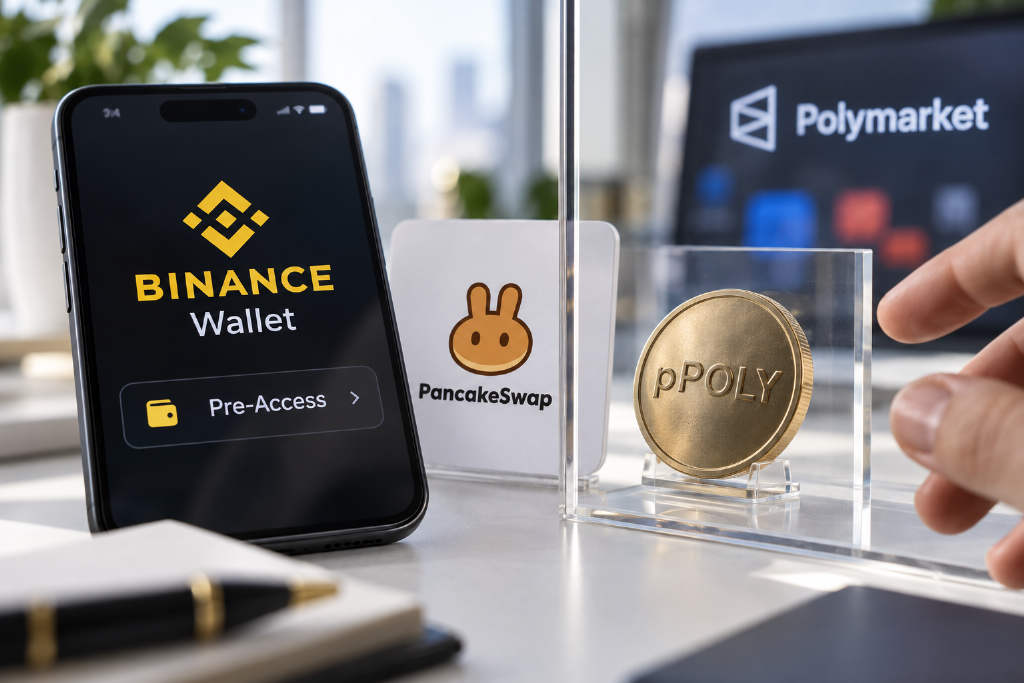
Binance Pre-Access debuts with pPOLY, raising questions over on-chain pre-IPO access

Binance Wallet on Sept. 20 introduced Pre-Access, a feature hosted through PancakeSwap that gives users indirect exposure to companies that may go public in the future. The first offering is pPOLY, issued by Paimon Finance and tied to Polymarket-related assets. Community discussion quickly framed the launch as a new form of on-chain "IPO subscription," but the official documents draw a much narrower line. According to Binance Wallet and the project FAQ, Pre-Access tokens are third-party tokenized instruments that provide contractual, synthetic, or indirect economic exposure. They do not represent shares, equity, fund interests, SPV ownership, or any direct claim on underlying assets. Holders do not receive voting rights, dividend rights, governance rights, information rights, or IPO allocation rights. Binance also says it does not issue the token, verify the subscription price or implied valuation, or guarantee redemption, conversion, buybacks, or even a future IPO. The first pPOLY sale is priced at $15.5, with a total size of $4.8 million, or about 309,700 tokens. Allocation is tied to Alpha Points, Trencher Badge status, and bStocks on-chain tier data, with the first round based on bStocks holdings and trading volume recorded from Sept. 6 to Sept. 20. The setup has fueled debate over whether Pre-Access is a genuine on-chain IPO model or a distribution mechanism built around indirect exposure and Binance’s internal user-ranking system.

90
Binance Pre-Access debuts with pPOLY, raising questions over on-chain pre-IPO access
Global Expans
2026-09-22 09:15:11

2026 East Forward conference in Shanghai turns the spotlight to long-term global operations for Chinese companies

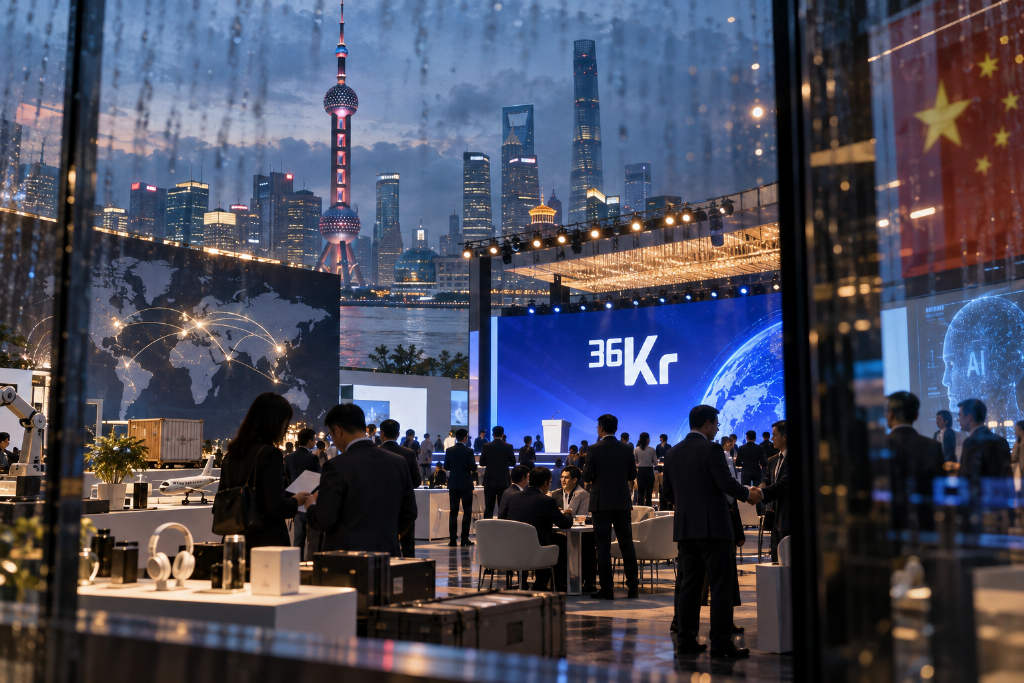
Chinese companies are no longer treating overseas expansion as a search for quick incremental growth. That was the central theme at 36Kr’s 2026 East Forward conference in Shanghai on Sept. 17, where speakers from sectors including new energy vehicles, cross-border e-commerce, AI applications, smart hardware, consumer electronics and new consumer brands discussed how global expansion is shifting toward long-cycle operating capability. Participants focused on what happens after market entry: building local teams, rebuilding supply chains and channels, managing compliance, forming durable brand recognition and connecting data, customers and operating systems. 36Kr Vice President Xie Zuoqiang said the old model of simply selling goods abroad is no longer the main challenge. Companies now need brands that can hold up overseas, accounts that can be clearly managed, and operations that can withstand governance and compliance pressure. The conference also examined AI as a new commercial entry point, the economics of AI-generated short dramas, capital allocation in the later stage of globalization, and the growing role of service ecosystems. Alongside the main forum, East Forward released three company rosters tied to globalization and held a business matchmaking session involving 28 companies.

100
2026 East Forward conference in Shanghai turns the spotlight to long-term global operations for Chinese companies
Bitcoin ETF
2026-09-22 09:31:01

Bitcoin spot ETFs pull in $999 million as X adds live market quotes for stocks and crypto

A PANews daily roundup put several crypto and tech developments in focus, led by strong U.S. spot ETF flows and a new market data feature on X. According to SoSoValue, U.S. spot Bitcoin exchange-traded funds recorded $999 million in net inflows on Sept. 21 Eastern Time, extending the streak to three straight days. BlackRock’s IBIT led with $381 million, while ARKB from Ark Invest and 21Shares added $289 million. Spot Ether ETFs also posted $270 million in net inflows the same day, with BlackRock’s ETHA and Fidelity’s FETH leading the list. On the product side, X rolled out live quote displays for stocks and cryptocurrencies. The feature includes a trading button that routes users to Coinbase, Gemini, Kraken, Moomoo and Interactive Brokers. The roundup also covered a Bloomberg report that the U.S. Department of Justice is investigating whether Binance may have violated Iran sanctions, a governance incentive proposal vote launched by World Liberty Financial, xAI’s release of Grok 4.7, and fresh revenue figures from the Bittensor ecosystem. In market data and on-chain activity, PANews highlighted a 14-year-dormant wallet moving 600 BTC, a brief USDe depeg on Binance, and new ETH accumulation by BitMine and several whale addresses.

170
Bitcoin spot ETFs pull in $999 million as X adds live market quotes for stocks and crypto
Xiaomi
2026-09-22 09:30:15

Developer says Xiaomi MiMo Code package contains modules absent from public repository

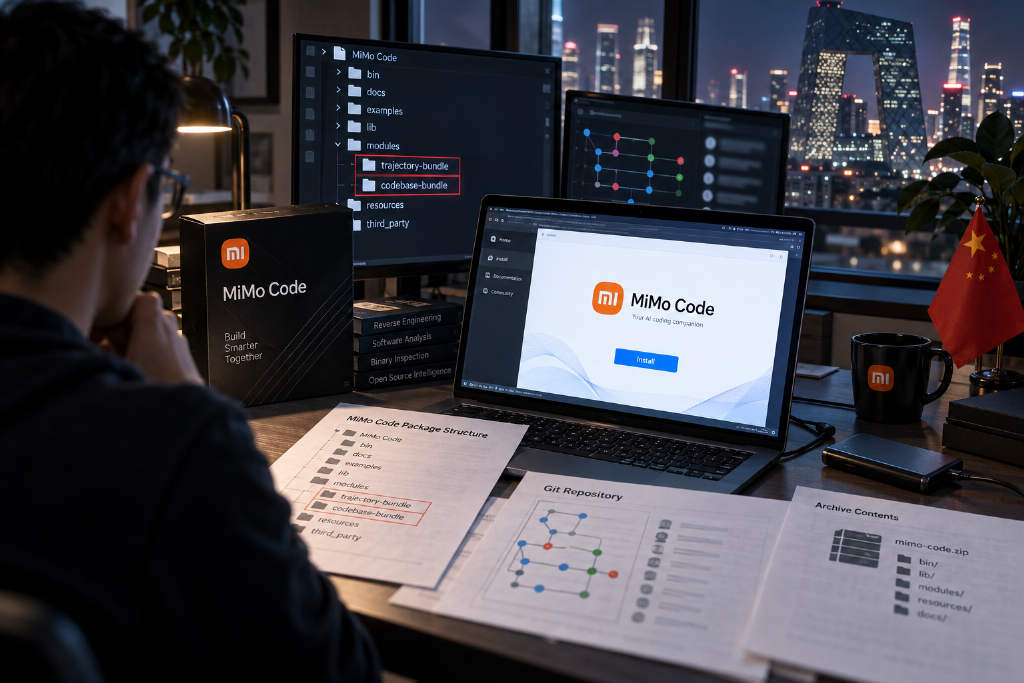
A developer who reverse-engineered the official installation package for Xiaomi MiMo Code said the package includes two modules that do not appear in the project’s public repository: trajectory-bundle and codebase-bundle. According to the findings, trajectory-bundle can package system prompts, conversations, model replies, and code diffs, while codebase-bundle contains a function called collectCodebase() that can traverse a Git repository, read source code, and compress it into a bundle. At the same time, the developer said there is no sign that collectCodebase() is called by MiMo Code’s built-in code, and there is no evidence that a complete codebase was uploaded. The information confirmed to have been sent out mainly involves Git repository addresses, commit hashes, and branch details. Xiaomi’s MiMo Code was open-sourced under the MIT license in June. Two days earlier, Zhipu’s ZCode drew legal pressure after automatically packaging a full workspace, with a company sending a 12-page legal letter demanding data deletion.

90
Developer says Xiaomi MiMo Code package contains modules absent from public repository
Aave
2026-09-22 08:54:28

AAVE buyback restart faces balance-sheet pressure after rsETH fallout

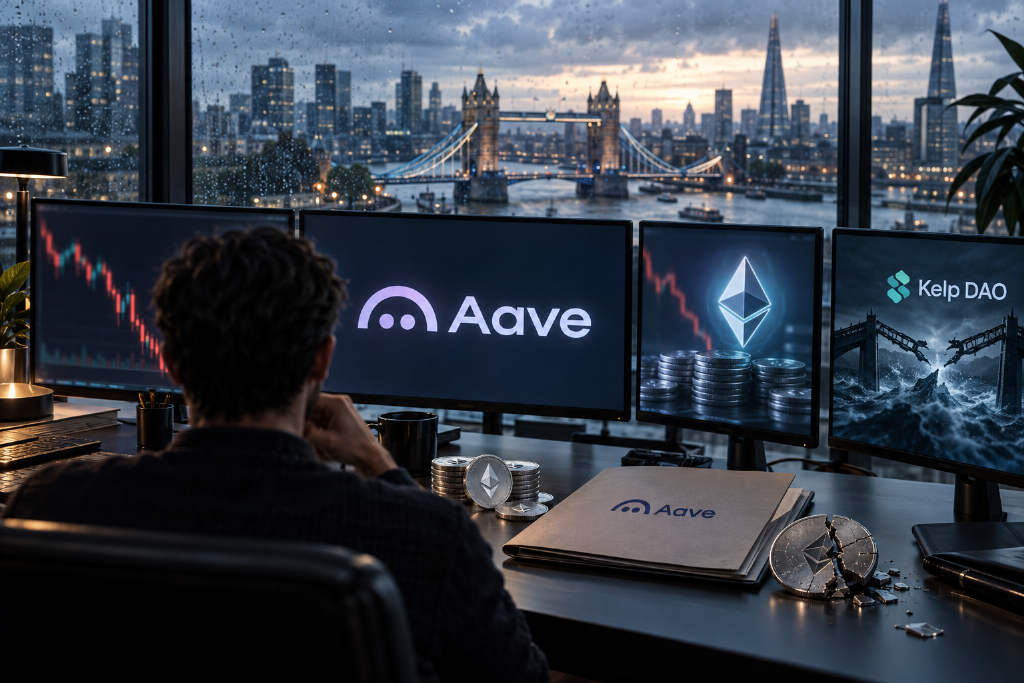
Aave tokenholders have been watching for signs that the protocol might restart AAVE buybacks, but DeFi researcher Chado argues the path is far less straightforward than the market may hope. The overhang traces back to the April 18 rsETH incident tied to Kelp DAO’s LayerZero bridge route, which left Aave dealing with a large hole after undercollateralized rsETH was used to borrow WETH on the protocol. While asset freezes, recoveries and expected liquidations reduced the shortfall, Aave still ended up committing 25,000 ETH from its treasury and taking on a long-term financing facility from Mantle of up to 30,000 ETH. Chado’s analysis focuses on what that means for cash flow. Over the 144 days after the incident, Aave generated about $181.2 million in protocol fees, but only around $24 million was retained by Aave DAO, or roughly $167,000 per day. That was down about 41% from the prior 144-day period. Using ETH at about $2,639 and assuming the full 30,000 ETH Mantle facility, the loan would equal roughly $79 million. At the recent retained-income pace, repaying that amount would theoretically take about 473 days. Chado frames that as a static stress test rather than a fixed repayment plan, but the conclusion is clear: until Aave’s balance sheet is repaired, protocol income may struggle to flow back to AAVE holders.

80
AAVE buyback restart faces balance-sheet pressure after rsETH fallout
Hong Kong reg
2026-09-22 08:10:46

Hong Kong’s Crypto Rulebook Takes Shape Across Exchanges, Stablecoins and New Licensing Plans

Hong Kong’s crypto regime is being built through multiple statutes rather than a single all-in-one code, with different rules applying to securities tokens, non-security virtual asset trading platforms and fiat-referenced stablecoins. The framework now links issuance, trading, client onboarding and custody more closely after the Hong Kong Monetary Authority issued the first two stablecoin issuer licenses on April 10, 2026, followed by a Securities and Futures Commission circular on May 27 setting out how licensed virtual asset trading platforms and licensed corporations may offer those licensed stablecoins to clients. The article maps out how the system works in practice. Securities tokens remain under the Securities and Futures Ordinance, while centralized spot crypto platforms fall under the Anti-Money Laundering and Counter-Terrorist Financing Ordinance. Stablecoin issuance is handled separately under the Stablecoins Ordinance, which took effect in August 2025. It also details licensing thresholds for trading platforms, including capital and liquidity requirements, token admission rules for retail access, and custody standards such as the 98% cold-storage requirement. Beyond current law, Hong Kong is still moving to add new licensing regimes for custody, trading intermediation, advisory and asset management. The piece also covers the role of banks and licensed corporations, the treatment of tokenized securities, and the city’s settlement infrastructure work through the HKMA’s Ensemble project.

80
Hong Kong’s Crypto Rulebook Takes Shape Across Exchanges, Stablecoins and New Licensing Plans
Ethereum
2026-09-22 07:14:09

Vitalik outlines EIP-8288, shifting signature and proof aggregation into Ethereum’s mempool

Vitalik Buterin used his ETHShanghai 2026 talk to lay out EIP-8288, a proposal he said could ease one of Ethereum’s hardest tradeoffs: scaling without giving up privacy or stronger cryptography. The design keeps large signatures and STARK proofs off-chain, then has mempool nodes aggregate them before block inclusion, so the chain only needs to verify a single proof for a batch of transactions. In Buterin’s framing, the proposal builds on EIP-8141, the native account abstraction upgrade expected in the next hard fork. Transactions would declare dependencies for signatures or proofs through compact frame structures, while the heavy cryptographic objects are absorbed and compressed in the mempool. He argued this could sharply reduce the cost of quantum-safe transactions, privacy-preserving applications, and proof publication for Layer 2 systems. Buterin also described the architecture as a form of specialized sharding for verification work, separating transaction business logic from expensive dependency checks. He said the approach could become one of Ethereum’s first practical paths for using RISC-V or a similar instruction set in proof expression, while early simulation tools, testnets, competitions, and prototype code are already under development around the proposal.

80
Vitalik outlines EIP-8288, shifting signature and proof aggregation into Ethereum’s mempool