Backfashion

fashion

Arthur Hayes
2026-08-25 06:33:15

Arthur Hayes says a 5% US 10-year yield is the trigger for more dollar liquidity and a bullish Bitcoin setup

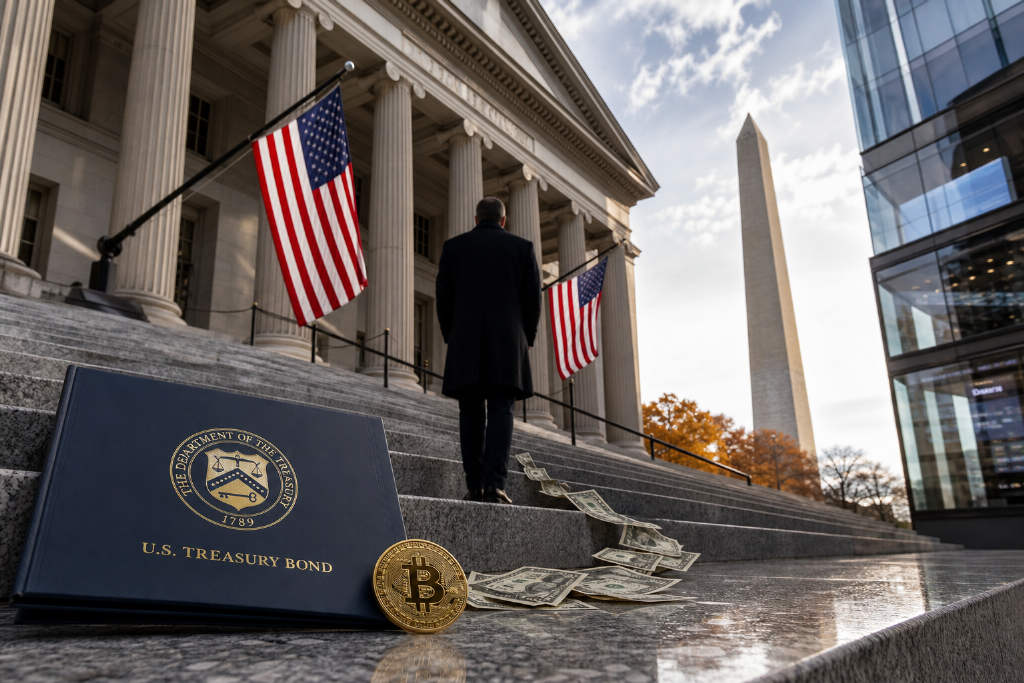
Arthur Hayes argues that the signal for Bitcoin is not a political slogan from Washington but the level of the US 10-year Treasury yield. In his latest piece, Hayes says both former Treasury Secretary Janet Yellen and current Treasury Secretary Scott Bessent end up choosing liquidity-creating measures when the 10-year yield nears 5%, even if their public messaging differs. He revisits late 2023, when Yellen increased Treasury bill issuance and helped pull money out of the Federal Reserve’s reverse repo facility, and contrasts that with Bessent’s current toolkit, including a larger long-end buyback program and support for broader use of the FIMA facility. Hayes argues that these steps are all aimed at keeping long-term borrowing costs from rising too far. His broader claim is straightforward: when the Treasury and the Fed lean toward yield suppression, dollar liquidity expands, and that tends to lift risk assets, including Bitcoin. Hayes points to the drop in reverse repo balances from about $2.5 trillion to $100 billion by the time Bessent took office on Jan. 20, 2025, and says that liquidity shift helped support both the Nasdaq 100 and Bitcoin. He adds that if Bessent escalates support as market stress builds, Bitcoin could respond in the same direction again.
370
Arthur Hayes says a 5% US 10-year yield is the trigger for more dollar liquidity and a bullish Bitcoin setup
Hyperliquid
2026-08-24 18:33:03

Hyperliquid Hits Record High, Then Faces a $1.2 Billion Token Unlock on Aug. 29

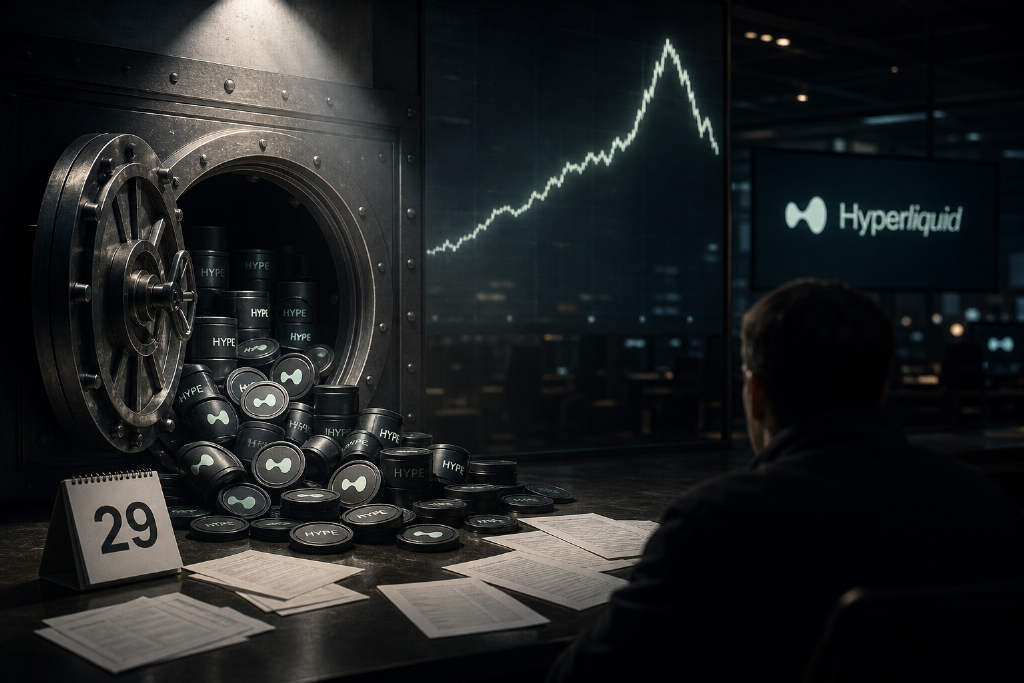
Hyperliquid’s native token HYPE climbed to a record $83.27 on Sunday before easing to around $77.50, putting the project’s market capitalization near $19.5 billion, according to CoinGecko. The rally now runs into what Tokenomics.com lists as Hyperliquid’s largest monthly unlock so far, scheduled for Aug. 29. Since the project’s November 2024 launch, the network has released portions of its 1 billion-token supply on a fixed calendar, and this upcoming event is the fourth straight monthly unlock sent to three groups: the community, the Hyper Foundation, and insiders. Insiders are set to receive the largest share at 46.6%, slightly above the community’s 46.3%, while the foundation will take 7%. Based on the figures cited in the report, roughly $560 million of the release is tied to insider-facing supply. Recent price action after prior unlocks has been mixed, with HYPE falling 7% after the July event, rising 1% after June, and dropping 14.1% after May. Hyperliquid has also drawn attention this month after Coinbase integrated 50x perpetual futures into its Base app using Hyperliquid infrastructure, while President Donald Trump said the CFTC is working to bring Hyperliquid into the U.S. in a compliant and legal way.

400
Hyperliquid Hits Record High, Then Faces a $1.2 Billion Token Unlock on Aug. 29
U.S. premarke
2026-08-24 08:04:55

Crypto-linked U.S. premarket stocks were mixed, with PURR up more than 3%

Crypto-related U.S. stocks traded in mixed fashion in premarket trading on Aug. 24, according to market data from BIT (bit.com). Among the names listed, CRCL fell 1.59%, MSTR slipped 0.36%, MARA declined 1.15%, COIN dropped 1.37%, and RIOT was down 0.66%. On the gaining side, BMNR rose 0.51%, while PURR posted the strongest move, up 3.12%. The snapshot shows divergence across crypto concept stocks ahead of the U.S. market open, with most of the tracked names edging lower and PURR leading the gainers in the group.

370
Crypto-linked U.S. premarket stocks were mixed, with PURR up more than 3%
Crypto Market
2026-08-24 02:03:17

Crypto’s 2026 user shift: capital is back, active participants are not

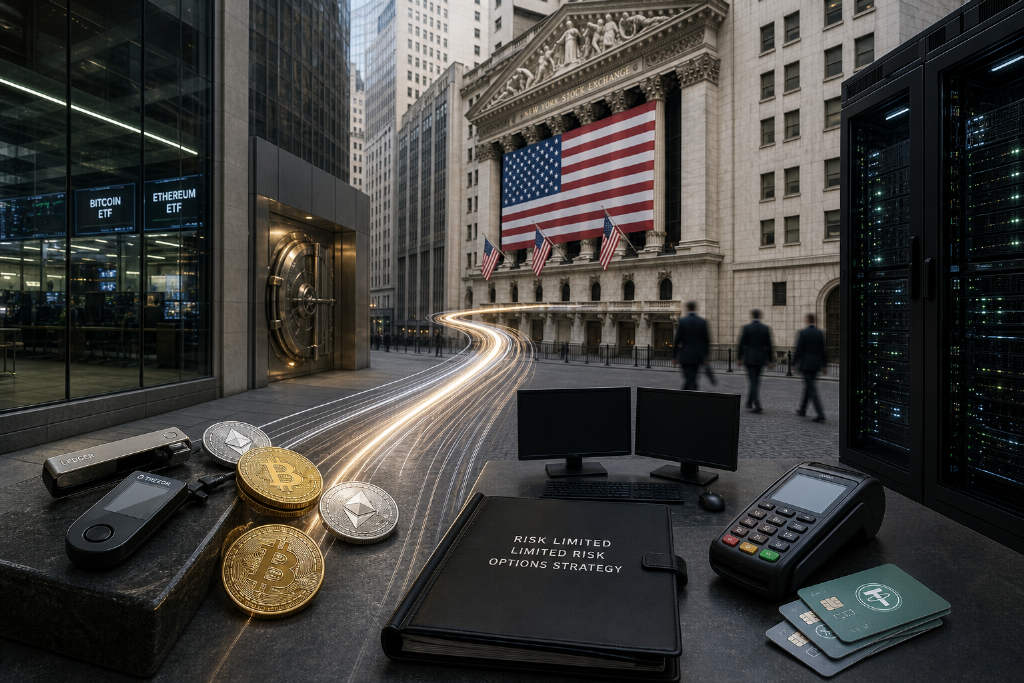
TechFlowPost argues that 2026 has brought a sharp split to crypto: capital has returned, but many of the people who once animated the industry have not. In the third week of August alone, U.S. spot Bitcoin and Ether ETFs posted $2.61 billion in net inflows, while Bitcoin climbed from 64,000 to 78,000 after a U.S. Treasury operation pushed 30-year yields down from 5.31 to 5.18. Yet over roughly the same stretch, monthly active onchain addresses fell 18% year over year, even as passive holders rose 16%. The article frames the shift as four migrations. New entrants are moving from self-custody to brokerage-based exposure through products such as IBIT. Speculators have moved from aggressive leverage to limited-risk positioning after the October 10, 2025 liquidation shock that wiped out more than $19 billion in a day. Another group has moved from chasing price to using stablecoins as payment and dollar-access tools, especially in emerging markets. A fourth shift is from humans to machines, with automated addresses and bots accounting for most onchain activity by some measures. The piece also says the users most clearly disappearing are P2E workers, NFT collectors and parts of the airdrop-hunting crowd, while stablecoin users, veteran developers and long-horizon allocators remain. Its central claim is that crypto is turning from a community of believers into infrastructure for capital, with fewer ideological participants and more institutions, compliance officers and financial advisors shaping the field.

370
Crypto’s 2026 user shift: capital is back, active participants are not
Bitcoin
2026-08-23 23:56:00

US debt fears, CLARITY push and SEC proposals drive a sharp crypto rebound

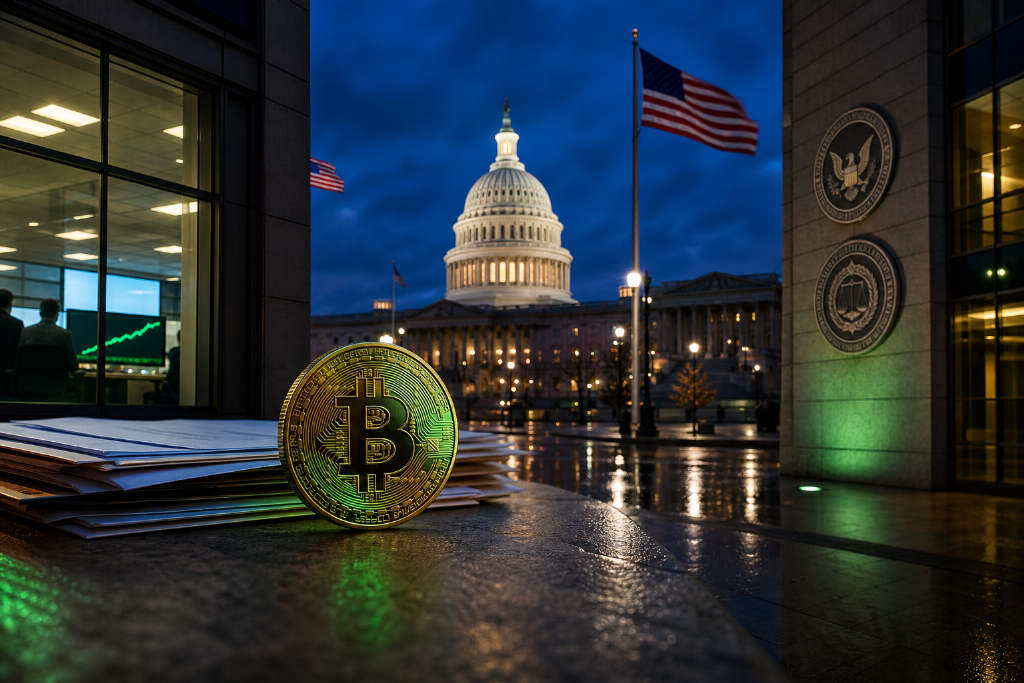
Bitcoin posted a 23.5% weekly gain as US debt concerns, fresh ETF inflows and a new wave of regulatory developments reshaped sentiment across crypto markets. Cointelegraph’s latest Hodler’s Digest says BTC traded around $77,559 at the time of writing after briefly topping $79,000 on Friday, while Ethereum rose 31.1%, Solana 28% and XRP 53.3%. Barchart noted that Bitcoin moved back above its 200-day moving average for the first time since November 2025, a level many traders watch for longer-term trend shifts. The report ties part of the rally to US debt policy after the federal debt crossed $40 trillion. The Kobeissi Letter pointed to inflation, deficit spending and Treasury buyback plans, while Bridgewater founder Ray Dalio said investors should hold around 15% in gold and a bit of Bitcoin, warning that a US debt crisis could arrive in about three years, give or take two, if the current path does not change. On the policy front, Donald Trump renewed his call for the CLARITY Act after meeting crypto executives including Coinbase CEO Brian Armstrong and Gemini co-founders Cameron and Tyler Winklevoss. At the same time, the SEC proposed new crypto exemptions and safe harbor language, and CFTC chair Michael Selig said the agency would move with its own rules if the Senate does not pass CLARITY.

590
US debt fears, CLARITY push and SEC proposals drive a sharp crypto rebound
Unitree Robot
2026-08-23 06:17:02

Videos of a “beggar robot” on Chinese streets go viral, but authenticity remains unverified

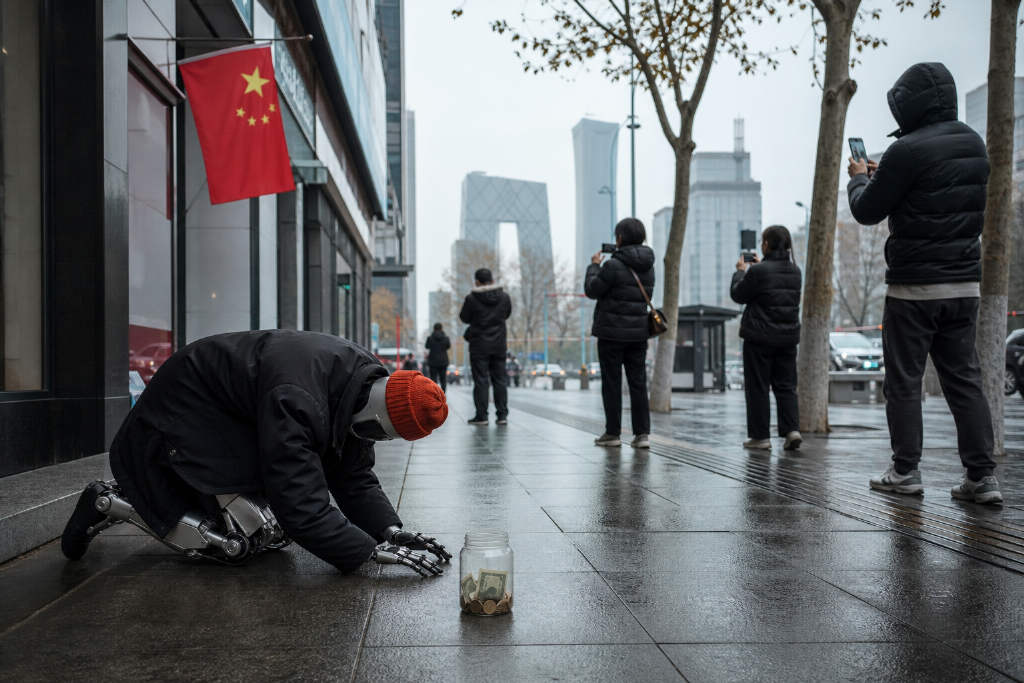
Videos circulating on X show what appears to be a humanoid robot dressed as a street beggar in China, repeatedly bowing on a sidewalk with a plastic container for cash placed in front of it. The clips have drawn wide attention online, with users joking that Unitree robots have finally found a real-world use case. Still, the footage has not been verified by mainstream media, and key details — including the filming location, whether the scene was staged, and whether the container actually received money — remain unclear. The report notes that this is not the first time similar scenes have surfaced. Starting in mid-June 2026, comparable videos from Fuzhou in Fujian, Beijing, and Chengdu in Sichuan showed a humanoid robot kneeling on the street, gesturing with clasped hands, and playing a prerecorded message asking for “electricity money.” Multiple media outlets identified that model as Unitree Robotics’ G1 humanoid robot, which the report said starts at $13,500 and has about two hours of battery life. Observers broadly viewed those appearances as staged promotional stunts or performance art rather than spontaneous public behavior by a machine. Online reaction in China was blunt and often sarcastic, with comments suggesting that even begging had become “involuted” and that people who do not work hard may one day “not even qualify to be a beggar.”

500
Videos of a “beggar robot” on Chinese streets go viral, but authenticity remains unverified
Y2K
2026-08-23 03:28:28

Y2K revival in Taiwan puts Beyblade, Tamagotchi and CCD cameras back in the spotlight

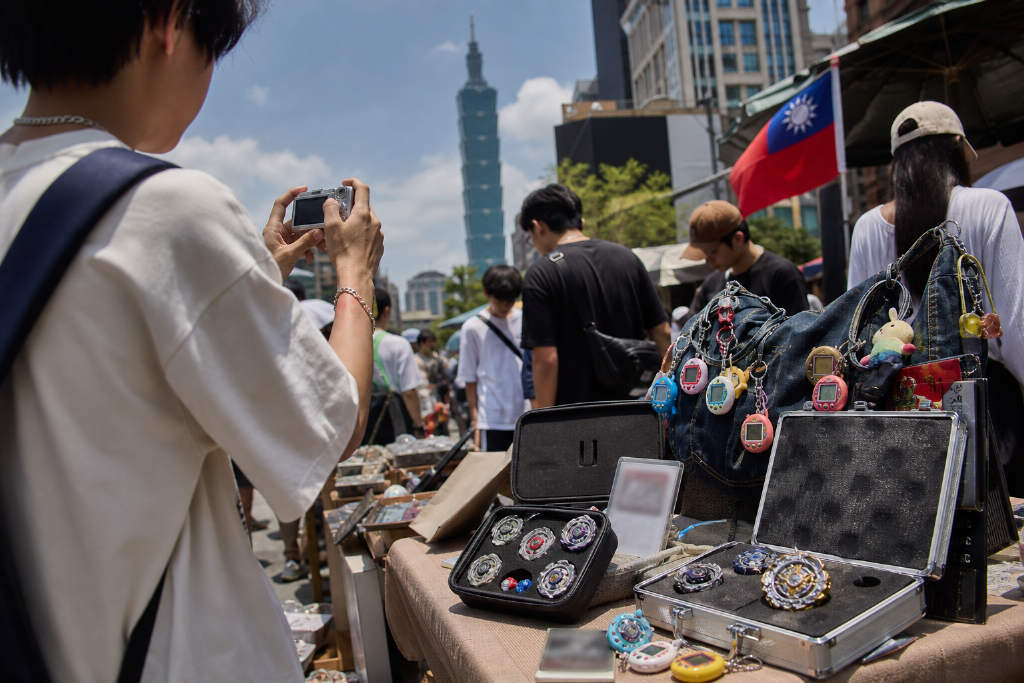
A Y2K-inspired nostalgia wave is gaining traction in Taiwan, bringing turn-of-the-millennium gadgets and toys back into everyday culture. According to ABMedia, Beyblade tops, Tamagotchi virtual pets and CCD cameras are seeing renewed popularity among both younger users and adults reconnecting with childhood memories. The report says Beyblades have surged in the secondhand market, with discontinued models such as “Storm Pegasus” and a “Barcelona” collaboration version being bid up to more than NT$10,000 and in some cases tens of thousands. Pricing in that market is said to depend heavily on weight and rarity, while transparent listing prices have increasingly given way to bidding. Tamagotchi devices, meanwhile, have evolved with color screens and more detailed interaction features, and are also being used as accessories on waist bags and handbags. The article also points to rising demand for low-resolution CCD point-and-shoot cameras, whose grainy images, color shifts and out-of-focus lighting effects are being favored over the cleaner look produced by modern smartphones. Interviewees cited by HahaTai said those visual traits help create a retro aesthetic, especially for Instagram-style photo layouts.

240
Y2K revival in Taiwan puts Beyblade, Tamagotchi and CCD cameras back in the spotlight
European Art
2026-08-21 06:00:00

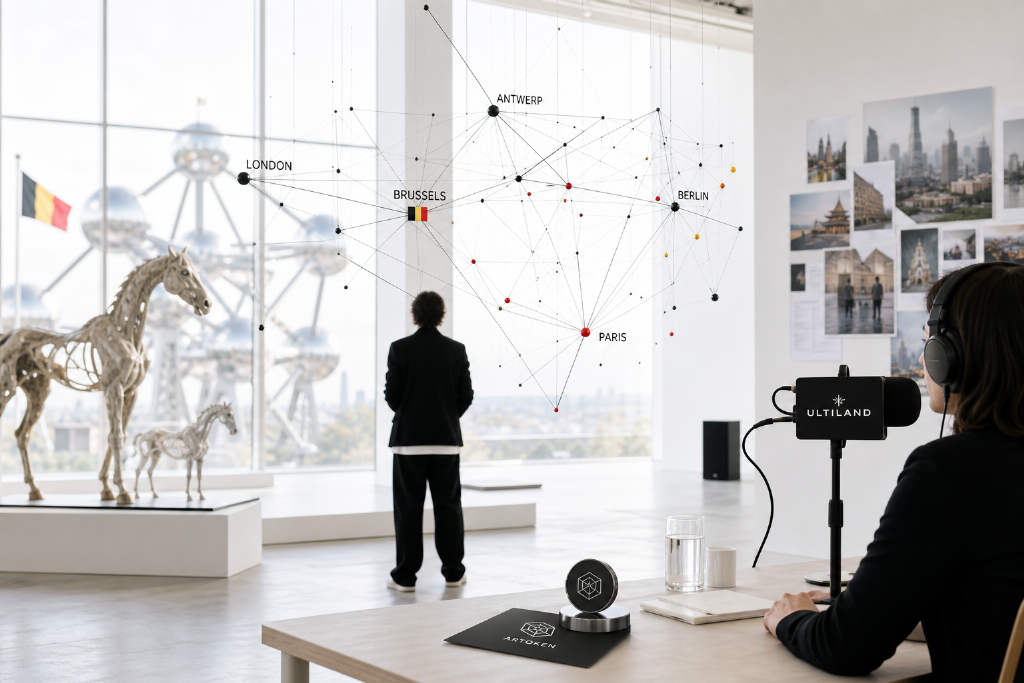
ULTILAND podcast frames European art as a network and links creative freedom to ARToken

Foresight published a recap of an earlier ULTILAND podcast episode, "The Creative Edge," featuring Belgian artist Stef, creator of L'Ecurie de Marcelo, and ULTILAND ecosystem lead Loven. The discussion presented Europe’s art world not as a single capital-centered system, but as a network of cities including Antwerp, Brussels, Paris, Berlin and London, each with its own pace, rules and cultural code. Stef described how those cities shape different paths for artists, from long trust-building cycles in Belgium to market-driven decisions in London and discourse-focused visibility in Berlin. The conversation also focused on the relationship between art and design, with Stef arguing that the two were split apart by education and market structures rather than by any real creative boundary. He said young creators are likely to move across tools and methods instead of identifying rigidly as either artists or designers. Another major theme was the difference Stef sees in Asia, where he said creators often show strong technical discipline but may hesitate when asked to risk failure. He outlined a four-hour coaching format planned for Hong Kong, Shanghai, Seoul and Bangkok, built around open-ended experimentation rather than formal critique. Loven then tied that model to ARToken, saying token holders support direct artist-led creation and gain access to workshops, behind-the-scenes work, early experiences of new pieces and community decision-making. The episode closed with a broader discussion of AI, which Stef described as a tool that can generate images but not human doubt, care or meaning.

190
ULTILAND podcast frames European art as a network and links creative freedom to ARToken