loan

BTCS
2026-08-21 16:55:32

BTCS repays $8.2 million Aave debt in Q2, but $36 million in DeFi loans remains

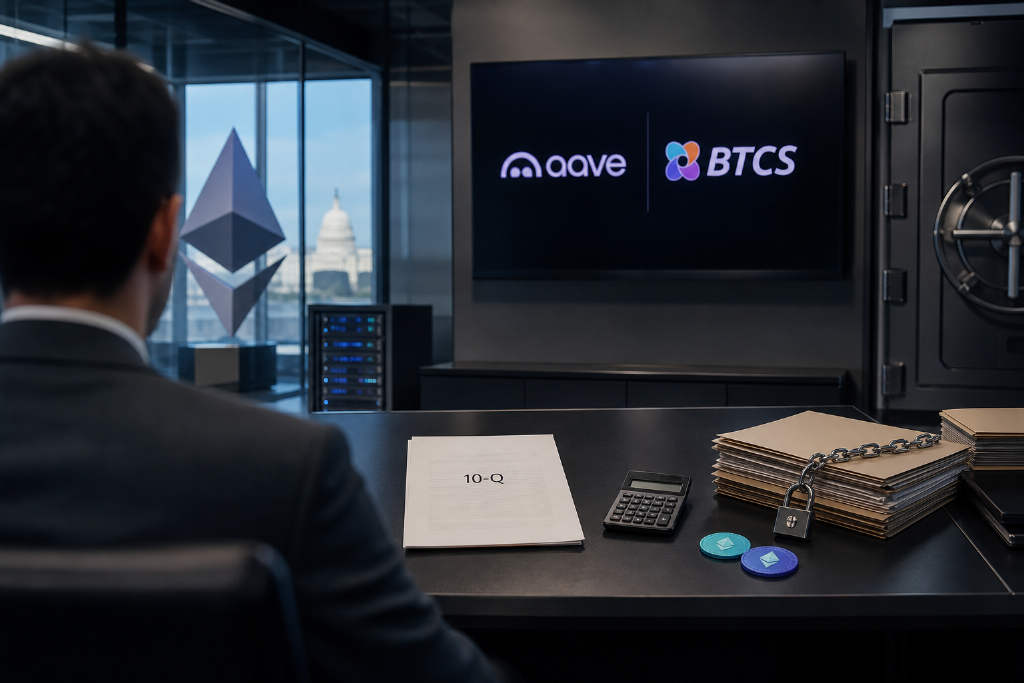
Techub News said listed company BTCS repaid $8.2 million of debt on the Aave protocol in the second quarter of 2026 to reduce leverage on its balance sheet. Its 10-Q filing showed $317,000 in cash and stablecoins at quarter-end, while $36 million of unpaid DeFi protocol loans remained. The company’s balance sheet is still tied mainly to digital assets, staking and DeFi activity. The filing also highlights the kinds of on-chain credit risks traditional investors need to understand as more public companies use Ethereum and DeFi infrastructure, including collateral, liquidation and protocol debt.

20
BTCS repays $8.2 million Aave debt in Q2, but $36 million in DeFi loans remains
Securitize
2026-08-21 13:00:01

Securitize and Neuberger Berman launch HINC tokenized fund

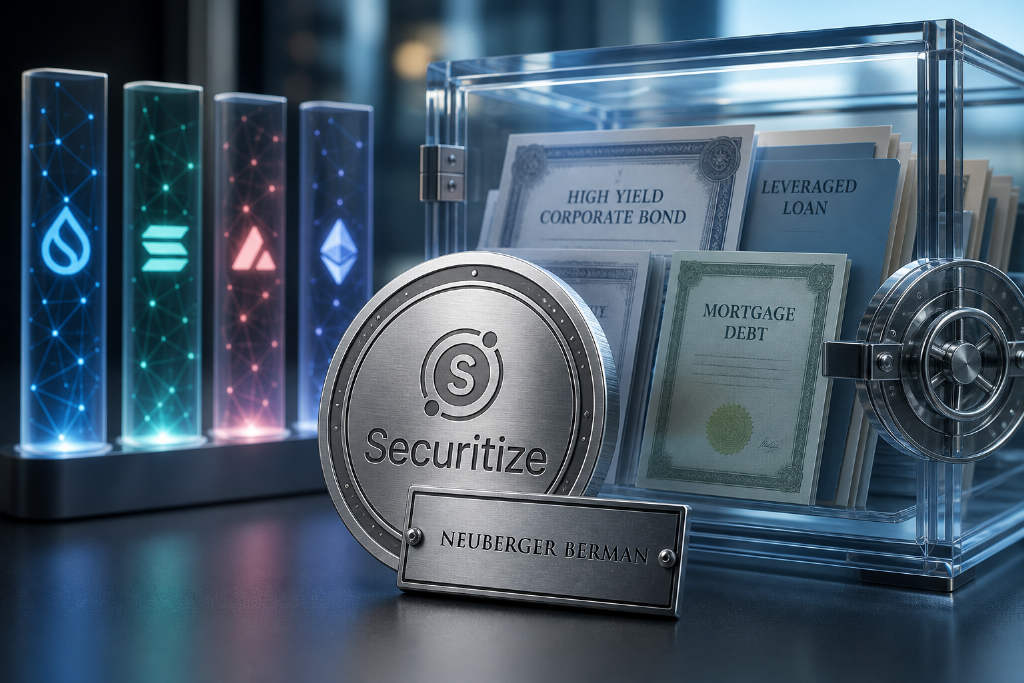
Securitize and Neuberger Berman have launched the Neuberger Securitize High Income Tokenized Fund, or HINC, a private tokenized fund aimed at qualified investors. The product is live across four blockchain networks: Sui, Solana, Avalanche, and Ethereum. According to the source, the fund offers tokenized exposure to high-yield bonds, leveraged loans, and mortgage debt. Securitize is handling administration and compliance infrastructure, while Neuberger Berman serves as investment adviser. The report also draws a distinction between HINC and stablecoins, describing HINC as an actively managed private tokenized fund. Its multi-chain rollout points to a pattern among tokenization issuers: using cross-chain availability to meet varying compliance and operational needs across investor groups, rather than relying on a single blockchain ecosystem.

10
Securitize and Neuberger Berman launch HINC tokenized fund
RWA
2026-08-21 08:22:06

RWA Tokenization Is Entering a New Phase, and the Real Edge Takes Time to Build

RWA tokenization is moving beyond issuance. As custody, compliance, issuance and blockchain infrastructure become easier to access, the market is shifting its focus to what happens after an asset goes onchain: whether the underlying asset is suitable as a reserve asset and whether the issuer can run the operation consistently over time. The piece argues that long-term records, not launch speed, are becoming the harder-to-copy advantage. Matrixdock’s XAUm is presented as a case study, with semiannual independent reserve audits and more than 20 new ecosystem integrations in the first half of 2026. The article also compares short-term U.S. Treasuries, gold, silver and money market instruments with private credit, and outlines why reserve quality and operating discipline both matter for RWA durability.

80
RWA Tokenization Is Entering a New Phase, and the Real Edge Takes Time to Build
Goldman Sachs
2026-08-21 07:50:39

Goldman Sachs Bets on Crypto Volatility Income With Up to $2.25 Billion NEOS Deal

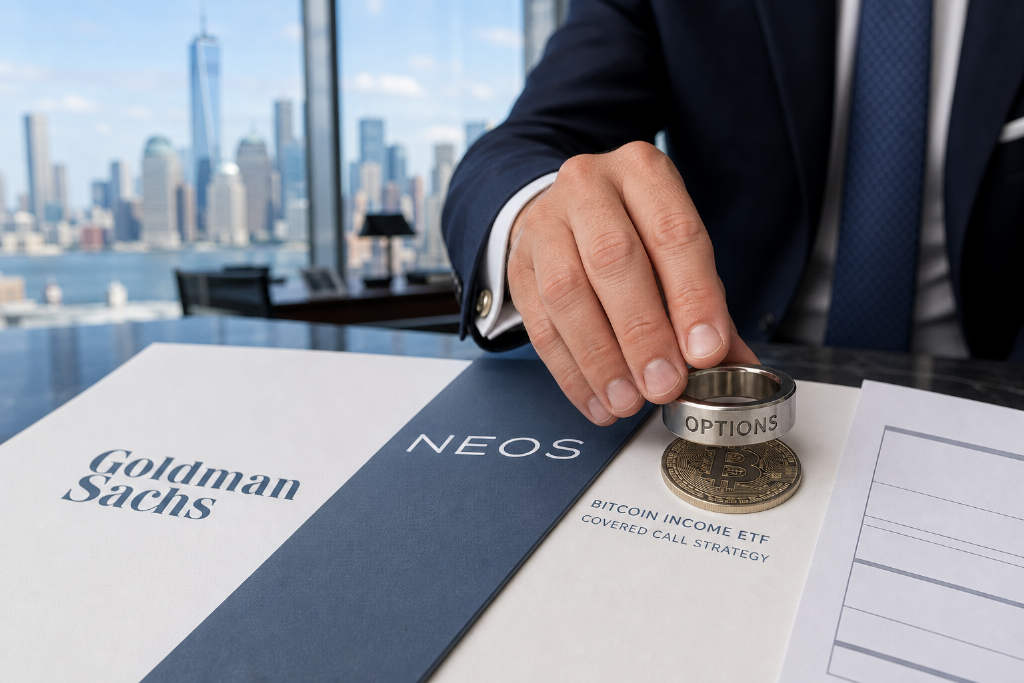
Goldman Sachs has agreed to acquire NEOS Investments for up to $2.25 billion in cash and stock, adding a firm that manages 19 options-based income ETFs with roughly $30 billion in assets. At the center of the story is BTCI, a NEOS fund that holds spot Bitcoin ETF exposure and sells covered calls against those positions. The fund has $1.11 billion in assets, charges a 0.98% fee, and currently distributes $7.75 per share each month, equal to a 27% annualized yield, according to the source text. The trade-off is direct: investors collect option premium up front, but still absorb sharp downside in Bitcoin and give up some of the upside in strong rallies. The article argues that this model is part of a broader Wall Street push to separate crypto cash flow from crypto price risk. It points to staking-enabled Ethereum products, crypto-backed lending, and Bitcoin-linked structured notes from major firms including Fidelity, BlackRock, Morgan Stanley, and JPMorgan. The larger claim is not that traditional finance has turned bullish on crypto as an asset class, but that large institutions have found ways to monetize volatility, fees, and market activity even without relying on a sustained rise in token prices.

80
Goldman Sachs Bets on Crypto Volatility Income With Up to $2.25 Billion NEOS Deal
whale movemen
2026-08-21 06:50:43

Whale who withdrew $140 million in ETH from Binance deposits 10,900 ETH back into exchanges

According to on-chain analyst Ai Yi, a whale withdrew 79,226.49 ETH from Binance between July and August 2026, worth about $140 million at an average price of $1,776.83. Since Aug. 19, the address has sent a total of 10,900 ETH back to exchanges, worth $24.16 million. If sold, the position would lock in a profit of $4.817 million. The stablecoins obtained from those sales were used to repay a Spark loan. The whale still has 47,900 wstETH and 1,200 WBTC posted as collateral, with 83.67 million USDS borrowed and a health ratio of 2.26.

40
Whale who withdrew $140 million in ETH from Binance deposits 10,900 ETH back into exchanges
AI compute
2026-08-21 06:14:55

Open-Source Models Are Pushing AI Compute Toward Capital Markets

Foresight says the capital structure behind AI infrastructure is changing fast. The AI-related capex of the top five cloud providers rose from 20%–30% of operating cash flow in 2020–2023 to nearly 94% in 2025, with confirmed 2026 capex already above $700 billion. The article argues that take-or-pay contracts, GPU lending, and rising public-market demand from open-source models are pushing compute toward pricing benchmarks, forwards, and derivatives. It also notes that after DeepSeek V4 launched, H100 rental rates rose about 7.5% within two weeks, while similar strength appeared around the launches of Kimi K3 and GLM 5.2. The larger point is that compute only becomes financialized once enough of it is traded openly, priced repeatedly, and separated from the balance sheets that used to absorb the risk.

40
Open-Source Models Are Pushing AI Compute Toward Capital Markets
Whale
2026-08-21 06:51:48

Whale Moves 10,900 ETH Back to Exchanges After Withdrawing 79,226.49 ETH From Binance

ChainCatcher reported, citing on-chain analyst Ai Yi, that a whale withdrew 79,226.49 ETH from Binance between July and August 2026. The stash was worth about $140 million at an average price of $1,776.83. Since Aug. 19, the same whale has sent 10,900 ETH, worth $24.16 million, back to exchanges. If sold, the position would lock in an estimated profit of $4.817 million. Ai Yi said the stablecoins received from the transfers were used to repay a Spark loan. The whale still has 47,900 wstETH and 1,200 WBTC pledged as collateral, with 83.67 million USDS borrowed and a health factor of 2.26.

40
Whale Moves 10,900 ETH Back to Exchanges After Withdrawing 79,226.49 ETH From Binance
Ripple
2026-08-21 05:35:13

Ripple backs institutional credit fund using RLUSD for fintech lending on XRP Ledger

Ripple is supporting a new institutional credit fund that plans to lend working capital to fintech and payments companies on the XRP Ledger using RLUSD, the stablecoin issued by Ripple. The fund will work with Clearpool and Cicada Partners. Cicada Partners will source borrowers, set loan terms and manage credit risk, while Clearpool will provide the infrastructure for creating and managing lending pools. Ripple is participating as one of the investors through a limited partner role, but its investment size has not been disclosed. The product has not yet launched on the XRP Ledger mainnet. Borrowers will receive RLUSD and repay loans in RLUSD, which ties the funding flow directly to the stablecoin and the ledger-based lending setup.

30
Ripple backs institutional credit fund using RLUSD for fintech lending on XRP Ledger