mRNA

Policy Regula
2026-08-26 04:56:00

Stocks Rise as Middle East Tensions Ease, With Nvidia Earnings Back in Focus

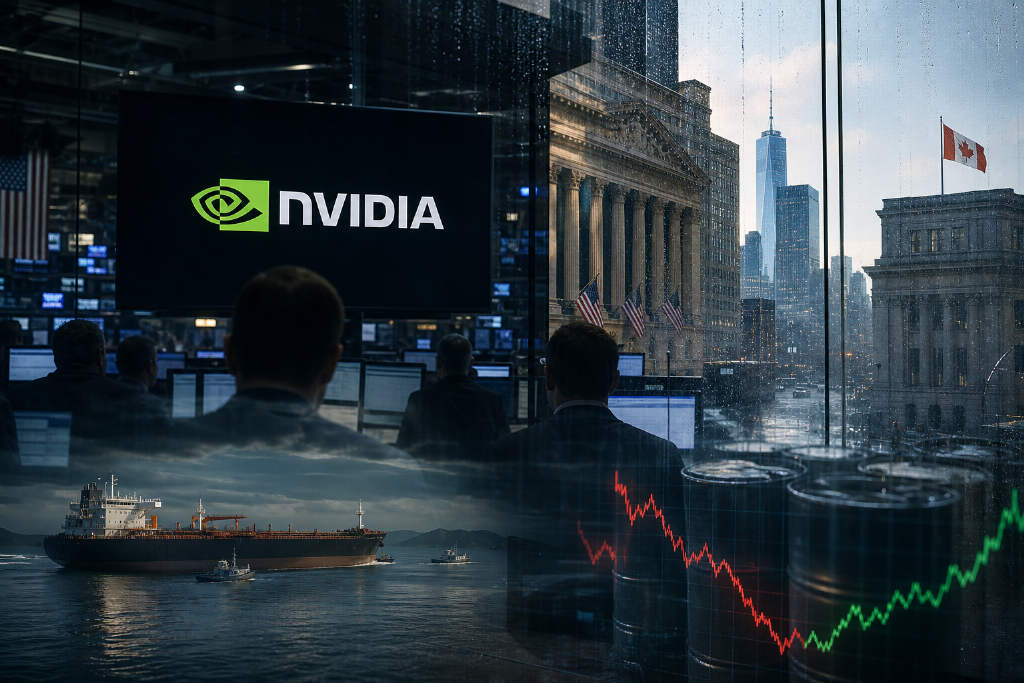
U.S. stocks closed higher after a sharp drop in oil prices followed signs of easing geopolitical risk in the Middle East. The Dow Jones Industrial Average rose 0.30%, the S&P 500 gained 0.32%, and the Nasdaq Composite advanced 0.66%. Reports cited by Russian media said the U.S. and Iran had reached consensus on ceasefire terms, including freedom of navigation through the Strait of Hormuz, while Iran and Oman were said to have reached a temporary aviation understanding. At the same time, an Iranian deputy foreign minister rejected the U.S. claim that sea mines in the strait had been cleared and said reopening would depend on several conditions being met. WTI crude fell 4.57% to below $80, while Brent dropped more than 5% and slipped under $85. Softer U.S. data added to the move in rates: August consumer confidence came in at 89.4, a seven-month low, and July new home sales missed expectations. The 10-year Treasury yield fell about 7 basis points to around 4.62%, while the 30-year yield dropped about 6 basis points to roughly 5.17%. In equities, AI hardware names led the rebound ahead of Nvidia’s second-quarter results. Nvidia gained 2.19% and ended a seven-session losing streak after unveiling the Jetson Orin Nano 2 robot computer. Copper also hit record levels, Canada announced new tariffs on about $20 billion of U.S. goods starting Sept. 8, and investors turned to a packed calendar that includes core PCE, revised GDP, Nvidia earnings, and the Jackson Hole symposium.

340
Stocks Rise as Middle East Tensions Ease, With Nvidia Earnings Back in Focus
Biotech
2026-08-26 01:46:35

Biotech shares rally across U.S. and Hong Kong as Moderna jumps 14% and CanSino rises more than 17%

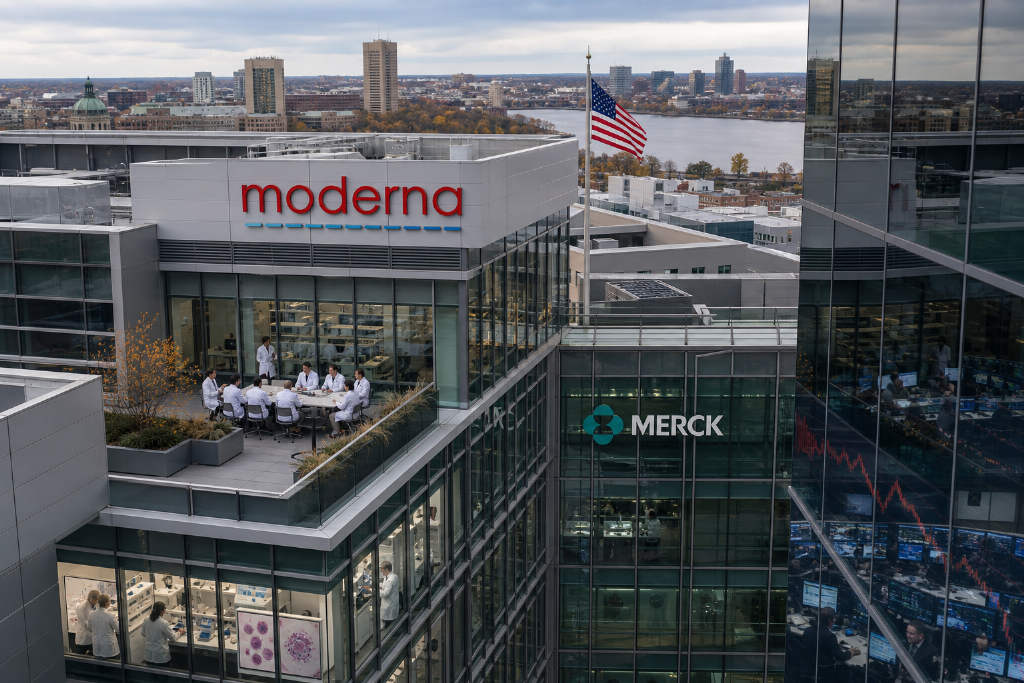
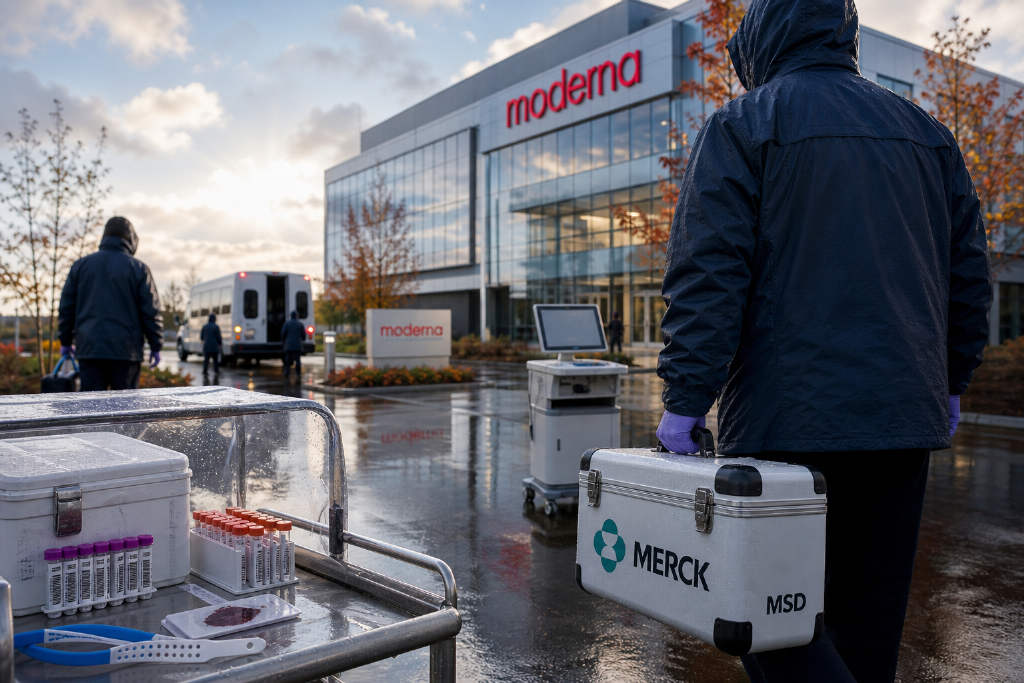
Biotech stocks posted sharp gains across U.S. and Hong Kong markets on Aug. 26, according to market data cited by BlockBeats. Moderna (MRNA) closed up 14.36% in U.S. trading with turnover reaching $7.636 billion, while Merck (MRK) gained 3.84%. The move followed a recent joint announcement from Moderna and Merck that their first personalized mRNA cancer therapy, intismeran autogene, succeeded in a global Phase III clinical trial for high-risk melanoma. After that update, several major banks raised their price targets on Moderna, including Bank of America, Piper Sandler, Goldman Sachs, JPMorgan, and Barclays. In Hong Kong trading, CanSino Biologics rose 17% after the open, while Innovent Biologics gained more than 10%, Everest Medicines rose more than 7%, Akeso climbed more than 6%, and RemeGen advanced more than 4%. CanSino also said its subsidiary CanSino Shanghai had formally signed a strategic framework agreement with DeepVessel Biopharma to jointly develop and commercialize personalized therapeutic mRNA tumor vaccines.

240
Biotech shares rally across U.S. and Hong Kong as Moderna jumps 14% and CanSino rises more than 17%
AI
2026-08-25 01:36:00

AI’s next big growth engine may not look like a second coding boom

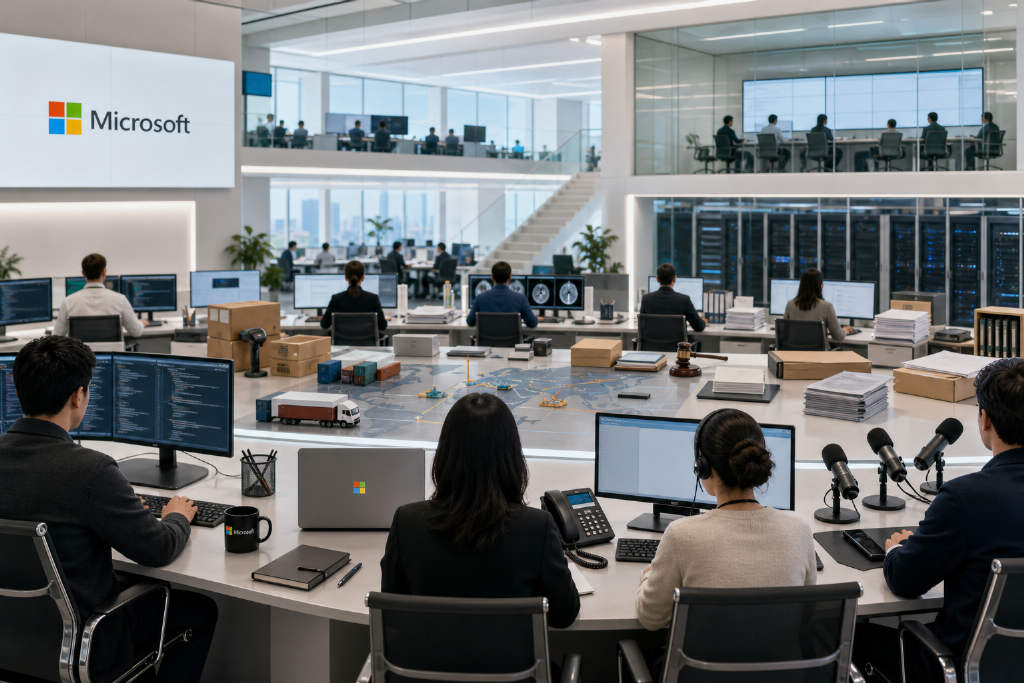
A PANews commentary argues that the market is asking the wrong question when it searches for a single “next Coding” moment for artificial intelligence. Coding became AI’s first large-scale commercial success because software development is fully digital, highly testable, modular, expensive in labor terms, and easy to adopt from the bottom up. That combination allowed AI coding tools and coding agents to move from autocomplete to testing, bug fixing, code migration, project-wide reasoning, terminal use, and repeated code revisions in real production settings. The piece says the bigger issue now is timing. Coding has shifted from an underappreciated opportunity to a broad market consensus, while the next AI growth engine may take longer to show up in revenue, profit, and free cash flow. Rather than one cleanly defined product, the next wave is more likely to come from many fragmented enterprise workflows moving into agent-based execution at the same time. Customer service and voice agents are presented as the closest single analogue to Coding, but finance, procurement, IT operations, healthcare administration, legal work, insurance, and supply chain processes could collectively outweigh software development. The article also uses Microsoft’s FY2026 fourth-quarter disclosures—100,000 Foundry customers, more than 30 million paid Microsoft 365 Copilot seats, and nearly 40 million registered Agent 365 agents—to separate enterprise AI adoption into three layers: building, using, and governing. Its broader conclusion is that AI demand is real, but investors still need proof that non-coding use cases can convert infrastructure spending into durable end-market cash flow.

220
AI’s next big growth engine may not look like a second coding boom
Gamgee
2026-08-24 00:31:09

Gamgee raises $4 million to turn a one-off dog cancer mRNA vaccine into a repeatable process

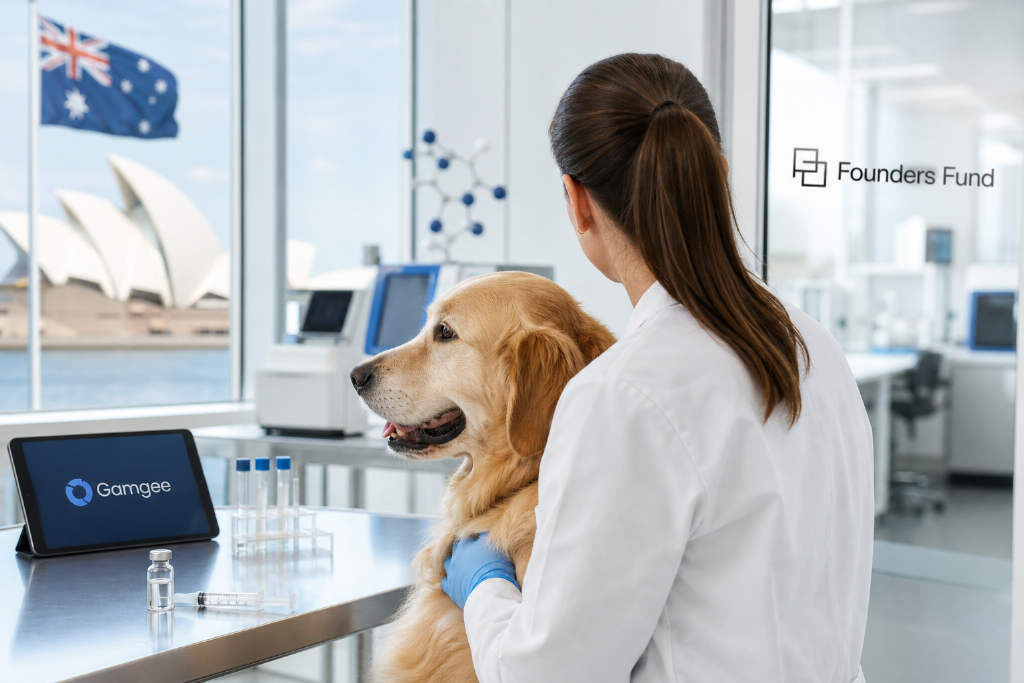
Gamgee, a startup founded by AI entrepreneur Paul S. Conyngham, said it has raised a $4 million seed round led by Founders Fund to build a repeatable pipeline for personalized mRNA cancer vaccines for dogs. The company grew out of Conyngham’s attempt to design a custom mRNA vaccine for his dog Rosie, who had mast cell cancer and later became the center of a widely shared story on English-language social media. Rosie received an initial shot in December 2025 and a booster the following month, and several tumors reportedly shrank while her quality of life improved. But the remission did not last. After a follow-up surgery, the cancer returned, spread rapidly within four weeks, and Conyngham said he made the decision to euthanize her. Gamgee said the new funding will be used to launch a clinical trial to test the personalized treatment approach first developed for Rosie. The company is working with UNSW, the University of Queensland and the Garvan Institute of Medical Research, with enrollment currently limited to eastern Australia. Conyngham has said the company is also recruiting veterinary oncologists and trial partners. The larger challenge, as described in the source material, is not only whether a personalized vaccine can be designed, but whether sequencing, regulatory review, manufacturing and delivery can be completed fast enough for patients who have limited time.

210
Gamgee raises $4 million to turn a one-off dog cancer mRNA vaccine into a repeatable process
JPMorgan
2026-08-21 03:32:49

JPMorgan keeps bearish view on Moderna, says INT melanoma win was already priced in

JPMorgan said in an Aug. 19 research note that Moderna and Merck’s individualized neoantigen therapy, referred to as INT, met its primary endpoint in adjuvant melanoma, with recurrence-free survival showing a significant improvement. The key secondary endpoint, distant metastasis-free survival, also met the bar. Even so, the bank argued the result was widely expected and had already been reflected in Moderna’s share price before the update was released. The firm kept its Underweight rating and a $40 price target on Moderna, versus a current share price of $63 cited in the note, implying 36% downside. JPMorgan’s view is that the clinical success of INT in adjuvant melanoma is no longer the main valuation question. Instead, the next leg of value depends on whether the therapy can show similar efficacy across a broader set of tumor types. JPMorgan said it had already assigned an 85% probability of success to the phase III melanoma study, based on prior phase IIb data and the biological rationale of the approach in cancer immunotherapy. The bank added that adjuvant melanoma is a relatively small indication, and that Moderna’s roughly $25 billion market value already includes expectations for approval in this setting. It said future data in non-melanoma indications will be more important for the company’s valuation.

330
JPMorgan keeps bearish view on Moderna, says INT melanoma win was already priced in
US stocks
2026-08-21 02:03:23

Long-dated Treasury yields and oil climb again, sending U.S. stocks lower as the Dow drops more than 700 points

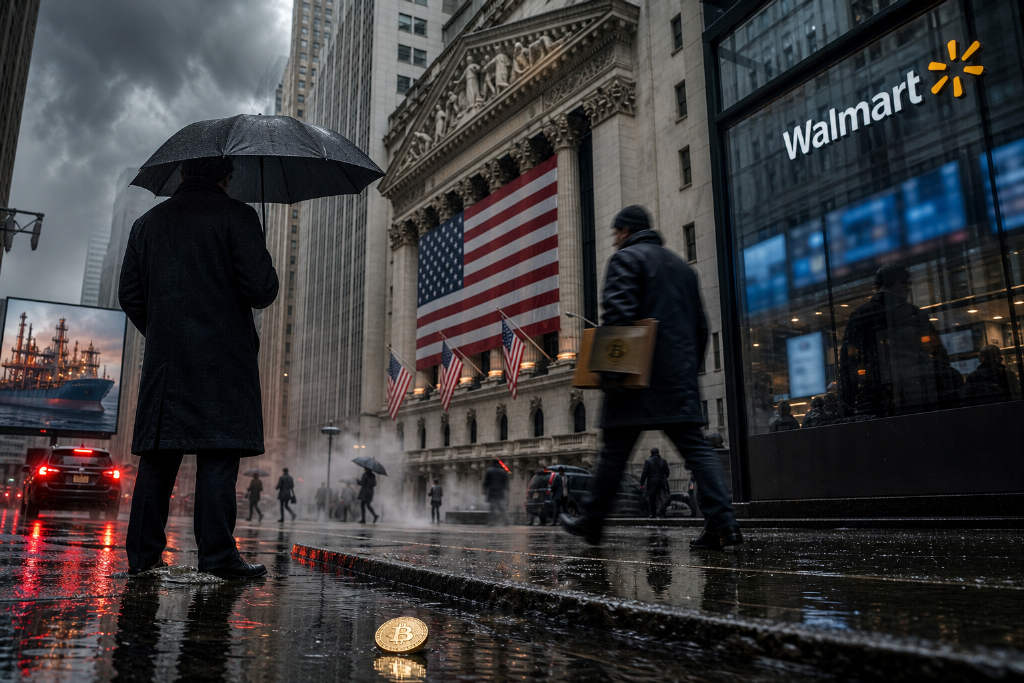
U.S. stocks lost ground again after a one-day reprieve from the Treasury Department’s expanded buybacks of long-dated bonds. The Dow Jones Industrial Average fell 703.84 points, while the S&P 500 dropped 0.87% to 7,641.16 and the Nasdaq slipped 1.00% to 26,067.17, with the Nasdaq 100 extending its losing streak to five sessions. The article argues that the market’s core signal is now clear: Treasury buybacks may ease liquidity stress in the long end for a short period, but they do not change the structural pressures coming from federal debt, fiscal deficits, sticky inflation, and AI-related capital spending. Once 30-year Treasury yields move back toward recent highs, richly valued assets struggle to recover. Oil added a second layer of pressure. WTI settled at $87.83 a barrel and Brent at $93.78, both at their highest levels since July 24, after stronger sanction threats on Iran and shipping risks around the Strait of Hormuz. At the same time, Walmart, despite posting quarterly revenue of $187.94 billion and adjusted EPS of $0.81 above expectations, fell more than 9% as investors focused on slowing U.S. same-store sales growth and weaker full-year profit guidance. The report also highlights sharp internal divergence in technology shares, a rebound in crypto with Bitcoin topping $72,000 for the first time since early June, and renewed focus on earnings and cash flow across Chinese ADRs.

460
Long-dated Treasury yields and oil climb again, sending U.S. stocks lower as the Dow drops more than 700 points
Moderna
2026-08-21 02:05:21

Moderna melanoma Phase 3 readout puts AI-driven drug development deeper into clinical and manufacturing workflows

Moderna and Merck said on Aug. 19 that the Phase 3 INTerpath-001 trial delivered a positive topline readout in resected Stage IIB-IV melanoma, with Intismeran plus Keytruda showing statistically significant and clinically meaningful improvement in recurrence-free survival and distant metastasis-free survival versus Keytruda alone. The study enrolled 1,137 patients, but Moderna has not yet released the hazard ratios, absolute recurrence-rate differences, or overall survival data, so the only firm conclusion for now is that the Phase 3 study met its interim bar. The trial will continue rather than stop early. The report argues that the bigger story is operational. Intismeran is not a one-formula product for every patient. The therapy is built from each patient’s tumor and blood genetic information, with up to 34 neoantigens selected before a personalized mRNA treatment is produced. Moderna’s Maestro digital system coordinates clinical operations, manufacturing, quality control, and logistics across separate production batches. The article also points to upstream data work by Personalis, whose tumor analysis platform has been used by Moderna and Merck since the early V940/mRNA-4157 program, and notes Tempus AI’s planned acquisition of Personalis at about $1.5 billion enterprise value. It pairs that development with Anthropic’s recent protein-design experiment to show a broader shift: AI is moving out of stand-alone software and into real-world research, lab, production, and clinical processes.

460
Moderna melanoma Phase 3 readout puts AI-driven drug development deeper into clinical and manufacturing workflows
WuBlockchain
2026-08-20 11:54:40

WhiteLine Daily: AI Narrative Shifts From Model Capability to Lab Results, Orders and Cash Returns

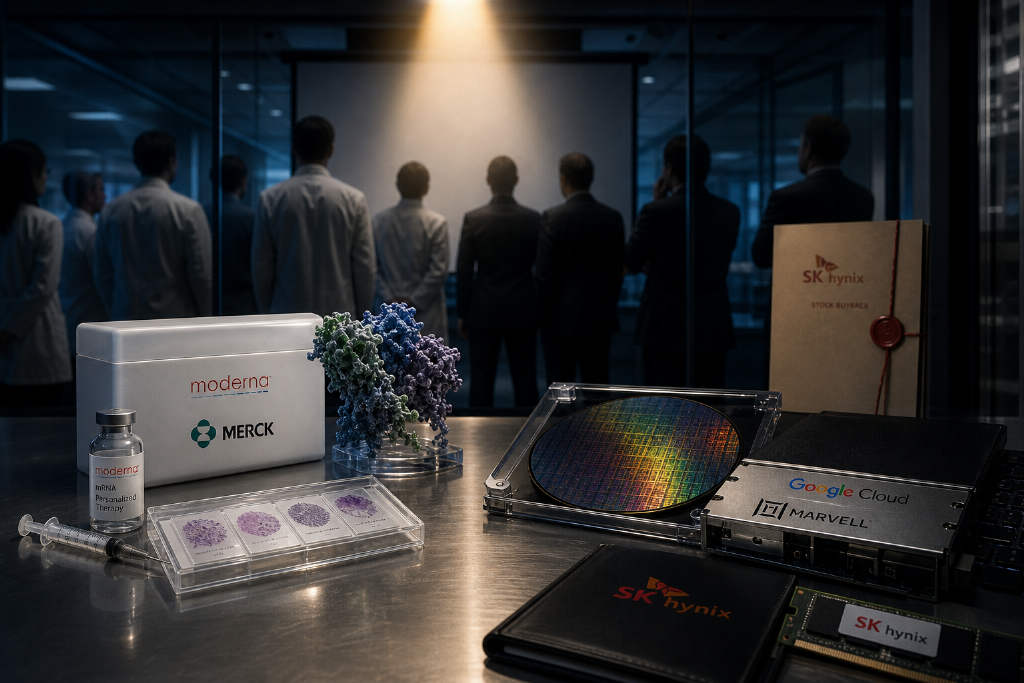
WuBlockchain’s WhiteLine Daily said the latest AI narrative is moving away from pure model capability and toward verifiable outcomes, including clinical data, lab validation, commercial chip orders and shareholder returns. On Aug. 19, Moderna and Merck said their personalized mRNA cancer therapy Intismeran combined with Keytruda met Phase 3 endpoints in melanoma, with Moderna shares rising about 177% and Merck up 12.6%. Anthropic also disclosed a protein design experiment in which Claude used specialized design and structure prediction models, producing effective binders for 14 of 15 targets, though the work remains at an early research stage without animal or clinical validation. In semiconductors, Marvell granted Google up to 58.97 million warrants tied largely to future custom chip revenue, while SK Hynix announced a 40 trillion won stock buyback and cancellation plan and raised its shareholder return target for 2025 to 2027. The publication’s takeaway was that AI progress is now being judged less by demos and more by experiments, recurring demand and cash generation.

480
WhiteLine Daily: AI Narrative Shifts From Model Capability to Lab Results, Orders and Cash Returns