OpenRouter2026-09-21 20:27:08OpenRouter lists Xiaomi’s MiMo-V2.6-Pro-UltraSpeed modelOpenRouter has added a new model, Xiaomi: MiMo-V2.6-Pro-UltraSpeed, according to Techub News. The listing describes it as a high-speed version of Xiaomi’s flagship foundation model MiMo-V2.6-Pro. It is built on the same 1T-parameter checkpoint and is presented as delivering a major increase in inference speed while keeping the original model’s quality intact. OpenRouter’s model description also notes that the release may have appeared before any formal announcement from the vendor, and says the platform uses labels such as "suspected" or "coming soon" in those cases. The model is now available for users to call on the platform. The information cited in the item comes from OpenRouter.510
Xiaomi2026-09-21 09:55:57Xiaomi’s MiMo halts two public RL training runs after spending $3.47 millionXiaomi has stopped both publicly streamed reinforcement learning training runs for its MiMo model, with Pro and Flash each completing 30 training steps as their last full run. Combined spending reached $3.4747 million, including $2.6207 million for Pro and $854,000 for Flash. The gains were notable: on DeepSWE v1.1, Pro rose from 58.41 at step 1 to 72.57, while Flash climbed from 48.67 to 65.68. Still, both curves saw clear pullbacks during training rather than moving up in a straight line. Other benchmark panels also improved, with Pro’s internal coding evaluation increasing from 57.54 to 65.43 and AutomationBench rising from 45.2 to 53.1. The process also ran into operational issues. Pro hit a GPU OOM caused by uneven expert load, and both the training cluster and evaluator experienced disconnects and restarts. Flash had to restart from step 15 because of an infrastructure error. Xiaomi also later filtered out tasks that had become too easy for Pro and removed the cyber dataset from later Pro training after abnormal rollout patterns appeared.550
Apple2026-09-21 00:41:43Report says Apple is developing an enterprise AI server with up to four M8 Ultra chipsMarket chatter cited by ChainCatcher says Apple is developing an enterprise-grade AI server that could carry two to four unreleased M8 Ultra processors. The reported target customers are AI developers, large enterprises, and government agencies, with AI inference listed as the main use case. The edge data center setup may also use NVLink, according to the report. Apple and NVIDIA had not responded to the market talk. Supply-chain sources cited in the report said Apple’s move into this segment is tied to heavy use of Mac systems as personal AI workstations, while Mac revenue rose nearly 30% in the latest quarter. The same report said Apple has been buying large amounts of NVIDIA chips and Google TPUs for its own AI data centers, and that the company is also rumored to be working with Broadcom on in-house AI chip development. The report also mentioned Qualcomm’s Dragonfly line and Xiaomi’s edge AI cabinet efforts, while supply-chain sources said TSMC may play a key role in advanced process technology or advanced packaging.530
5Y Capital2026-09-11 10:20:175Y Capital said to be seeking about $600 million for a new fundChinese venture capital firm 5Y Capital is seeking to raise a new fund with a target size of about $600 million, according to ChainCatcher, which cited people familiar with the matter. The fundraising is expected to begin later this year, and the firm plans to complete the process in early 2027. The people asked not to be identified because the information has not been made public. 5Y Capital is an early investor in Chinese technology companies including Moonshot AI and Xiaomi. The new vehicle would place the firm among a group of fund managers focused on the Chinese market that are pitching fresh startup investment opportunities to investors. No further fundraising details were disclosed in the report.880
Hong Kong sto2026-09-11 06:20:00Hang Seng Tech turns positive in afternoon trade as tech and auto shares reboundMarket data cited by Odaily showed that Hong Kong stocks recovered in afternoon trading, with the Hang Seng Tech Index moving back into positive territory. The broader Hang Seng Index also trimmed its decline to 0.44%. The rebound was led by technology and auto names. Sunny Optical Technology (02382.HK) and Xiaomi Group (01810.HK) were each up more than 2%. NIO (09866.HK), JD.com (09618.HK), Tencent Holdings (00700.HK), Meituan (03690.HK), and BYD Co. (01211.HK) each gained 1%. The move reflected a session rebound in Hong Kong-listed internet and car stocks, according to the market update published by Odaily.820
Xiaomi2026-09-08 07:24:40Xiaomi Unveils MiMo-X AI Models: Pro and Flash Enter Preview TestingXiaomi has introduced its new MiMo-X series AI models, starting with MiMo-X-Pro-Preview and MiMo-X-Flash-Preview. The models target complex reasoning, multi-agent collaboration, and large-scale programming. Invited users can access them via the Xiaomi MiMo Desktop app for a limited time. No benchmark results or API details have been released yet.2230
Xiaomi2026-09-05 02:28:18Xiaomi Launches Universal Table Data Foundation Model Xiaomi-TabLDMXiaomi officially released the Xiaomi-TabLDM, a universal table data foundation model, on September 5, 2026. The model uses a single pre-trained model with unified default configurations, enabling direct adaptation to different table datasets without retraining, parameter tuning, or post-integration. It supports classification and regression prediction tasks. The company stated that the model aims to lower the barrier to table data modeling, providing general-purpose capabilities for structured data analysis and prediction across various scenarios.790
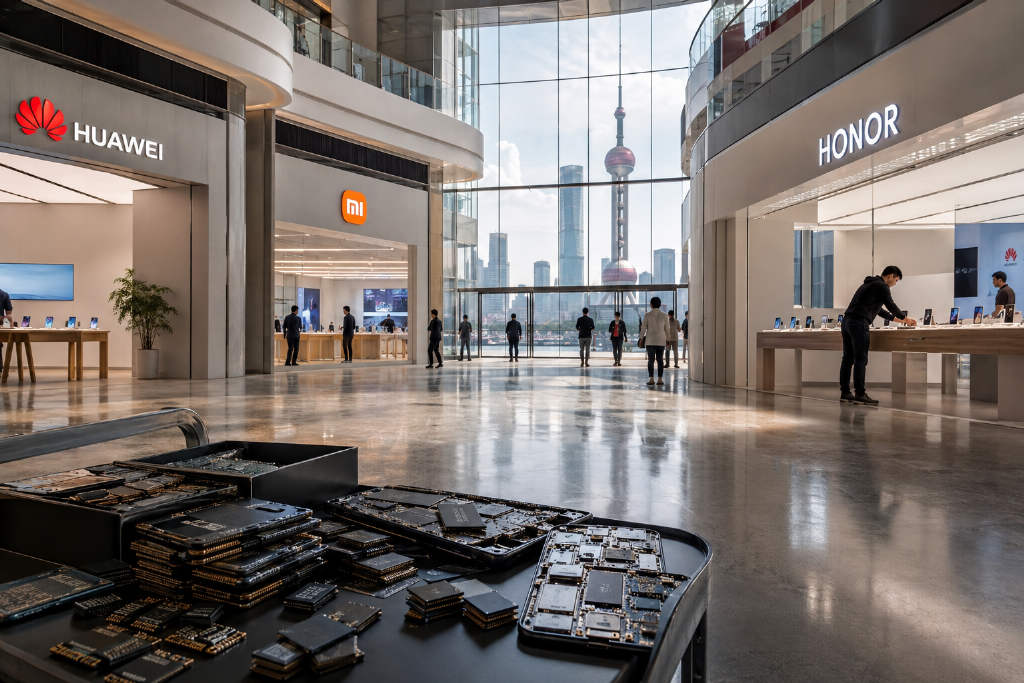
smartphone pr2026-09-04 07:36:16Huawei, Xiaomi and Honor raise phone prices as memory chip costs squeeze the supply chainChinese smartphone brands Huawei, Xiaomi and Honor have raised prices on multiple handset models, with some devices seeing a one-time increase of as much as 1,000 yuan, according to a report by the Star Market Daily. Store visits in Shanghai found the new prices had already taken effect, even though some retailers had not yet replaced shelf labels and were informing shoppers verbally. Online price-tracking data from official Tmall flagship stores showed several rounds of increases over the past month, including a second adjustment for some Xiaomi 17 and Honor Magic 8 variants. Despite the online attention, foot traffic at offline stores did not change much. The report said the main driver behind the latest round of price hikes is higher upstream component costs, especially memory chips. That pressure has also reached Shenzhen’s Huaqiangbei second-hand market, where rising memory prices fueled a trade in dismantling scrap phones to extract chips for resale into automotive accessories, IoT hardware and refurbished overseas devices. Analysts cited in the report said the economics of low-end smartphones have deteriorated sharply as component costs rise. IDC data showed sub-1,000-yuan phones accounted for 22% of the market in 2023, but only 2.7% in the first quarter of 2026, while the firm expects global smartphone shipments in 2026 to fall 16.7% year over year and average selling prices to rise 27.6% to $581.1060