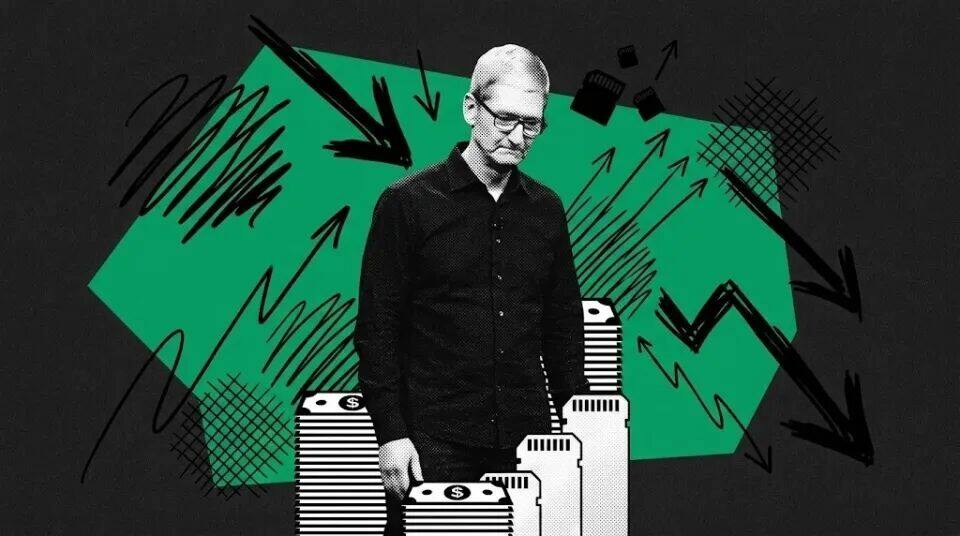
Apple's Profit Bill: Who Gets the Biggest Slice?
The profit distribution of an iPhone has long been a hot topic in the industry. A viral post by tech blogger @BluthCapital, written in the voice of Micron's CEO, sarcastically described Apple's practice: buying chips for $5, putting them in a metal box, and selling for $99. When chipmakers tried to raise the price to $7, Apple ridiculed them. Now that memory costs $50, Apple simply raises the iPhone price by $250, passing the burden to consumers. This anecdote captures the power struggle between Apple and upstream component suppliers.
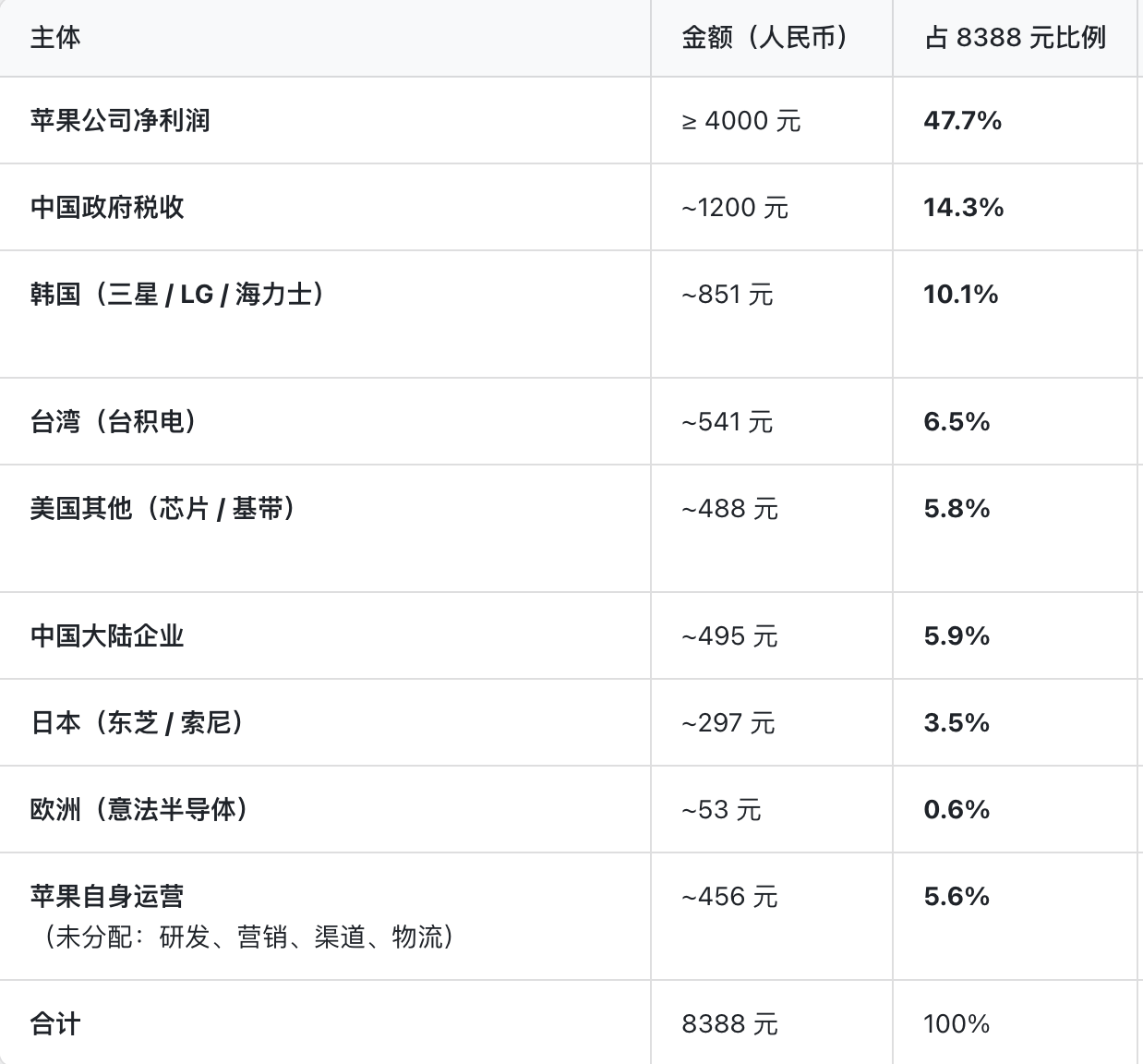
According to estimates, Apple takes about 25% of the profit from each iPhone, memory giants only about 3% (one-thirtieth), and TSMC, due to its monopoly position, captures 4-5%. The rest goes to other hardware suppliers, channels, R&D, and taxes. Counterpoint data shows Apple has long held nearly 50% of global smartphone operating profits. IDC reported in 2025 that Apple, with an 18% market share, captured about 75% of the industry's total profit.
Apple's Profitability: Stable Growth and High Margins
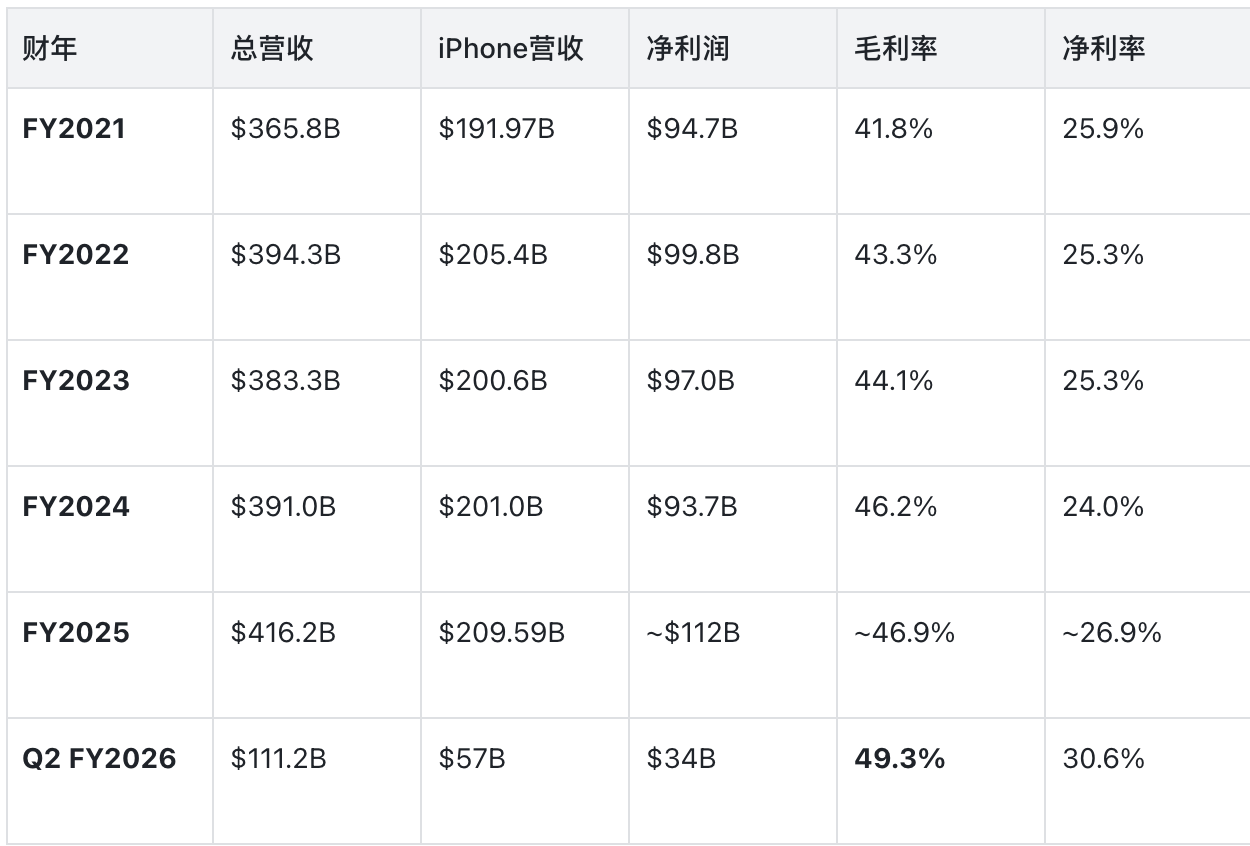
Based on Apple's fiscal Q2 2026 results, iPhone revenue was $57 billion, net profit $34 billion, with estimated shipments of 61 million units. This implies a net profit per iPhone of approximately $320-340, with a net margin of 33-36%. Over the past five years, iPhone revenue has remained stable, with net profit gradually rising from about $94 billion in 2021 to around $112 billion in 2025, and net margins hovering around 25%. Even under cost pressure, Apple remains extraordinarily profitable.
Memory Cost Evolution: From Negligible to Critical
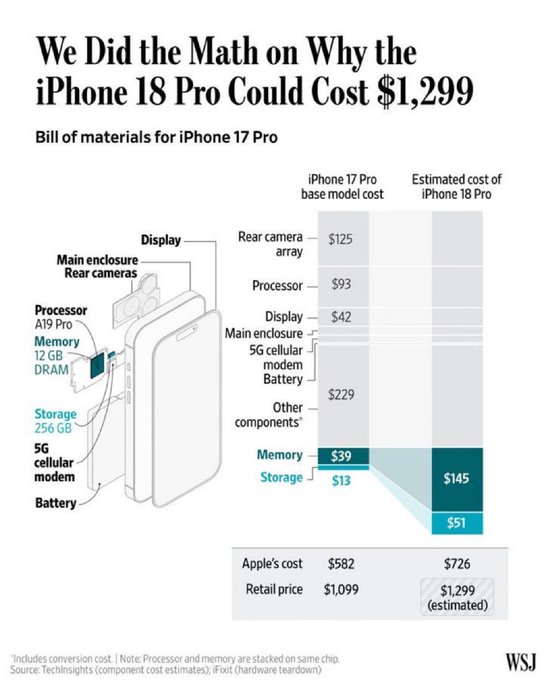
Examining the iPhone X (2017), iPhone 14 Pro (2023), and iPhone 17 series (2026), the role of memory has transformed dramatically. In the iPhone X era, memory cost accounted for only about 2% of the total selling price (approximately 135-195 RMB), and Apple's net profit margin was nearly 50%. For the iPhone 14 Pro in 2023, the BOM cost reached about $464, but memory remained a small part; however, camera and processor price increases caused overall profit to drop 3.7% versus the iPhone 13 Pro. By 2025-2026, memory cost as a percentage of BOM jumped to 12-15% (about $60-80). DRAM contract prices surged 93-98% quarter-on-quarter in Q1 2026, with Citi forecasting 88% growth for the full year. Memory has gone from an overlooked cost line to a major profit squeezer for Apple.
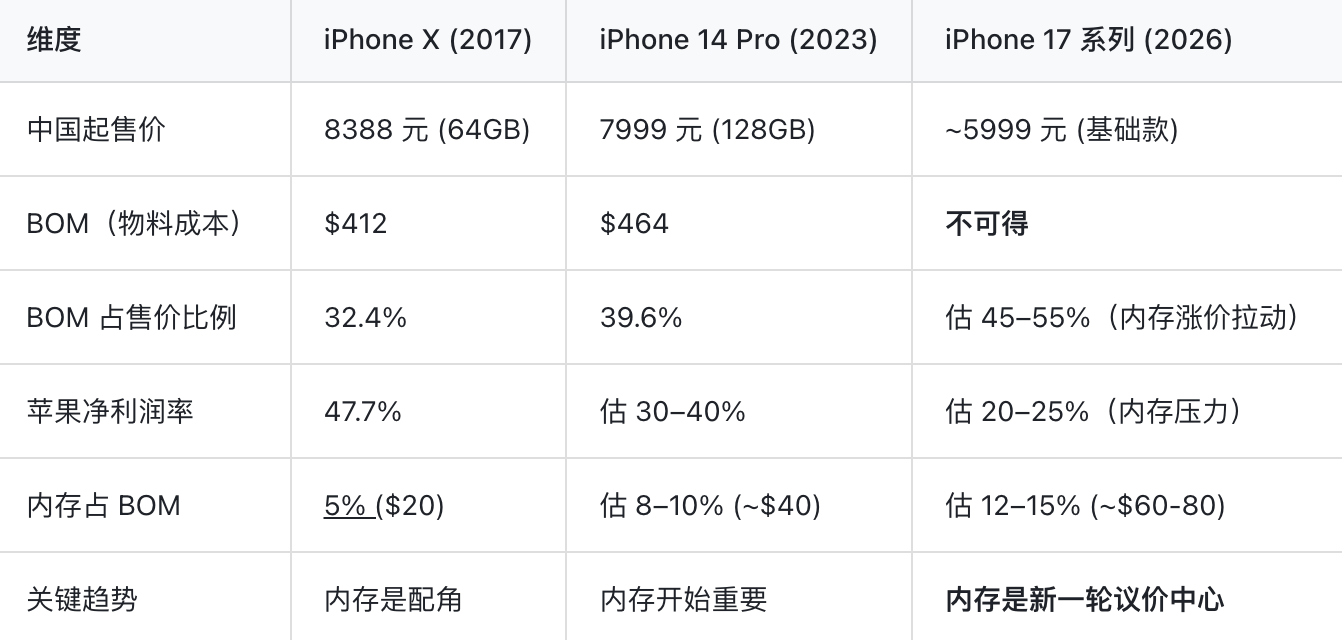
AI Fuels the Memory Bull Run: Cook and Musk Agree
The root cause of the memory price surge is AI's insatiable demand for DRAM and NAND. Industry estimates suggest each AI server requires 8x more DRAM and 3x more NAND than a standard server. The Big Three—Samsung, SK Hynix, and Micron—have shifted advanced process capacity to high-margin HBM and DDR5, deliberately cutting back on commodity DDR4 production, leading to a shortage of general-purpose DRAM. Micron's Q3 earnings showed a stunning 84.6% gross margin and 346% YoY revenue growth to $41.46 billion. SK Hynix announced an IPO in the US, seeking to raise approximately $29 billion. A single Nvidia Vera Rubin AI server uses as much memory as about 14,500 MacBook Neos—a 1:14,500 ratio that underscores the imbalance between AI demand and consumer electronics supply.
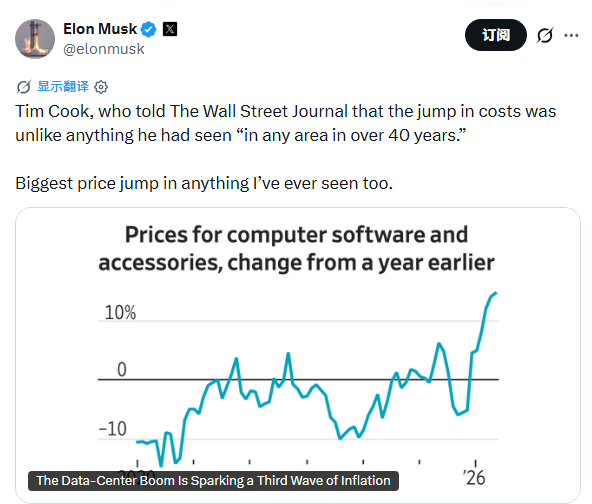
On June 17, 2026, Apple CEO Tim Cook told the Wall Street Journal that 'we absolutely need memory pricing and supply to return to reasonable levels for consumer products.' But less than a week later, he dramatically changed his tone, calling the cost shock a 'once-in-a-century flood' and announcing price increases across Mac, iPad, HomePod, Apple TV, and Vision Pro. Apple's stock fell 6% on the news, erasing $263 billion in market value—the biggest single-day drop since April 2025. Elon Musk quickly echoed Cook's statement, tweeting: 'This is the most violent price jump I've ever seen.'

Apple's Countermove: Bringing in CXMT to Break the Monopoly
Facing the newfound pricing power of memory suppliers, Apple is exploring ways to diversify its supply chain. Sources say Apple is actively lobbying the Trump administration for approval to purchase memory chips from Chinese manufacturer ChangXin Memory Technologies (CXMT). CXMT is set to go public next month. Apple's potential orders could determine whether CXMT can secure a seat at the table. The memory market pie is still growing, and the question remains: can CXMT replicate the wealth-creation miracles of SK Hynix and Micron? The answer is coming soon.