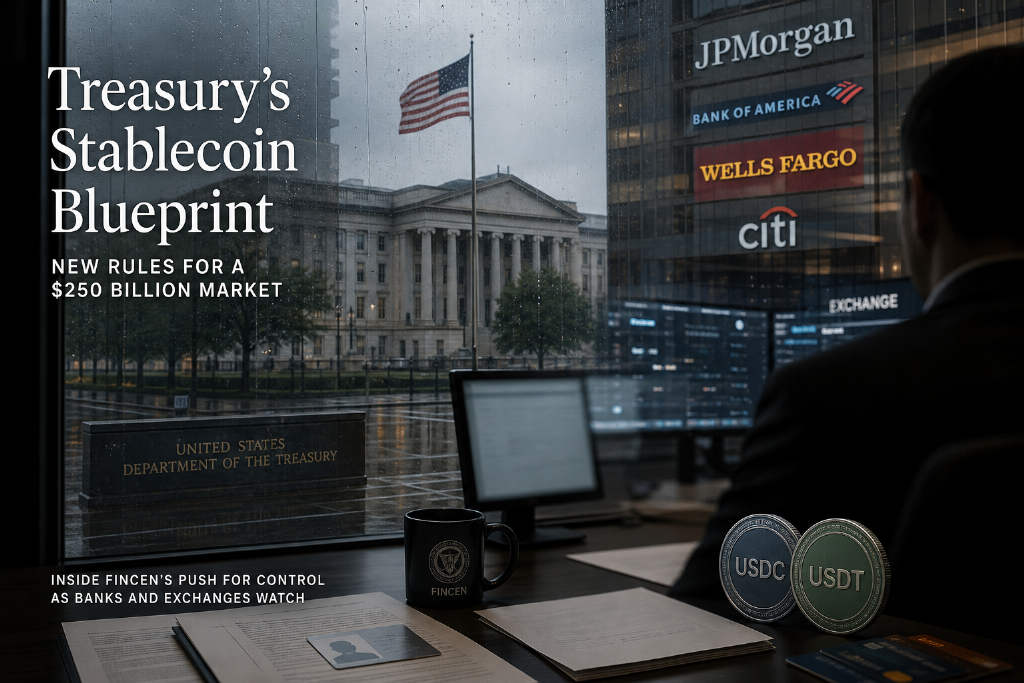
The Bank Policy Institute, a banking industry group representing major U.S. lenders including JPMorgan, Bank of America, Wells Fargo, and Citi, has proposed that the Financial Crimes Enforcement Network extend customer identification program requirements to the secondary market for stablecoins. The proposal would apply to exchanges and other platforms that maintain direct account relationships with retail users. According to BPI, a large share of buying and selling activity in the payment stablecoin ecosystem takes place on those venues, and most illicit activity tied to stablecoins occurs there as well. If adopted, the change would require covered platforms to collect customer information under the Bank Secrecy Act. The group’s proposal also suggests that decentralized exchanges could fall within the scope of oversight. FinCEN’s proposed rule says secondary-market stablecoin transactions on blockchains often involve anonymous or pseudonymous identities and lack a centralized point for gathering identity data, limiting issuers’ ability to collect customer information from secondary-market users. BPI has also previously opposed the current version of the Digital Asset Market Clarity Act alongside other banking groups.
ChainCatcher reported that the Bank Policy Institute (BPI), a group representing major banks including JPMorgan, Bank of America, Wells Fargo, and Citi, has proposed that the U.S. Treasury’s Financial Crimes Enforcement Network (FinCEN) expand customer identification program requirements to the secondary market for stablecoins.
Proposal targets exchanges and other retail-facing platforms
BPI said the expanded requirements should cover exchanges and other platforms that maintain direct account relationships with retail customers. The group argued that those venues handle a large volume of buying and selling activity in the payment stablecoin ecosystem and that most illicit activity involving stablecoins takes place there.
If the proposal is incorporated into the rule, the affected platforms would need to collect customer information under the Bank Secrecy Act. Decentralized exchanges could also end up within the scope of regulation.
What FinCEN said in its proposed rule
FinCEN’s proposed rule states that secondary-market stablecoin transactions on blockchains typically use anonymous or pseudonymous identities and do not have a centralized node for collecting identity information. It also says issuers have limited ability to gather customer data from users in the secondary market.
BPI has also previously opposed the current version of the Digital Asset Market Clarity Act together with other banking groups.
This article was originally published by Bit.Fan. For more cryptocurrency news and market insights, visit www.bit.fan. Disclaimer:
The market information, project data, and third-party content displayed on this platform are for industry information sharing only and do not constitute any form of investment advice or return commitment.
Cryptocurrency trading carries high risks. Users should fully assess their risk tolerance and make independent decisions. All profits, losses, and legal responsibilities are borne by the users themselves.