Hong Kong SFC
Nov 7, 2026

Hong Kong SFC Proposes Limits on Crypto-Related Terms

Hong Kong’s Securities and Futures Commission has published consultation conclusions on proposed amendments to the Securities and Futures Ordinance and the Anti-Money Laundering and Counter-Terrorist Financing Ordinance. The proposed changes would restrict unauthorized institutions from using certain terms related to crypto or exchanges when those terms could lead the public to believe that the institutions’ businesses are regulated by the SFC. The restrictions would also apply to wording that could suggest an association with an exchange, a clearing house, or a virtual asset trading platform. The consultation conclusions set out the regulator’s proposed legislative direction. The measure concerns the use of specific designations by institutions that do not hold the relevant authorization. The source does not provide a specific list of the terms covered by the proposal. It also does not state when the proposed amendments would take effect. The changes remain part of a proposed revision to Hong Kong’s securities, futures, and anti-money-laundering legislation.

530
Hong Kong SFC Proposes Limits on Crypto-Related Terms
privacy coins
Nov 4, 2026

How Privacy Coins Differ: Bitcoin, Monero and Zcash Compared

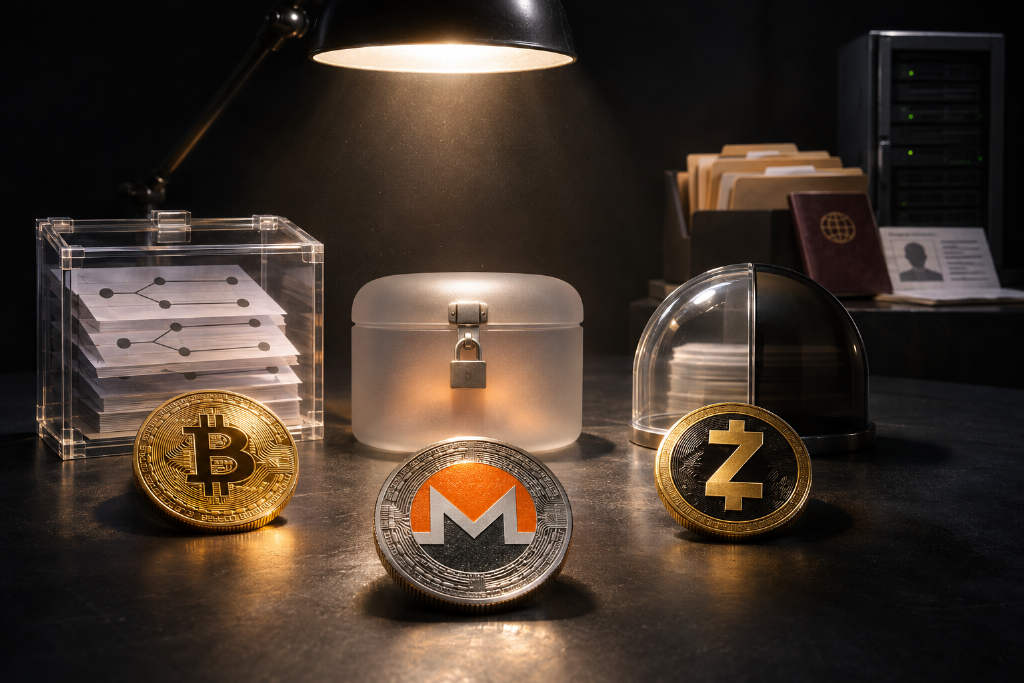
The Defiant compared Bitcoin, Monero, and Zcash through the lens of transaction privacy, highlighting how each network handles visibility onchain. The piece says Monero makes privacy mechanisms mandatory for ordinary transfers, while Zcash offers users a choice between transparent transactions and shielded ones. Bitcoin appears in the comparison as a reference point for a more open transaction model. The report also draws a line between onchain privacy and offchain identity records. Even when privacy-focused cryptocurrencies obscure transaction details at the protocol level, that does not remove customer identity information collected and stored by exchanges. In other words, privacy features built into a blockchain do not erase records created during exchange onboarding or compliance checks. The comparison centers on design differences rather than price action or market performance, framing privacy coins as tools with distinct operating models and limits.

510
How Privacy Coins Differ: Bitcoin, Monero and Zcash Compared
GENIUS Act
Nov 4, 2026

GENIUS Act does not remove state licensing requirements for stablecoin-related firms

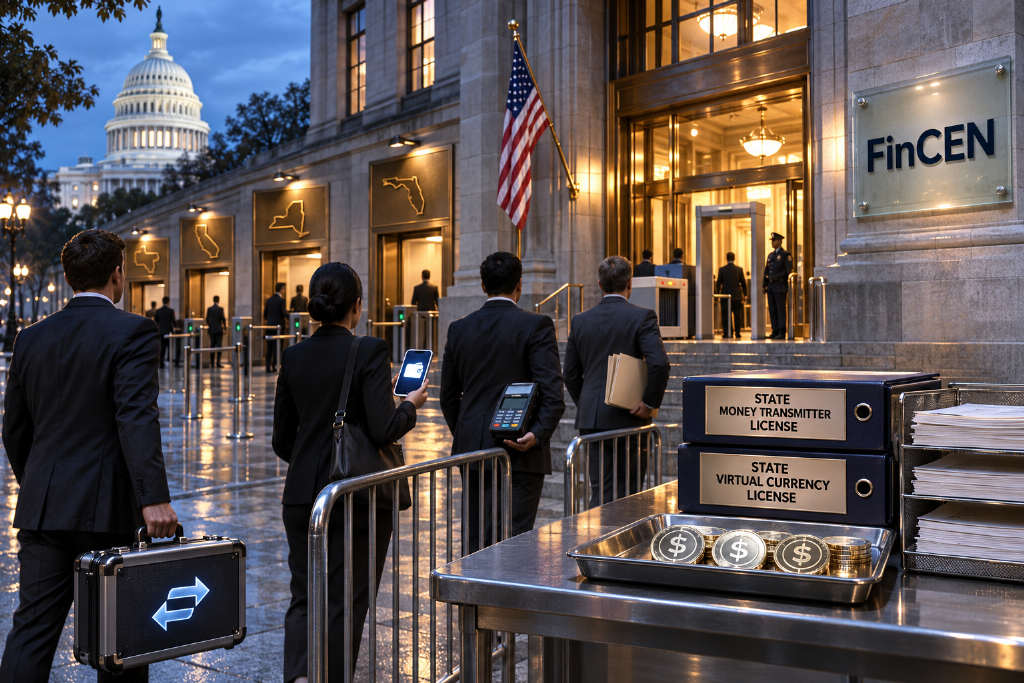
The GENIUS Act creates a federal framework for payment stablecoin issuance, but it does not broadly remove money transmission rules for every business that handles stablecoins. According to Bitcoin.com News, exchanges, wallets, payment processors, and remittance companies may still need to register with the Financial Crimes Enforcement Network, or FinCEN, as money services businesses and obtain state-level money transmission or virtual currency licenses. Whether a license is required depends on the role a company plays in receiving, controlling, exchanging, or transmitting customer value, and on which entity performs each function. The report also said approval for an issuer, or federal registration with FinCEN, does not automatically satisfy other federal obligations or state licensing requirements. While the GENIUS Act includes a state law preemption arrangement for certain approved issuers, that treatment does not extend as a blanket exemption to third parties such as exchanges, distributors, wallets, or payment companies. Because states define virtual currency activity, exemptions, and licensing regimes differently, firms still need to assess requirements based on their business model and where they operate.

600
GENIUS Act does not remove state licensing requirements for stablecoin-related firms
euro stablecoins
Nov 3, 2026

Euro Stablecoins EURC and EURR Come With €1 Redemption Rights, but Access Differs by Channel

The Defiant has outlined how euro-denominated stablecoins work, focusing on EURC and EURR and the conditions attached to redemption. According to the article, both tokens disclose a right to redeem at €1. That headline promise, however, does not mean every holder can access redemption in the same way or through the same route. The report draws a distinction between two paths: redeeming through issuer accounts and selling tokens on exchanges. Those routes carry separate access conditions, meaning the practical experience for users can vary depending on how they seek liquidity. The piece centers on the basic structure of euro stablecoins, the roles of EURC and EURR, and the difference between formal redemption rights and market-based exits on trading venues. Rather than treating redemption and exchange sales as interchangeable, the article frames them as distinct mechanisms with different requirements. That distinction is the core point of the report.

800
Euro Stablecoins EURC and EURR Come With €1 Redemption Rights, but Access Differs by Channel
Santiment
Nov 3, 2026

Santiment says exchange-held ETH fell to 3.20% of supply after Binance hack, destination remains unclear

On-chain analytics platform Santiment said the amount of ETH held on trading platforms declined in two phases after Binance was hit by a hack, though only one of those phases matched the timing of the hacker-related fund movements. Its data showed that exchange-held ETH accounted for 3.56% of total ETH supply at the close on Oct. 28, then dropped to 3.20% by the close on Nov. 2. More than half of that decline took place on Oct. 29, the same day Binance suffered the attack. Still, the ETH balance held by major exchange addresses did not fall that day and instead rose by about 39,000 ETH. TRM Labs data showed that about 200,630 ETH was transferred out of Binance hot wallets on Oct. 29. A larger reduction came later, when exchange-related addresses shed about 313,000 ETH between Nov. 1 and Nov. 2 as withdrawals reopened. Over the full Oct. 28 to Nov. 2 period, major exchange addresses reduced holdings by about 297,000 ETH, a decline of roughly 5.4%. Santiment said exchange data alone is not enough to determine where the ETH ultimately went, including whether it moved into cold wallets or to other trading venues.

570
Santiment says exchange-held ETH fell to 3.20% of supply after Binance hack, destination remains unclear
Thailand SEC
Nov 3, 2026

Thailand SEC seeks feedback on revised licensing framework for digital asset derivatives

Thailand’s Securities and Exchange Commission said in an Oct. 29 notice that it has opened a public consultation on draft notifications to revise the licensing framework for derivatives businesses. The proposed changes cover derivatives exchanges, derivatives clearing houses, and intermediary businesses, and are intended to support the inclusion of digital assets as underlying assets recognized under the Derivatives Act. Under the proposal, digital asset operators would be able to apply for derivatives business licenses without setting up a new company. MediaNama reported that the proposed digital asset derivatives license would permit activities including derivatives agency services, proprietary trading, investment advisory, and investment management. The license fee is set at 500,000 baht, while existing digital asset exchanges, brokers, and dealers would be exempt from application and licensing fees. Among digital asset operators, only exchanges and brokers would be eligible to apply to operate a derivatives exchange, and digital asset custodians would not be allowed to apply for a clearing house license. The consultation runs through Nov. 28.

510
Thailand SEC seeks feedback on revised licensing framework for digital asset derivatives
crypto security
Nov 3, 2026

Crypto industry losses top $11.4 billion over two years as AI-led attacks spread to 10 countries

Techub News, citing CoinPedia, reported that the crypto industry lost more than $11.4 billion to hacks and vulnerabilities across 2025 and 2026. The report said the incidents exposed weaknesses across exchanges, wallets, and blockchain networks, highlighting persistent security risks in core parts of the sector. It also said AI-driven attacks are no longer confined to crypto exchanges and are spreading into other areas. As of Nov. 3, 2026, Beijing time, at least 10 countries had reported cyber incidents over the previous 48 hours. The update links large-scale crypto losses with a wider expansion of AI-enabled cyber activity, while stopping short of naming specific platforms, countries, or individual incidents.

770
Crypto industry losses top $11.4 billion over two years as AI-led attacks spread to 10 countries
Thailand
Nov 3, 2026

Thai police obtain Shuffle fund-flow data from three exchanges and form 80 task forces

Thai cyber police have obtained fund-flow data tied to Shuffle.com from three digital asset exchanges and set up 80 task forces as the country widens its probe into the platform. Siriwat Deepho, deputy inspector general of Thailand’s cyber police, said investigators plan to first open cases against players inside Thailand before turning to operators based overseas. At a parliamentary hearing on Oct. 29, a lawmaker said Gulf Binance, which operates Binance TH, had identified two wallets linked to 44 people. The funds moved in and out of Shuffle through more than 400 transactions totaling about $113,000. Former Democrat Party lawmaker Sirichok Sopha also said four of Thailand’s nine digital asset operators had on-chain links to Shuffle, while adding that such links do not mean the exchanges engaged in wrongdoing. Thailand’s Department of Special Investigation is assessing whether to classify Shuffle as a special case and plans to invite the Thai Securities and Exchange Commission to join the probe. The Ministry of Digital Economy and Society said it had already blocked Shuffle.com nationwide on Oct. 9, according to Bitcoin.com News.

480
Thai police obtain Shuffle fund-flow data from three exchanges and form 80 task forces
Total 220 items
Go topage