Ice and Fire: Two Key Assessments from SemiAnalysis
Semiconductor research firm SemiAnalysis released two contrasting analyses on June 30, painting a mixed picture for NVIDIA. The first assessment highlighted the potential for a significant revenue surge as supply bottlenecks are resolved; the second revealed a major product downgrade that raises questions about NVIDIA's technology roadmap. These opposing views anchor NVIDIA's narrative along two dimensions: execution ability and technological moat.
Bullish Side: HBM4 Supply Resolved, Revenue Could Beat Estimates by 20%
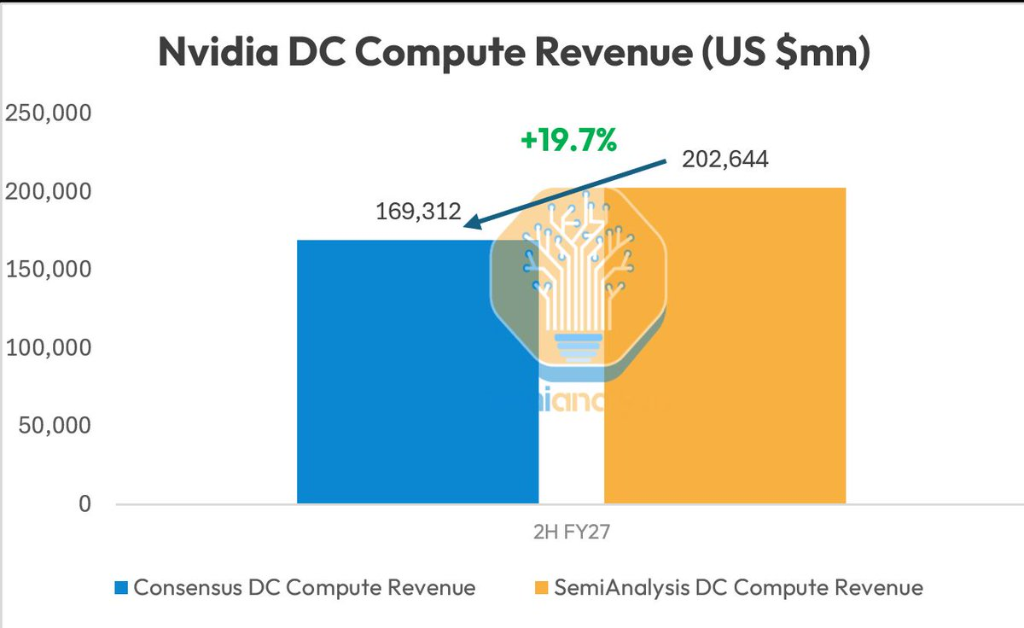
Using its Accelerator Model, SemiAnalysis forecasts that NVIDIA's data center computing revenue in the second half of fiscal 2027 will exceed Wall Street consensus by approximately 20%. The core driver is the resolution of HBM4 memory supply issues that previously constrained the Rubin platform's volume ramp, combined with front-end wafer capacity already secured. SemiAnalysis emphasizes that its methodology differs from traditional sell-side analysts: most Wall Street firms adopt conservative earnings projections to allow room for upside surprises, while SemiAnalysis relies on primary supply chain research, covering material suppliers, wafer fabrication, key components, server OEMs, and actual procurement/deployment data from hyperscalers and frontier AI labs. The model cross-validates supply-demand relationships across multiple dimensions.

Bearish Side: Rubin Ultra Cancelled, CUDA Moat Slowly Eroding
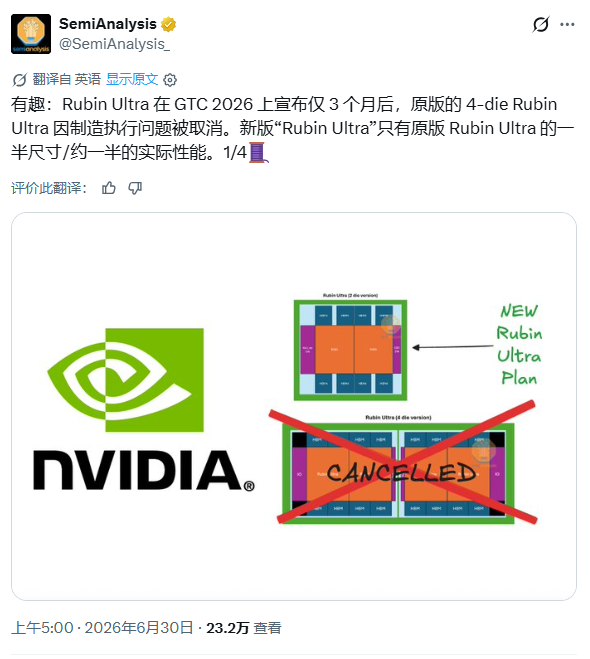
Earlier on the same day, SemiAnalysis disclosed a negative update: NVIDIA's original plan for a 4-chip Rubin Ultra design was canceled about three months after its GTC 2026 unveiling. The new version is half the size and delivers half the performance, due to challenges in advanced packaging manufacturing. More concerning is the growing adoption of multi-platform architectures by key customers. For example, Anthropic now uses a combination of Google TPU, Amazon Trainium, and NVIDIA GPUs—training its Claude models largely on TPUs, deploying Claude Code inference increasingly on Trainium, and reserving NVIDIA GPUs primarily for general-purpose frontier research. SemiAnalysis notes that a year ago, the scale of TPU and Trainium adoption was unimaginable; today, CUDA's moat is being slowly eroded.