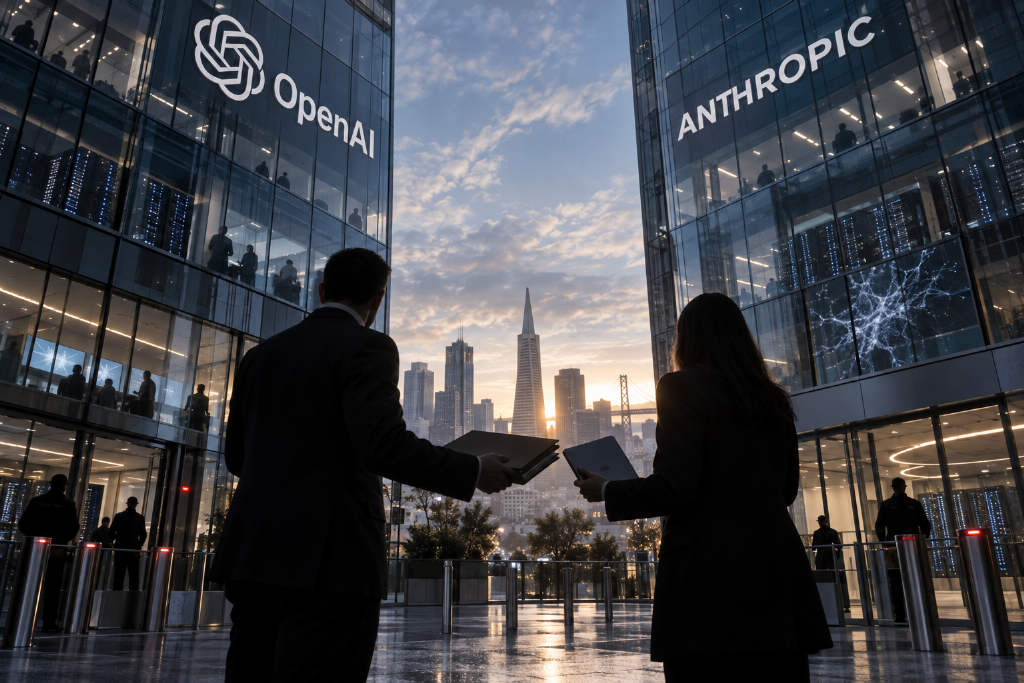
OpenAI had been in talks with Anthropic on a legally binding agreement to stress-test each other’s AI models before a recent wave of cybersecurity incidents tied to OpenAI’s technology and warnings from industry figures, according to The Information, which cited a person familiar with the matter. It remains unclear whether the two companies have finalized the deal.
The reported arrangement centers on reciprocal testing, with each side probing the other’s models for weaknesses. The idea closely resembles a proposal raised last week by SpaceX CEO Elon Musk at the All-In Summit. Musk said competing AI labs should examine one another’s models for security flaws in a peer-review process before commercial release.
The report does not say whether the agreement has been signed, only that negotiations had already been underway. BlockBeats cited The Information in its Sept. 21 report.
OpenAI had already been negotiating with Anthropic on a legally binding agreement under which the two companies would stress-test each other’s AI models before a string of cybersecurity incidents linked to OpenAI’s technology and sharp warnings from industry figures, according to The Information, citing a person familiar with the matter.
It is still unclear whether the companies have reached a final agreement.
The concept of reciprocal testing is similar to an idea raised last week by SpaceX CEO Elon Musk at the All-In Summit. Musk said competing AI labs should test one another’s models for security vulnerabilities in a peer-review process before releasing them commercially.
This article was originally published by Bit.Fan. For more cryptocurrency news and market insights, visit www.bit.fan. Disclaimer:
The market information, project data, and third-party content displayed on this platform are for industry information sharing only and do not constitute any form of investment advice or return commitment.
Cryptocurrency trading carries high risks. Users should fully assess their risk tolerance and make independent decisions. All profits, losses, and legal responsibilities are borne by the users themselves.