

Russia’s State Duma on July 21 passed the second and third readings of the Digital Currency and Digital Rights bill, putting in place the core legal framework for a regulated domestic crypto market. The move opens a formal channel for crypto trading inside Russia, but not a free-access market for all investors. The final text keeps high barriers for retail buyers, preserves narrow rules on what assets can be traded publicly, and carves out a separate regime for foreign stablecoins.
Before the second and third readings, lawmakers rejected a series of amendments that would have eased restrictions. The result is a model that admits crypto under close supervision rather than broad liberalization. Stablecoins are treated under a different logic: investment use is tightly constrained, while room remains for foreign trade settlements.
The policy direction is now clearer than before. Russia has moved from blocking crypto activity to conditional acceptance, then to a layered regulatory model built around investment management and cross-border payments.
From limited exceptions to a formal market framework
Russia’s shift on crypto started under geopolitical pressure.
In 2024, after sanctions disrupted traditional cross-border payment channels, Moscow began taking a more pragmatic view of digital assets. Alongside efforts to regulate crypto mining, authorities allowed businesses to use Bitcoin and other digital currencies for foreign trade settlements within an experimental legal regime led by the central bank.
That dual-track approach did not extend to ordinary investors. In March 2025, the Russian government proposed a new plan that began to create a formal access route for domestic crypto investors. The focus moved away from simple containment toward a compliant market built under strict oversight.
At that stage, the Bank of Russia proposed a three-year experimental regime that would allow “specially qualified investors” to buy and sell crypto. The threshold was aimed at a very small pool of wealthy individuals: more than 100 million rubles, or about $1.28 million, in securities and deposits, or annual income above 50 million rubles, about $640,000, in the previous year.
By December 2025, the central bank widened its regulatory plan from a limited experiment to a standing market structure. It dropped the idea that only “specially qualified investors” could participate and, for the first time, explicitly included retail investors by dividing users into two groups.
Under that structure, non-qualified investors must pass a risk test, can buy only a limited set of assets that meet liquidity standards, and are subject to annual investment caps. Qualified investors can buy any cryptocurrency other than privacy coins and face no additional annual ceiling. The central bank estimated the number of compliant investors in Russia at about 1 million.
It also abandoned the earlier plan of running an experiment for several years before drafting permanent rules, and instead pushed for direct legislation.

The bill’s structure and timeline
In April 2026, the Russian government submitted the Digital Currency and Digital Rights bill, and the State Duma passed it in first reading on April 21. The bill seeks to build a domestic infrastructure licensed or registered by the Bank of Russia, including crypto exchange operators, brokers, trust managers, and digital asset custodians.
It also allows companies and individual entrepreneurs to use crypto for settlements under foreign trade contracts.
The bill says some cryptocurrencies can enter the public trading market, but the bar is very high. To qualify, an asset must simultaneously meet these requirements:
- an average market capitalization above 5 trillion rubles, or about $63.8 billion, over the past two years;
- average daily trading volume above 1 trillion rubles, or about $12.8 billion;
- at least five years of price history on foreign licensed exchanges.
By those standards, the report said, Bitcoin and Ethereum are essentially the only assets likely to qualify.
Russia’s legalization of crypto has therefore always come with strict conditions. Even so, the broader direction had been toward a looser regime than before. That easing stopped as the bill approached its key second reading on July 21.
The legislation now only needs review by the Federation Council and the president’s signature to take effect. Under the bill, the main provisions are scheduled to begin on Sept. 1, 2026. Crypto trading service providers will get roughly one year of transition time and may continue operating until July 1, 2027 even if they have not yet entered the central bank’s official register.
Retail cap stays in place
Before the second and third readings, the Duma committee on financial markets reviewed amendments aimed at easing crypto trading restrictions. The version that passed stayed close to the committee’s cautious stance. Retail purchase limits were not materially raised, and the asset thresholds for public trading were left in place.
The most closely watched proposal would have increased the annual limit for non-qualified investors buying crypto through a single intermediary from 300,000 rubles to 600,000 rubles, or from about $3,800 to about $7,700. That proposal was rejected. The committee recommended keeping the original figure.
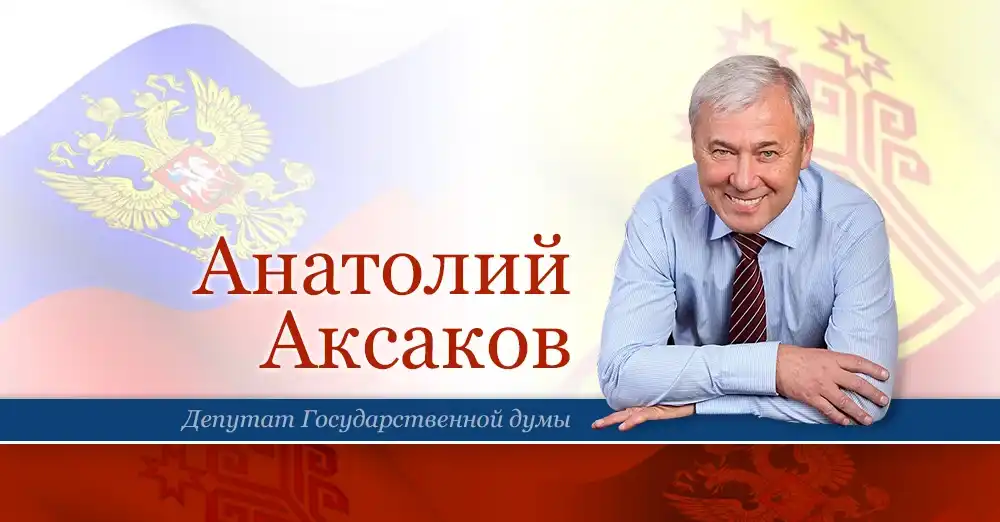
Anatoly Aksakov, chair of the Duma committee on financial markets, said the limit would help protect inexperienced investors from the risk of heavy losses in a highly volatile market.
The bill’s wording is also important. It says no more than 300,000 rubles per year through each intermediary, rather than aggregating an investor’s purchases across all Russian platforms. On the face of the published text, the cap is calculated separately by intermediary.
The threshold for assets allowed into the public market was not lowered either. The original version already set demanding standards tied to market capitalization and daily turnover, leaving only a handful of large-cap cryptocurrencies such as BTC and ETH in a position to qualify.
Some lawmakers proposed cutting the market-cap requirement to 1 trillion rubles, about $12.8 billion, and lowering the average daily trading threshold to 100 billion rubles, about $1.28 billion. That effort failed. In practice, most altcoins remain outside Russia’s compliant public trading market.
Limited room for self-custody
The final version does make one concession on non-custodial wallets. Investors may transfer crypto to external wallets that are not managed by a Russian digital custodian, provided the private keys are controlled by the investor.
For transfers above 100,000 rubles, or about $1,277, digital custodians must impose a 48-hour cooling-off period and execute the instruction two days after receiving it.
That is a meaningful shift from the first-reading approach. Earlier, crypto assets were expected in principle to remain within Russian custody systems or qualifying foreign custody systems, leaving little practical room for personal wallets. The final bill does not shut the non-custodial route, but it keeps outbound transfers under tighter anti-fraud controls through cooling-off periods, identity verification, and transaction monitoring.
There is still debate over user protection. One proposed amendment would have required digital custodians to carry mandatory liability insurance for customer losses caused by hacks, technical failures, or unlawful use of keys. That requirement was left out of the final text.
Under the current design, liability insurance is not a universal mandatory duty for custodians. Protection against customer losses will depend mainly on institutional capital, information security systems, and the specific contract terms in place.
The result is an uneven structure: custodians retain significant control over transactions, but they are not required to fully shoulder the related technical and custody risks.
Stablecoins split into a separate category
One of the more substantive changes in the second-reading text concerns foreign stablecoins. While the bill largely kept earlier thinking on investor access and protections, it created a separate classification and separate admission rules for these instruments.
The first-reading version defined “digital currency” as an asset without an obligated issuer standing behind the holder. That works for decentralized assets such as Bitcoin, but not for stablecoins like USDT and USDC, where centralized issuers such as Tether and Circle are responsible for reserve management, value maintenance, and redemption.
To address that distinction, the second-reading amendments introduced the concepts of “foreign digital instruments” and “non-deliverable foreign digital instruments,” aiming to separate foreign fiat-backed stablecoins from the broader crypto category.
Under the final version, qualified investors may buy foreign digital instruments through licensed Russian infrastructure, including foreign stablecoins that fit the legal definition. Non-qualified investors generally cannot freely buy stablecoins unless the Bank of Russia places a specific foreign stablecoin on the list of assets permitted for public trading. Even then, the 300,000-ruble limit applies.
In foreign trade settlement scenarios, however, the restrictions are looser. Russian companies and individual entrepreneurs engaged in foreign economic activity may use cryptocurrencies, stablecoins, and different types of wallets to settle with overseas counterparties, without being subject to those investor-access rules.
That means Russia is not moving to ban USDT or USDC outright. Instead, it is narrowing their use as investment products while preserving wider access for cross-border trade.
The arrangement reflects a mixed official view. The Bank of Russia has acknowledged that stablecoins can shorten settlement times and reduce intermediary costs in cross-border payments. At the same time, foreign issuers can freeze or seize tokens, and Russian businesses and users remain exposed to sanctions risk, reserve-asset risk, and issuer credit risk.
Criminal penalties are still pending, and P2P remains unclear
Russia is also preparing criminal liability for the illegal organization of crypto circulation in an effort to push activity toward licensed venues.
A companion bill would add Article 171.7 to the Criminal Code. Anyone providing crypto custody, purchase and sale services, crypto-to-crypto exchange, or transfer services without permission from the Bank of Russia could face penalties if the activity generates more than 3.5 million rubles in income, about $45,000, or causes major losses of the same scale. The proposed penalties include fines of 100,000 to 300,000 rubles, about $1,300 to $3,800, up to four years of forced labor, or up to four years in prison, with an additional fine of up to 80,000 rubles, about $1,000.

If the conduct is carried out by an organized group, or if income or losses exceed 13.5 million rubles, about $172,000, the maximum prison term could rise to seven years, along with a fine of up to 1 million rubles, about $12,800. The bill had been planned to take effect on July 1, 2027.
That criminal package did not pass together with the main Digital Currency and Digital Rights bill. Aksakov previously said the second and third readings of the companion criminal bill are expected to be handled by the new State Duma after elections, and the exact punishment provisions still need more work.
His comments suggest that there is little disagreement over cracking down on unlicensed commercial intermediaries. The harder issue is drawing a workable legal line between illegal exchange businesses operating on a continuing basis, occasional transactions between private individuals, and ordinary holding or transfer of crypto assets.
Under the current regulatory approach, residents are expected in principle to buy and sell crypto through institutions registered with or licensed by the central bank. Direct P2P trading could conflict with that model. At the same time, Aksakov said ordinary P2P users would not automatically fall within criminal punishment, adding that provisions concerning individuals are still under discussion.
That matters because Russia has long had a large over-the-counter exchange market, Telegram-based trading, and broad person-to-person crypto networks. Setting up licensed exchanges and custodians may be straightforward on paper. Moving users into them may not be. If compliant channels offer too few assets, charge too much, or keep limits too low, many retail users may stay outside the system. If criminal liability is drawn too broadly, occasional trades between individuals could also be swept into enforcement against unlicensed business activity.
The mixed messaging points to a likely outcome: the final criminal framework may target unlicensed exchangers that operate continuously, take fees, and reach the threshold for “major income,” while the legal boundary around person-to-person transactions remains unresolved.
What comes next
The bill passed on July 21 has largely fixed the institutional outline of Russia’s crypto market. The main questions have now shifted from whether a legal market will exist to how the framework will be implemented.
The next stage will center on which assets the Bank of Russia permits for ordinary investors, how transfers to self-custodied wallets will work in practice, whether licensed intermediaries can offer services convenient enough to attract users, and how the companion criminal bill will ultimately distinguish personal P2P activity from illegal business operations.