Revenue Upgrade: HBM4 Bottleneck Lifted, Rubin Ramp Accelerates
Using its Accelerator Model, SemiAnalysis projects a massive ramp for NVIDIA in the second half of fiscal 2027. The firm expects NVIDIA's data center computing revenue to exceed consensus estimates by approximately 20%, driven by the Rubin platform. The previously problematic HBM4 memory supply has been resolved, and front-end wafer capacity has been pre-booked, clearing the way for rapid production scaling of the delayed Rubin platform.
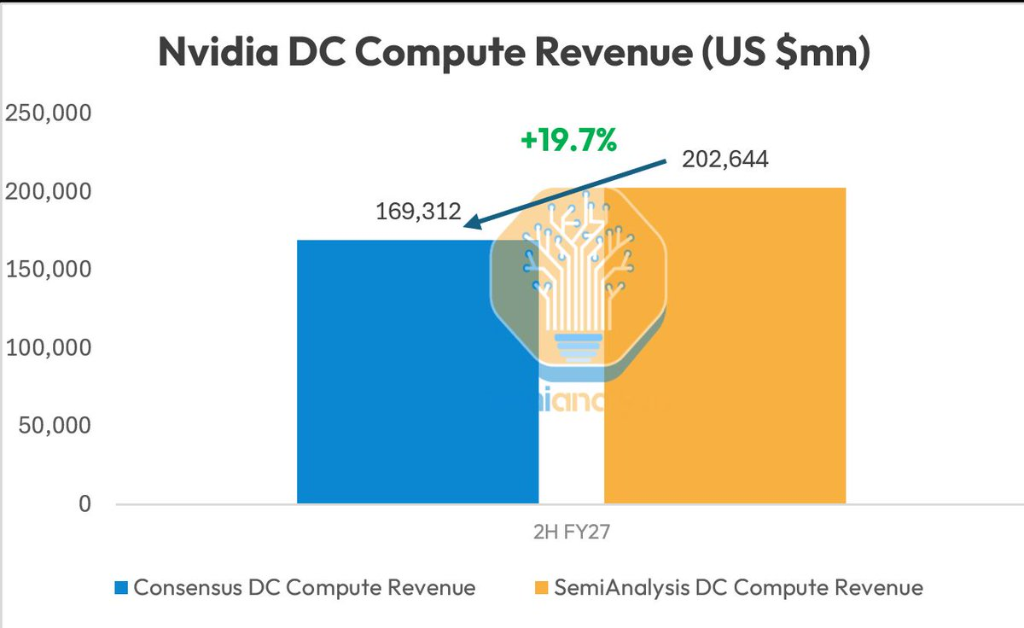
SemiAnalysis emphasizes that its methodology differs from conservative Wall Street forecasts. The Accelerator Model cross-validates data across the full supply chain—material suppliers, wafer fabrication, key components, server OEMs, and actual procurement from hyperscalers and advanced AI labs. The model also covers AI chip peers such as Broadcom, AMD, MediaTek, and Marvell, and works in tandem with the HBM Model to track the broader AI compute ecosystem.

Technology Shrink: Rubin Ultra Canceled, CUDA Moat Under Threat
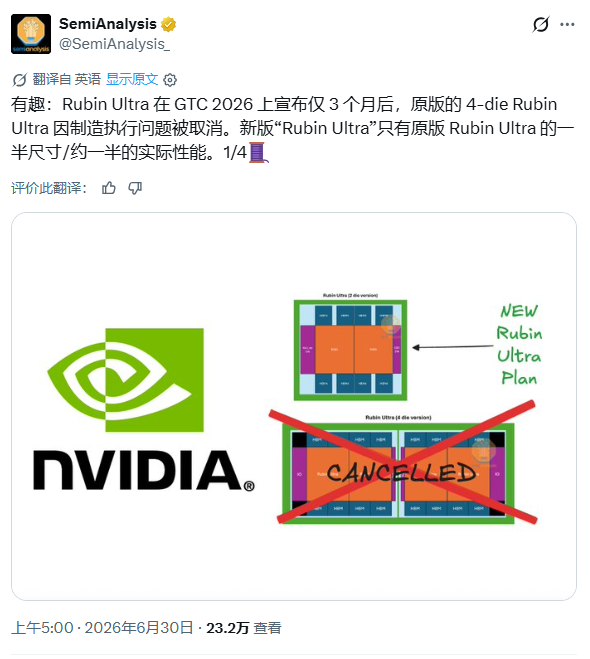
However, SemiAnalysis revealed a simultaneous bearish update: NVIDIA's original 4-chip Rubin Ultra, announced at GTC 2026, was canceled about three months after launch. The new 'Rubin Ultra' is halved in size, resulting in a proportional reduction in performance. The reason relates to challenges in advanced packaging manufacturing. This revision directly weakens NVIDIA's technological leadership narrative in flagship AI accelerators.

The report also highlights Anthropic as a case study of CUDA ecosystem erosion. Anthropic now runs a multi-platform architecture combining Google TPU, Amazon Trainium, and NVIDIA GPUs: most Claude model training occurs on TPUs, Claude Code inference increasingly runs on Trainium, and NVIDIA GPUs are reserved for frontier research and general-purpose tasks. A year ago, the scale of TPU and Trainium usage would have been unimaginable; today, the CUDA moat is being slowly chipped away.

Fire and Ice: Revenue Execution vs. Technology Moat
On one hand, the removal of supply constraints drives an upward revenue revision. On the other, the flagship product downgrade signals a pessimistic readjustment of technology trajectory. SemiAnalysis's two contradictory assessments anchor NVIDIA's narrative along two distinct axes: near-term earnings delivery and long-term competitive moat. Investors must weigh both the potential earnings beat and the evolving competitive landscape.