
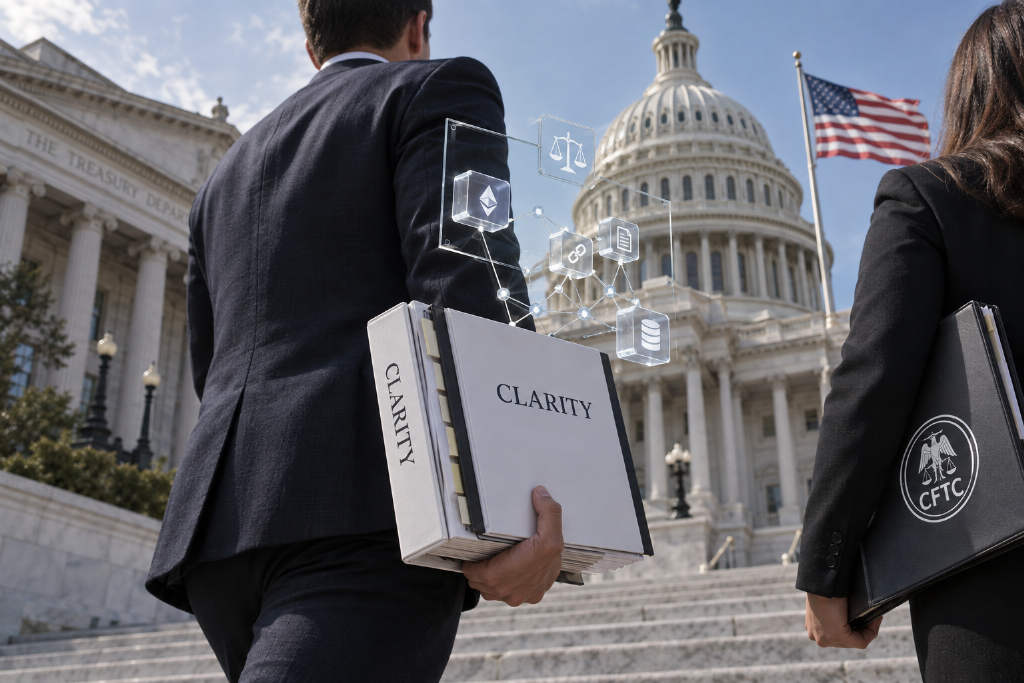
Senate Republicans on Thursday circulated a revised version of the Digital Asset Market Clarity Act, four days before the bill is set to face its first procedural test on the Senate floor.
The 630-page text, released by Sen. Cynthia Lummis of Wyoming and other Republicans, rewrites how the legislation handles decentralized finance and credit unions. The ethics language that Democrats have made a condition for their support remains unchanged.
Revised draft redraws the DeFi section
The new draft creates a category called non-decentralized finance trading protocols. It applies to anyone who retains authority to control a protocol or materially alter its functionality or consensus rules.
Under the bill, those protocols would have to register with the Commodity Futures Trading Commission. The measure also directs the CFTC and the Treasury Department to write the rules.
The DeFi provisions now apply only to spot and cash digital commodity transactions. Lummis said that change responds to concerns raised by tribal governments about blockchain-based prediction markets. The revised text also gives credit unions clearer authority to engage in crypto-related activity.
Lummis said the draft incorporates more than 100 provisions requested by Democrats.
Cloture vote approaches as ethics dispute remains
A cloture vote on the motion to proceed is scheduled for Tuesday at 2:15 p.m. ET. It will need 60 votes.
At least two Republicans are expected to vote no on the procedural question, leaving the bill nine Democratic votes short.
According to Punchbowl News reporter Brendan Pedersen, who cited a staffer, the ethics provision remains Democrats’ primary concern, and the new text does nothing to address it.
Republicans also told Semafor this week that the bill is likely to fail for the same reason.
If the Clarity bill falls short on Tuesday, only a limited number of session days would remain before the Nov. 3 midterm elections.
Bank groups push for tighter stablecoin yield language
Banking groups moved quickly after the revised text was released. The American Bankers Association, the Independent Community Bankers of America, and 77 state and regional banking groups asked Senate leaders to tighten Section 10404, the provision banning interest or yield payments on stablecoins.
They argued that the current wording would allow rewards programs to pull deposits out of community banks.
Paradigm’s Alexander Grieve pushed back on X, saying the negotiated yield prohibition is a loss for crypto rather than a win.
Sens. Jerry Moran of Kansas and Josh Hawley of Missouri have said they would oppose the bill without changes backed by banks.
Committee history and competing proposal
The bill cleared the Senate Banking Committee in May by a 15-9 vote, but it has been stalled on conflict-of-interest issues since then.
In late July, Sens. Thom Tillis of North Carolina and Ruben Gallego of Arizona introduced a counterproposal that would bar federal elected officials and judges from issuing or sponsoring digital assets and would require them to divest any existing holdings.
The White House has not responded to that proposal.
The House has also canceled its final two September voting weeks, pushing any House action into the November lame-duck session.