Morgan Stanley
1 days ago

Morgan Stanley Cuts Coinbase to Underweight, Slashes Price Target to $120

Morgan Stanley has downgraded Coinbase Global (COIN) to underweight from equal weight and cut its price target to $120 from $258, according to CNBC. The new target implies roughly 16% downside from last Friday’s close. In a Monday note to clients, analyst Michael Cyprys said Coinbase continues to pursue a broader strategy, but weaker recent trading trends, softer forward revenue expectations, and uncertainty around the crypto market make the company’s "earnings recovery" case harder to support. Cyprys said crypto trading on Coinbase weakened in October. Based on activity through Oct. 25, the bank estimated fourth-quarter transaction revenue at about $165 million, which would translate to roughly $607 million on an annualized basis, about 11% below the consensus estimate of around $685 million. Morgan Stanley also cut its 2027 revenue forecast for Coinbase by 28% and lowered its adjusted EBITDA forecast by 47%. The call stands apart from broader Wall Street sentiment: LSEG data shows that among 41 analysts covering Coinbase, 26 rate the stock buy or strong buy, while 13 rate it hold.


130
Morgan Stanley Cuts Coinbase to Underweight, Slashes Price Target to $120
Binance
1 days ago

Binance rolls out post-hack campaign, but the 100 USDC voucher only offsets trading fees

Binance has launched a Community Appreciation Campaign after its hot wallet hack on Oct. 30 and the reopening of withdrawals on Nov. 1, when users withdrew about $4.4 billion on the first day back. The campaign runs until 07:59 Taiwan time on Nov. 22, but it is not a cash compensation plan tied to the hack. Binance had already said losses from the incident would be covered by its SAFU fund and company capital. The promotion includes three parts: a 100 USDC rebate voucher, a 20 million USDC trading prize pool, and boosted yields on selected stablecoin wealth products. The voucher is not credited directly to user balances. Instead, it rebates 30% of spot trading fees, after referral commissions are deducted, and pays the amount in USDC the next day. The trading pool requires at least $10,000 in cumulative eligible volume, with rewards capped at 4,000 USDC per user. Yield boosts apply only to new subscriptions made after the campaign starts and are subject to quota limits. Taiwan is not listed among the explicitly excluded jurisdictions, though Binance says eligibility still depends on regional restrictions and reserves the right to verify user location and disqualify participants.

110
Binance rolls out post-hack campaign, but the 100 USDC voucher only offsets trading fees
Donald Trump
1 days ago

Trump says he would consider preemptive pardons for Musk and allies if Democrats flip Congress

U.S. President Donald Trump said he would be willing to issue preemptive pardons to aides and allies if Democrats win control of Congress and follow through on threats to prosecute members of his administration. He made the remarks in an interview with New York Post columnist Miranda Devine on the podcast Pod Force One, where he said that if such protection were needed, he would do it. Trump pointed to what he described as a precedent set by former President Joe Biden, who, according to the report, issued preemptive pardons in his final hours in office to Anthony Fauci, Mark Milley, members and staff of the House Jan. 6 committee, and some relatives including Hunter Biden. Trump said he would apply the same logic to defend people who worked for him. The report also cited comments from Democratic Senator Elissa Slotkin, who said last month that Democrats should pursue “signature cases” against people who helped Trump, while committees could begin accountability efforts in January. Trump dismissed talk of arrests involving Elon Musk as likely rhetoric, but said people tied to his administration should still be protected. The U.S. midterm election result is expected Tuesday night.

90
Trump says he would consider preemptive pardons for Musk and allies if Democrats flip Congress
Perpetual DEX
1 days ago

Four perpetual DEX models compared: Lighter offers a user exit path, while Variational shows the widest on-chain exposure

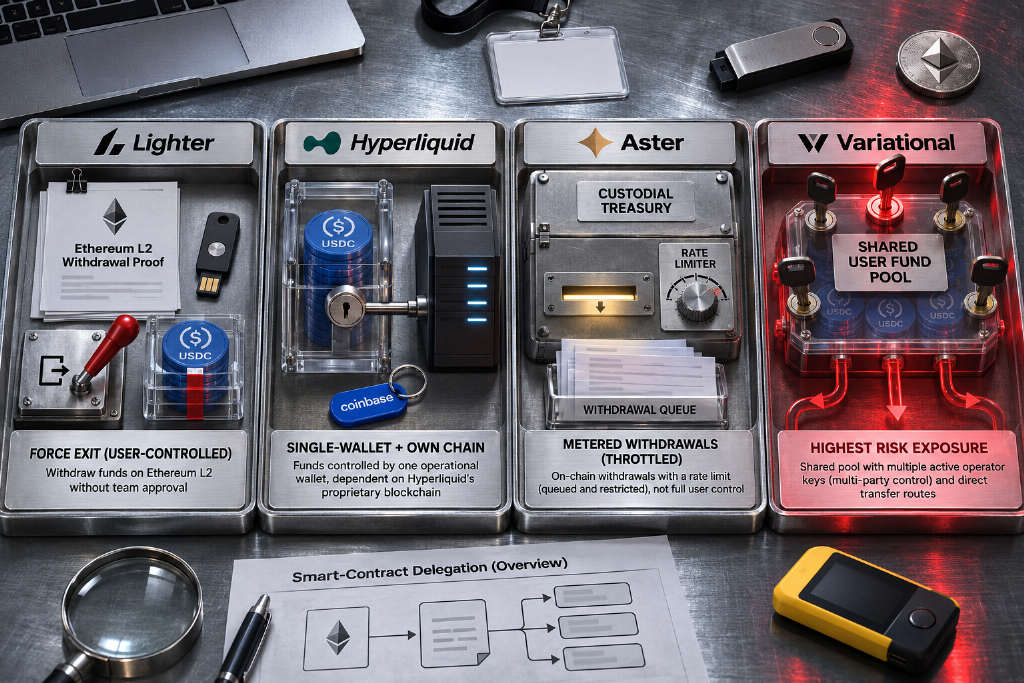
A long-form comparison of four perpetual decentralized exchanges argues that the label "DEX" says little about who actually controls user funds. Using a single stress scenario — the team’s systems and keys are compromised in a Binance-style breach — the piece reviews Lighter, Hyperliquid, Aster, and Variational through three questions: where the money sits, who can move it, and whether users can still exit if the team disappears or its infrastructure fails. The review, based on on-chain reads, verified contract code, team documentation, posts, and L2BEAT references, concludes that Lighter is the only one of the four whose design lets users leave without relying on the team. Its contracts require ZK-proof-based withdrawals and include a forced withdrawal path that can lead to a full "desert mode" exit if requests go unprocessed for 14 days. The tradeoff, according to the author, is trust in operator-supplied pricing and a fast-track upgrade path. Hyperliquid lands in the middle because 86% of its USDC backing sits in a Coinbase single-key wallet on HyperEVM, with Circle freeze powers acting as a backstop. Aster is described as a custodial model with on-chain withdrawal rate limits rather than hard permission limits. Variational is presented as the least defended design on-chain, since any one of 17 operating keys can move USDC out of user pools with no contract-level amount cap.

90
Four perpetual DEX models compared: Lighter offers a user exit path, while Variational shows the widest on-chain exposure
Binance
1 days ago

Crypto Week Ahead Points to Binance Hack Fallout, U.S. Midterms and Jobs Data

CoinDesk’s preview for the week starting Nov. 2 flags three main themes for crypto markets: fallout from the Binance hack, the U.S. midterm elections, and the jobs report. The source text is brief and does not provide additional detail beyond identifying these items as the main events to watch in the coming week. As presented, the piece serves as a short forward-looking market calendar note rather than a full analysis. No extra figures, market moves, or commentary were included in the source summary.

80
Crypto Week Ahead Points to Binance Hack Fallout, U.S. Midterms and Jobs Data
Binance
1 days ago

Binance releases post-hack proof of reserves, lets users verify 1:1 backing for 10 major tokens

Binance said users holding 10 major assets on the exchange can now verify that those balances were backed at at least a 1:1 ratio in a reserve snapshot taken on Oct. 31. The exchange announced at 8:45 p.m. Taipei time on Nov. 2 that the full zero-knowledge proof for that snapshot had been completed within its expected timeline. Binance said the covered assets include BTC, ETH, USDT, BNB, SOL, USDC, XRP, USD1, RLUSD and ZEC, and repeated that it would absorb the financial impact of the theft rather than pass losses on to users. The proof combines a Merkle Tree, which lets users confirm their balances were included in the snapshot, with a zk-SNARK proof showing aggregate reserves were at least 1:1 without exposing individual balances. Binance also said about 95% of the affected amount has already been replenished, while the remaining 5% involves lower-liquidity tokens outside the 10 listed assets. A new snapshot covering more tokens is planned for Nov. 4, with the resulting proof expected to take 40 to 50 hours to generate.

90
Binance releases post-hack proof of reserves, lets users verify 1:1 backing for 10 major tokens
DTCC
1 days ago

DTCC launches tokenization service, but the first scaled use case is collateral movement, not free trading

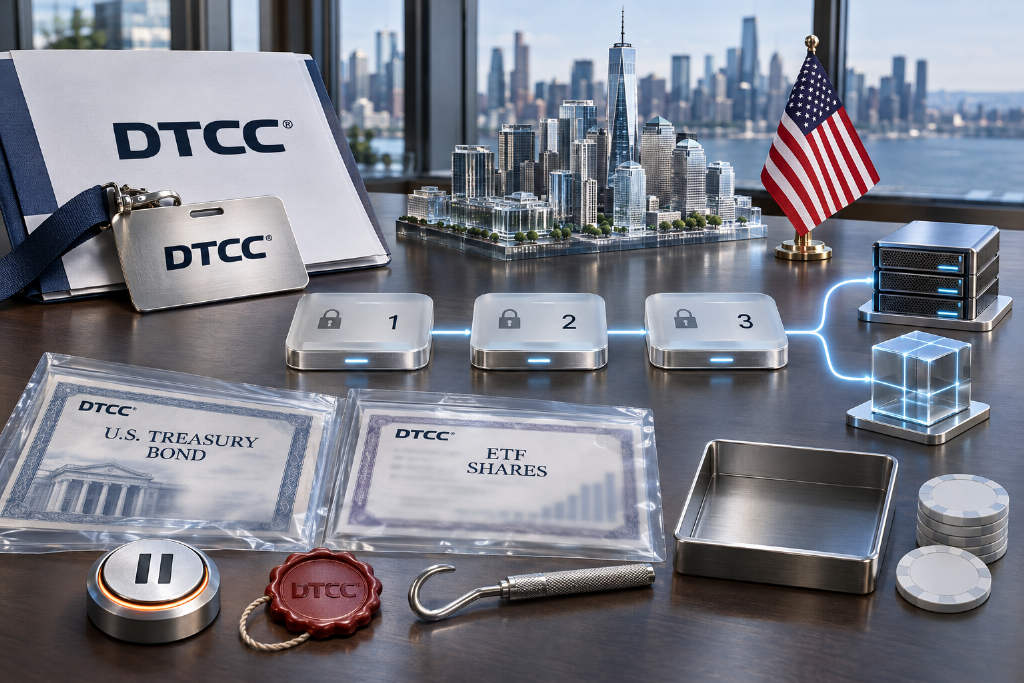
DTCC’s new Tokenization Service has gone live with 20 DTC participants, connections to Canton Network and a private Besu network, and a securities servicing base of more than $114 trillion at DTC. The headline numbers are large, but the live product is narrower than the phrase “tokenized securities” may suggest. In its first version, the service lets eligible securities move 24/7 between registered wallets on a free-of-value basis, meaning the securities leg can move while DTC does not process the cash leg. The tokens also do not yet carry collateral value or settlement value inside DTC’s own risk framework, and some corporate action workflows still require burning the token and restoring the traditional book-entry position. That design matters because it shows where institutional tokenization is finding practical traction first. Rather than building an open, always-on onchain market for stocks, ETFs, or Treasuries, DTCC and DTC are starting with a controlled system for moving securities rights faster without giving up whitelist controls, intervention powers, or legal certainty. Retail investors cannot directly connect to the service, and even future access would likely come through brokers or custodians tied to DTC participants. The result is not a permissionless capital market. It is a regulated extension of existing market infrastructure onto blockchain rails, with the strongest near-term case centered on collateral mobility and operational efficiency.

120
DTCC launches tokenization service, but the first scaled use case is collateral movement, not free trading
memory chips
1 days ago

Shenzhen memory suppliers post surging profits as higher chip prices fuel heavier stockpiling

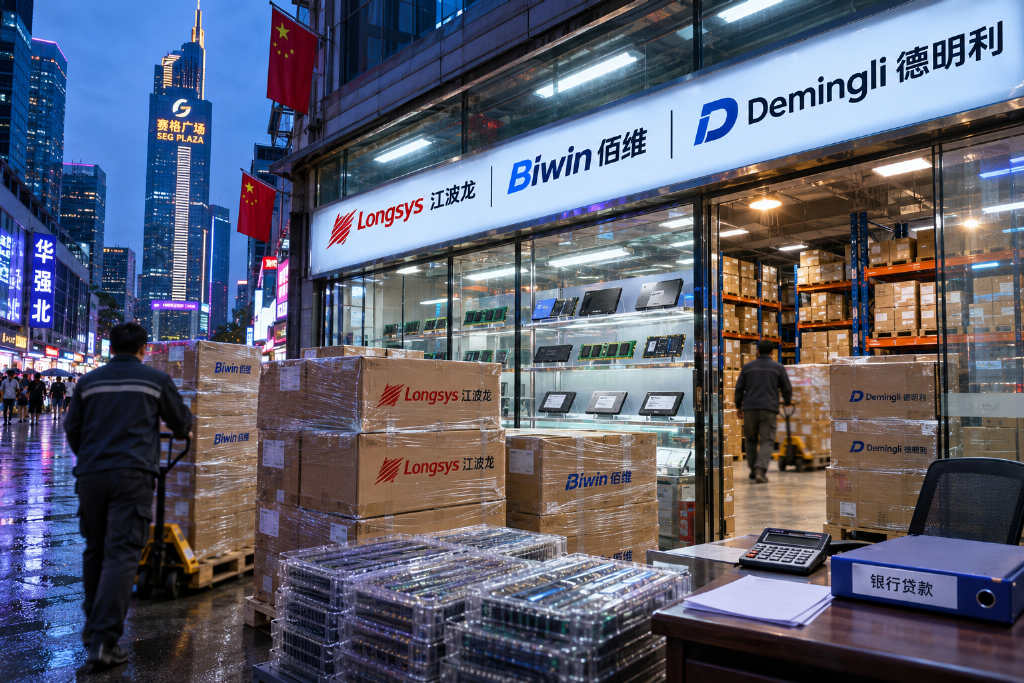
A new round of earnings from Shenzhen-listed memory companies shows how sharply the upcycle in storage pricing has lifted profits, while also exposing rising balance-sheet pressure. Delongli, Biwin Storage and Longsys each reported extraordinary year-on-year jumps in net profit, with the smallest increase still above 1,900%. The report ties that performance to strong demand for DRAM and NAND in the third quarter of 2026, even as price gains began to cool heading into October. The article also points to a split market. Bernstein data showed DRAM contract prices rose about 20% in the third quarter, while NAND pricing was more uneven after wafer spot prices surged in August and pulled back in September. Enterprise eSSD demand remained firm, but consumer demand stayed weak. Against that backdrop, Shenzhen’s so-called “storage five tigers” expanded raw-material purchases, lifted inventories and relied more heavily on borrowing. The result is a mixed picture: headline profit growth accelerated, but operating cash flow weakened at most of the companies discussed. The report argues that much of the gain reflects inventory revaluation and aggressive procurement rather than steady cash generation, leaving these firms more exposed if the current pricing cycle loses momentum.

120
Shenzhen memory suppliers post surging profits as higher chip prices fuel heavier stockpiling
Total 425 items
Go topage