Mitsubishi UFJ Financial Group
1 days ago

MUFG research head says US GDP and dollar are highly exposed to any slowdown in AI growth

Derek Halpenny, head of global markets research at Mitsubishi UFJ Financial Group, said artificial intelligence is now embedded throughout US GDP data, making the broader economy unusually sensitive to any loss of momentum in the sector. In his view, the US economy is highly exposed because it depends heavily on whether the current positive narrative around AI can continue. Halpenny also said the US dollar shares that vulnerability. His comments frame AI not as a narrow technology theme, but as a factor that has become closely tied to perceptions of US economic strength and currency resilience. The remarks were cited by Bloomberg and carried by Techub News as a market analysis flash update.

60

MUFG research head says US GDP and dollar are highly exposed to any slowdown in AI growth
economic crisis
1 days ago

Why Economic Crises May Matter Less Than Business Quality in Investment Decisions

A market analysis published by Foresight argues that major investment decisions should not hinge on predicting macroeconomic downturns or financial crises. The author says that after reading works related to Warren Buffett, Charlie Munger, and especially Duan Yongping’s Q&A collection, he has gradually reduced his focus on macro calls and crisis forecasts. In his view, the core of investing lies elsewhere: corporate culture, business model, and price. The article lays out that a strong company should reward shareholders through buybacks or cash dividends, treat employees well, and operate with integrity. A sound business model should have a wide moat, sufficient cash flow, and a healthy balance sheet with low leverage. A good price, the author writes, means a company’s market value should be below the discounted sum of its future free cash flows. From that framework, the piece argues that both selling before a crisis and buying during one still depend on the same question: whether the asset is trading above or below intrinsic value. It also says that companies that collapse in a crisis usually already had weak cash generation and excessive debt, issues investors should have examined before buying. The article cites Buffett, Munger, and Duan Yongping to support the view that business fundamentals, not crisis prediction, drive sound investment choices.

100
Why Economic Crises May Matter Less Than Business Quality in Investment Decisions
Zhimin Qian
1 days ago

UK High Court says Chinese law governs the basis of victims’ Bitcoin claims in Zhimin Qian case

The UK High Court has issued a preliminary ruling in DPP v Zhimin Qian, holding that the underlying rights supporting victims’ proprietary claims over Bitcoin controlled by British authorities must be determined under Chinese law. The decision, handed down on Oct. 12, 2026 in judgment [2026] EWHC 2509 (KB), does not decide final distribution and does not yet resolve the content of Chinese law or the evidence behind each individual claim. Instead, it sets the legal starting point for the next phase of recovery efforts. The ruling sits within civil recovery proceedings brought under Part 5 of the Proceeds of Crime Act 2002, while victims may separately seek declarations under section 281 if they claim that specific property, or part of it, belongs to them. The court said applicants must do more than show loss: they must establish a proprietary right in the property now under control. The judgment also rejected an attempt to rely directly on POCA’s statutory tracing framework as a standalone route to create proprietary rights, while leaving POCA’s recovery regime in place. For victims and legal teams, the next stage turns on evidence, tracing, and legal characterization. Payment records, contracts, police reports, prior registrations, exchange and bank records, and expert evidence on Chinese law are likely to be central as the case moves forward in the UK.

50
UK High Court says Chinese law governs the basis of victims’ Bitcoin claims in Zhimin Qian case
South Korea
1 days ago

South Korea to levy 11% tax on gains from U.S. stock perpetuals traded on offshore exchanges from next year

South Korea’s Ministry of Economy and Finance has decided to classify perpetual contracts linked to U.S. stocks as overseas equity derivatives, bringing them into the capital gains tax regime. Starting next year, gains earned by South Korean investors from trading these products through offshore crypto exchanges will be taxed at 11% after a basic annual deduction of 2.5 million won. The ministry said the rate is half the 22% tax applied to overseas spot equities. These perpetual products, traded on offshore venues including Binance, track U.S. stocks such as Nvidia, Apple, and Tesla. Because South Korea’s Financial Services Commission has not permitted perpetual contracts, local investors can only access them through overseas exchanges. Data cited in the report showed that trading volume for such products across 19 global exchanges reached about $1 trillion from January to August this year. The South Korean government also plans to obtain relevant trading records from investors’ activity on overseas exchanges and use them as the basis for taxation.

80
South Korea to levy 11% tax on gains from U.S. stock perpetuals traded on offshore exchanges from next year
Semiconductor Equipment
1 days ago

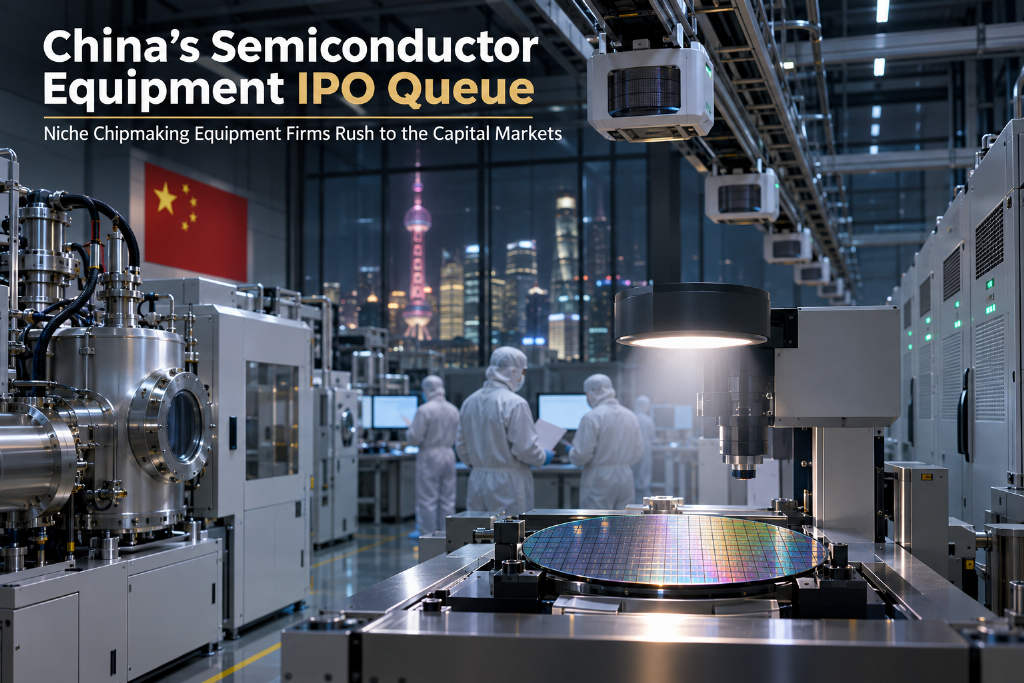
China’s semiconductor equipment IPO queue shifts toward niche suppliers and component makers

China’s semiconductor equipment financing cycle has accelerated this year, with nearly 20 equipment-related companies already on an IPO track for 2026 when filings, approvals, and tutoring progress are counted together. The lineup looks very different from the 2019-2022 wave led by major front-end tool makers in etch, deposition, cleaning, coating and CMP. This time, many candidates are concentrated in narrower but harder segments such as metrology and inspection, ion implantation, automated material handling systems, RF power supplies, precision motion platforms, and other core subsystems. The article says the shift reflects a change in where localization pressure now sits. Large equipment categories have already reached double-digit domestic penetration and their leading names have largely completed listings. What remains are lower-penetration bottlenecks. At the same time, many whole-tool makers in the new queue are still loss-making. Under STAR Market listing standards tied to expected market value and revenue, losses no longer automatically block an IPO, but fundraising use of proceeds faces close scrutiny. The piece also highlights repeat applicants returning after earlier setbacks, and notes that state-backed capital and downstream industrial investors are increasingly appearing on shareholder registers, with supply-chain security becoming a central investment logic.

100
China’s semiconductor equipment IPO queue shifts toward niche suppliers and component makers
Name.com
1 days ago

Name.com-linked domain hijack hit DeFi front ends as root cause remains unresolved

A wave of malicious redirects tied to domains registered through Name.com hit several DeFi front ends late Friday, with the apparent goal of gaining access to visitors’ crypto wallets. Name.com said Saturday that a number of domains on its platform had been improperly redirected and were later restored, but it did not explain how the attackers gained control or identify the affected domains. Vercel, one of the companies pulled into the incident, described the episode as a takeover campaign targeting crypto firms and said 10 affected domains were associated with its platform. Several projects publicly confirmed impact, including Flap, Kintsu, and Origami Finance. Origami said its smart contracts and vault funds were unaffected, but paused its vaults and urged users who connected wallets or signed transactions on its site after midnight UTC on Oct. 31 to revoke unfamiliar approvals. Blockaid said nine additional sites were actively serving the Step Drainer. Public registry checks reviewed by Unchained showed 12 named domains were all registered at Name.com and all reflected changes dated Oct. 31. Responsibility remains disputed, with project teams, Vercel, and independent researcher punkquidity offering differing views on whether the issue originated at Name.com, a reseller, or Vercel-linked nameservers.

110
Name.com-linked domain hijack hit DeFi front ends as root cause remains unresolved
UBS
1 days ago

UBS strategist says markets are underestimating the length of the AI cycle

According to Bloomberg, Gerry Fowler, UBS’s chief European equity strategist and head of derivatives, said investors are pricing the AI cycle too conservatively and that the AI trade remains intact. He pointed to hyperscale cloud companies now trading at valuation multiples below 20x while still delivering annual revenue growth of 10% to 20%, a mix he said shows how pessimistic expectations have become and why some investors are willing to buy AI-linked assets again. Fowler said the heavy spending tied to AI may be nearing the point where returns begin to show up more clearly. In his view, 2027 could mark a turning point as data center deliveries help clear backlogs and revenue starts to catch up with capital expenditure. He also said cash has not left the market but has shifted toward suppliers such as memory chip makers, some of which are beginning to return cash to investors. Looking ahead, Fowler said he is paying closer attention to global and European industrial companies involved in building new factories, while also noting that ASML is benefiting through equipment sales to expanding memory manufacturers including Samsung Electronics and SK Hynix.

100
UBS strategist says markets are underestimating the length of the AI cycle
Brazil
1 days ago

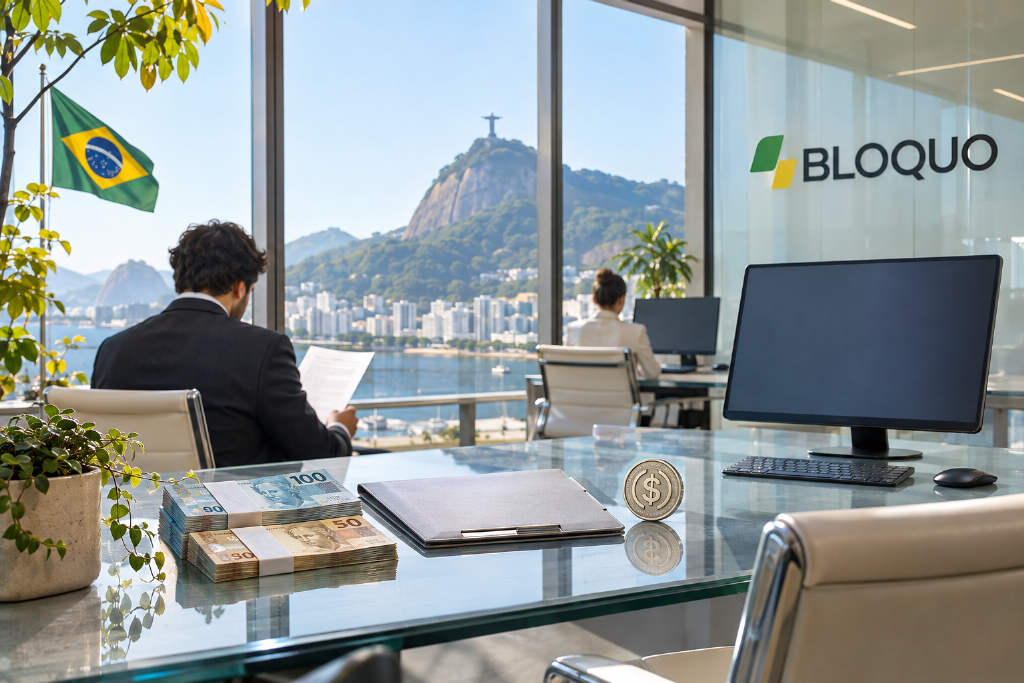
Brazil stablecoin payments infrastructure firm Bloquo raises about $3.72 million

Brazilian stablecoin payments infrastructure company Bloquo has raised about $3.72 million, or 20 million Brazilian reais, according to a report by Valor Econômico cited by ChainCatcher. The round was led by Crescera Capital and Triaxis Capital. The company said the new capital will be used to strengthen regulatory compliance and its technology architecture, while also supporting an expansion of the platform’s business operations. The funding comes as Bloquo positions itself as an infrastructure provider built around stablecoin-based financial services. Founded in 2025 and headquartered in Rio de Janeiro, Brazil, Bloquo operates a stablecoin infrastructure platform focused on cross-border payments, foreign exchange, and trade finance. The report did not disclose additional terms of the financing.

160
Brazil stablecoin payments infrastructure firm Bloquo raises about $3.72 million
Total 497 items
Go topage