AI supply cha2026-09-03 04:26:43Citrini Analyst: AI Supply Chain 'Bottleneck Trade' Is Over, Capital Rotation BeginsCitrini analyst Jukan stated that the 'bottleneck trade' in the AI supply chain has ended, with all major bottlenecks identified. Future investments will shift to capital rotation among known bottlenecks rather than discovering new opportunities, signaling a maturing market.920
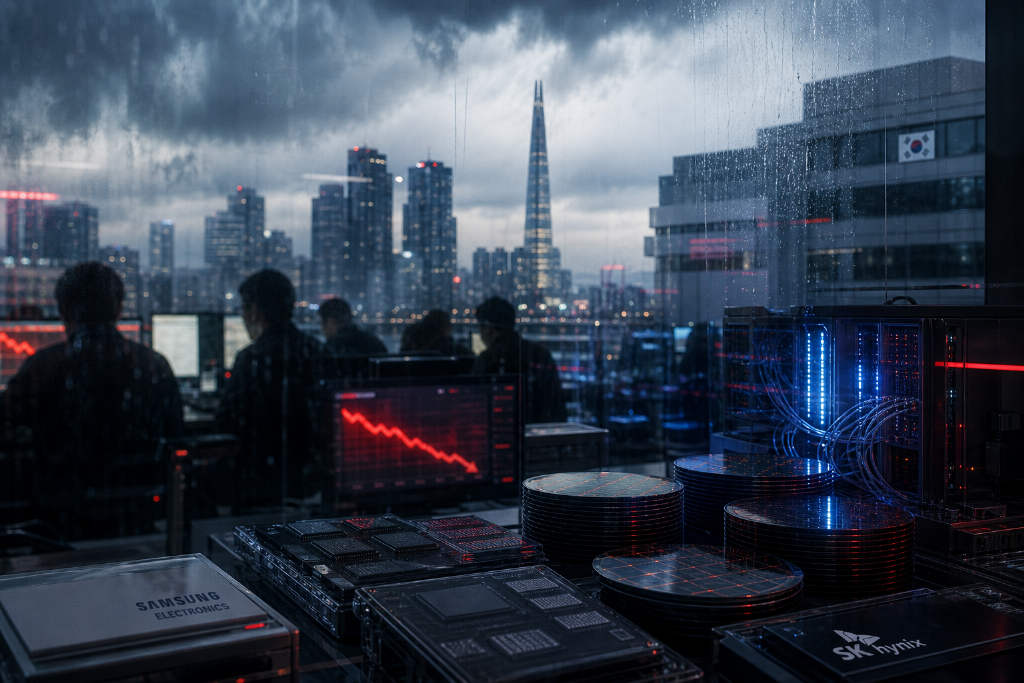
AI supply cha2026-08-19 03:30:45AI Stocks Tumble Across Markets as Higher Treasury Yields, OpenAI Growth Concerns and Korea-US Chip Tensions Hit SentimentAI-linked stocks sold off sharply overnight in the US, with the Nasdaq Composite closing down 1.33% and the Philadelphia Semiconductor Index falling nearly 5%, before the weakness spread into Asia-Pacific markets and China A-shares. In the article, author Gelong attributes the move to three overlapping pressures rather than a single trigger. First, rising tension between the US and Iran lifted oil prices and inflation expectations, pushing long-dated US Treasury yields higher and weighing on richly valued growth sectors. Second, newly disclosed second-quarter figures for OpenAI showed quarterly revenue growth of only 18% from the prior quarter, alongside widening operating losses and continued executive departures, raising fresh questions about the pace of large-model commercialization. Third, continued friction between South Korea and the US over semiconductor investment plans added uncertainty to the global memory supply chain, especially the HBM segment that sits at the center of AI computing infrastructure. The article argues that while the long-term need for AI compute remains intact, investors are becoming less willing to pay extreme premiums for distant growth stories and are shifting their focus toward actual earnings, financing costs and the direction of global supply-chain negotiations.540
AI supply cha2026-08-16 05:01:46Serenity says the AI supply chain is still in a high-growth phase, with storage and packaging in focusSerenity, known online as the "white-haired stock god," said on X that the AI infrastructure buildout is still driving a long expansion cycle across several parts of the supply chain, including storage, advanced packaging, compute financing, optical communications, power systems, and electronic components. In the storage segment, Serenity cited a UBS forecast saying gross margin at traditional DRAM makers such as Micron could reach an unprecedented 95% by 2027, potentially topping margins seen in HBM products. Serenity also pointed to SanDisk, saying long-term agreements already cover about two-thirds of its 2028 capacity, with minimum contracted revenue of $93 billion, against a current market capitalization of about $239 billion. On cloud infrastructure, CoreWeave has signed an agreement to keep using Nvidia A100 GPUs through 2029, which Serenity said supports newer cloud companies such as Nebius and Iren while weakening bearish arguments around rapid depreciation of older GPUs. Serenity added that growth at frontier AI labs remains extremely fast, with market expectations that Anthropic could generate $190 billion to $200 billion in revenue by 2028. At the same time, advanced packaging and semiconductor infrastructure remain major bottlenecks, with a TSMC advanced packaging executive warning that the industry could face both memory shortages and tight ABF substrate supply in the coming years.1460
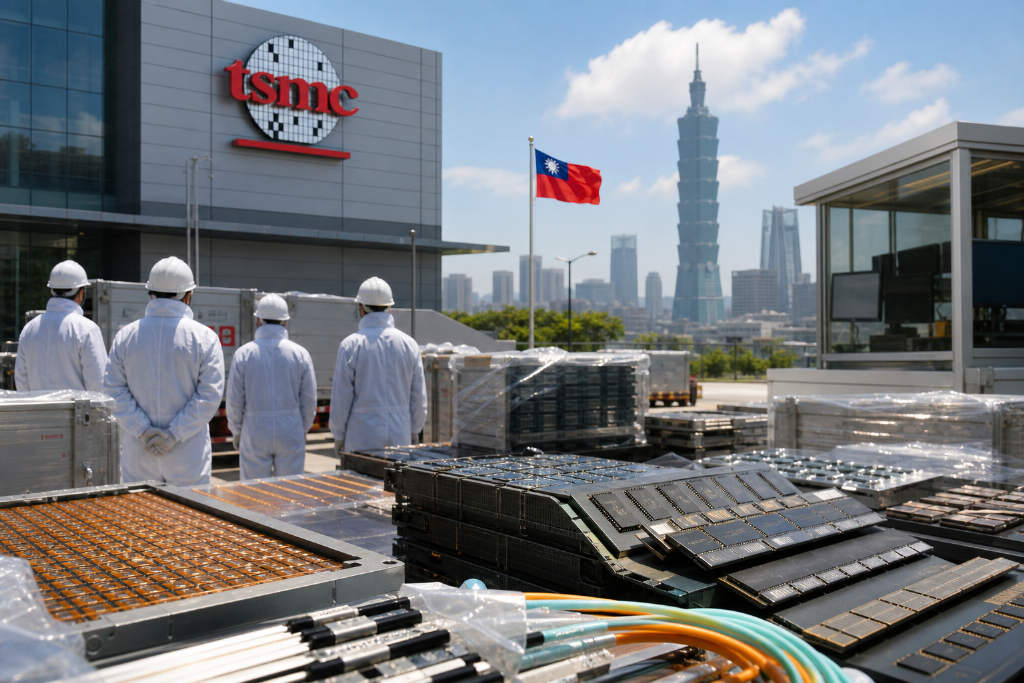
Nvidia2026-08-14 00:00:08Private funds cut Nvidia in Q2 while adding TSMC and memory namesGao Yi Asset’s latest U.S. equity filing for the end of the second quarter has drawn attention to a broader shift in positioning across artificial intelligence-related stocks. According to statistics cited from Simuwang, Gao Yi’s offshore fund held 19 U.S. stock names at quarter-end, with a total market value of about $979 million, or roughly RMB 6.6 billion. The biggest move was a sharp increase in Taiwan Semiconductor Manufacturing Co. (TSMC), which was raised from Gao Yi’s third-largest holding to its top position at $238 million, accounting for about 24% of total U.S. holdings. The filing also showed notable additions to Kanzhun, operator of Boss Zhipin, and Trip.com, with share counts up 175% and 53%, respectively. In memory, Gao Yi lifted its Micron position by more than 283% and its SanDisk stake by about 192%, while Dongfang Harbor’s offshore fund also initiated a new SanDisk position worth more than $200 million at quarter-end. At the same time, several private funds moved the other way on Nvidia. Gao Yi cut its Nvidia stake by more than 70%, Jinglin Asset exited completely, and Dongfang Harbor reduced its holding by about 15.7%. The article argues this does not amount to a rejection of the AI theme. Instead, it reflects a shift from expectation-driven pricing toward earnings and cash-flow delivery, with funds rotating from crowded AI design names into manufacturing and memory segments seen as tighter bottlenecks in the supply chain.560
Norway sovere2026-08-13 00:53:01Norway wealth fund lifts Taiwan stock holdings to $61.9 billion as TSMC stays a top global positionNorway’s sovereign wealth fund reported total assets of $2.34 trillion for the first half of 2026, with a 9.4% investment return and profit of $184.9 billion. The fund’s Taiwan equity holdings rose 50.7% to $61.914 billion, or roughly NT$2 trillion, increasing Taiwan’s share in its global equity portfolio to 3.68%. TSMC remained the fund’s fifth-largest holding worldwide at $33.525 billion and was the only non-U.S. company among its top five positions, accounting for 1.7% of total assets. In Taiwan, the top five positions were TSMC, MediaTek, Delta Electronics, Hon Hai and Yageo. MediaTek climbed to the No. 2 Taiwan holding at $3.183 billion, while Yageo’s position value jumped 426% to $1.12 billion, moving from 18th at the end of the prior year to fifth. The fund held 333 Taiwan-listed stocks as of June 30, 2026. First-half portfolio changes included 14 additions and 20 removals. New positions were concentrated in AI server-related supply chains, including passive components, optical communications, PCB and semiconductor testing materials, memory, connectors and thermal modules. Stocks removed from the portfolio included names tied to autos, precision machinery, aerospace, green energy and energy storage, reflecting a sharper focus on AI-linked technology segments.1790
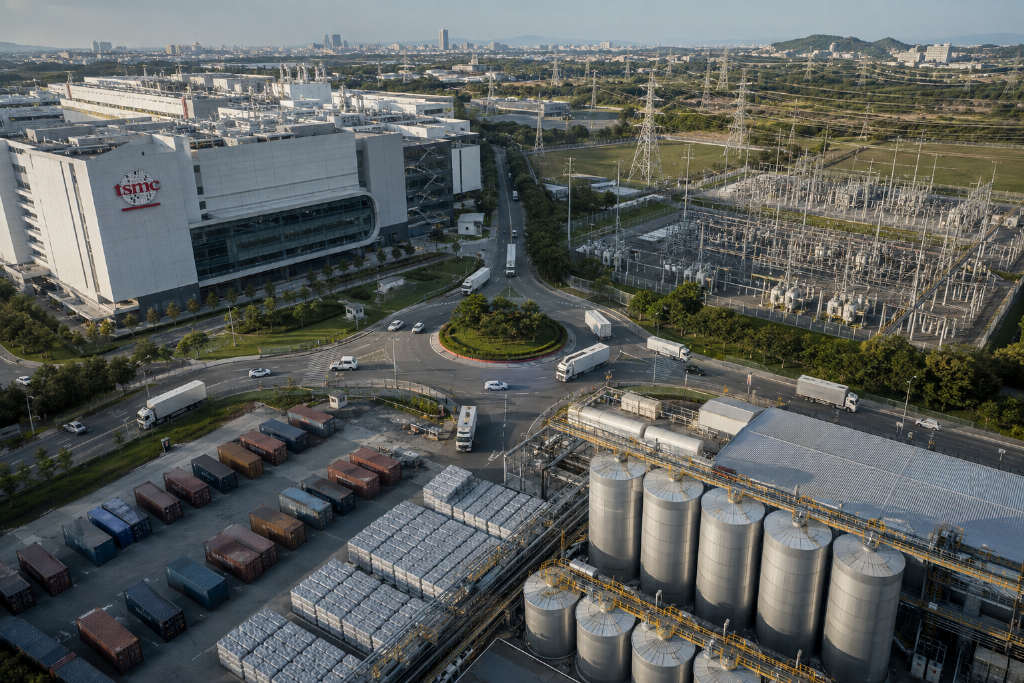
TSMC2026-08-12 03:47:27TSMC says 5.5x reticle CoWoS is in mass production, flags ABF substrates as next constraintTaiwan Semiconductor Manufacturing Co. said its 5.5x reticle-size CoWoS packaging has entered mass production, with yields holding above 98% and some products topping 99%, according to comments made publicly on Aug. 11 by Vice President of Advanced Packaging Ho Chyun. He said the company aims to scale CoWoS to 14x reticle size by 2029, while also pushing SoIC hybrid bonding from a 6-micron pitch already in production to 4.5 microns by the same year. Ho said TSMC’s CoWoS capacity has nearly doubled every year over the past three years and that the company now operates 10 advanced packaging fabs globally. Supply is now much closer to customer demand, he said, though it still has not fully caught up. He also pointed to a new supply-chain strain for AI hardware. After memory, ABF substrates are likely to become the next major bottleneck, he said. In his view, multisourcing does not fully solve the problem because substrate differences across suppliers can complicate coplanarity control and hurt yields during system integration. Ho also called for broader industry coordination through the Open Compute Project to build system-level validation standards and speed AI product development and ramp-up.1570
Bernstein2026-07-27 12:00:00Bernstein says $700 billion in AI tie-ups is really about locking memory and packagingBernstein’s July 27 note argues that the most important takeaway from two headline-grabbing AI supply-chain announcements is not another wave of GPU demand, but an earlier and broader scramble for memory and advanced packaging. On July 24, SK Group and Nvidia said they would expand a comprehensive partnership worth more than $500 billion, spanning AI factory infrastructure and next-generation memory. Samsung Electronics then signed an MOU with Broadcom covering more than $200 billion of cooperation through 2030 in memory and foundry work. Bernstein says those figures should be read carefully. The SK Group number is not a standalone memory purchase contract for SK hynix, while the Samsung-Broadcom figure remains an MOU rather than a final order book. Neither announcement disclosed actual purchase volumes, pricing, product mix or delivery schedules. The firm’s core point is that AI servers depend on much more than GPUs or ASICs. HBM, DRAM, NAND, advanced packaging and reliable delivery all sit on the critical path. If those pieces fall behind, chip shipments can also slow. The report keeps Outperform ratings on Samsung Electronics, SK hynix, Micron, Nvidia and Broadcom, with KIOXIA at Underperform, while stressing that execution, yield, customer qualification and capacity will determine whether these frameworks turn into real revenue.660
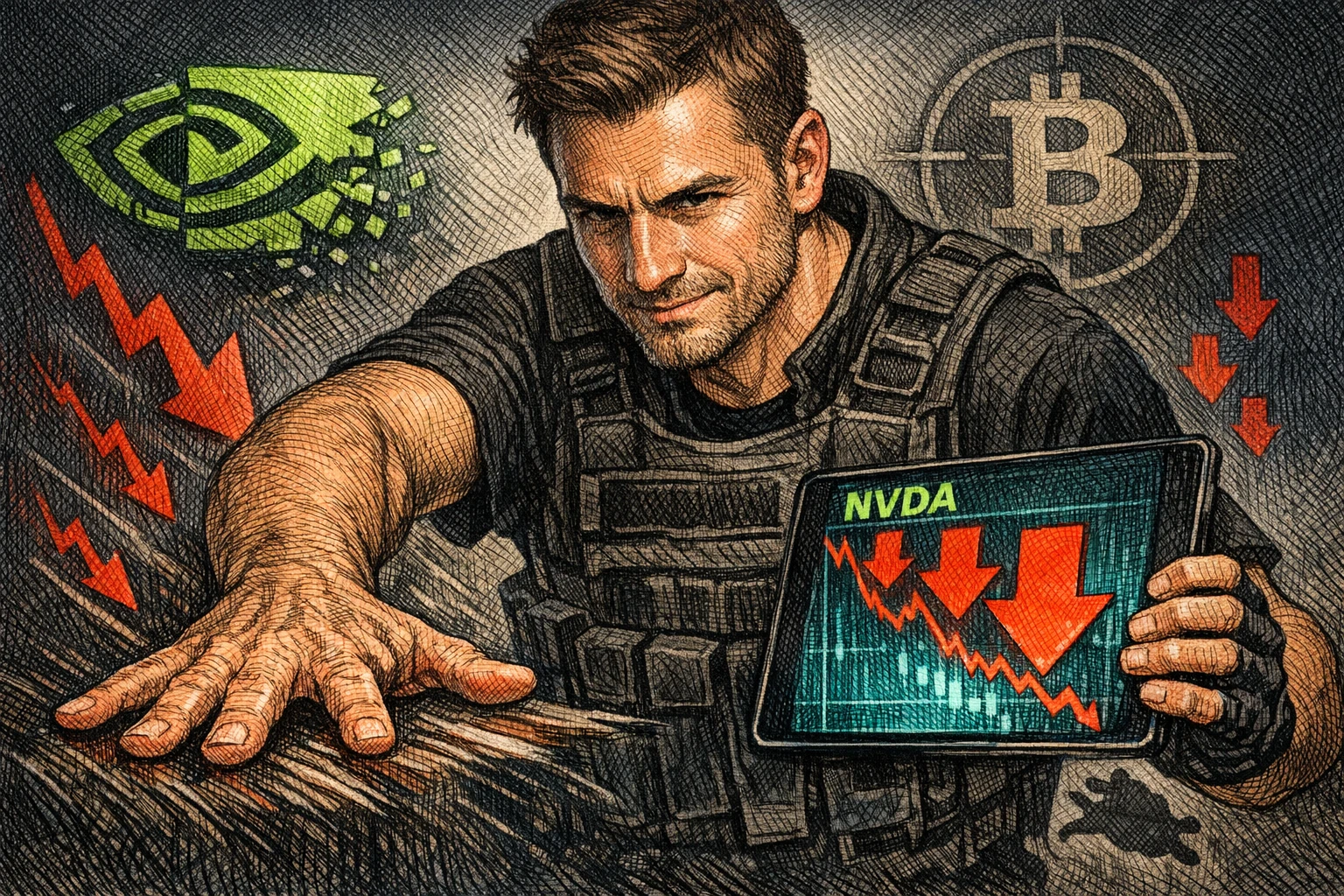
CBB2026-07-24 10:10:19Crypto Trader CBB Expands Nvidia Short, AI Supply Chain Bets Reach $30 MillionCrypto trader CBB has increased his Nvidia synthetic short on Hyperliquid to $18.6 million, with unrealized profit near $1.25 million. Including MU and SNDK positions, his total bearish exposure to the AI supply chain has reached $30 million.250