ATS

Robinhood
2026-08-19 02:14:48

Robinhood CEO Says Tokenization Is in Its Early Supercycle, Urges U.S. to Modernize Market Infrastructure

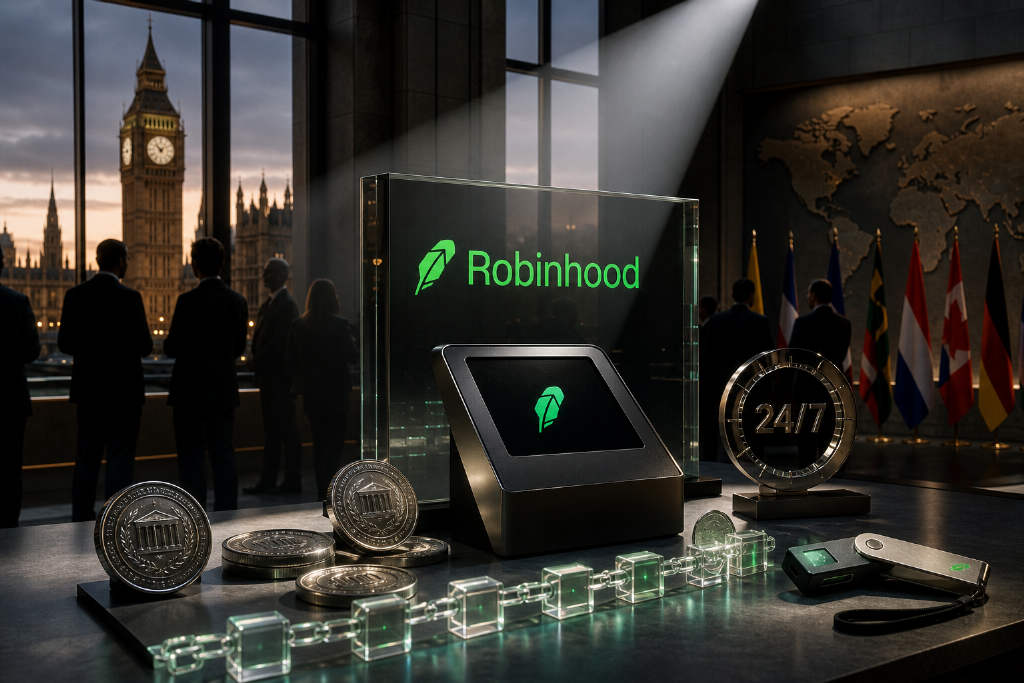
Robinhood CEO Vlad Tenev said tokenization is in the early stages of a global supercycle. In a public letter, he said Robinhood Chain went live more than a month ago as the first blockchain built specifically for real-world assets and has since become the fastest EVM chain to reach 100 million transactions. He said Robinhood’s Stock Tokens now give users in more than 120 countries and regions economic exposure to more than 190 U.S. stocks, each backed 1:1 by the underlying shares. Tenev argued that tokenized assets can improve market resilience through real-time settlement, enable native 24/7 trading, and make assets transferable and self-custodial. He also said U.S. securities rules need to be modernized so the country can adopt blockchain-based market infrastructure without sacrificing investor protection or market integrity.
290
Robinhood CEO Says Tokenization Is in Its Early Supercycle, Urges U.S. to Modernize Market Infrastructure
Nasdaq
2026-08-16 11:14:08

Nasdaq’s planned 23-hour trading day is aimed at Asia’s daytime flow, with ETFs at the center

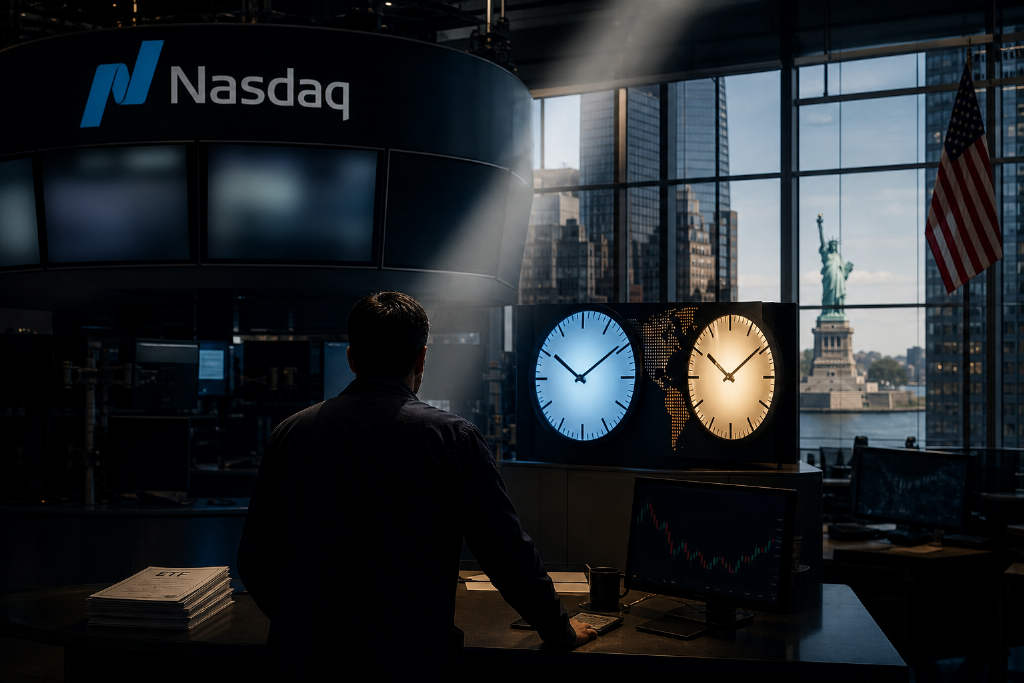
Nasdaq plans to launch 23-hour-a-day, five-day-a-week stock trading on Dec. 6, 2026, after the U.S. Securities and Exchange Commission approved the rule change for 23/5 trading. The rollout still depends on whether market infrastructure, including the Securities Information Processor, is ready and whether related operating rules are in place. The added session would run from 9 p.m. to 4 a.m. Eastern Time, covering daytime hours in Asia and allowing investors there to trade U.S. stocks without waiting for the New York open. According to the article, the change is less about letting U.S. investors trade longer and more about pulling order flow back from overnight ATS venues, broker internalization systems and rival exchanges. Nasdaq’s own overnight data show trading is highly concentrated: out of roughly 11,300 U.S. tickers, only 1,403 traded overnight, and just 644 saw more than $10,000 in daily turnover. The top 15 instruments made up about 53% of overnight volume, with 12 ETFs and only three single stocks. That pattern suggests overnight trading is centered on macro risk transfer and price discovery in broad market products and mega-cap names, not broad equity research. The article also argues that extending trading hours raises infrastructure, staffing, compliance and market-making costs, while faster prices do not automatically mean better prices in a thinner market.

490
Nasdaq’s planned 23-hour trading day is aimed at Asia’s daytime flow, with ETFs at the center
Tokenized Sto
2026-08-14 00:39:10

Tokenized Stocks Emerge as the Next RWA Battleground After Tokenized Treasuries Lose Momentum

Tokenized U.S. Treasuries helped turn tokenization into a major market theme, but growth in that segment has slowed after assets climbed from $701 million on Jan. 1, 2024 to more than $15 billion on April 17, 2026. As that market levels off, tokenized stocks are gaining speed. According to the source article, the segment grew from $291 million on Jan. 1, 2025 to about $1.9 billion over the following year and a half. The competition now spans nearly every part of the market. Web3-native firms such as Securitize, Ondo Global Markets and xStocks are expanding their offerings, while Robinhood and Coinbase are building stock token products of their own. Traditional market infrastructure operators including DTCC, the New York Stock Exchange and Nasdaq are also moving in the same direction. A central issue is structure. The article lays out the U.S. Securities and Exchange Commission’s framework for tokenized securities, separating issuer-sponsored, custodial, linked and security-based swap models. Those choices shape what users actually get: full shareholder rights, broader onchain transferability, access to DeFi, or tighter compliance controls. The result is not one tokenized stock market but several competing approaches, each with different trade-offs around regulation, liquidity and onchain utility.

1420
Tokenized Stocks Emerge as the Next RWA Battleground After Tokenized Treasuries Lose Momentum
Tokenized Sto
2026-08-13 23:52:08

Tokenized stocks gain traction as exchanges, fintechs and market infrastructure firms pursue different paths

Tokenized stocks are emerging as a new battleground in real-world assets as growth in tokenized U.S. Treasuries slows. According to the article cited by WuBlockchain, the tokenized stock market has expanded from $291 million on Jan. 1, 2025 to about $1.9 billion, a 6.5-fold increase in roughly a year and a half. The piece argues that nearly every major participant in U.S. capital markets is now studying or launching tokenized equity products, including Web3-native firms such as Securitize, Ondo and xStocks, broker and trading platforms like Robinhood and Coinbase, and infrastructure operators including DTCC, the New York Stock Exchange and Nasdaq. A central theme in the report is that tokenized stocks do not follow a single model. The U.S. Securities and Exchange Commission’s framework divides tokenized securities into issuer-sponsored structures, custodial structures, linked securities and security-based swaps. Those designs differ in key areas: whether token holders receive full shareholder rights, how much freedom the assets have onchain, how strict compliance controls are, and whether U.S. users can access the products. The article also details how each company is positioning itself within those trade-offs, and why regulation, settlement infrastructure and distribution rules will shape the next phase of competition.

870
Tokenized stocks gain traction as exchanges, fintechs and market infrastructure firms pursue different paths
AI security
2026-08-13 03:13:30

Study Says Major AI Reasoning Models’ Encrypted Thought Chains Can Be Decrypted

ABMedia, citing Decrypt, reported on a study submitted on Aug. 10 that found major weaknesses in how reasoning models from Anthropic, OpenAI and Google encrypt their internal thought chains. The researchers said the encrypted reasoning blocks could be reused across sessions, users and even models. They also said they decrypted 315,320 reasoning blocks from 6,708 public AI agent conversation logs. The paper was put forward by teams from MATS Research, ELLIS Tübingen, the Max Planck Institute for Intelligent Systems and security firm Snyk. The report said many developers publish AI agent logs on GitHub and Hugging Face for collaboration or debugging, while those logs may contain sensitive material hidden inside encrypted reasoning traces.

750
Study Says Major AI Reasoning Models’ Encrypted Thought Chains Can Be Decrypted
AI security
2026-08-13 00:14:20

Researchers say hidden reasoning traces from major AI models were once recoverable through smaller sibling models

A research team from MATS Research, the University of Tübingen, the Max Planck Institute for Intelligent Systems and other institutions says proprietary large language model APIs previously exposed a way to recover hidden reasoning traces without breaking encryption or compromising servers. In a paper titled “Stealing Reasoning Traces from Proprietary LLM APIs,” the authors describe how encrypted reasoning blobs returned by flagship models could be fed back into smaller models from the same vendor, which then reproduced the hidden content. The paper names three examples: Anthropic’s Claude Opus 4.8 with Haiku 4.5, OpenAI’s GPT-5.6 Sol with GPT-5.6 Luna, and Google’s Gemini 3.1 Pro with Gemini Robotics 1.6. The researchers also examined 6,708 public agent trajectories gathered from GitHub and Hugging Face and said they recovered 315,320 hidden reasoning segments, including API keys, passwords, personal email addresses, access tokens and private keys. The paper estimates that, at Haiku 4.5 pricing at the time, decoding 10,000 reasoning traces with 12,000-token input and output windows would carry a nominal cost of about $720. The team says it reported the issue to Anthropic, OpenAI, Google, Microsoft and Hugging Face through responsible disclosure, and that the original attack method could no longer be reproduced by the time the paper was released.

920
Researchers say hidden reasoning traces from major AI models were once recoverable through smaller sibling models
Bitcoin
2026-08-06 21:38:01

Bitcoin Treasury Models Are Starting to Split, Raising New Questions for Strategy

A market analysis from Unchained says the Bitcoin treasury trade is beginning to change shape as some pure-play public companies move away from accumulating BTC and crypto. VanEck head of digital assets research Matthew Sigel recently highlighted a list of firms that have abandoned those strategies, including Satsuma Technology, whose shareholders voted on July 21, 2026 to liquidate all 668 BTC, return capital to investors, and delist, with more than 90% approval. At the same time, Unchained points to the emergence of a cash-flow-based alternative. It cites Orange Juice, a proposed permanent capital company backed by a Bitcoin treasury and founded with names including Lyn Alden and Jeff Booth, as an early signal. About a week later, Tether-backed Twenty One Capital disclosed an executive shake-up and outlined a revised strategy that Unchained says closely resembled Orange Juice’s plan. Glenn Cameron, Global Head of Onramp Institutional, told Unchained that two successor models are emerging from the pure-play structure: Strategy’s credit model and a permanent capital model. The report frames the debate around which approach can hold up better and what rising competition could mean for MSTR.

1040
Bitcoin Treasury Models Are Starting to Split, Raising New Questions for Strategy
Coldcard
2026-08-05 11:34:27

Coldcard RNG flaw tied to four suspected attack waves as scrutiny grows over Bitcoin self-custody risks

A years-old randomness flaw in Coldcard hardware wallet firmware has come under intense scrutiny after several waves of suspicious Bitcoin sweeps were linked by researchers to seeds created under affected software versions. Investigations by Block and Coinkite traced the issue to a 2021 code migration that routed seed generation through a software pseudorandom number generator instead of the intended hardware RNG on some firmware paths, reducing the effective search space of wallet seeds below the design target. Galaxy Research said three suspected attack waves it identified covered 4,585 addresses and 1,367.05 BTC, and on Aug. 3 its researchers flagged a fourth wave that was later updated to about 448.7 BTC across 709 potential victim addresses. Those figures come from on-chain pattern analysis and are not a wallet-by-wallet confirmation of Coldcard victims or final losses. The incident has also reopened debate over custody models. Researchers and market observers pointed to higher address activity, movements from older UTXOs, and inflows to centralized venues after the disclosure, while cautioning that on-chain data alone cannot prove those moves were caused by the Coldcard bug. Coinkite has said users with affected seeds need to generate a new seed in patched firmware or another trusted environment and move funds, because updating firmware alone does not restore the missing entropy in an already created mnemonic.

1290
Coldcard RNG flaw tied to four suspected attack waves as scrutiny grows over Bitcoin self-custody risks