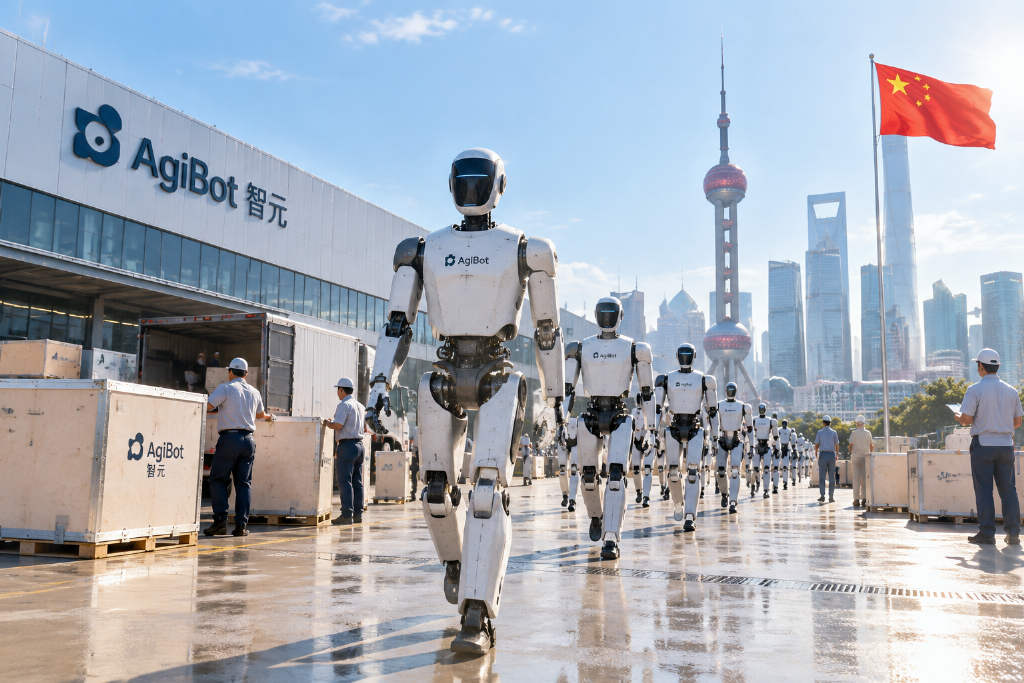
IDC2026-09-30 03:53:45IDC says global humanoid robot shipments neared 25,000 in the first half of 2026According to a Cailian Press report cited by ChainCatcher, International Data Corporation (IDC) said the global humanoid robot market kept expanding at a rapid pace in the first half of 2026. Shipments came close to 25,000 units, up 432.1% from a year earlier, as the industry moved faster from technical validation toward commercial deployment. China accounted for more than 19,000 units, or about 77.9% of the global market, while AgiBot shipped more than 8,600 units. IDC also projected that global humanoid robot shipments will exceed 750,000 units by 2030, pointing to a period of faster large-scale adoption.770
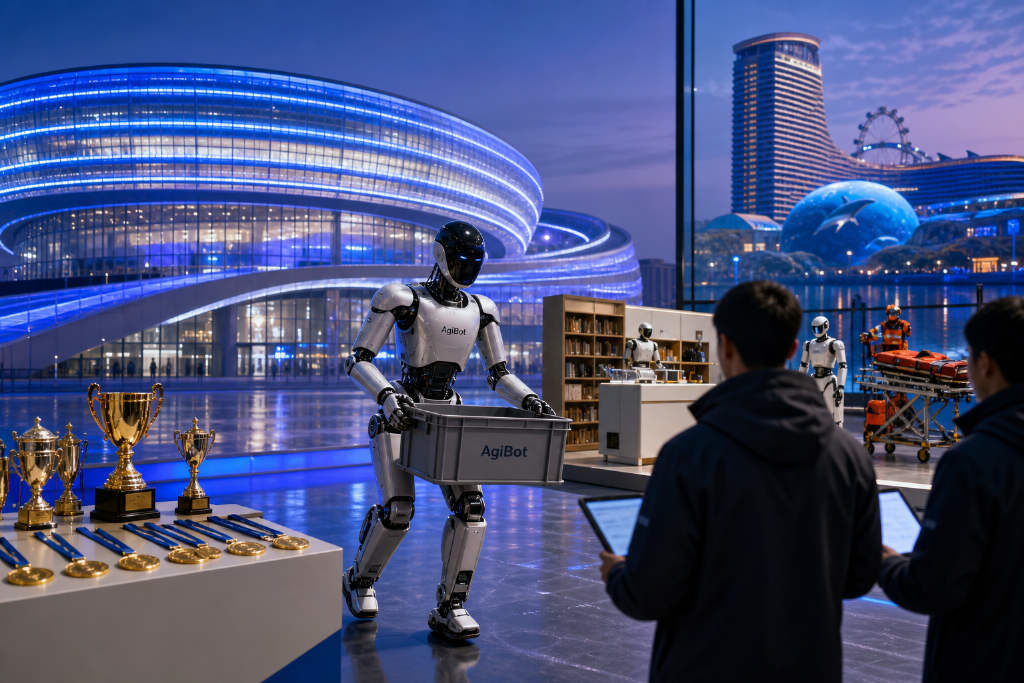
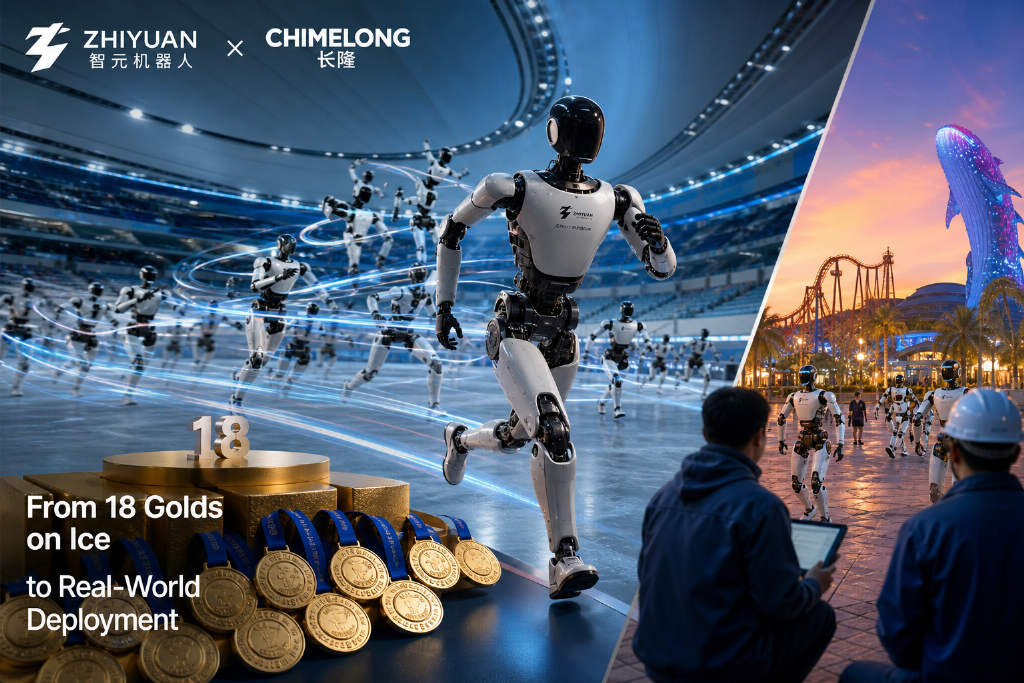
Agibot2026-08-31 09:34:08Agibot’s back-to-back robotics showcase points to a tougher contest: commercial deliveryAgibot spent the same weekend in two very different arenas: the Second World Humanoid Robot Games in Beijing and a commercial cooperation rollout at Chimelong in Hengqin. The contrast is central to the current humanoid robotics debate. Competition results still matter, and Agibot posted one of the strongest showings at the event with 18 gold medals and 46 total medals, topping both tables. But the industry is no longer judged only by how fast a robot can run, how well it balances, or how many difficult movements it can complete. This year’s games expanded from 26 to 51 events, with 21 newly added scenario-based competitions spanning emergency rescue, hotel service, library management, and home life. That shift moved the focus from motion display to task completion in less controlled environments. At almost the same time, Agibot appeared in Hengqin Chimelong, where the company and Chimelong agreed to work on four global projects, including a robot theme park and a robot service hotel, while also planning a joint lab for embodied AI in cultural tourism. The article argues that humanoid robotics is entering a stage where technical ceilings and commercial deployment must be proven together. In that framework, scale manufacturing is only part of the story. Long-term operation, maintenance, delivery, and stable performance in real settings are becoming the harder test.890
Agibot2026-08-29 02:45:11Agibot Fights on Two Fronts as It Tops a Humanoid Robot Meet and Enters ChimelongAgibot spent one weekend showing two very different sides of the humanoid robot business. On Aug. 22, the company appeared at Beijing’s Ice Ribbon during the second World Humanoid Robot Games, where it finished first on both the gold-medal table and overall medal table with 18 golds and 46 medals. The event itself expanded sharply from the inaugural edition, growing from 26 events to 51, from 280 teams to 666, from about 500 robots to 2,056, and from three days to five, with participants from 16 countries across six continents. The next day, Agibot turned up more than 2,000 kilometers away at Chimelong in Hengqin, shifting from competition to commercial deployment. Under the agreement announced by the two sides, their partnership will cover four global projects: an immersive robot theme park, a large robot circus show, a cyber-themed parade, and a robot service hotel. They also plan to build a joint embodied intelligence lab for the cultural tourism industry. Taken together, the two appearances point to a broader change in the sector. The market is no longer looking only at whether robots can run, jump, balance, or perform difficult movements. It is also asking whether a company can deliver robots into real operating environments, keep them working over time, and support them at scale. In that sense, competition in embodied AI is moving beyond single-product performance toward a test of full-stack delivery and systems capability.1080
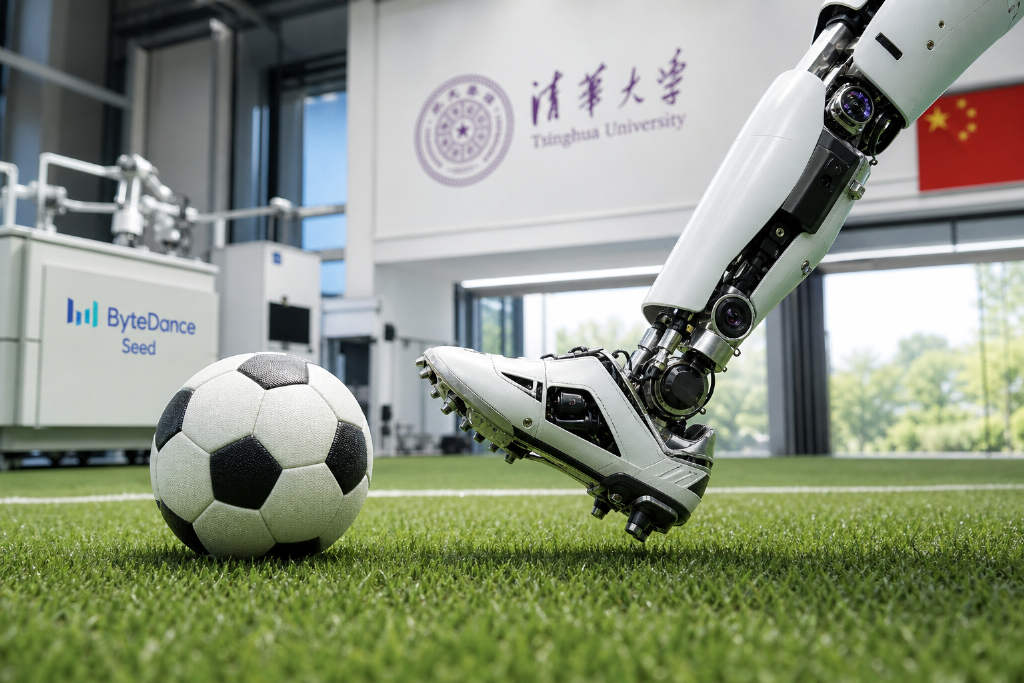
Science Robot2026-08-24 07:44:11Tsinghua team lands in Science Robotics after 22 years of robot soccer workA Tsinghua University team led by Professor Zhao Mingguo has published a paper in Science Robotics with ByteDance Seed and China Agricultural University on vision-driven reactive soccer skills for humanoid robots. The study uses an AgiBot humanoid platform for real-robot tests and covers ball finding, chasing, gait adjustment and multi-direction shooting. It also traces a 22-year line from the Tsinghua Vulcan robot soccer team, founded in 2004, to AgiBot’s current hardware platform and the team’s RoboCup work. The paper reports a unified perception-motion reinforcement learning framework, with visual sensing, state estimation, locomotion and physical contact trained together for a continuous soccer task. On the experiment side, the team says the robot can keep reacting when vision is briefly interrupted, and that it achieved stable results in both simulation and hardware tests. The article also notes AgiBot’s Booster T2 platform, unveiled in 2025, and its use in RoboCup and the Robot Competition opening ceremony in 2026.570
Agibot2026-08-03 11:45:08Agibot removes chief scientist Luo Jianlan from partner roster as departure speculation growsAgibot has removed Luo Jianlan from the partner team list on its official website, adding weight to online speculation that the company’s former chief scientist may have left. Luo had previously been listed as partner, senior vice president and chief scientist, and appeared on the company’s first publicly disclosed partner roster in September 2025 alongside Deng Taihua, Peng Zhihui and Yao Maoqing. Other public-facing changes have surfaced as well: Luo’s personal webpage now only identifies him as an assistant professor at the Shanghai Institute of Advanced Intelligence, while his X profile no longer includes Agibot-related titles. The timing has drawn attention because Zhiyuan Innovation said on July 24, 2026 that it had started the process for a Hong Kong listing. Agibot and Luo had not publicly announced any personnel change as of publication. Luo joined Agibot in April 2025 as chief scientist, led the creation of the company’s Embodied Intelligence Research Center, and later became a partner and senior vice president. His past work spans robot learning, real-world reinforcement learning and embodied intelligence, with prior research roles at UC Berkeley, Google X, BAIR, and projects including SERL and HIL-SERL.450