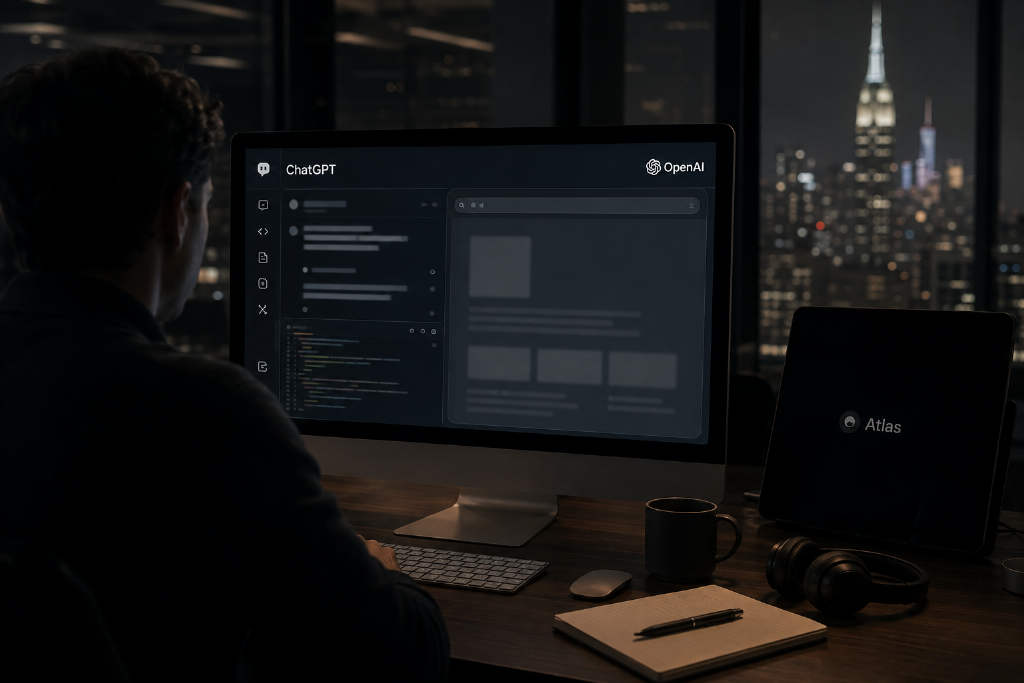
OpenAI2026-09-19 02:55:23ChatGPT desktop browser adds Chrome extension support, with 1Password shown in demoOpenAI has added Chrome extension support to the built-in browser inside the ChatGPT desktop app, allowing users to install, pin, and use extensions directly. The company’s demo featured 1Password, and enterprise administrators can also deploy and manage extensions across their organizations. The setup does not mirror a user’s existing Chrome environment, however. OpenAI’s documentation says the in-app browser runs separately, so it does not automatically inherit Chrome sign-ins, cookies, or previously installed extensions, which must be configured again inside ChatGPT. The browser now supports standard features including sign-in, tabs, downloads, and extensions. OpenAI engineer James Sun said the security boundary remains in place: Agent cannot directly operate extensions or read data stored inside them. In the 1Password example, a person can use the extension to fill in credentials, but ChatGPT cannot open the extension and retrieve passwords on its own. According to the report, the update is part of the ongoing integration of Atlas capabilities into ChatGPT after OpenAI said in July that Atlas would be shut down and its browser Agent functions moved to ChatGPT and Codex.340
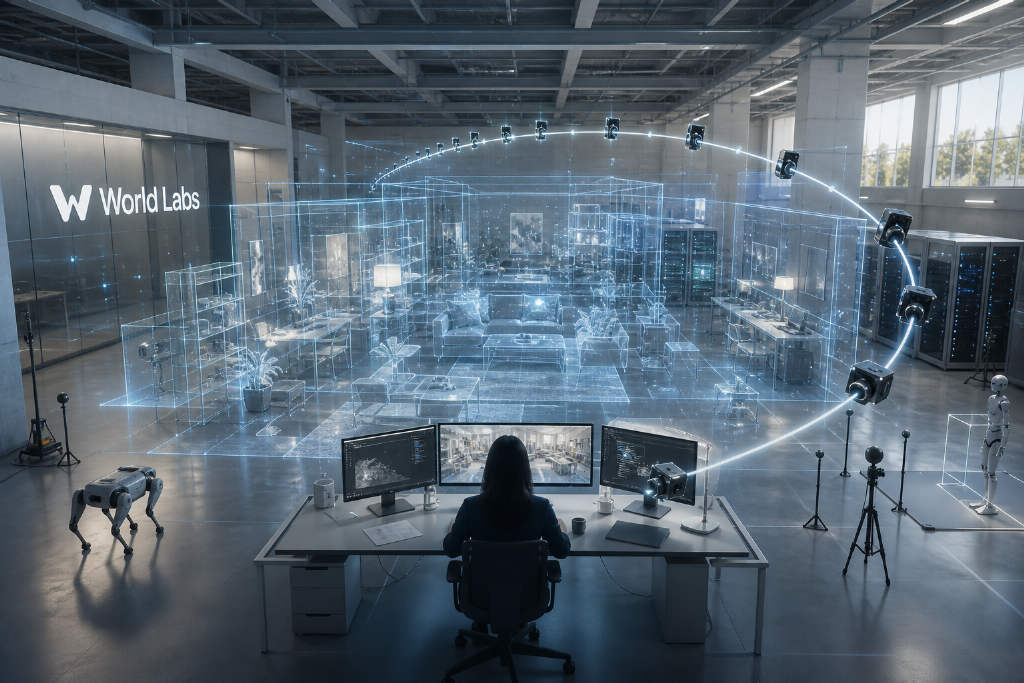
World Labs2026-09-05 10:53:04World Labs unveils Atlas, saying three iPhones are enough to create a Matrix-style bullet-time shotWorld Labs has introduced Atlas, its new world model built to handle generation, reconstruction and simulation in a single system. The company says the model can use as few as three cameras, or even three iPhones mounted on tripods, to recreate moving camera views around a scene in a way similar to the "bullet time" effect made famous by The Matrix. Unlike standard AI video models that infer a scene mainly from pixels and prompts, Atlas ties each image to a 3D camera pose, letting the model work with explicit spatial context and predict how the world should look from unseen viewpoints. World Labs positions Atlas as a step toward spatial intelligence by combining 3D reconstruction with generative AI. The team says this approach could sharply reduce the amount of visual data needed for scene capture, cutting some workflows from hundreds of photos to only a few images, and in other examples from roughly 2,000 photos to about 30 to 40. Beyond film, games and visual design, the company says Atlas could be useful in architecture, construction, exhibition design, industrial design and robotics, where lower-cost real-to-simulation workflows remain a major challenge.370
OpenAI2026-09-03 11:46:10OpenAI folds Atlas browser functions into ChatGPT desktop after shutting standalone appOpenAI has moved away from Atlas as a standalone browser and folded its web-browsing functions into the ChatGPT desktop app, according to a product timeline centered on executive Tibo Sottiaux’s recent public posts. Sottiaux wrote on X that ChatGPT desktop has become his primary browser and that his productivity has "never been higher," a remark that reflects a broader shift inside OpenAI’s desktop strategy. The sequence laid out in the source shows several key steps. On July 10, ChatGPT Work rolled out to all Pro users, with OpenAI pushing users toward a new desktop app for full access to apps, browser functions and local files. After complaints about the redesign, Sottiaux acknowledged on July 17 that the first version missed the mark and said OpenAI would restore sidebar history and projects, add sync between Chat and Work, and support dual desktop modes. On Aug. 9, Atlas was officially shut down, and the same day OpenAI released a new ChatGPT desktop version combining Chat, Work and Codex with a built-in browser. OpenAI’s help documentation said browser-based agent capabilities were being moved into ChatGPT and Codex. The result is not the end of browsing, but the end of the standalone AI browser form factor inside OpenAI. The company now appears to be pursuing both an isolated in-app browser and Chrome-based access through the Codex Chrome extension when existing logins, sessions or extensions are required.960
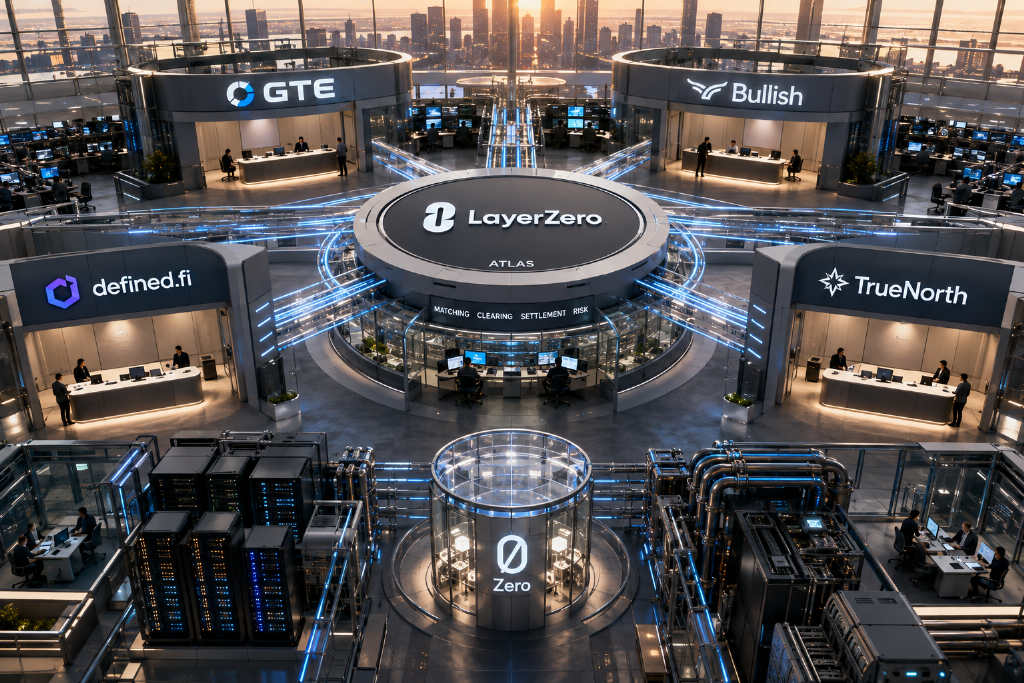
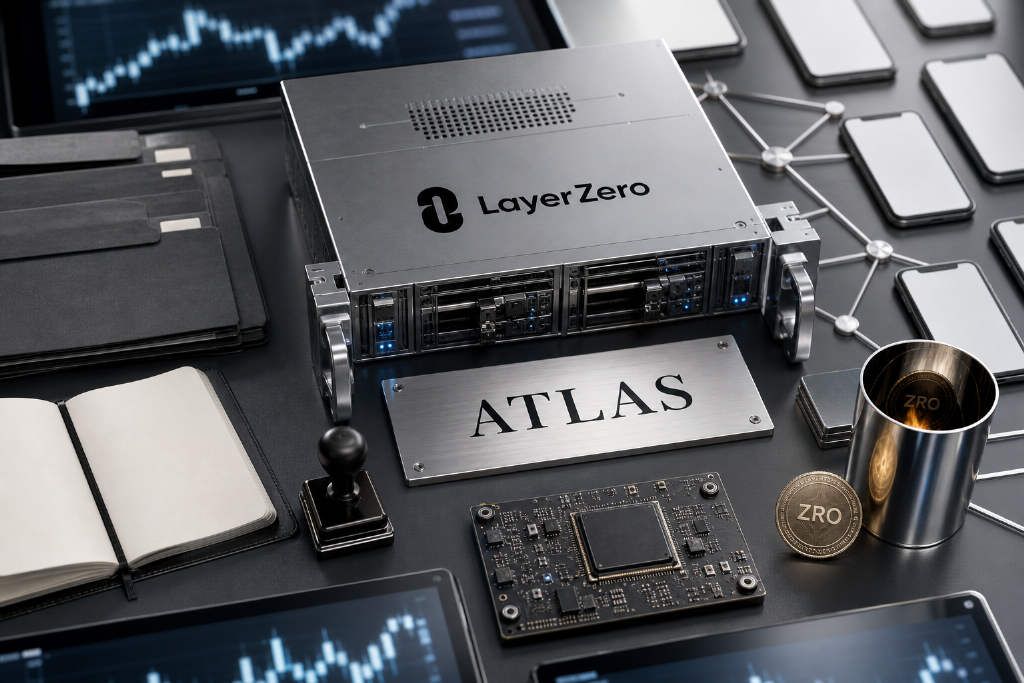
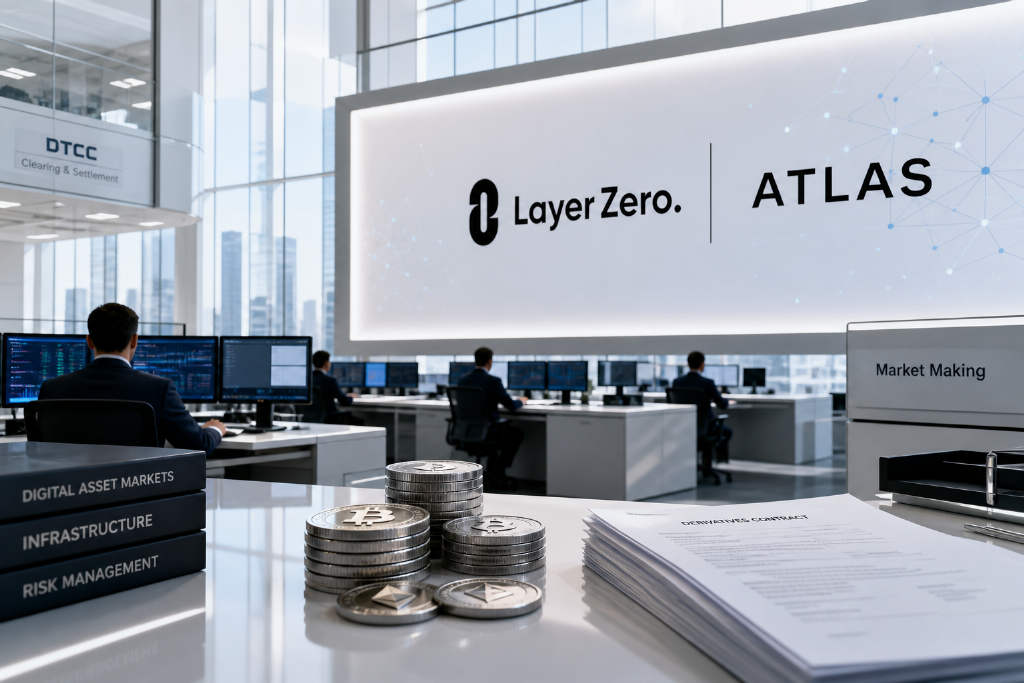
LayerZero2026-09-03 06:33:05LayerZero unveils ATLAS, a headless exchange engine that pushes trading venues to the front endLayerZero has introduced ATLAS, short for Aggregated Trading Liquidity and Settlement, as a headless exchange engine built on Zero. Announced on Aug. 25, 2026, the system is designed to take over matching, clearing, settlement, and risk management, while exchanges, brokers, wallets, and other venues keep the customer relationship and distribution layer. LayerZero said ATLAS is scheduled to launch later in 2026. The model also rewires fee distribution. Open ATLAS venues can receive rebates ranging from 20% to 65% based on a mix of ZRO staking and total trading volume. After those rebates, 25% of the remaining fees go to market creators and 75% is used to buy and burn ZRO. Based on the structure disclosed so far, Alea Research said ZRO’s effective capture of gross fees would range from 26.25% to 60%, depending on venue rebates. LayerZero said early Open ATLAS venues include GTE, Bullish, defined.fi, and TrueNorth. The company also reported a 965-microsecond median latency for perpetuals, with p95 latency of 1.418 milliseconds and p99 latency of 2.641 milliseconds in a simulated public deployment environment. ATLAS is set to be configured for 200,000 transactions per second at launch, with each trade verified on-chain through zero-knowledge proofs.710
World Labs2026-09-02 01:40:41Fei-Fei Li's World Labs Releases Atlas: A Few Photos Build a 3D WorldWorld Labs, the AI startup founded by Fei-Fei Li, has released Atlas, a multimodal world model it says is the first to precisely control camera movement while generating images and video and completing 3D reconstruction. The experience is similar to a panoramic drone, but Atlas does not require shooting every angle. Users input one or a few photos and draw a camera path; the model then fills in unseen walls, object backs, and surrounding space, letting a virtual camera fly along the route. It can generate up to one minute of 1440p video. Unlike ordinary video models, which keep generating pixels from text or images and usually handle camera movement through phrases such as "left pan" or "zoom in," Atlas directly reads the camera's position and angle in 3D space and produces depth plus a full 3D scene. The more input photos, the less the model has to imagine on its own. World Labs says this is why it calls Atlas a "world model": it is not just predicting the next frame, but tracking where the camera is, where objects are, and what another viewpoint should reveal. The company is also using Atlas to turn real spaces into simulated environments for robot training. At present, Atlas is open only to a select group of partners.830
LayerZero2026-08-31 18:13:42LayerZero says Zero blockchain architecture can scale to 5 million TPSLayerZero said its Zero blockchain architecture can now scale horizontally to 5 million transactions per second, marking a major technical claim tied to the team’s push into Layer 1 infrastructure. The architecture separates transaction execution from verification through zero-knowledge proofs and is paired with ATLAS, an exchange infrastructure product that has drawn support from institutions including Citadel Securities and DTCC. LayerZero was previously best known for its cross-chain messaging protocol, but the team said in February this year that it was shifting toward L1 development. According to the announcement, Zero uses a parallel design built around multiple Atomicity Zones, with a single zone capable of handling 2 million TPS. Tether’s USDt0 is already running on the infrastructure, and the cost per transaction is about $0.0001. The update was cited by Techub, which referenced CryptoBriefing.860
LayerZero2026-08-26 06:12:50LayerZero unveils ATLAS as an exchange backend for matching, settlement and risk controlsLayerZero on Aug. 25 introduced ATLAS, short for Aggregated Trading Liquidity and Settlement, as a headless exchange infrastructure stack rather than a retail-facing venue. The product is designed to sit behind trading platforms and handle matching, clearing, settlement and risk management, while partner venues keep control of the front end, branding, user relationships and distribution. The company said ATLAS will run on Zero, the blockchain LayerZero disclosed in February 2026, and published test figures showing sub-1 millisecond median latency, 1.418 milliseconds at P95 and 2.641 milliseconds at P99 in its current environment simulating public deployment. It said the system is planned to launch with capacity for 200,000 transactions per second. Under the fee model released for Open ATLAS, exchanges can receive rebates of 20% to 65% based on ZRO staking and total trading volume. After those rebates, 25% of the remaining fees would go to market creators and 75% would be used to buy back and burn ZRO. LayerZero named GTE, Bullish, Defined and TrueNorth as initial Open ATLAS partners, while saying the product is expected to launch later in 2026, with The Information reporting a target of fall 2026.670
LayerZero2026-08-25 13:02:00LayerZero Plans Institutional On-Chain Exchange ATLAS for Fall 2026LayerZero plans to launch ATLAS, a blockchain exchange aimed at financial institutions, in the fall of 2026, according to The Information. The company says the venue will not include a consumer-facing app and will be built on Zero, the blockchain LayerZero announced in February. ATLAS will initially support spot crypto assets and perpetual contracts, with plans to add prediction contracts, futures and options later. LayerZero also said Citadel Securities, DTCC and ICE, the parent of the New York Stock Exchange, are partners in Zero, and that top-tier market makers will provide liquidity on day one.1010