Box

Robinhood
2026-09-09 20:36:11

Tenev says Robinhood stock tokens should not automatically need issuer consent

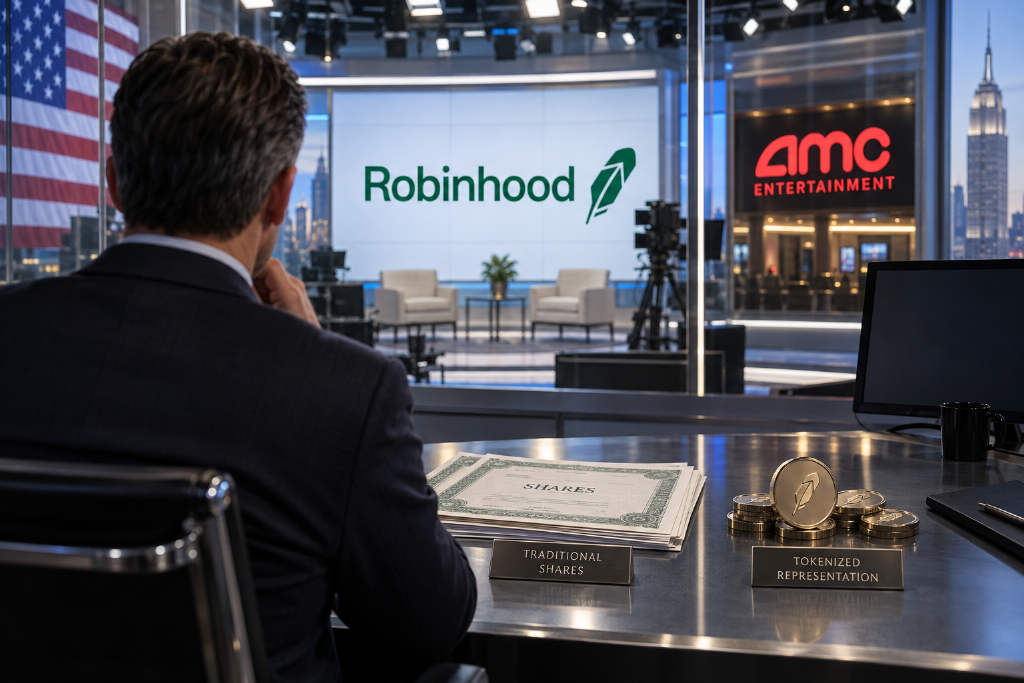
Robinhood CEO Vlad Tenev said the company’s stock tokens should not automatically require consent from the underlying issuer because they are separate tokenized securities issued by another entity and backed by the referenced shares. Speaking on CNBC’s Squawk Box on Sept. 9, Tenev drew a line between a tokenized product linked to AMC Entertainment stock and an actual AMC share placed onchain. He also acknowledged that holders of the tokens do not receive the voting rights attached to the underlying shares, while Robinhood has yet to say how those votes would be handled. The comments come as Robinhood faces criticism from AMC CEO Adam Aron, who argues that the structure disconnects token demand from AMC’s own capital-raising efforts and strips investors of shareholder rights. Product documents describe the instruments as tokenized debt securities issued by Robinhood Assets (Jersey) Limited, with each token backed one-for-one by corresponding shares held by a U.S. custodian. Robinhood’s disclosures also state the product is unavailable in the U.S. and to U.S. persons.
830
Tenev says Robinhood stock tokens should not automatically need issuer consent
Strive
2026-09-09 20:37:49

Joe Burnett says Trezor and BitBox email infrastructure may have been compromised

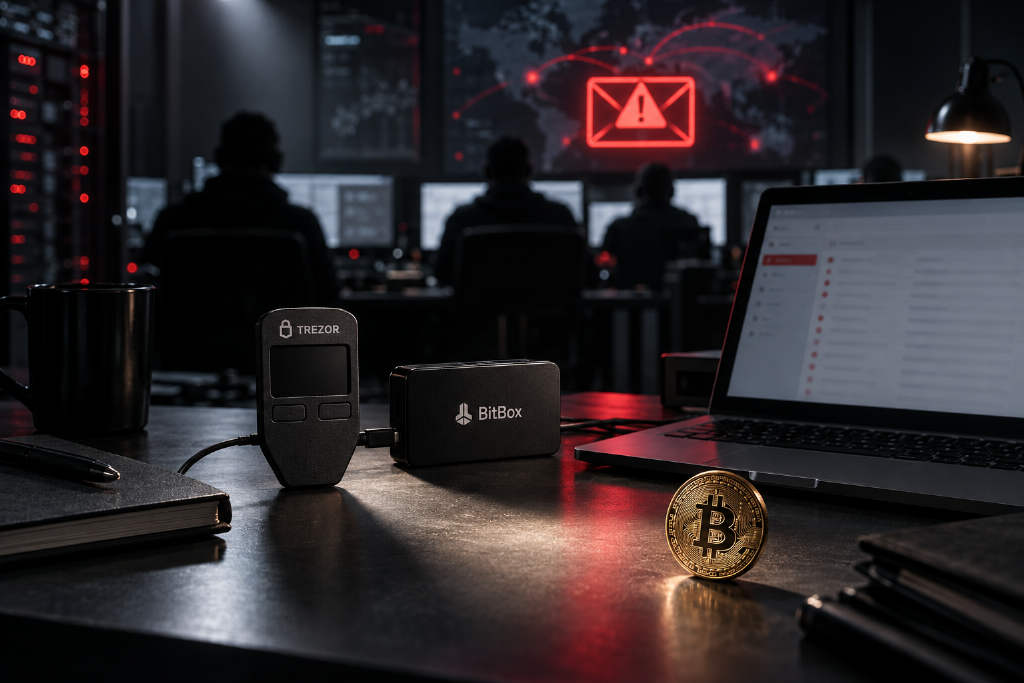
Joe Burnett, vice president at Strive, said in a post on X that the email infrastructure used by Trezor and BitBox appears to have been compromised. He also said Bitcoin remains in what he described as a strengthening phase. The update was published by ChainCatcher. The source text did not provide additional details on the suspected breach, its scope, or any response from the companies. No further technical information, timeline, or impact assessment was included in the original item. As presented, the report is limited to Burnett’s statement on X and his accompanying comment on Bitcoin’s current phase.

610
Joe Burnett says Trezor and BitBox email infrastructure may have been compromised
Bitcoin
2026-09-09 09:10:10

Bitcoin Stays Boxed Between $78,000 and $81,000 as $40.8 Billion in Options Open Interest Pins Price Action

Bitcoin briefly fell below $78,000 overnight, touched roughly $77,600, and then returned to trade near $79,000, with the market focusing on the $78,000-$81,000 range. The report says traders are treating the area around $78,300 as near-term support, while upside levels begin at $79,500 and then $81,000-$82,000. Options positioning is a major part of that range-bound setup: BTC options open interest stands at about $40.8 billion, with a large concentration around the $78,000 and $81,000 strikes. In the report’s framing, market makers tend to sell BTC as price approaches $81,000 and buy BTC as it nears $78,000, effectively keeping spot in a narrow band. Signals outside derivatives are mixed. Coin Bureau pointed to Bitcoin’s first golden cross since November 2025, with the 50-day moving average crossing above the 200-day moving average, while Benjamin Cowen said the more important test is whether BTC can print a higher high and reclaim the 50-week moving average. On-chain indicators remain more restrained. CryptoQuant said MVRV is approaching a key test at the 365-day moving average, and ARK Invest analyst David Puell said the market still needs a higher high and a higher low to confirm a true bottom. The report also cited Murphy’s research showing that long-term holders control about 14.74 million BTC, or roughly 74% of supply in circulation, a structure that may limit the chance of an extreme drop toward $30,000-$40,000 unless those holders start selling at scale.

1170
Bitcoin Stays Boxed Between $78,000 and $81,000 as $40.8 Billion in Options Open Interest Pins Price Action
Antioch
2026-09-09 09:22:25

Antioch raises $32 million Series A led by Greylock

Physical AI simulation company Antioch has raised $32 million in a Series A round led by Greylock, with participation from A* Capital, Category Ventures, BoxGroup, Icehouse Ventures, and angel investors. The company said artificial intelligence has already sped up software development, but physical autonomous systems are still constrained by slow and costly hardware development cycles. Antioch provides simulation tools for physical AI teams to build, test, and validate systems. Its customers and partners include Amazon Ring, NVIDIA Robotics, and Nebius. The company also said it is expanding quickly and hiring across simulation, infrastructure, machine learning, 3D graphics, go-to-market, and operations roles.

780
Antioch raises $32 million Series A led by Greylock
Bitcoin
2026-09-09 06:51:27

Singaporean defendant pleads guilty in $245 million Bitcoin theft case tied to RICO charges

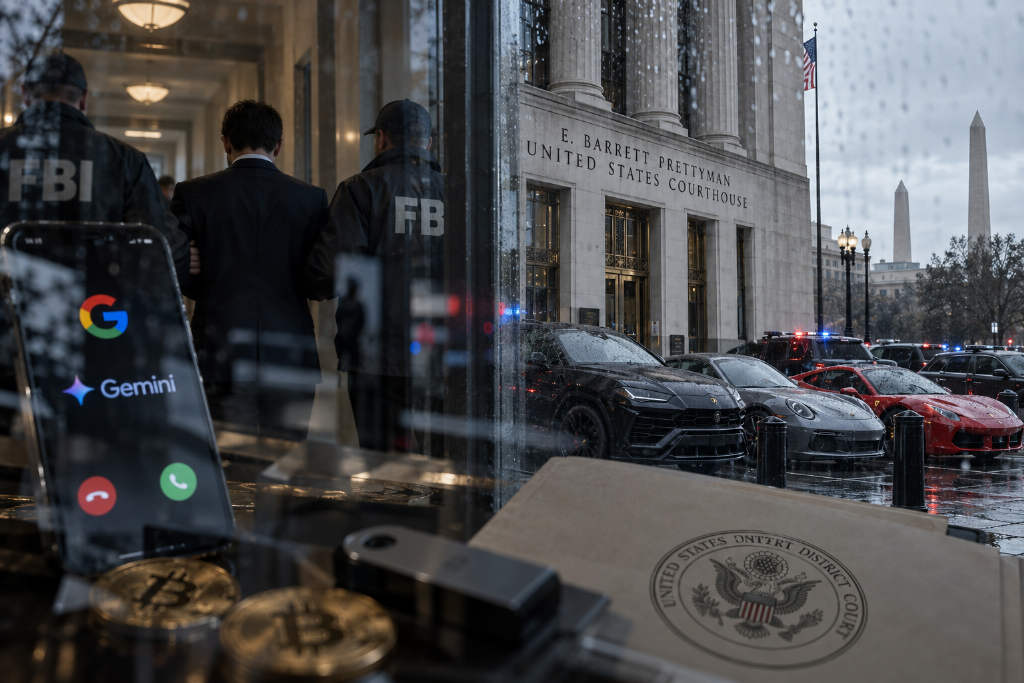
Malone Lam, a 22-year-old Singaporean national, pleaded guilty in federal court in Washington, D.C. to one count of RICO conspiracy in a case tied to the theft of 4,100 BTC from a long-dormant wallet. Prosecutors said the theft began on Aug. 18, 2024, when a Washington resident who had held Bitcoin since 2012 was tricked by callers posing as Google support and Gemini customer service. After the victim was persuaded to reset two-factor authentication and share his screen through AnyDesk, the attackers obtained the private key to a Bitcoin Core wallet and drained the funds. At the time, the stolen Bitcoin was valued at roughly $245 million to $263 million. The case quickly drew attention from on-chain investigator ZachXBT, who traced suspicious transfers on Aug. 19, 2024 and linked the movement of funds to a wallet that had been inactive for 12 years. The investigation later expanded from two initial defendants to 18 people, with the U.S. Department of Justice using the Racketeer Influenced and Corrupt Organizations Act, or RICO Act, to describe the group as a transnational criminal enterprise. Lam agreed to forfeit multiple luxury vehicles as part of his plea deal. A status hearing ahead of sentencing is scheduled for Dec. 8, 2026.

1140
Singaporean defendant pleads guilty in $245 million Bitcoin theft case tied to RICO charges
Robinhood Cha
2026-09-09 05:21:15

15 utility-focused protocols gaining traction on Robinhood Chain

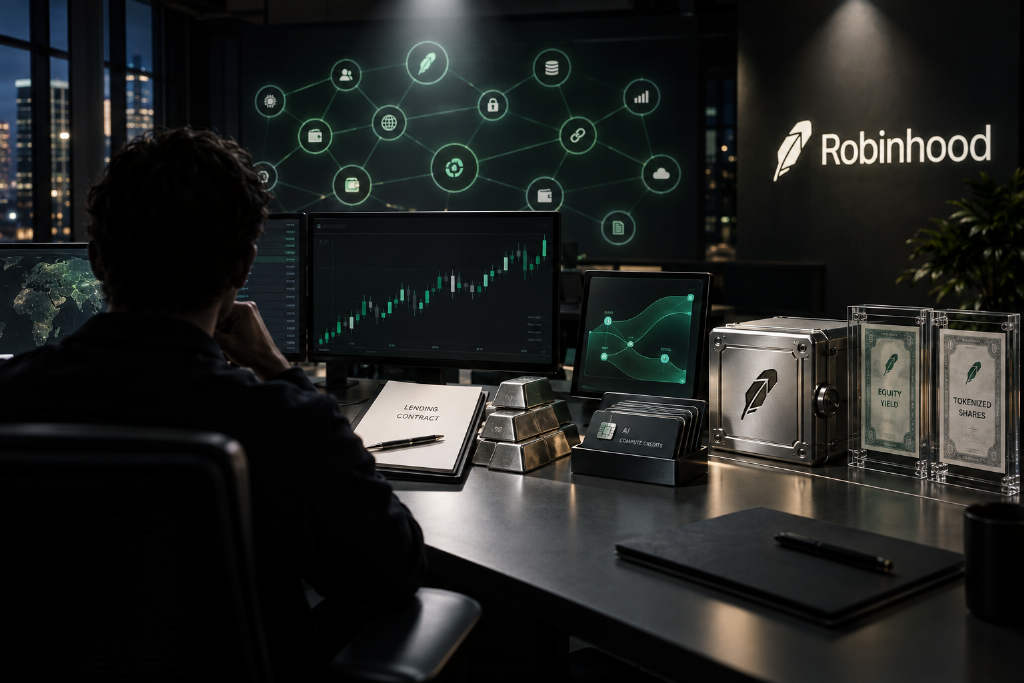
MarsBit has published a Robinhood Chain market analysis originally written by Emiri at blocmates and translated by TechFlow, focusing on 15 utility-oriented protocols that have appeared on the chain in recent weeks. The piece argues that, after a long stretch in which almost every rally was treated as another meme-coin cycle, a set of projects tied to lending, tokenized equities, trading infrastructure, programmable launchpads, AI credits and yield products is starting to draw attention. Before the main list, the article briefly mentions established names including PONS, AI, CASHCAT, Index, SLVR, Arcus and Rialto. It then walks through projects such as Longdotxyz, which pairs meme coins with tokenized stocks; Netnet, which adapts Olympus-style treasury mechanics into code-defined rules; Longbow, a collateralized lending market; and Twofold, which uses Uniswap V4 DualPool design to let the same capital earn lending yield and DEX fees. The analysis also covers Mancer, Quotron, Hookr, Fables, Statics, Arrow Finance, Shroom, Clutch Markets, Orbio, Earn and Pare. Across these protocols, the recurring themes are tokenized stock exposure, protocol-owned liquidity, fee sharing, NFT-linked financial rights and new ways to split, route or monetize onchain assets. The author says the review is based on public information and documents and is not investment advice.

1210
15 utility-focused protocols gaining traction on Robinhood Chain
livestream ca
2026-09-08 10:59:25

Livestream card unboxing turns cheap goods into a legal gambling-like business

Livestream card-unboxing rooms in China are drawing scrutiny for turning low-cost cards, badges and small trinkets into high-priced purchases built around suspense, probability and repeat spending. The report argues that the physical item is often not the real product. What viewers are paying for is a gambling-like thrill, packaged as normal retail and delivered through mechanics such as wish draws, spin wheels and stacking rewards. The business remains difficult to classify as illegal gambling because customers receive physical goods rather than cashable rewards. That legal distinction matters. The article contrasts card-unboxing streams with cases such as "Cyber Reward," where recharge, prize draw, discounted buyback and recharging formed a cash loop that led to criminal penalties. In livestream card sales, even if odds are manipulated, the transaction is usually framed as ordinary merchandise sales. At the same time, regulators are moving closer. Beijing’s consumer association has surveyed complaints around blind-box card streams, while market regulators in several cities have folded the practice into special enforcement campaigns. The broader industry backdrop is also shifting: China’s card and "guzi" merchandise economy expanded sharply in 2024, yet rising traffic-acquisition costs, weak brand moats and tighter oversight are raising questions about how durable the model really is.

830
Livestream card unboxing turns cheap goods into a legal gambling-like business
MoonPay
2026-09-08 10:27:26

MoonPay rolls out PayBox to bring crypto wallets and card payments into Claude, ChatGPT and Grok

MoonPay has launched PayBox, a payment vault designed for AI agents that lets users connect wallets and payment cards to assistants such as Claude, ChatGPT and, later, Grok. The product went live on July 29 at paybox.sh and is built to keep transactions inside the chat interface, so users can research, compare and authorize purchases without jumping to a separate checkout page. According to MoonPay CEO Ivan Soto-Wright, the goal is to let agents hold payment credentials and crypto wallets while preventing any single party from controlling private keys. PayBox supports both card and onchain transactions. MoonPay said agents can initiate card payments without seeing raw card numbers, while crypto wallets can be created or imported and funded either from an existing wallet or through card on-ramps after a one-time identity check. The product launched with support for Solana and several EVM-compatible networks, including Ethereum, Base, Arbitrum, Polygon, Hyperliquid, Tempo and Robinhood Chain. It also integrates x402, the machine-payment standard originally open-sourced by Coinbase and now governed by the Linux Foundation-backed x402 Foundation. MoonPay said PayBox reached 224,000 signups one day after launch, though that figure was disclosed by the company itself and has not been independently verified. The firm frames PayBox as a non-custodial system built on MPC and TEE infrastructure, partly inherited from its roughly $100 million all-stock acquisition of Israeli key-management company Sodot in April.

360
MoonPay rolls out PayBox to bring crypto wallets and card payments into Claude, ChatGPT and Grok