Box

semiconductor
2026-09-06 03:38:07

Taiwan semiconductor documentary Chip Odyssey begins free streaming on PTS Plus

Chip Odyssey: The Century’s Bet, a documentary by director Hsiao Chu-chen, is now available to watch for free on PTS Plus after user registration. The film took five years to complete and features interviews with more than 80 people, tracing how Taiwan’s semiconductor industry grew from an uncertain state-backed technology bet into a core part of today’s AI computing supply chain. The documentary revisits a key turning point in 1976, when the Industrial Technology Research Institute signed an integrated circuit technology transfer licensing agreement with RCA in the United States and sent a 19-member team of young engineers for training across facilities in New Jersey, Ohio, California and Florida. According to records cited in the report, the pilot factory established after their return reached a 70% yield within six months, above RCA’s 50%. The film also covers the 1980 transfer of wafer technology that led to the creation of United Microelectronics Corp., described in the report as Taiwan’s first semiconductor manufacturing company, before the later arrival of TSMC. Released in Taiwan on June 13, 2025, the documentary went on to pass NT$30 million at the box office in under three months and ranked among the top five highest-grossing documentaries in Taiwan.

790
Taiwan semiconductor documentary Chip Odyssey begins free streaming on PTS Plus
World Labs
2026-09-05 10:53:04

World Labs unveils Atlas, saying three iPhones are enough to create a Matrix-style bullet-time shot

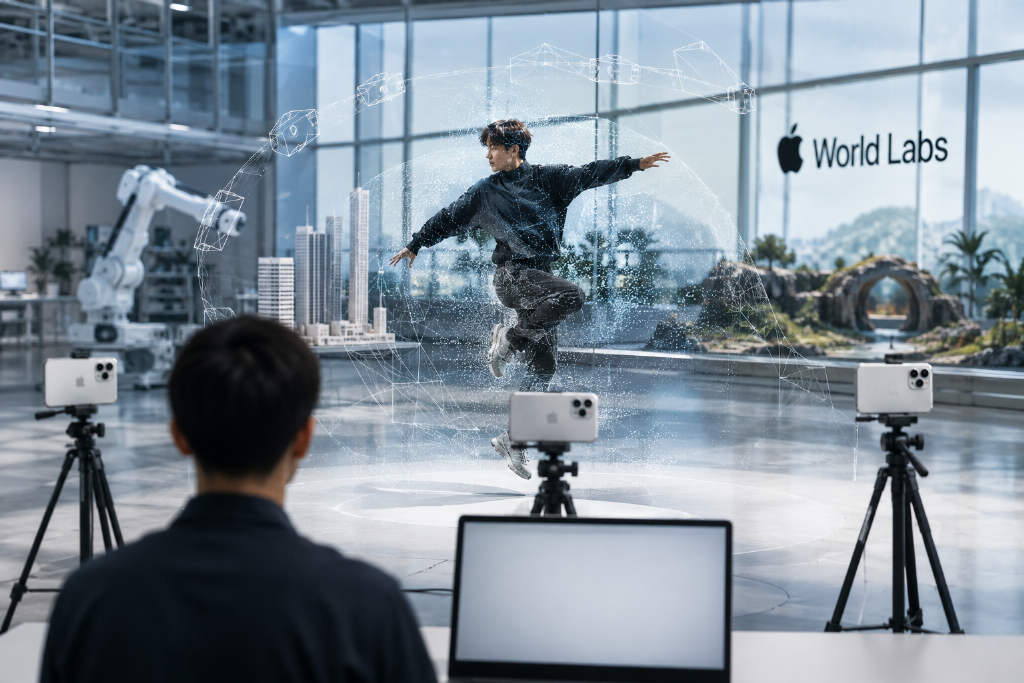
World Labs has introduced Atlas, its new world model built to handle generation, reconstruction and simulation in a single system. The company says the model can use as few as three cameras, or even three iPhones mounted on tripods, to recreate moving camera views around a scene in a way similar to the "bullet time" effect made famous by The Matrix. Unlike standard AI video models that infer a scene mainly from pixels and prompts, Atlas ties each image to a 3D camera pose, letting the model work with explicit spatial context and predict how the world should look from unseen viewpoints. World Labs positions Atlas as a step toward spatial intelligence by combining 3D reconstruction with generative AI. The team says this approach could sharply reduce the amount of visual data needed for scene capture, cutting some workflows from hundreds of photos to only a few images, and in other examples from roughly 2,000 photos to about 30 to 40. Beyond film, games and visual design, the company says Atlas could be useful in architecture, construction, exhibition design, industrial design and robotics, where lower-cost real-to-simulation workflows remain a major challenge.

260
World Labs unveils Atlas, saying three iPhones are enough to create a Matrix-style bullet-time shot
Steakhouse Fi
2026-09-04 14:35:36

Steakhouse Financial Bolsters Security for Morpho and Box Vaults

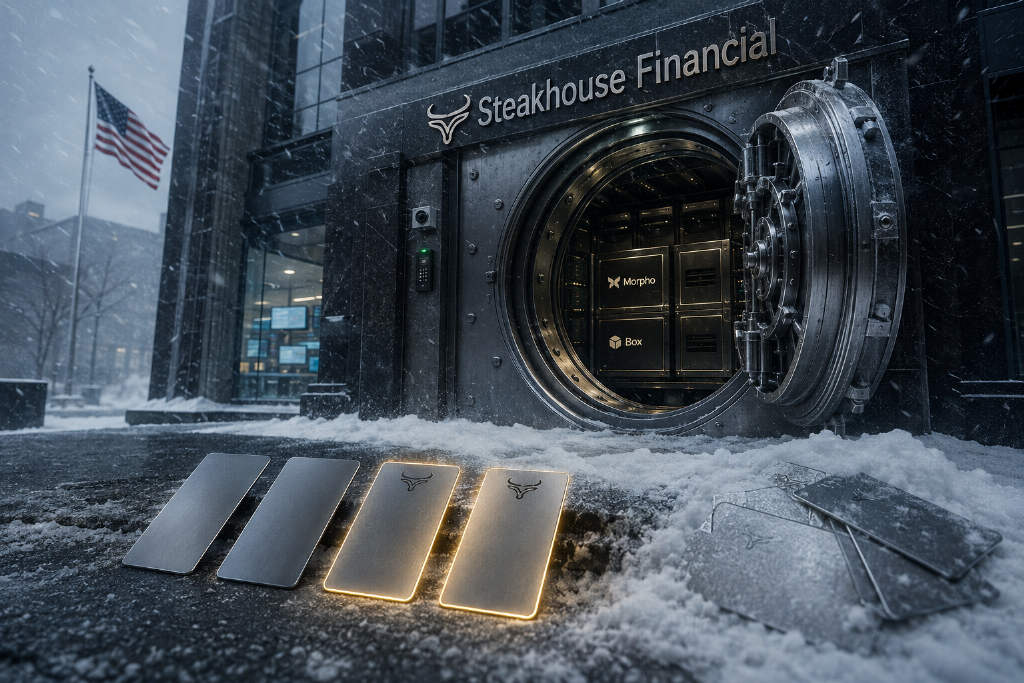
Steakhouse Financial announced planned OpSec enhancements for all Morpho and Box vaults, with no service interruption or risk exposure changes. Two new Allocators will be added from four candidate addresses, and deprecated ones may be removed. The operation is not subject to timelock.

680
Steakhouse Financial Bolsters Security for Morpho and Box Vaults
Cursor
2026-09-03 10:30:03

Cursor adds macOS sessions to Cloud Agents through Namespace Devboxes

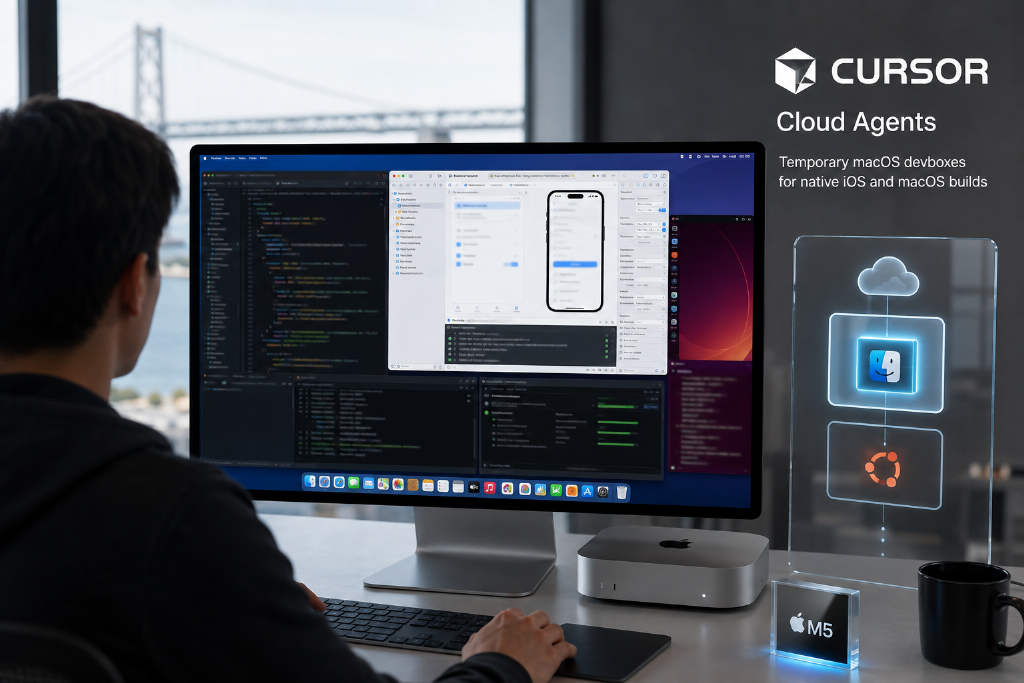
Cursor has connected its Cloud Agents to Namespace Devboxes, giving users a macOS option when launching an agent session. Under the setup, Namespace spins up a temporary Apple M5 Mac for each session so the agent can edit code, compile projects, and run tests on an actual macOS machine rather than a Linux-based workaround. The change addresses a practical limitation in Cursor’s cloud development environment, which had defaulted to Ubuntu. That setup worked for web and backend tasks, but it could not handle full builds for native iOS and macOS development. According to the BlockBeats brief, Cursor still handles model inference and task planning, while shell commands, file edits, Git operations, compilation, and testing are executed inside Namespace’s macOS DevBox. Once the task is finished, the DevBox is destroyed.

860
Cursor adds macOS sessions to Cloud Agents through Namespace Devboxes
Robinhood Cha
2026-09-01 22:30:49

StonkBrokers on Robinhood Chain push NFTs into a securities gray zone

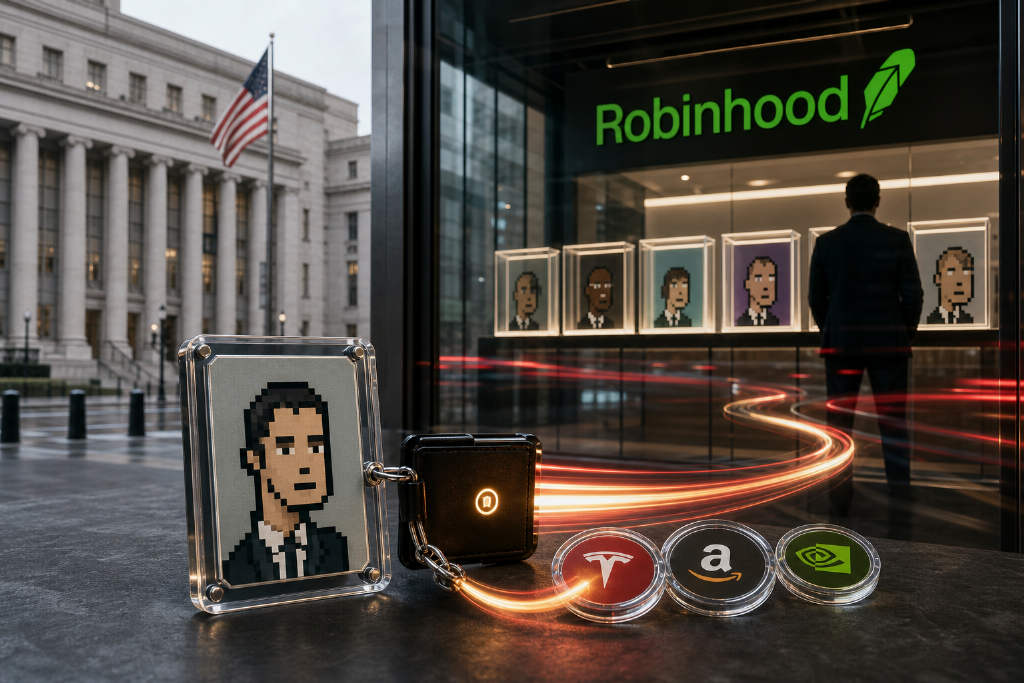
StonkBrokers, a 4,444-piece NFT collection on Robinhood Chain, has become one of the most closely watched experiments in tokenized finance and digital collectibles. The collection’s floor price has risen 77% over the past month, and holders can accumulate Stock Tokens on Robinhood’s Ethereum layer-2 network, gaining exposure to names such as Tesla, Amazon, and Nvidia. Those tokens are available to investors in more than 120 countries, though not in the U.S., U.K., Canada, or Switzerland. The project sits in a legal gray area. Holders must pass geographic and network screening and attest that they live in a permitted jurisdiction to receive Stock Token rewards, yet the NFTs themselves can still be bought and sold on secondary markets without going through the same KYC steps required of Robinhood customers. Lawyers interviewed by Unchained said the structure combines regulated financial products, offshore issuance, NFT-based wallets under ERC-6551, and reward mechanisms tied to social-media promotion in a way that lacks clear precedent. The setup also revives questions raised by past SEC NFT enforcement, including the Stoner Cats 2 case. StonkBrokers’ documents avoid framing payouts as passive income and instead describe them as compensation for services, but legal specialists said it remains untested whether that distinction would hold if regulators scrutinize the model.

930
StonkBrokers on Robinhood Chain push NFTs into a securities gray zone
Policy and Re
2026-09-01 07:22:21

Gemini, MoonPay, the Dallas Fed and BIS point to the same shift in agentic finance

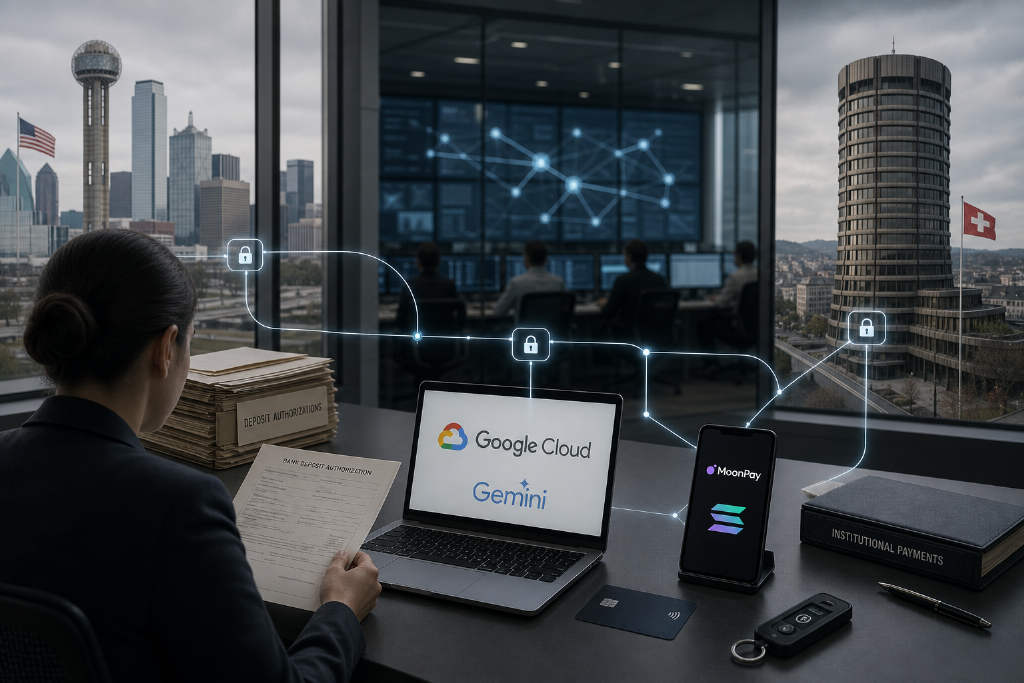
A series of developments across enterprise AI, crypto lending, banking research and payment infrastructure is starting to sketch a shared direction for finance. On Aug. 25, Google Cloud rolled out Gemini Enterprise for Financial Services, pushing AI deeper into workflows such as KYC, credit analysis, portfolio monitoring, bond issuance and financial research. Two days later, MoonPay said it had connected PayBox to Kamino on Solana, letting users initiate lending and access yield through interfaces such as Claude and ChatGPT. Around the same time, the Federal Reserve Bank of Dallas published research on what happens to deposit stickiness if deposits can move in real time and AI can automatically compare yields for households and businesses. BIS also referenced Project Agorá, which recently completed a real-money test tied to tokenized deposits and central bank money. Taken together, these events suggest the key threshold for AI in finance is not simply whether models understand finance better. The bigger question is when they are allowed to make bounded financial decisions on a user’s behalf and actually move money. The article argues that the market is not jumping straight from manual finance to fully autonomous finance. Instead, it is building narrower forms of authorization, execution and auditability that let AI act within preset limits. That shift could eventually affect treasury operations, programmable money, deposit competition and the way banks defend customer relationships.

970
Gemini, MoonPay, the Dallas Fed and BIS point to the same shift in agentic finance