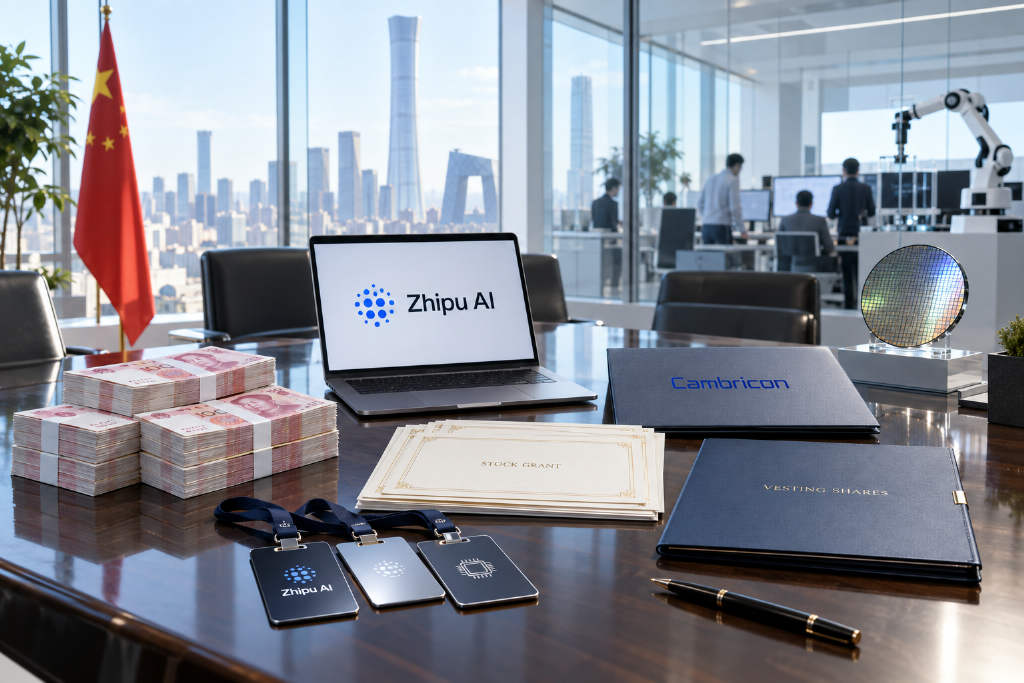
AI talent2026-09-21 09:46:10Pay for key talent is rising across China’s AI sector, with Zhipu’s executive average topping TencentChinese technology companies tied to the AI supply chain are paying sharply higher compensation to secure key talent, even before some businesses turn profitable. A compensation review covering 30 listed companies across large AI models and AI applications, AI chips and semiconductors, and robotics and embodied intelligence, plus three major internet firms as benchmarks, shows how salary design and equity incentives now reflect each company’s stage of development and hiring strategy. The figures cited in the report are striking. Zhipu posted 2025 revenue of 724 million yuan and a net loss attributable to shareholders of 4.698 billion yuan, yet Chairman Liu Debing received total annual compensation of 157 million yuan, including 156 million yuan in share-based payment. Cambricon’s 2026 restricted stock incentive plan proposes granting 5 million restricted shares to 945 employees, equal to an 85.37% coverage ratio based on its 1,107 employees at the end of 2025. The report also points to a wider AI labor boom. According to 36Kr, PhD interns in core teams at ByteDance, Tencent and Alibaba can earn 5,000-6,000 yuan a day. Maimai’s September AI talent mobility report said newly posted AI jobs rose 789.47% year over year in January-July 2026, with average monthly pay at 63,160 yuan. Across the three sectors, executive average monthly pay was highest in large-model and AI application companies, followed by chipmakers and then robotics firms.650
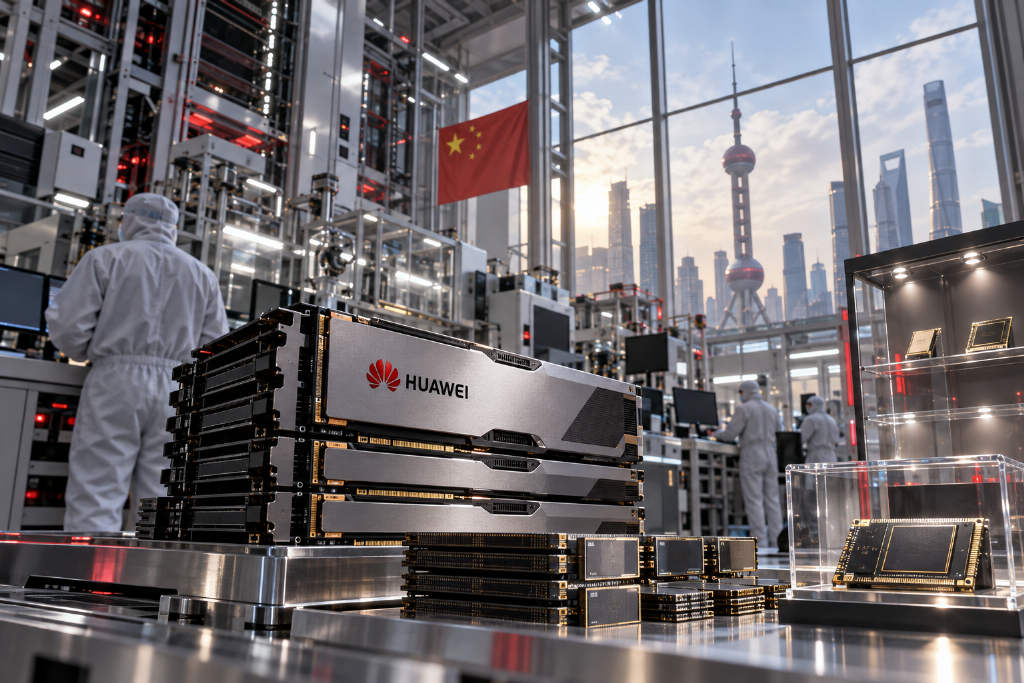
Reuters2026-09-10 06:21:33Reuters: HBM shortage drives price hikes by Chinese AI chip makersChinese AI chip makers have raised prices sharply as supplies of high-bandwidth memory, or HBM, remain tight, according to a Reuters exclusive published on Sept. 10. Huawei lifted the indicative price of its Ascend 950DT accelerator card to more than 250,000 yuan, up 20% to 50% from quotes seen two months earlier. Cambricon raised the indicative price of its planned 690 chip by 20% to 30%, while Moore Threads and Iluvatar CoreX also made similar increases. Reuters said the higher pricing reflects cost pressure tied to U.S. export controls and HBM sourced through the grey market. Prices for Huawei’s earlier-generation products, including the Ascend 950PR and 910C, also rose by about 30%. The report said the increases are adding to the cost of building AI computing capacity in China. Huawei, Cambricon and other companies did not comment, according to Reuters.1280
Moore Threads2026-09-07 11:57:10Moore Threads hits limit down as first lock-up expiry nearly doubles free floatMoore Threads fell to its daily limit on Sept. 7, sliding to RMB 415.48 within minutes of the open and staying pinned there through the session. The sell-off came even though the company had recently posted strong first-half numbers, including RMB 1.736 billion in revenue, up 147% year over year, and adjusted half-year profit after excluding share-based compensation. The article argues that the main trigger was not the earnings release but the first major lock-up expiry. A total of 25.77 million shares became eligible for trading, equal to 5.48% of total shares outstanding. More importantly, the company had only 30.22 million shares in free float before the unlock, meaning tradable supply jumped about 85% overnight. According to the piece, that change in supply mattered more to short-term pricing than the company’s operating story. The report also points to a much larger unlock on Dec. 7, when 186 million shares are due to mature. Still, it notes that the structure of that overhang is more complex because shareholder groups face different sale restrictions. The article frames the next phase around three signals: November reduction plans, block trade discounts, and how another GPU name, Muxi, trades around its own Sept. 17 unlock.490
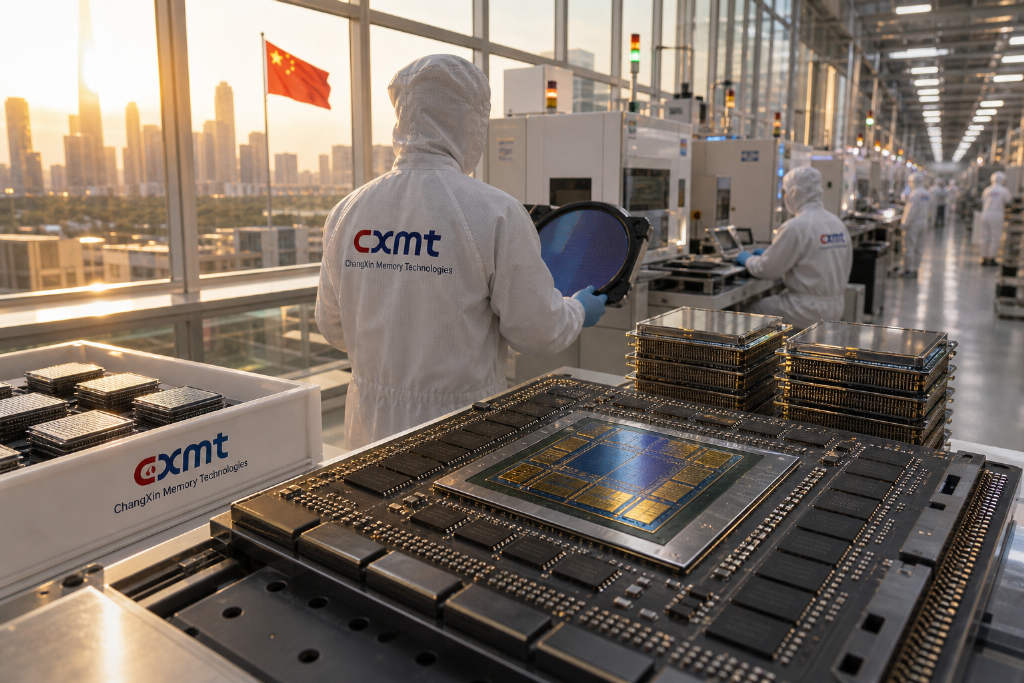
CXMT2026-08-31 15:15:05CXMT starts small-batch HBM3E production, with volume expansion planned for 2027Chinese memory maker ChangXin Memory Technologies, or CXMT, has started small-batch production of HBM3E and plans to expand output in 2027, according to The Information, which cited two people familiar with the matter. The report said domestic chip teams including Cambricon and Alibaba’s T-Head have already been testing CXMT’s HBM products, and if those efforts go smoothly, the memory could appear in products as early as next year. HBM, or high-bandwidth memory, sits alongside AI chips and feeds them data at high speed, making it a critical component for AI computing. The report described HBM2 and later generations as a longstanding weakness for China’s domestic AI chip supply chain. In product-generation terms, CXMT is one step behind SK Hynix, Samsung and Micron, which are already mass-producing HBM4. Still, the report said small-batch production is not the same as mature mass production. CXMT’s HBM3E currently has lower yields, and its speed and reliability trail the three established suppliers. SK Hynix began mass production of HBM3E in 2024, and the three leading makers have already moved into HBM4 and started sampling HBM4E.1190
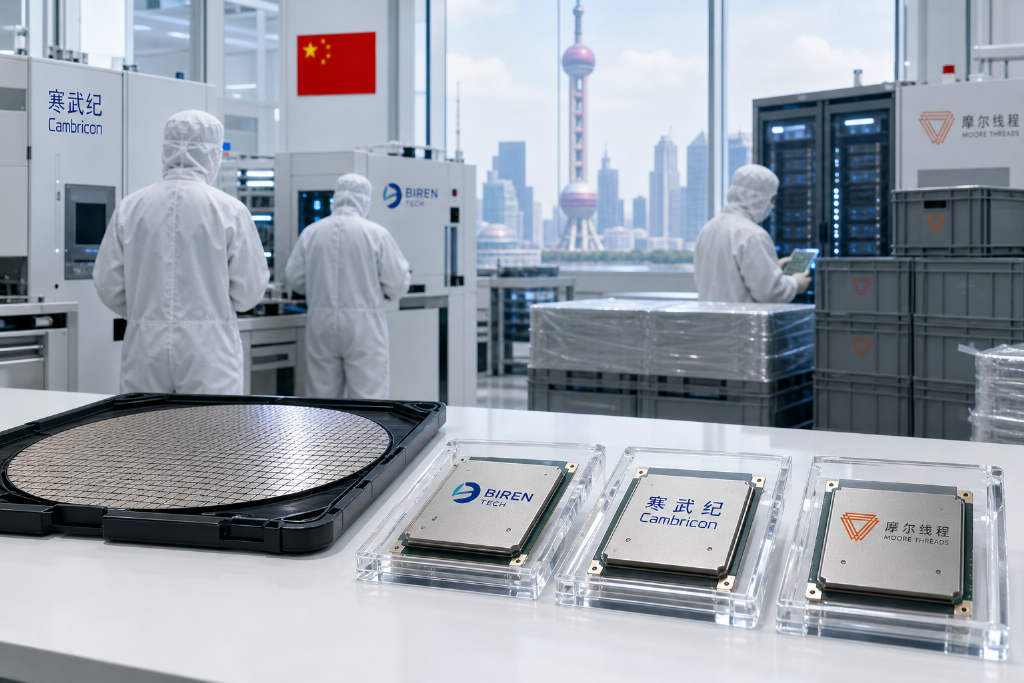
AI chips2026-08-31 06:50:57Chinese AI chip makers post sharp revenue gains as high-end compute supply stays tightChinese AI chip companies are reporting strong revenue growth as demand for high-end computing power continues to outpace supply. According to a BlockBeats brief citing Beating AI, several leading domestic chip firms released their half-year results in August, with Biren Technology posting nearly 20x revenue growth. Cambricon and Moore Threads were also reported to have delivered major increases in revenue. The report links the performance surge to persistent shortages across the high-end compute supply chain. It said tightness now spans the full supply side, with some companies' orders scheduled as far as three years out. The imbalance is not limited to chip vendors. Downstream intelligent computing center resources remain undersupplied, while orders are also being released intensively in the midstream system integration segment. Industry survey data cited in the report projects demand for domestic AI chips at about 4 million units in 2026, against actual deliveries of roughly 3 million units, leaving a production gap on the order of 1 million chips. The report added that many Chinese chip companies have recently posted results showing a collective breakout, and that the industry broadly sees domestic chips in high-end AI applications as being in a strong upward cycle.1000
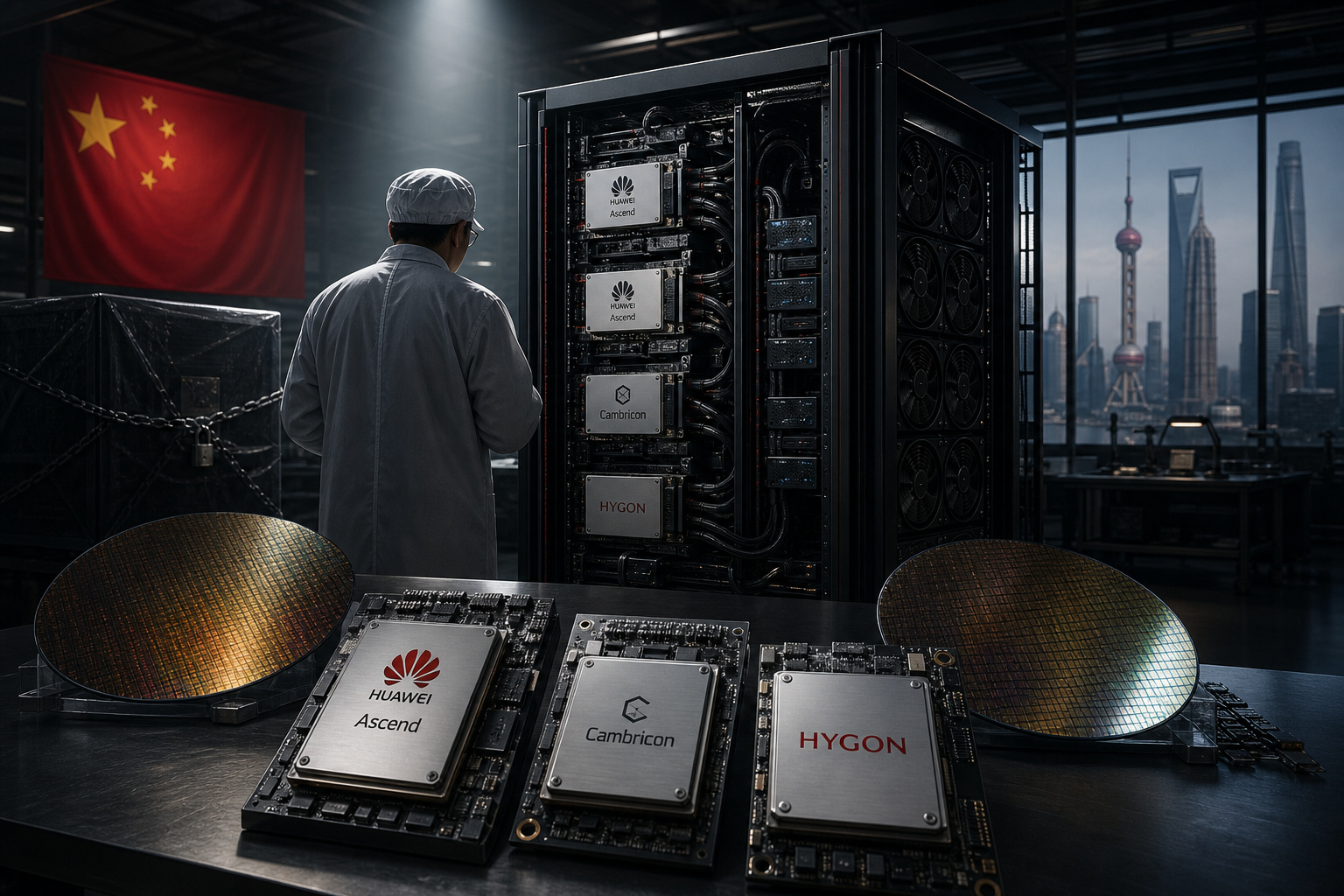
AI chips2026-08-10 04:16:52China's AI Chip Push Accelerates Despite US GPU Export Curbs, TrendForce SaysUS export controls on high-end GPUs haven't slowed China's AI industry. TrendForce's latest supply chain survey shows China's high-end AI chip supply is shifting toward a dual-track model of domestic GPUs and self-developed ASICs, with domestic solutions projected to capture nearly 90% of the market by 2026. Policy support is expected to benefit local players like Huawei Ascend, Cambricon and Hygon.2510
A-shares2026-08-10 01:59:43Cambricon shares fall more than 5% in China A-share trading, turnover tops 10 billion yuanBlockBeats reported on Aug. 10 that Cambricon, an A-share listed company in China, fell more than 5%, while turnover exceeded 10 billion yuan. The brief update disclosed only two market data points: the size of the decline and the total trading value. No additional details were provided on the drivers behind the move, intraday pricing, or broader market context. As a short market flash, the item was limited to the stock’s drop of more than 5% and turnover above 10 billion yuan on the day.3850
Paragon2026-08-09 08:35:06Paragon Acquires CAMBRICON Code, May Launch Perpetual ContractsOn August 9, HIP-3 DEX Paragon spent 580.97 HYPE to acquire the code of CAMBRICON, suggesting perpetual trading for the Chinese AI chip designer could go live in the coming days. CAMBRICON focuses on AI core chips, covering cloud accelerators, edge computing, IP licensing, and system software.2110