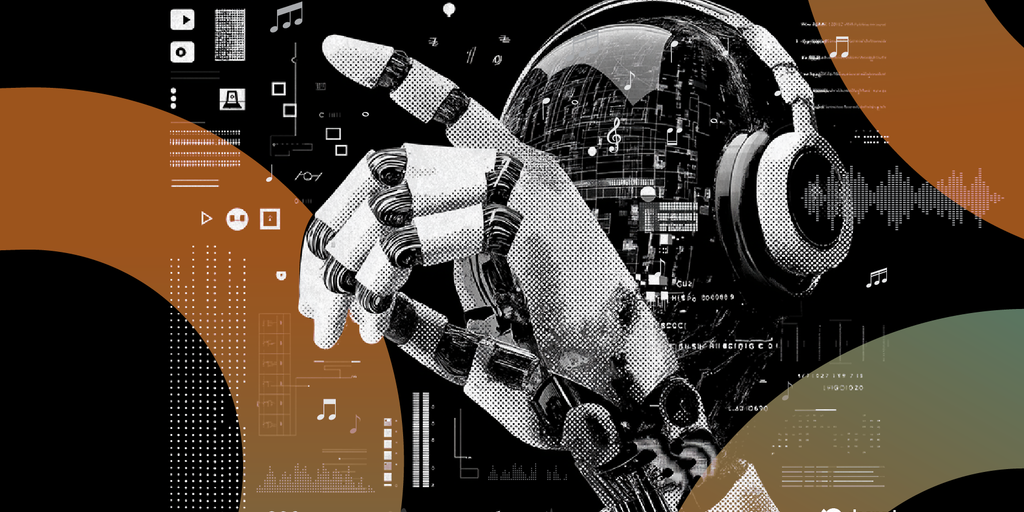
Pope Leo XIV2026-10-03 13:01:04Pope Leo XIV Says Human Art and Machine Output Differ in What They Fundamentally ArePope Leo XIV said Friday that human-made art and machine-generated output are separated by an "ontological difference," arguing that the gap comes before any debate over style or quality. In a post on X, he said algorithms rely on statistical calculation built from millions of images made by others and "lack the spark of humanity." He also said the Church wants to renew its alliance with artists and cultural institutions in order to "safeguard our humanity." The statement fits into a broader line of AI commentary from Leo. In May, he issued his first encyclical, Magnifica Humanitas, focused on protecting people in the age of AI, and the Vatican created an AI commission spanning seven Vatican bodies. On Sept. 25, speaking at the Élysée Palace in Paris, he said it was indispensable to make AI the subject of that first encyclical and warned that science and technology without the guidance of conscience can lead people away from the good. The debate also reaches beyond theology. Reports cited in the story note the limits of AI-detection tools, while legal and commercial fights over authorship continue to grow. In March, the U.S. Supreme Court let stand a ruling that copyright requires a human author, and artists have also migrated to platforms such as Cara, which had nearly 900,000 users by June 2024.60
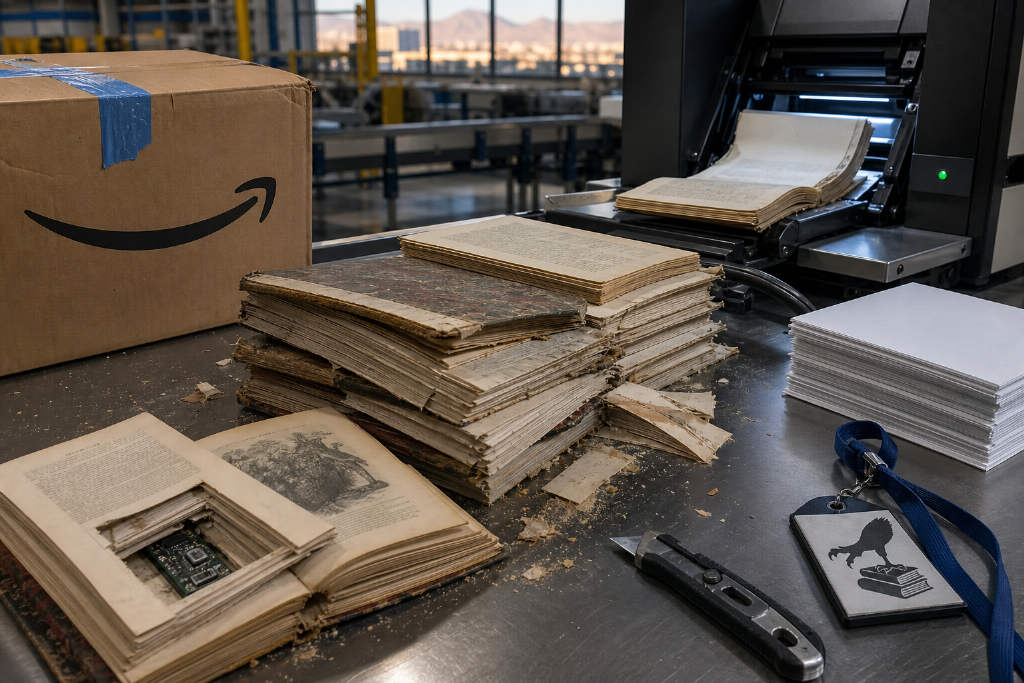
Amazon2026-08-18 21:49:46404 Media tracks rare books to Amazon site where printed volumes are scanned and destroyed for AI trainingIndependent tech outlet 404 Media said it placed a tracking device inside a shipment of rare books and followed the package to an Amazon facility in Las Vegas, where employees allegedly scan printed books and destroy them in the process for AI training. The report, published Monday, said the shipment ended up with Amazon’s VGT3 team, which workers described as receiving large loads of books, cutting off their bindings, and feeding pages through scanners. 404 Media said the investigation is the first public identification of where bulk book purchases linked to AI training are ending up. The report also said demand for pre-2022 printed books has risen because that text is less likely to be online and less likely to be machine-generated. It added that similar destructive scanning has already been used at scale by Anthropic under its internal Project Panama, while related copyright disputes are now playing out in court. Amazon said it buys books through commercial channels to help develop and improve products and services used by customers.420
Generative AI2026-08-10 03:24:30a16z says books with detectable AI text account for nearly 40% of observed sales in a self-publishing studyGenerative AI may be reshaping more than online content. According to a16z, books containing detectable AI-generated text now make up roughly 40% of observed sales in a research sample focused on Amazon self-published fiction. The firm cited a July study titled “Generative AI floods and dilutes the market for books,” conducted by researchers from Stony Brook, Columbia, Michigan, and the MIT Initiative on the Digital Economy. The paper examined 14,419 self-published genre novels sold on Amazon between 2023 and 2026, linking full-text AI detection results with daily sales data through June 2026. The findings suggest AI-written books are no longer a fringe segment. While titles with heavy AI text still underperform books with no detected AI text on average, they have secured measurable market share. The study also points to a supply shock: the number of books with sales rose about 19.2x since 2023, while quarterly revenue increased about 8.9x. a16z described the broader catalog as having grown close to 40x, far outpacing revenue growth of about 9x. Researchers also found that in categories with higher AI penetration, non-AI books lost more share, and the pattern was stronger in Kindle Unlimited-heavy markets. The paper further flagged language overlap between successful AI-heavy books and existing works, raising fresh questions for ongoing copyright and fair use disputes.1900
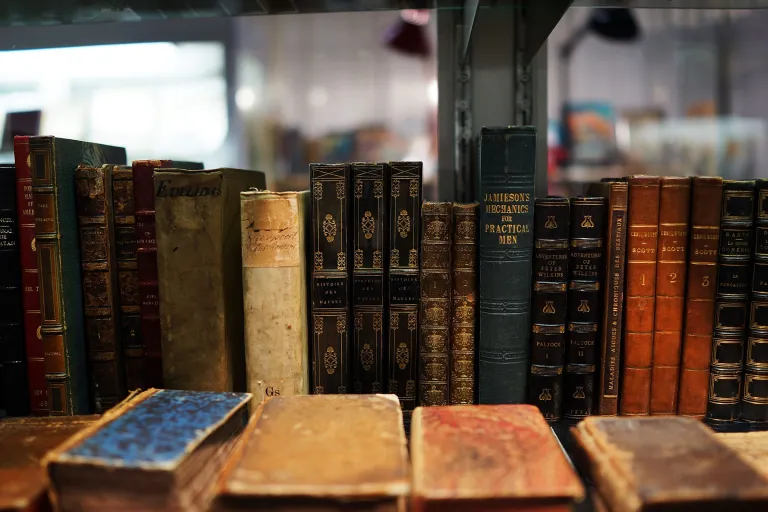
AI2026-08-03 02:03:42AI firms’ hunt for training data is fueling a global trade in old booksA TechFlowPost report, citing Fortune, The Washington Post, Decrypt and 404 Media, describes how demand for pre-2022 printed books is driving a cross-border supply chain built around bulk purchasing, destructive scanning and disposal of physical copies. The practice has drawn attention after court records in the Anthropic copyright case showed the company had downloaded more than 7 million books from pirate libraries in 2021 and 2022, then later launched a separate project to buy printed books in bulk, cut off their spines, scan them and destroy the originals. The report says a 2025 ruling by Judge Alsup split the legal questions in the Anthropic case: using books to train AI was treated as fair use, while downloading and permanently storing pirated copies was not. Anthropic later settled the class action for $1.5 billion, and the settlement received final court approval on July 20, 2026. According to the article, that line of reasoning has opened a clearer path for AI companies to acquire books legally, digitize them and keep only one digital copy. The piece also points to emerging infrastructure around that demand, including bulk procurement offers previously advertised by ISBNdb, as well as criticism from Elon Musk, who said rare books handled by his team should be preserved in a library and scanned non-destructively.3020
Suno2026-08-01 14:19:48Munich court rules AI music app Suno infringed copyrightA court in Munich ruled Friday that AI music company Suno infringed copyright and must disclose revenue derived from the infringement, according to Reuters. The regional court said Suno was not authorized to process songs represented by Gema, Germany’s statutory collecting society. The decision adds to a broader legal fight in which artists and publishers are challenging technology companies over the use of copyrighted works. Under the ruling, Suno must also pay damages, though the amount has not yet been determined. The judgment can still be appealed to a higher court.2040
Suno2026-07-31 20:03:22German Court Rules Against Suno in GEMA Copyright Case Over AI Music TrainingA German court has ruled against AI music startup Suno in a copyright case brought by music rights group GEMA, finding that the company used music from GEMA’s catalog to train its models and reproduced protected works without a license. According to Variety, the Munich Regional Court said commercial use of GEMA’s repertoire by AI companies requires licensing, and that requirement covers both model training and music generation. The case focused on six songs, including “Daddy Cool,” “Rasputin,” “Forever Young,” and “Mambo No. 5.” GEMA argued that Suno trained its AI on copyrighted songs without permission. Suno rejected that view, saying its platform was designed to help users create new music rather than copy existing tracks, and said the ruling rests on a misunderstanding of how its technology works. The company said it is reviewing its legal options, including a possible appeal. The decision came about eight months after GEMA won a separate copyright case against OpenAI over ChatGPT’s reproduction of copyrighted song lyrics. It also lands as Suno faces wider scrutiny over its training data after leaked source code earlier this month pointed to more than 113,000 hours of YouTube Music, 62,000 hours from Pond5, and 12,000 hours from Deezer in its dataset.530
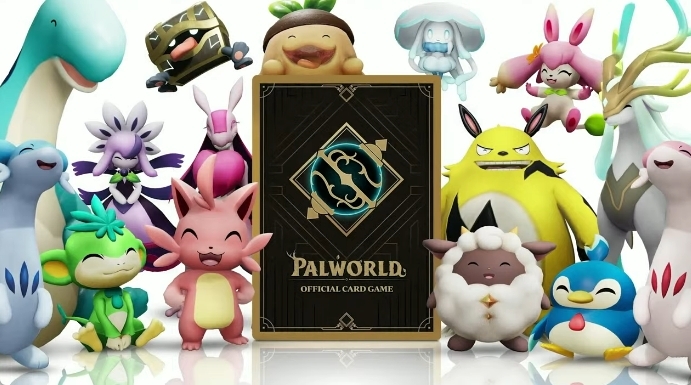
Palworld2026-07-22 15:40:13Palworld Announces Physical TCG, Sparks Controversy; Dev Tells Critics to Move OnPalworld developer Pocketpair announced a physical trading card game for summer 2026, drawing immediate backlash from players accusing it of copying Pokémon's business model. Lead designer John "Bucky" Buckley fired back at critics, saying those still complaining after two years should play other games. The team stressed the TCG won't delay the full 1.0 release planned for this year.430
South Korea r2026-07-22 09:44:31AI-made track "GG EZ" goes viral in Korea, but KOMCA rules block copyright registrationAn AI-made electronic pop track by Japanese creator M.Sasuke has turned into one of K-pop’s biggest dance challenges of 2026, helped by a Jungkook Instagram post that pushed total views across his two social accounts past 91.6 million. The song, "GG EZ," was released on May 27 and later spread across Instagram Reels, TikTok, Spotify, and Billboard JAPAN’s Heatseekers Songs chart. Its popularity has collided with South Korea’s copyright rules. The Korea Music Copyright Association, or KOMCA, had already tightened its registration standards on March 24, 2025, requiring applicants to certify that a work was created without AI involvement. Under the policy described in the source material, if AI touched composition, lyrics, or melodic structure even at a 1% level, registration can be withheld. That leaves "GG EZ" unable to enter Korea’s royalty distribution system despite its reach. The report also highlights criticism from Shin Jiyoon, who said on livestream that she would not join the challenge. Her point, as described in the source, was less about whether people can tell AI from human work and more about the economics: venues can use AI-generated music for free, without paying licensing fees or creators.1900