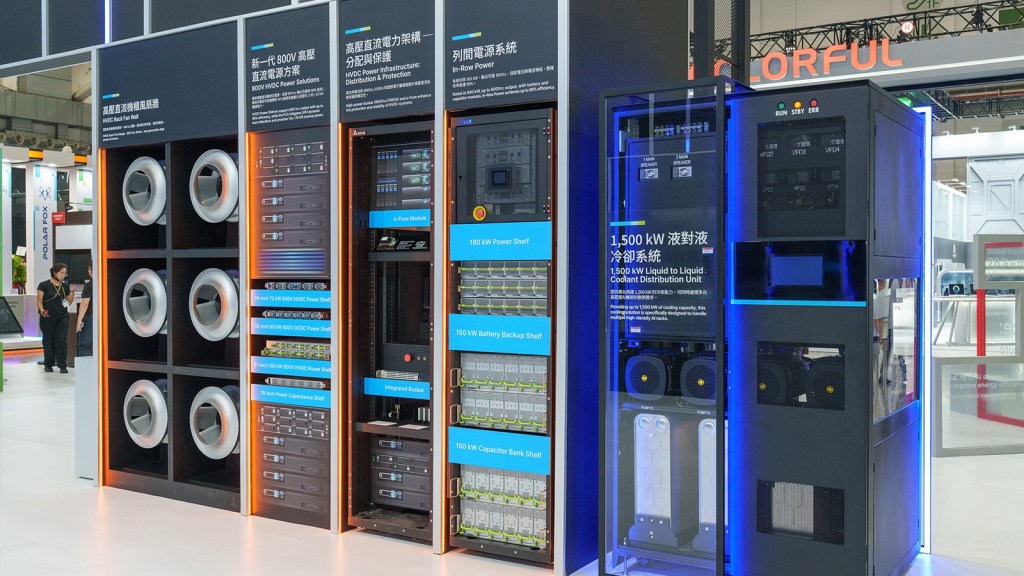
HVDC

onsemi
2026-09-22 08:14:29

onsemi to raise prices on some power semiconductors from Oct. 10 as Taiwan suppliers may follow in Q4

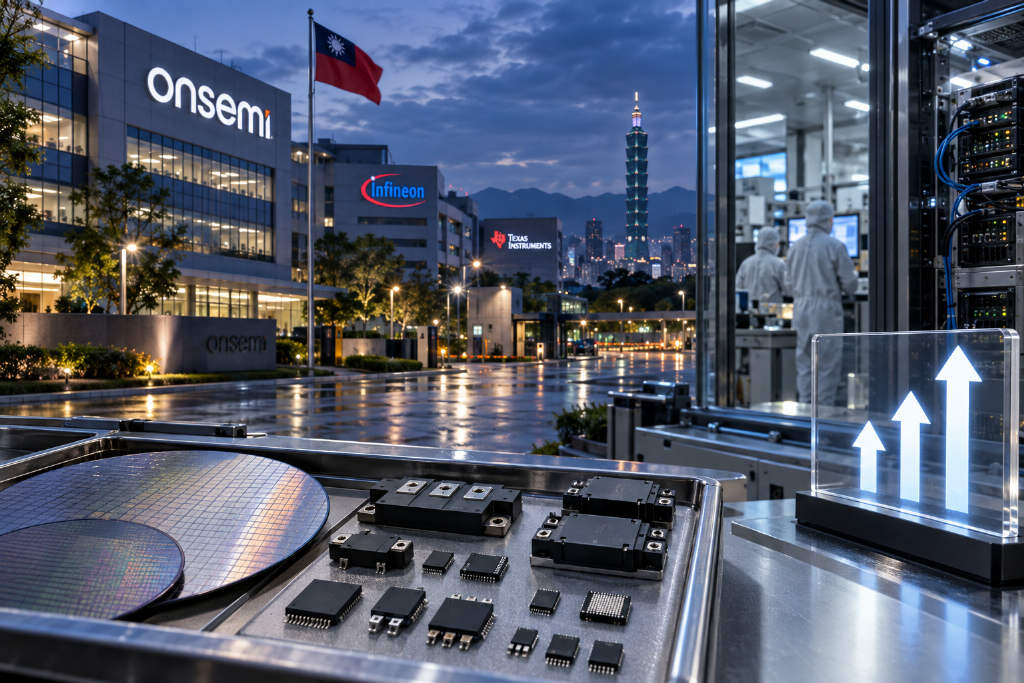
onsemi said it will raise prices on some power semiconductor products starting Oct. 10, adding to a string of increases already announced by Infineon and Texas Instruments. Citing Commercial Times, the report said onsemi notified customers on Sept. 21. Renesas is expected to take up the next round of price increases in early 2027, extending what the article described as a relay of hikes among major international suppliers. The report said Taiwan power component makers Panjit, Taiwan Semiconductor and Eris Technology could move as early as the fourth quarter to lift prices on non-contract products by about 10% to 15%, with the actual range depending on product lines, customer mix and contract structure. It also linked the latest pricing cycle to changes in AI infrastructure power demand, including a shift from traditional 48V systems toward 800V high-voltage direct current architectures. That transition is driving demand across SiC, GaN, MOSFET, IGBT and PMIC products. The article highlighted Panjit’s rising AI revenue mix and shipment growth in Power MOSFET, small-signal devices and TVS, while Eris Technology was described as focusing on opportunities tied to 800 VDC upgrades, with plans to convert part of its 4-inch capacity to 6-inch lines by the third quarter of 2027. The report said a key question for the sector is whether spot price increases can be passed through into contract pricing.

220
onsemi to raise prices on some power semiconductors from Oct. 10 as Taiwan suppliers may follow in Q4
NVIDIA
2026-07-24 09:24:43

NVIDIA’s 800V HVDC rollout may slip to 2028 as validation drags, Delta says pilot production still set for early 2027

NVIDIA’s planned 800V high-voltage direct current power architecture, originally targeted for deployment in 2027, may face a broader rollout delay into 2028 or later, according to market research firm SemiAnalysis. Supply chain sources cited in the report said the issue lies in validation rather than the underlying technology. Early testing reportedly identified a potential short-circuit risk, prompting U.S. customers to ask for additional testing and extending redesign and certification work across the supply chain. Delta Electronics, one of the companies tied to the buildout, said its timetable remains at small-volume production by the end of the first quarter of 2027, with shipments gradually ramping in the second quarter. The report also said foreign institutions still view HVDC as the long-term direction for powering AI data centers, with penetration of 800V-related products next year seen as having a chance to approach 20%. The architecture is designed to address rising rack-level power demand in AI infrastructure. NVIDIA’s next-generation Rubin Ultra racks are described as approaching 1 MW of power consumption, a level that strains traditional 54V DC and 415V or 480V AC setups. The 800V approach aims to cut copper use, reduce conversion stages, and improve end-to-end efficiency.

700
NVIDIA’s 800V HVDC rollout may slip to 2028 as validation drags, Delta says pilot production still set for early 2027
Delta Electro
2026-07-24 03:05:11

Delta says Nvidia 800V HVDC program remains on track for pilot output in Q1 2027

Concerns over Nvidia’s 800V high-voltage direct current power architecture resurfaced after market research firm SemiAnalysis warned that large-scale deployment could slip from the previously expected 2027 timeline to 2028 or later. Supply-chain sources cited in the report pushed back on that view, saying the delay is tied to validation work rather than a core technical roadblock. According to Digitimes, early system verification uncovered a potential short-circuit risk, prompting U.S. customers to request additional testing. That led to redesign and certification work, forcing Delta Electronics, Simplo Technology and upstream material suppliers to adjust shipment schedules. The same sources said key components including power cabinets, backup battery units and battery packs have already been resubmitted for validation, with progress described as smooth. The report also addressed questions about whether Nvidia still needs 800V HVDC given that its Rubin platform uses a 50V power architecture. Supply-chain sources said the two are not substitutes: 50V is used for in-rack power distribution, while 800V HVDC is meant to move high-voltage power from the data-center level to the rack. Delta is expected to begin low-volume production near the end of the first quarter of 2027 and expand shipments in the second quarter based on customer deployment schedules.

660
Delta says Nvidia 800V HVDC program remains on track for pilot output in Q1 2027
Nvidia
2026-07-23 23:11:48

DigiTimes says Nvidia's 800V HVDC roadmap is unchanged, with Delta expected to start pilot output by late Q1 2027

DigiTimes reported that Nvidia’s 800V HVDC power architecture for next-generation AI data centers remains on its original production path, pushing back on market concerns that broad deployment could slip from 2027 to sometime after 2028. According to the report, those worries came largely from a misreading of the product validation process rather than a change in technical direction. Supply-chain sources said the main delay stems from a longer design-validation cycle for first-generation products, not from the abandonment of the 800V HVDC roadmap. The report said power cabinets, battery backup units, battery packs, and related components have been resubmitted for validation, with testing progressing smoothly. Delta Electronics is expected to begin small-scale production of 800V HVDC products near the end of the first quarter of 2027 and gradually raise shipments in the second quarter in line with customer deployment schedules. The adjustment followed extra testing requested by a U.S. customer after potential short-circuit risks were identified during early system validation, extending optimization and certification timelines for suppliers including Delta, Sunonwealth and Chicony Power. Industry sources added that the issue is not manufacturability. They said 800V HVDC remains an important long-term direction for high-power AI data center infrastructure, while ±400V HVDC and 800V HVDC are expected to develop in parallel during the initial phase.

1360
DigiTimes says Nvidia's 800V HVDC roadmap is unchanged, with Delta expected to start pilot output by late Q1 2027
JP Morgan
2026-07-01 04:31:07

JP Morgan Deep Dive: AI Power Semiconductor Market to Surge 7x to $19.2B by 2028, 800V HVDC Architecture Disrupts Traditional Power

JP Morgan released its first-principles analysis of the AI data center power supply chain, concluding that the AI power semiconductor market will reach $19.2 billion by 2028, a compound annual growth rate of 82%. The report highlights a shift from traditional 400V AC architecture to 800V high-voltage DC (HVDC), significantly increasing semiconductor content per watt from $175 to $260. New silicon carbide (SiC) and gallium nitride (GaN) components replace electromechanical devices, driving a material revolution. NVIDIA's Kyber rack (600kW) is expected to be the inflection point for mass deployment. However, two risks stand out: US grid upgrade timelines (3-5 years) lag behind data center buildout (2 years), and NVIDIA's pricing power over the supply chain. The article summarizes key data, technology roadmaps, player landscape, and investment caveats.

550
JP Morgan Deep Dive: AI Power Semiconductor Market to Surge 7x to $19.2B by 2028, 800V HVDC Architecture Disrupts Traditional Power
AI Data Cente
2026-06-30 22:31:10

JPMorgan: AI Data Center Power Semiconductor Market to Reach $19.2B by 2028, 800V HVDC Architecture Drives Silicon Content Jump

A new JPMorgan report reveals that the AI data center power semiconductor market will surge from $2.7 billion in 2025 to $19.2 billion in 2028 — a compound annual growth rate of 82%. The core catalyst is the shift from traditional AC architectures to 800V high-voltage DC (HVDC) designs, which increases semiconductor content per watt from $175 to $260. Silicon carbide solid-state transformers, gallium nitride converters, and other novel devices will penetrate the entire chain from grid to GPU cores. Infineon, MPS, Renesas, and nine other players dominate the landscape, but Nvidia's Kyber rack (600kW per rack) will be the scale-up catalyst by 2028. The report also highlights two risks: grid upgrading timelines (US median 3-5 years) mismatch with data center build-out speed, and Nvidia's pricing power over the value chain.

610
JPMorgan: AI Data Center Power Semiconductor Market to Reach $19.2B by 2028, 800V HVDC Architecture Drives Silicon Content Jump
JPMorgan
2026-06-30 19:31:06

JPMorgan: AI Data Center Power Semiconductor Market to Reach $19.2B by 2028, 800V HVDC Architecture Key

JPMorgan's first-principles analysis of AI data center power supply chains reveals the power semiconductor market will grow from $2.7B in 2025 to $19.2B in 2028, a 82% CAGR. The core driver is the shift to 800V high-voltage DC (HVDC) architecture, which boosts semiconductor content per watt from $175 to $260. The report details the inefficiencies of traditional five-stage power conversion (85-88% efficiency), the introduction of SiC solid-state transformers and GaN converters, and a deployment timeline centered on Nvidia's Kyber rack in 2027-2028. It also profiles 12 key suppliers including Infineon, MPS, Navitas, and warns of grid upgrade delays and Nvidia's pricing power as key risks.

530
JPMorgan: AI Data Center Power Semiconductor Market to Reach $19.2B by 2028, 800V HVDC Architecture Key