‹ BackJarvis

Jarvis

Policy Regula
2026-09-10 05:01:00

Treasury buyback move fails to calm bond sell-off as oil tops $100 and U.S. stocks extend losses

U.S. stocks fell for a third straight session as rising oil prices, weak long-end Treasury sentiment and pressure on rate-sensitive equities drove trading. Brent crude settled at $101.21 a barrel and WTI at $96.05 after the U.S.-Iran conflict escalated, while CTA positioning in both contracts jumped sharply, according to Bridgeton Research Group under Kpler. The U.S. Treasury raised its long-bond buyback cap to $6 billion, below market expectations of $7 billion to $10 billion, and the bond market sold off anyway. A $39 billion 10-year Treasury auction cleared at a record 4.834% with a bid-to-cover ratio of 2.71, pushing the 10-year yield to about 4.85% and the 30-year above 5.30%. In equities, storage, optical communications and AI-linked names outperformed. Meta rose after unveiling its personal AI agent Muse, while Apple slipped after introducing the foldable iPhone Duo. Investors are now watching the European Central Bank decision, U.S. August PPI data and a $22 billion 30-year Treasury auction.

1000
Treasury buyback move fails to calm bond sell-off as oil tops $100 and U.S. stocks extend losses
x402
2026-09-03 06:28:00

x402 tops roughly 155.6 million transactions since launch, but the case for durable agent demand is still being tested

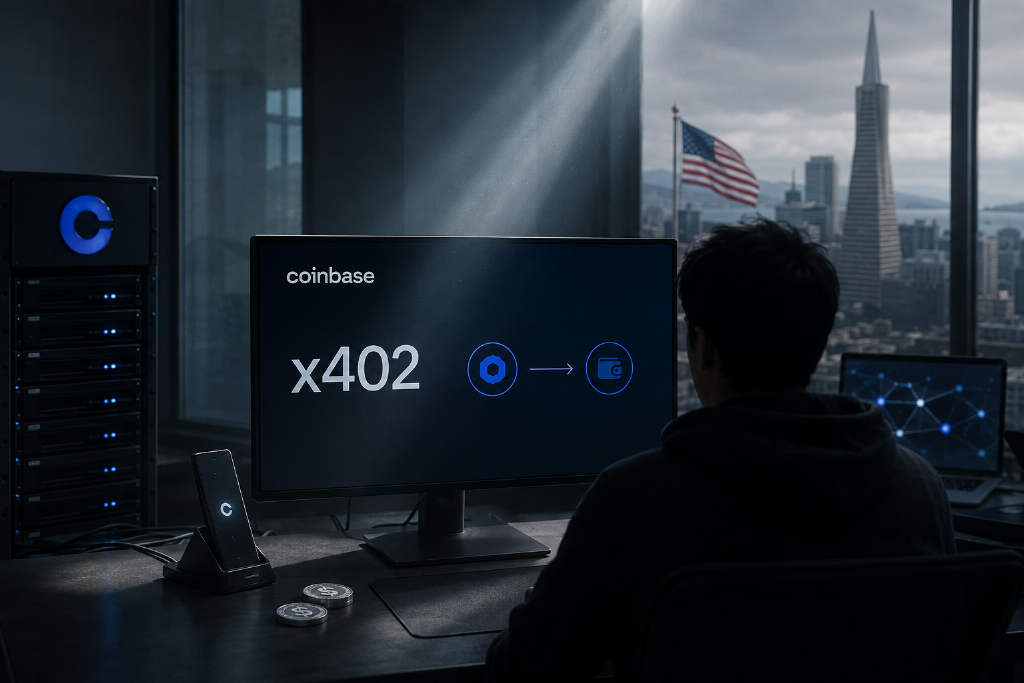
PANews reviewed adoption data for x402, the protocol launched by Coinbase Developer Platform on May 6, 2025 to revive HTTP 402 Payment Required as a native payment flow for software. The article says x402 has moved beyond the demo stage, with several visible usage signals across different datasets: Chainalysis said cumulative x402 transactions on Base had passed 100 million as of June 2026; Agent Economy’s cross-chain tracker showed about 155.6 million transactions and roughly $40.97 million in settled stablecoin volume around July 10, 2026 UTC; and x402scan, viewed on July 11, 2026, showed about 16.24 million indexed transactions, around 837,500 USDC in total amount, about 67,000 unique buyers and roughly 39,600 unique sellers within its visible range. The report argues those figures show x402 is no longer just a protocol experiment, but they do not prove that agentic payments have reached mature, large-scale commercial adoption. A meaningful share of early activity may have come from campaigns such as PING, developer testing, stress tests, bot activity or one-off experiments rather than persistent enterprise workflows. The article says the more important signal is the transaction shape x402 enables: software can see a price inside an HTTP request, pay, and receive access to an API, dataset, model call or tool result without a human checkout flow. It also points to real-world categories already forming around APIs, data endpoints, infrastructure gateways, wallets, SDKs and incentive-driven experiments, while warning that spending policy, audit trails, refunds, dispute handling and human approval remain unresolved parts of the stack.

1180
x402 tops roughly 155.6 million transactions since launch, but the case for durable agent demand is still being tested
OpenClaw
2026-08-31 09:34:30

OpenClaw fades from the spotlight, but its agent playbook lives on in Codex and harness-based tools

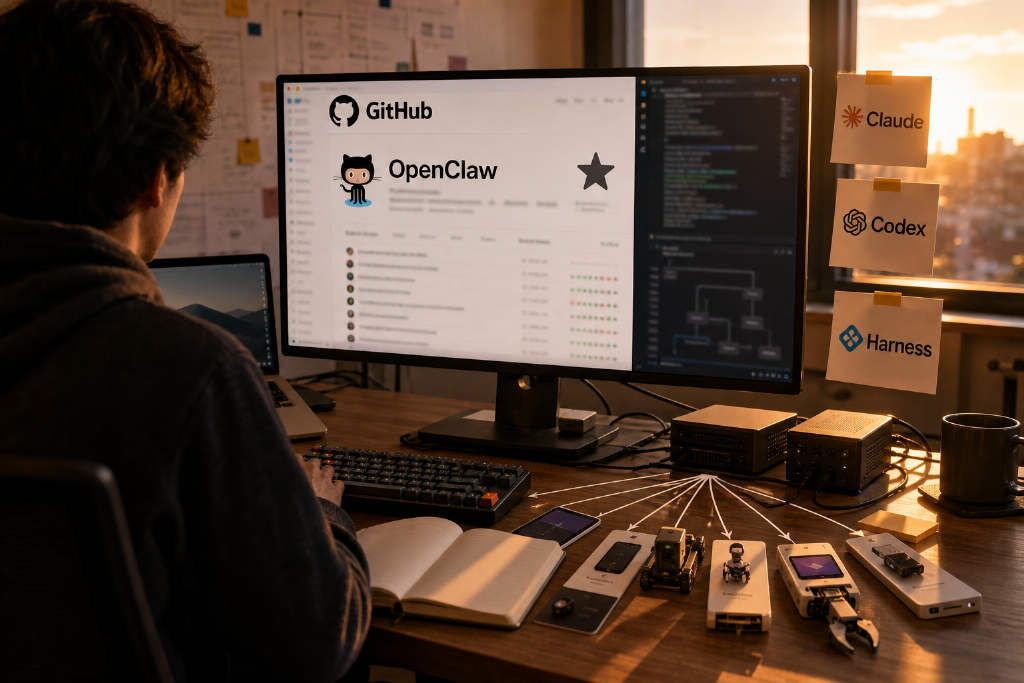
OpenClaw’s public buzz has cooled sharply, yet the project itself remains active and continues to shape how the AI industry builds personal agents. The project launched in late November 2025 and, according to the source article, passed 250,000 GitHub stars by March 3, 2026, roughly 100 days later. By late March, that figure had climbed past 330,000, and by August it had exceeded 380,000, with more than 80,000 forks. The article argues that OpenClaw did not simply disappear. Instead, its core ideas were absorbed by a wider range of products. Chinese companies including Tencent, Baidu, Youdao, Zhipu and Volcano Engine have all released derivative offerings around the same agent model, and the article says more than 30 such products have emerged from domestic vendors alone. At the same time, the center of discussion has shifted. Rather than focusing on how to deploy a desktop agent, developers are now paying closer attention to model-native harness systems such as Claude Code, Codex and related agent frameworks. The source also points to the practical issues OpenClaw exposed early on, especially token costs and safety risks tied to broad permissions. Peter Steinberger, identified in the piece as a key figure behind OpenClaw, joined OpenAI in February and is now working on Codex- and agent-related efforts while also backing open-source infrastructure through Omacom Foundation.

260
OpenClaw fades from the spotlight, but its agent playbook lives on in Codex and harness-based tools
OpenAI
2026-07-27 10:36:17

OpenAI brings ChatGPT Voice to desktop Work and Codex tools

OpenAI has added ChatGPT Voice to the desktop version of its app for Work and Codex use cases, turning voice from a simple chat input into a control layer for AI task execution. The rollout, announced for July 23, is being released globally in phases on macOS and Windows for Plus, Pro, Business, Edu, and Enterprise users. Android support is set to follow, while iOS connects through Remote pairing. According to the report, the feature runs on GPT-Live, OpenAI’s new voice model introduced on July 8. It supports live interruption and continuous turn-taking, letting users speak naturally while the system keeps up in real time instead of relying on the older record-transcribe-reply flow. In Work and Codex, users can start tasks, ask for progress updates, reprioritize jobs, and coordinate several agents within the same conversation. The article frames the move as part of a broader shift in human-AI interaction. Andrej Karpathy, Elon Musk, and Sam Altman are all cited as arguing that voice works better than typing when users need to hand over large amounts of context. OpenAI’s larger goal, the piece argues, is to turn ChatGPT on desktop into an AI operating layer for work, where users assign tasks and agents carry them out in the background.

1920
OpenAI brings ChatGPT Voice to desktop Work and Codex tools
Delphi Ventur
2026-07-13 05:18:00

Delphi Ventures says AI, multipolarity, and aging will shape the next decade

Delphi Ventures laid out a long-range investment view centered on three macro forces it expects to dominate the next 10 years: AI and automation, a more multipolar world, and demographic aging paired with longer lifespans. The firm argues these trends reinforce one another rather than move separately. Falling birth rates and aging populations raise the need for automation, while a less globalized and more contested world pushes countries toward self-sufficiency, domestic production, military rearmament, and energy security. That mix, in Delphi’s view, also deepens fiscal strain and raises the need for strong productivity gains. On AI, the report says the market still underestimates the depth of demand for intelligence. It points to rising model capability, growing compute, falling inference costs, and a coming “agent economy” that could reshape indexing, payments, commerce, and software infrastructure. It also argues AI will move beyond data centers into distributed, hybrid edge-cloud systems tied to the physical world. On geopolitics, Delphi sees the US stepping back from the order it once anchored, with broader implications for supply chains, commodities, defense, and hard money. On demographics, it highlights shrinking fertility, aging societies, and growing interest in longevity and AI-biology research. The report also makes clear that crypto remains central to Delphi’s thesis. It describes crypto as a parallel system for exchange, coordination, and wealth preservation in a world marked by debt, debasement, and political fragmentation.

1380
Delphi Ventures says AI, multipolarity, and aging will shape the next decade
Delphi Ventur
2026-07-13 03:23:50

Delphi Ventures says automation, multipolarity and demographics will reset asset pricing over the next decade

Delphi Ventures argues that three long-cycle forces — automation, a more fragmented geopolitical order, and demographic decline paired with longer lifespans — are set to reshape how global assets are priced over the next decade. In the firm’s view, intelligence is becoming the scarcest resource, while capital is steadily replacing labor as the main engine of wealth creation. The report says AI demand still exceeds supply even as inference costs fall, and that the next stage of AI will move beyond data centers into distributed, real-world systems tied to robotics, manufacturing, energy and edge networks. It also argues that a retreat from the post-1945 global order, led by the United States itself, could reprice commodities, energy, defense, hard money and supply-chain infrastructure. On demographics, Delphi highlights collapsing birth rates, aging societies and growing fiscal pressure, while pointing to longevity science and AI-driven biology as a possible counterweight. The piece also lays out a distinctly crypto-native hedge: Bitcoin, Zcash and distributed agent economies are framed as part of a parallel system for exchange and wealth preservation in a world of rising deficits, political fragmentation and currency debasement. The note stops short of presenting a precise forecast for 2035, but it makes one point clearly: Delphi sees the coming decade as a period of structural repricing rather than cyclical noise.

490
Delphi Ventures says automation, multipolarity and demographics will reset asset pricing over the next decade